Autonomous Driving Perception Patent Landscape in 2026
Writen By:
Cypris Research Team
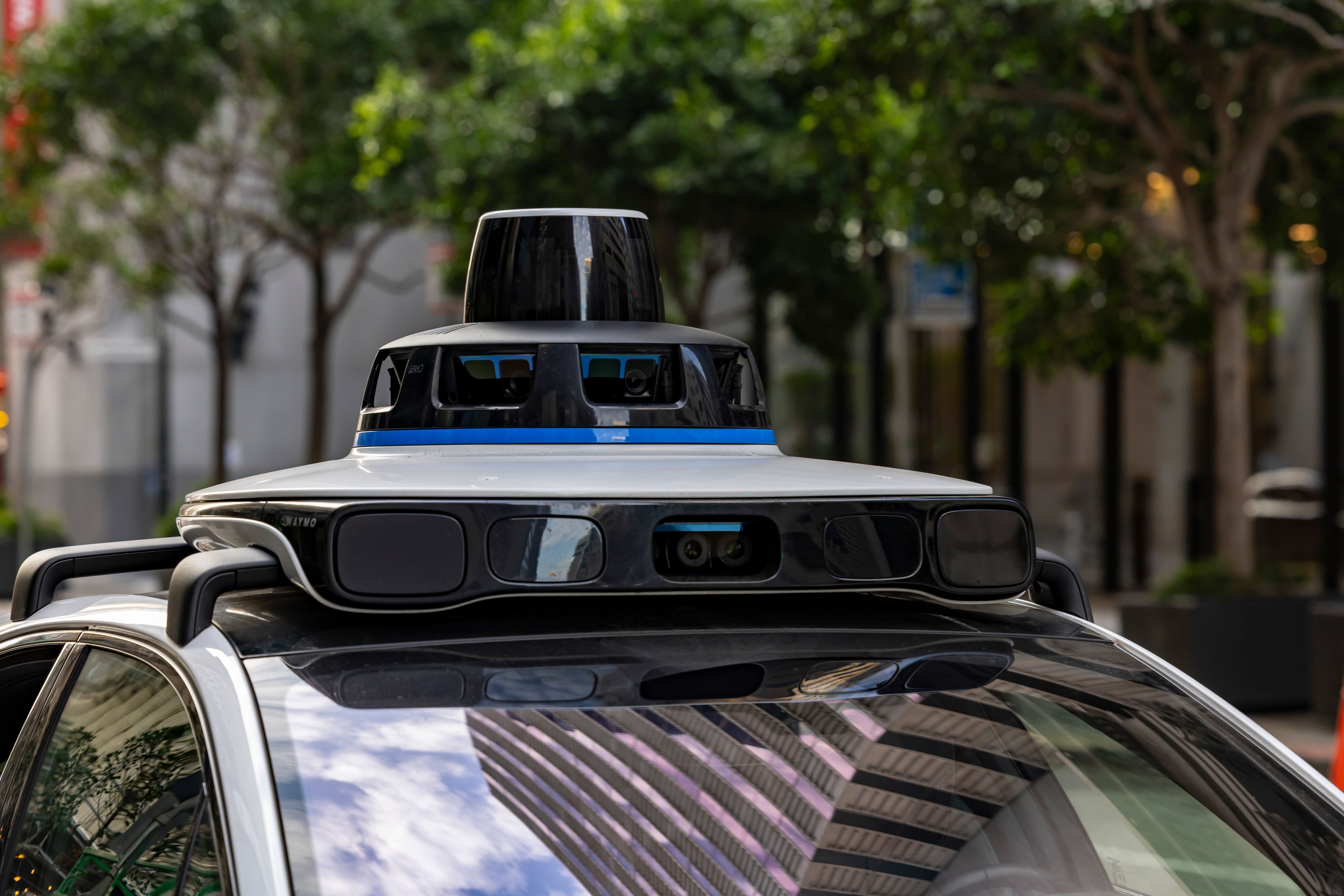


Perception is the part of an autonomous vehicle that turns raw sensor data into an understanding of the road, and its patent landscape is distinctive because value is distributed across a deep stack of sensing, calibration, fusion, and learning technologies. An autonomous vehicle carries an array of sensors, lidar, radar, cameras, and ultrasonics, and perception is the layer that combines them into a coherent, real-time model of the surroundings: detecting and classifying vehicles, pedestrians, and obstacles, tracking their motion, and locating the vehicle on a map. Large-scale multi-sensor benchmarks such as the Waymo Open Dataset have become the reference standard for training and evaluating this layer<sup>1</sup>. The intellectual property divides across several regions, each a distinct area of patenting: the sensors themselves, including lidar hardware; the calibration that aligns the sensors' coordinate frames, without which fusion outputs are biased; the sensor-fusion algorithms that combine the streams at different stages, whether early, feature-level, or late fusion<sup>3,4</sup>; the perception models that perform detection, tracking, and segmentation — an approach with roots in foundational architectures such as MV3D, which fused LiDAR and RGB views for 3D object detection<sup>7</sup>; the mapping and localization systems, including high-definition maps; and, increasingly, the end-to-end learning models that fold several of these steps into a single trained system. Because a working stack depends on several of these layers, freedom-to-operate and white space analysis must span them together.
The landscape is deep, concentrated among leaders, and geographically broad. A small number of established developers hold very large portfolios covering their full self-driving stacks, from sensing and mapping to on-vehicle compute; in Cypris's corpus, China and the United States are roughly neck-and-neck as the two largest filing jurisdictions, with automakers, technology companies, autonomous-driving startups, and universities all active, followed by strong filing in other major markets as foreign developers protect their positions there (see the landscape figures below). A defining technical debate now runs through the landscape: conventional modular pipelines, which separate perception, prediction, and planning into interpretable stages, versus end-to-end learning systems, which train a single model from sensor input to driving action and handle rare situations more flexibly but are harder to interpret and certify. Each approach generates its own IP. Because applications publish about eighteen months after filing, the most recent fusion and end-to-end-model filings are under-represented, so the current frontier is more active than granted-patent counts suggest.
The strategic question is which layer to own, and the white space sits where reliability is hardest. Sensor fusion that stays robust when sensors disagree or degrade, and calibration that holds during operation, are foundational and heavily worked but still advancing — the case for fusion in the first place rests on the fact that no single sensor modality is reliable across all conditions<sup>5</sup>, and combining complementary modalities such as 4D radar and LiDAR is one active response<sup>6</sup>. End-to-end learning models are the fastest-moving frontier, where much of the newest activity concentrates. Perception in adverse conditions, approaches that reduce dependence on high-definition maps, collaborative and vehicle-to-everything perception, and the simulation and validation methods needed to certify safety are all distinct, contested layers. Reading the landscape by layer and by owner, and tracking both the patents and the underlying computer-vision and machine-learning research, is what separates a crowded region from an open one.
Where the autonomous perception white space is
Robust sensor fusion. Fusion that stays accurate when sensors disagree, degrade, or are attacked is a foundational layer where reliability gains carry high value, spanning early, feature-level, and late fusion architectures<sup>3,4</sup>.
End-to-end learning models. Models that map sensor input to driving action in a single trained system are the fastest-moving frontier and the most active recent layer.
Adverse-condition and map-light perception. Perception in rain, fog, and low light, and approaches that reduce dependence on high-definition maps, are distinct, high-value layers, building on the case for multi-modal complementarity established in the fusion literature<sup>5,6</sup>.
Collaborative and vehicle-to-everything perception. Sharing perception between vehicles and infrastructure to see beyond line of sight is an emerging, less-crowded area.
Simulation and validation. Methods to test and certify perception safety, including for rare long-tail scenarios, are where deployment and regulatory approval are decided, and large real-world benchmarks such as the Waymo Open Dataset support this work<sup>1</sup>.
How AI-powered landscape and white space analysis helps
Resolving a landscape that spans sensing, calibration, fusion, perception models, mapping, and end-to-end learning requires more than keyword search. AI-powered analysis addresses this with semantic search that clusters activity by layer and approach across varied terminology, attribution that normalizes automaker, technology-company, startup, and university filers to canonical entities across jurisdictions, and continuous monitoring that keeps pace with a fast-moving field. Because perception advances appear in computer-vision and machine-learning literature before they are patented, reading both patents and literature gives the earliest signal of where the frontier and the white space are moving.
The competitive landscape by the numbers
Cypris's corpus puts the autonomous-driving-perception patent family set at roughly 36,227 families (Cypris corpus, indicative; 2025–26 partial). Filing has accelerated from 285 new families in 2015 to 1,249 in 2018 and 4,354 in 2024, with 2025 (6,749) and 2026 (6,012, partial) continuing that climb (Cypris corpus, indicative; 2025–26 partial). Jurisdiction distribution shows China (11,593 families, 612 assignees) and the United States (10,837 families, 354 assignees) essentially neck-and-neck at the top, followed by Germany (2,331), South Korea (953), Japan (722), Sweden (431), and Israel (267) (Cypris corpus, indicative; 2025–26 partial). Assignee concentration is led by Waymo (1,101 families), Aurora (1,000), Bosch (787), General Motors (685), Ford (637), Baidu (604), Nvidia (570), GM Cruise (470), and Zoox (444) (Cypris corpus, indicative; 2025–26 partial) — figures drawn from the Cypris corpus rather than any company's own disclosed portfolio size, since issuer-reported totals were not independently available for this set. These per-company totals should be treated as lower bounds: assignee names are not fully canonicalized in the underlying index (for example, GM Global Technology Operations filings sit apart from GM Cruise, and Baidu USA filings sit apart from Baidu's Beijing entity), so known name variants should be summed before publishing a definitive ranking.
Where Cypris fits
Cypris runs patent landscape and white space analysis for fast-moving, cross-disciplinary fields such as autonomous driving perception across a corpus of more than 500 million patents and scientific papers, organized through a proprietary R&D ontology. The ontology clusters activity by layer, sensing, calibration, fusion, perception models, mapping, and end-to-end learning, and normalizes automaker, technology-company, startup, and university filers to canonical entities across jurisdictions, so a team can resolve which layers are crowded and which remain open as white space. Semantic search across patents and scientific literature connects filings to the underlying computer-vision and machine-learning research, which is where perception advances appear first, often well ahead of the patent record. Cypris Q, the platform's agentic layer, lets teams run landscape and white space analysis conversationally and chain the clustering, attribution, and gap analysis, and Agentic Monitoring tracks a defined layer over time and flags new patents and papers as they publish. Cypris provides enterprise API partnerships with OpenAI, Anthropic, and Google, and is built with enterprise-grade security. Cypris serves hundreds of enterprise customers across pharmaceuticals, chemicals, advanced materials, energy, and other regulated industries.
FAQ
What is autonomous driving perception? Autonomous driving perception is the layer that turns data from lidar, radar, cameras, and other sensors into a real-time model of the vehicle's surroundings, detecting and tracking objects and localizing the vehicle. It sits between raw sensing and the prediction and planning that decide how the vehicle moves. It is central to the safety and capability of a self-driving system.
What layers does the perception patent landscape cover? The landscape covers the sensors themselves, calibration, sensor fusion, perception models for detection and tracking, mapping and localization, and end-to-end learning models<sup>3,4,7</sup>. Each is a distinct region of patenting with different owners. Freedom-to-operate and white space analysis must span them together.
Who holds the IP in autonomous perception? A small number of established developers hold very large portfolios covering their full self-driving stacks. In Cypris's corpus, Waymo, Aurora, and Bosch lead the assignee ranking, and China and the United States are roughly neck-and-neck as the two largest filing jurisdictions, with automakers, technology companies, startups, and universities all active (Cypris corpus, indicative; 2025–26 partial). Foreign developers also file heavily in other major markets to protect their positions.
What is the modular-versus-end-to-end debate? The modular-versus-end-to-end debate is the architectural choice between separating perception, prediction, and planning into distinct, interpretable stages, and training a single model that maps sensor input directly to driving action. Modular systems are easier to interpret and certify; end-to-end systems handle rare situations more flexibly but are harder to interpret. Each approach generates its own IP.
Why is sensor fusion necessary in the first place? Sensor fusion is necessary because no single sensor modality — lidar, radar, or camera — is reliable across all conditions on its own, so combining complementary modalities, such as 4D radar with LiDAR, improves robustness where any one sensor would fail<sup>5,6</sup>. This is why fusion architecture, spanning early, feature-level, and late fusion, is a foundational and heavily worked layer<sup>3,4</sup>. It remains an active area even though it is comparatively mature.
Where is the white space in autonomous perception? The white space includes robust sensor fusion, end-to-end learning models, adverse-condition and map-light perception, collaborative and vehicle-to-everything perception, and simulation and validation. The core sensing and fusion layers are heavily worked. The fastest-moving and most open opportunities are in end-to-end learning and in reliability under difficult conditions.
Why does perception analysis need scientific literature? Perception analysis needs scientific literature because computer-vision and machine-learning advances appear in research and conference proceedings before they are patented, so the literature gives the earliest signal in a fast-moving field. Analyzing patents alone gives a lagging view. Cypris analyzes both across more than 500 million patents and scientific papers.
What software helps analyze the autonomous driving perception patent landscape? Software for the perception landscape should cluster activity by layer and approach, resolve automaker, technology-company, startup, and university filers to canonical owners across jurisdictions, search patents and scientific literature semantically, and monitor a fast-moving field continuously. Cypris does this across more than 500 million patents and scientific papers using a proprietary R&D ontology, semantic search, Cypris Q, and Agentic Monitoring.
Which teams use autonomous perception patent landscape analysis? Autonomous perception patent landscape analysis is used by R&D, IP, and strategy teams at automakers, autonomous-driving and sensor companies, and technology firms, as well as investors assessing the sector. Because the landscape is deep, concentrated, and moving fast, structured analysis is essential. Cypris serves hundreds of enterprise customers across research-intensive and regulated industries.
Endnotes
- Sun P, Kretzschmar H, Vasudevan V, et al. (Google/Waymo). Scalability in perception for autonomous driving: Waymo Open Dataset. CVPR. 2020. DOI: 10.1109/cvpr42600.2020.00252.
- Mao Q, Zhang Y, et al. Multi-modal 3D object detection in autonomous driving: a survey. International Journal of Computer Vision. 2023. DOI: 10.1007/s11263-023-01784-z.
- Bi J, Wang L, et al. Multi-modal 3D object detection in autonomous driving: a survey and taxonomy. IEEE Transactions on Intelligent Vehicles. 2023. DOI: 10.1109/tiv.2023.3264658.
- Chehri A, et al. Multi-sensor fusion technology for 3D object detection in autonomous driving: a review. IEEE Transactions on Intelligent Transportation Systems. 2023. DOI: 10.1109/tits.2023.3317372.
- Tang Y, et al. Multi-modality 3D object detection in autonomous driving: a review. Neurocomputing. 2023. DOI: 10.1016/j.neucom.2023.126587.
- Wang L, et al. Multi-modal and multi-scale fusion 3D object detection of 4D radar and LiDAR. IEEE Transactions on Vehicular Technology. 2022. DOI: 10.1109/tvt.2022.3230265.
- Chen X, Ma H, et al. Multi-view 3D object detection network for autonomous driving (MV3D). CVPR. 2017. DOI: 10.1109/cvpr.2017.691.
- Cypris platform corpus analysis, autonomous-driving-perception patent families. Indicative figures; 2025–2026 partial.
.jpg)