
Case Study: Why Philip Morris International turned to Cypris to understand which area to invest in


Keep Reading
.jpg)
Regulatory intelligence is the discipline of tracking the approvals, submissions, guidance, and standards that decide whether a technology can reach the market. In regulated industries it stands alongside patent and scientific intelligence as a gate on every R&D program. A technology can be genuinely novel, fully patent-clear, and still be blocked, delayed, or reshaped by a single regulatory decision.
The signals are public but scattered across many bodies and formats: approvals and clearances, submission and trial records, guidance documents and rule changes, standards, labeling, and safety actions. Their value is highest early — before a rule change or a competitor's approval is widely understood. This article sets out how AI-powered regulatory intelligence works for R&D teams in 2026, and how it connects to the patent and scientific record.
What regulatory intelligence covers
Regulatory intelligence spans the full regulatory footprint of a technology area: approvals and clearances, submissions and clinical or field trial records, agency guidance and rule changes, technical standards, labeling requirements, and safety actions such as recalls. The relevant bodies differ by sector — drug and device regulators, environmental and chemical agencies, standards organizations — but the task is constant: know what has changed, what is pending, and what it means for a program.
The payoff is lead time and avoided risk. A competitor's submission reveals its direction and timeline. A guidance change can open or foreclose a development path. Catching either early is the difference between steering a program and being overtaken by a decision after the fact.
Why manual regulatory tracking lags
Manual regulatory tracking means monitoring dozens of agency websites and databases separately, then compiling findings by hand. It is slow, and it is partial. Keyword-based tracking misses documents that describe the same technology or requirement in different terms, and single-source monitoring severs the connection between a regulatory signal and the patent or scientific activity around the same technology.
It is also episodic. A periodic regulatory report is stale the moment a new decision publishes, and the window between refreshes is precisely where a missed signal becomes a missed deadline. Rising regulatory activity across sectors only widens that gap.
How AI-powered regulatory intelligence works
AI-powered regulatory intelligence replaces periodic keyword monitoring with continuous, meaning-based retrieval. Semantic search surfaces relevant approvals, submissions, and guidance by concept, so a signal registers even when it uses unfamiliar terminology. An R&D ontology organizes those signals by technology domain, tying each regulatory event to the specific technology and the organizations pursuing it.
Continuous monitoring runs the analysis without waiting for a scheduled review. It interprets each new regulatory signal against a defined domain, separates the material from the routine, and delivers contextualized alerts rather than raw document links. Because agents span sources, regulatory events can be correlated with patents, scientific literature, and corporate activity into a single picture of where a technology and its competitors are moving.
Connecting regulatory signals to patents and science
Regulatory intelligence is most valuable when it is not siloed. A regulatory decision is one input to a stage-gate, alongside prior art, freedom-to-operate, and the competitive landscape. Connecting regulatory signals to the patent and scientific record lets a team see that a competitor's approval aligns with a filing cluster and a research push — a far stronger signal than any one source read alone.
This is the shift AI enables: from monitoring agencies one at a time to interpreting regulatory change in the context of the full technology picture, and from a static report to intelligence that updates the moment decisions publish.
Regulatory intelligence in practice
Cypris is an AI-native R&D intelligence platform whose Agentic Monitoring capability tracks regulatory bodies continuously, alongside patent offices, scientific literature, M&A activity, product launches, grant awards, and corporate news. It interprets these signals through a proprietary R&D ontology over a corpus of more than 500 million patents and scientific papers, so a regulatory event is tied to the technology and the organizations it concerns rather than read in isolation.
Cypris Q, the platform's agentic layer, lets teams move from a regulatory signal into prior art, white space, or freedom-to-operate analysis on the same technology, in one environment, with cited output. Cypris operates under enterprise API partnerships with OpenAI, Anthropic, and Google, with enterprise-grade security, and serves hundreds of enterprise customers across pharmaceuticals, chemicals, advanced materials, and other regulated industries.
FAQ
What is regulatory intelligence for R&D?
Regulatory intelligence for R&D is the practice of tracking the approvals, submissions, guidance, and standards that determine whether a technology can reach the market. It sits alongside patent and scientific intelligence as a gate on a program, because a technology can be patent-clear and still be blocked or delayed by a regulatory decision.
How is regulatory intelligence different from patent monitoring?
Regulatory intelligence tracks regulatory signals such as approvals, submissions, and guidance, while patent monitoring tracks filings. Both gate an R&D program, and the fullest picture comes from correlating them, since a competitor's approval often aligns with its patent and research activity.
What signals does regulatory intelligence track?
Regulatory intelligence tracks approvals and clearances, submissions and trial records, agency guidance and rule changes, technical standards, labeling requirements, and safety actions such as recalls. The relevant bodies vary by sector, but the task is to know what has changed, what is pending, and what it means.
Why does regulatory intelligence matter for R&D?
Regulatory intelligence matters for R&D because a regulatory decision can open or close a development path regardless of a technology's novelty or patent position. Catching a guidance change or a competitor's submission early is the difference between adjusting a program and being caught by a decision after the fact.
How does AI improve regulatory intelligence?
AI improves regulatory intelligence by replacing periodic keyword monitoring with continuous semantic retrieval, so relevant approvals, submissions, and guidance are found by concept even when terminology differs. An R&D ontology then organizes the signals by domain and connects them to the technology and organizations involved.
Can regulatory signals be tracked continuously?
Regulatory signals can be tracked continuously with agentic monitoring that interprets new decisions against a defined technology domain and delivers contextualized alerts as they publish. This replaces periodic manual reports, which are stale as soon as a new decision appears.
How does regulatory intelligence connect to patents and science?
Regulatory intelligence connects to patents and science when the same platform correlates a regulatory event with the filings and research around the same technology. This produces a stronger signal than any single source, and it lets a regulatory decision feed directly into prior art or freedom-to-operate review.
Which sectors rely most on regulatory intelligence?
Regulated industries rely most on regulatory intelligence, including pharmaceuticals, medical devices, chemicals, advanced materials, and energy, where approvals and standards gate commercialization. In these sectors a regulatory signal can reshape an R&D program's timeline and direction.
What public sources support regulatory intelligence?
Public sources that support regulatory intelligence include agency databases and registers such as those published by drug, device, environmental, and standards bodies, along with trial registries and official rule-change publications. Unifying and interpreting these fragmented sources is what an AI-powered platform adds.
What is the best platform for regulatory intelligence in R&D?
The best platform for regulatory intelligence in R&D tracks regulatory signals continuously and connects them to the patent and scientific record. Cypris tracks regulatory bodies through Agentic Monitoring alongside patents, literature, and corporate signals, interpreted through a proprietary R&D ontology over a corpus of more than 500 million patents and scientific papers.
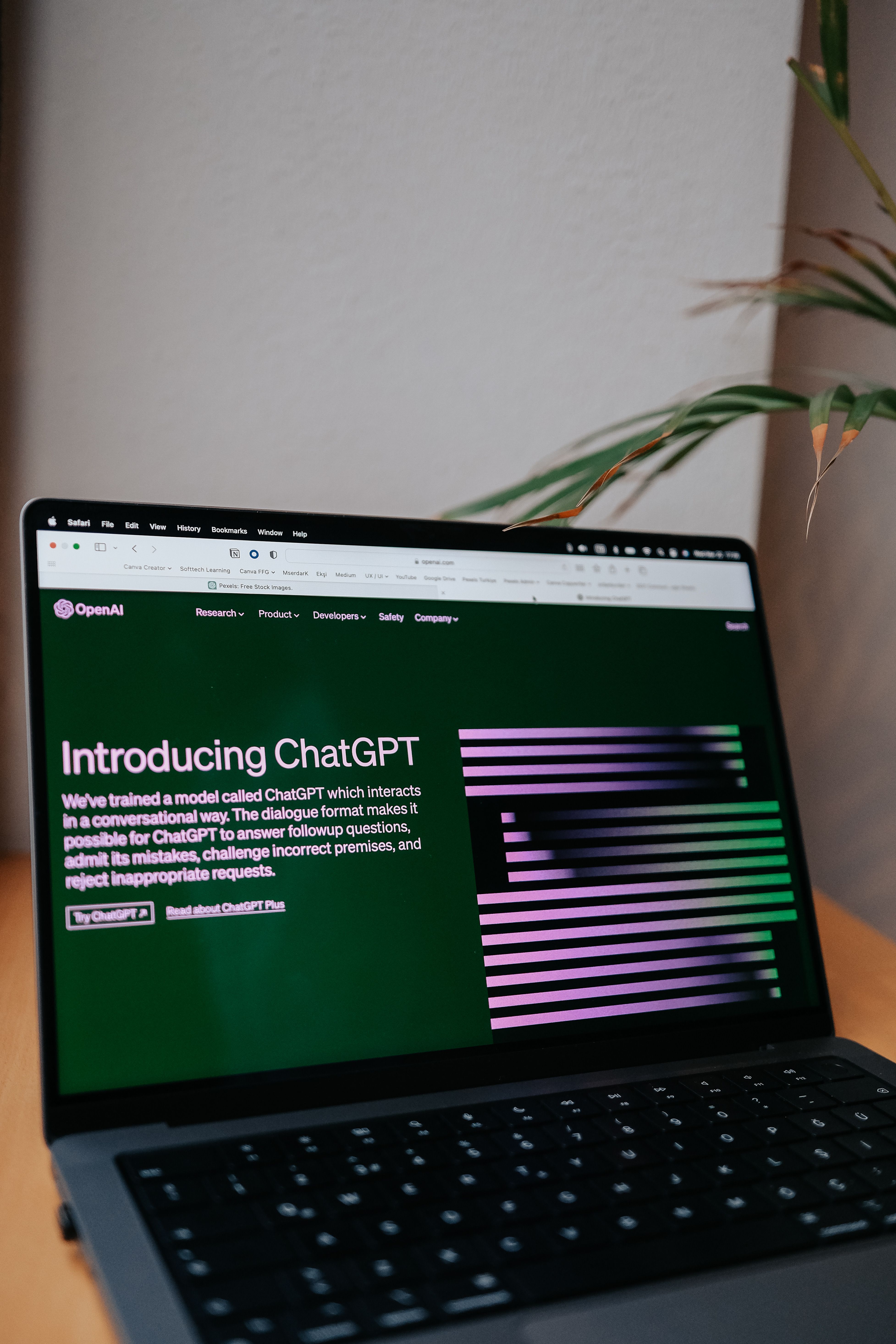
ChatGPT is the assistant many R&D and IP teams already use, but on its own it answers patent questions from training data. It can miss recent filings, confuse filing and publication dates, or produce a patent number that does not exist. Connecting ChatGPT to a live source through the Model Context Protocol (MCP) fixes this, so it retrieves real records and reasons over them.
MCP is an open standard introduced by Anthropic in late 2024 and now supported across the major AI platforms, ChatGPT among them. This article explains how ChatGPT's connectors and apps work, how to connect patent and scientific data, and why the choice of connector determines whether the output is reliable.
How connectors and apps work in ChatGPT
ChatGPT connects to external data through MCP-based apps. OpenAI renamed connectors to apps in December 2025, and in 2026 moved the app directory into a broader plugin directory, but the underlying mechanism is unchanged: an app is an MCP integration that lets ChatGPT call approved tools and retrieve information from a service. Custom MCP servers are added through Developer Mode, and on workspace plans administrators control whether custom apps are allowed and how they roll out.
Once connected, ChatGPT can call the app's tools during a chat or in deep research, so a plain-language question becomes a structured query against a patent or scientific source. MCP's security model relies on OAuth-scoped tokens and read-only access patterns, which keeps the connection appropriate for enterprise use.
What you can connect
Several open-source MCP servers expose public patent and scientific sources to ChatGPT. There are connectors for USPTO data through Patent Public Search and the Open Data Portal, for the EPO through the OPS API, and for Google Patents through third-party APIs, alongside academic connectors for arXiv and PubMed. Independent projects such as Patent Connector link ChatGPT directly to official patent-office data across several jurisdictions.
These connectors solve access. They let ChatGPT retrieve records from a specific authority in natural language, which removes the manual copy-paste loop and the errors a model makes when it reads patent data off a web page.
Access is the easy part
Connecting ChatGPT to a dataset is now straightforward. Reasoning over it well is the harder problem. A point connector hands ChatGPT a stream of raw records from one source and leaves interpretation to the model, and research on context engineering shows that flooding a model with a large, undifferentiated set of records degrades accuracy rather than improving it.
Most open-source connectors also cover a single source, so a question that spans the patent record and the scientific literature usually means running several apps and reconciling their output by hand. That is acceptable for a quick lookup but not for prior art, freedom-to-operate, or landscape work.
Point connector versus domain-oriented agent
The meaningful distinction is between an app that exposes a dataset and an agent built around a domain. A domain-oriented agent is shaped around a field's data, ontology, and workflows, so retrieval is scoped before it reaches ChatGPT's context. Rather than returning everything a keyword matches, it retrieves the high-signal patents and papers relevant to the question. Access alone does not make ChatGPT reason well about patents; the domain layer does.
For teams on workspace plans, this also simplifies governance. A single domain-oriented app under administrator control is easier to manage and audit than a stack of point connectors, each with its own source, credentials, and maintenance burden.
Connecting patent data to ChatGPT in practice
Cypris exposes its intelligence layer through an MCP server, so its competitive and landscape context can be connected into ChatGPT as an app. Rather than handing ChatGPT a broad dataset, it uses a proprietary R&D ontology over a corpus of more than 500 million patents and scientific papers to scope retrieval to what matters for a question, and returns source-traceable results ChatGPT can cite.
Cypris Q, the platform's agentic layer, runs prior art, white space, freedom-to-operate, and regulatory workflows and returns cited output, and Agentic Monitoring keeps a position current as new records publish. Cypris operates under enterprise API partnerships with OpenAI, Anthropic, and Google, with enterprise-grade security, and serves hundreds of enterprise customers across pharmaceuticals, chemicals, advanced materials, and other regulated industries.
FAQ
Can ChatGPT search patents using MCP?
ChatGPT can search patents using MCP when a patent app or connector is added, after which it calls the app's tools to retrieve records during a chat or deep research. This lets ChatGPT work from real filings rather than training data, which removes the hallucination and stale-coverage problems of answering from memory.
How do I connect patent data to ChatGPT?
You connect patent data to ChatGPT by adding an MCP-based app, typically a custom MCP server through Developer Mode, subject to any workspace controls. Once connected, ChatGPT can call the app's tools so a plain-language question becomes a structured query against a patent source.
What are ChatGPT apps and connectors?
ChatGPT apps are MCP integrations that let ChatGPT call approved tools and retrieve information from a service; OpenAI renamed connectors to apps in December 2025 and later organized them in a plugin directory. The mechanism is MCP, so the same standard used by other assistants applies.
What is Developer Mode in ChatGPT?
Developer Mode is the setting that lets you add custom MCP servers to ChatGPT beyond the built-in apps. It is how a team connects a specific patent or scientific data source that is not already offered as a packaged app.
Which open-source MCP connectors work with ChatGPT?
Open-source MCP connectors for ChatGPT include ones for USPTO Patent Public Search and the Open Data Portal, the EPO OPS API, Google Patents through third-party APIs, and academic sources such as arXiv and PubMed. Most cover a single source, so spanning patents and literature usually means running several.
Is connecting ChatGPT to a dataset enough for patent research?
Connecting ChatGPT to a dataset solves access but not reasoning, because a raw connector floods the model with records and an overwhelmed model reasons less accurately. Pairing retrieval with a domain ontology, so only high-signal records reach ChatGPT, is what produces reliable analysis.
How do enterprise controls work for ChatGPT apps?
On workspace plans, administrators control whether custom apps are allowed and how they roll out, which lets an organization govern what data ChatGPT can reach. Combined with MCP's OAuth-scoped, read-only access model, this is what makes connecting external data appropriate for enterprise use.
What is the difference between a point connector and a domain-oriented agent?
A point connector exposes one dataset and leaves interpretation to ChatGPT, while a domain-oriented agent is built around a field's data, ontology, and workflows and scopes retrieval before it reaches the model. The connector improves retrieval; the agent improves the answer, and it is also easier to govern as a single app.
Can Cypris and ChatGPT be used together?
Cypris and ChatGPT can be used together, because Cypris exposes its intelligence layer through an MCP server and ChatGPT connects to MCP servers as apps. The landscape and competitive context Cypris maintains can be connected into ChatGPT so it reasons over scoped, source-traceable records.
What is the best way to give ChatGPT patent and scientific data?
The best way to give ChatGPT patent and scientific data for R&D work is a domain-oriented agent rather than a raw connector, because stage-gate work spans patents and literature and requires reasoning, not just retrieval. Cypris connects to ChatGPT through an MCP server over a corpus of more than 500 million patents and scientific papers organized by a proprietary R&D ontology.

Keyword search matches exact terms. Semantic search matches meaning. For patent search, that distinction determines whether a strategically critical filing is found or missed.
Patent search has relied on Boolean keyword queries and classification codes for decades. The method works when the searcher already knows the exact language an invention will use. It fails when a competitor describes the same mechanism with different words, files under a different classification, or uses terminology that did not exist when the query was written. In fast-moving fields, that failure is routine.
In 2026, R&D and IP teams are moving to AI-native semantic patent search because the volume and linguistic variety of global filings have outpaced keyword methods. This article defines semantic search, contrasts it with keyword search, and explains what the shift changes for patent search, patent analytics, prior art, and freedom-to-operate work.
How keyword patent search works and where it breaks
Keyword search retrieves documents that contain the specific terms in a query, usually combined with Boolean operators and classification filters. It is precise when the vocabulary is known and stable, and it remains useful for targeted lookups.
It breaks on vocabulary mismatch. Two teams working on the same problem often use entirely different terminology, and patent drafters frequently choose broad or unusual language deliberately. A keyword query built around expected terms will not retrieve a filing that describes the same invention differently. The result is silent gaps: the searcher sees results and assumes coverage, without knowing what was missed.
Volume magnifies the problem. Global patent filings and scientific publications continue to rise, and the World Intellectual Property Organization reported scientific output above two million articles in 2025. Expanding keyword queries to chase this volume produces either too much noise or too little signal.
How semantic search works
Semantic search represents the meaning of text as mathematical vectors, so that conceptually similar passages sit close together regardless of exact wording. A query for a mechanism retrieves filings that describe that mechanism, even when the words differ. This directly addresses the vocabulary-mismatch problem that keyword search cannot solve.
For patents, the strongest implementations apply semantic search at the claim level and across both patents and scientific literature. Claim-level retrieval matters because the legal risk in a patent lives in its claims, not its abstract. Searching patents and scientific papers together matters because early technical disclosure often appears in the literature before it reaches granted claims.
An R&D ontology strengthens semantic search further. An ontology is a structured map of technical concepts and their relationships. When semantic retrieval is organized through an ontology, as it is on AI-native platforms such as Cypris, the system interprets a query in the context of a technology domain rather than as isolated words, which improves both recall and precision.
What the shift changes for R&D and IP teams
Semantic search changes prior art and FTO work most directly. In prior art search, semantic retrieval surfaces conceptually relevant disclosures that keyword queries overlook, which strengthens both patentability assessments and invalidity arguments. In freedom-to-operate search, it surfaces active claims a product may read on even when those claims use unexpected language, reducing unquantified legal risk.
It also changes patent analytics. Once retrieval understands meaning, analytics can group filings by technical concept rather than by literal text, producing cleaner technology landscapes, competitor maps, and white space analysis. Agentic workflows build on this by chaining retrieval and reasoning steps to assemble landscapes, comparison matrices, and monitored positions automatically.
Semantic search in practice
Cypris is an AI-native R&D intelligence platform built on semantic search across a corpus of more than 500 million patents and scientific papers, organized through a proprietary R&D ontology. The ontology lets Cypris interpret technical meaning and retrieve conceptually related patents and literature at the claim level, rather than matching keywords.
Cypris Q, the platform's agentic layer, chains semantic retrieval and reasoning into end-to-end workflows such as landscape analysis, prior art review, and FTO assessment. Agentic Monitoring keeps those positions current by evaluating new filings as they publish. Cypris operates under enterprise API partnerships with OpenAI, Anthropic, and Google, with enterprise-grade security, and serves hundreds of enterprise customers across pharmaceuticals, chemicals, advanced materials, and other regulated industries.
FAQ
What is semantic search for patents?
Semantic search for patents retrieves filings by meaning rather than by exact keywords, representing text as vectors so that conceptually similar patents sit close together. This surfaces relevant patents that use different terminology than a query expects, which keyword search cannot do.
What is the difference between semantic search and keyword search?
Semantic search matches the meaning of text, while keyword search matches exact terms combined with Boolean operators. Keyword search misses filings that describe the same invention in different words, whereas semantic search retrieves them because it operates on concepts rather than literal strings.
Why are R&D teams moving to AI-native patent search?
R&D teams are moving to AI-native patent search because the volume and linguistic variety of global filings have outpaced keyword methods, causing silent gaps in coverage. Semantic search retrieves conceptually related filings across patents and scientific literature, reducing the risk that critical disclosures are missed.
Is semantic search better than keyword search for prior art?
Semantic search is generally stronger for prior art because it surfaces conceptually relevant disclosures that keyword queries overlook due to vocabulary mismatch. Keyword search remains useful for targeted lookups when the exact terminology is known, so many workflows combine both.
What is an R&D ontology in patent search?
An R&D ontology is a structured map of technical concepts and their relationships that organizes a search corpus by meaning. In patent search, an ontology lets a system interpret a query in the context of a technology domain rather than as isolated words, improving both recall and precision.
Does semantic search work across patents and scientific papers?
Semantic search works across both patents and scientific papers when the corpus unifies them, which matters because early technical disclosure often appears in the literature before it reaches granted patent claims. Searching both together produces a more complete technical and competitive picture.
How does semantic search improve patent analytics?
Semantic search improves patent analytics by grouping filings by technical concept rather than literal text, which produces cleaner technology landscapes, competitor maps, and white space analysis. Analytics built on meaning are more reliable than analytics built on keyword matches alone.
Can semantic patent search be automated with agents?
Semantic patent search can be automated with agentic workflows that chain retrieval and reasoning steps to assemble landscapes, comparison matrices, and monitored positions. Agents keep the analysis current by re-running semantic retrieval against new filings as they publish.
Does semantic search replace Boolean patent search entirely?
Semantic search does not fully replace Boolean patent search, because targeted keyword queries remain useful when exact terminology is known. The strongest workflows combine semantic retrieval for recall with keyword precision for confirmation.
What data coverage does effective semantic patent search require?
Effective semantic patent search requires broad coverage across patents and scientific literature, so that conceptually related disclosures in any vocabulary can be retrieved. A corpus of more than 500 million patents and scientific papers organized through an R&D ontology supports this breadth.