
How Cypris Empowers R&D Teams


Keep Reading

Patent filings are a leading indicator of competitor R&D direction, and the lead time is a structural consequence of how the patent system operates. An application is filed at its priority date, well before the corresponding product reaches the market, and under the standard 18-month publication rule reflected in USPTO practice and PCT Article 21,⁵ it is not published until roughly eighteen months after that priority date. The interval between when a competitor commits R&D and when the public can observe it is therefore built into the system. The International Energy Agency treats patenting as a leading indicator of technological change in its innovation analysis,¹ and the same logic holds across sectors: a competitor's published filings reveal committed R&D direction ahead of the market, and studies of the linkage between scientific publication and patenting document a measurable lag between the two that compounds the observable lead time.² For R&D and competitive intelligence teams, this makes patents one of the most reliable forward-looking competitive signals available.
Reading that signal well requires structured analysis rather than filing counts, and several technical steps determine its accuracy. First, the unit of analysis should be the patent family, not the individual document, because a single invention generates multiple applications across jurisdictions; counting documents rather than families overstates activity and double-counts international coverage. Second, filings must be located in the technology space using classification codes, principally the Cooperative Patent Classification and International Patent Classification systems, which assign standardized technology categories independent of the applicant's terminology. Third, activity must be attributed through assignee disambiguation, normalizing the many name variants, subsidiaries, and transliterations of an organization to a single canonical entity, because unresolved assignee names fragment a competitor's portfolio and distort the picture. Fourth, the analysis should read the trend over time rather than the latest counts, because the most recent eighteen-to-twenty-four months of data are systematically under-represented by publication lag, so apparent recent declines are usually artifacts rather than real slowdowns.
Two network structures add depth beyond volume. Forward and backward citation analysis situates a competitor's filings in the flow of prior art: backward citations reveal the foundations a filing builds on, and forward citations indicate influence and where a technology is being extended. Co-assignee and knowledge-search network analysis reveals partnerships, academic-industry pipelines, and the coupling between organizations, which shape a competitor's future direction; network-embedding methods over these structures are an established competitive-intelligence technique.³ Scientific literature strengthens the signal further, because research is published before it is patented and patents are filed before products ship, so combining the two sources extends the observable lead time; the scientific footprint within a competitor's filings can be traced through their non-patent references.⁴
What competitor filings reveal
Technology direction. The classification areas where a competitor is filing show where R&D is being committed, often well before those commitments appear in products.
Intensity and momentum. The distribution and rate of change of filing activity across technology areas indicate priorities, and shifts in filing momentum signal changes in strategy earlier than raw counts.
Adjacent moves. Filings in classifications adjacent to a competitor's current products can signal diversification or expansion before it is announced.
Research foundations. The non-patent references and scientific literature a competitor's filings build on show the research base behind their direction, and rising related research is an earlier signal still.
Collaboration structure. Co-assignee patterns and citation coupling reveal partnerships and academic-industry pipelines; network analysis of these relationships is an established competitive-intelligence method.³
How to read competitor R&D direction
Define the competitors and the technology space, scoping the latter with classification codes so the boundary is standardized and reproducible.
Resolve assignees to canonical entities and aggregate to the patent-family level, so activity is attributed accurately and international coverage is not double-counted.
Cluster filings by concept using semantic analysis over the classification and text, so related work groups together regardless of terminology.
Analyze filing momentum as a time series, discounting the most recent windows for publication lag, since direction is visible in trends rather than in the latest bar.
Connect filings to their non-patent references and to the scientific literature, to extend the lead time and expose the research foundations.
Monitor continuously, because competitor direction is revealed by how activity shifts, and continuous monitoring captures those shifts as they publish.
Where Cypris fits
Cypris supports competitive intelligence across a corpus of more than 500 million patents and scientific papers, organized through a proprietary R&D ontology. The ontology and its entity resolution are what turn filings into direction: they normalize assignees to canonical organizations, aggregate to the family level, and cluster activity by concept, so a team sees where a competitor is moving rather than a list of documents. Dense semantic search across patents and scientific literature connects filings to their research foundations, which extends the lead time on the signal, and citation and co-assignee structures expose collaboration and influence. Cypris Q, the platform's agentic layer, lets teams analyze competitor direction conversationally and chain the attribution, clustering, and time-series analysis. Agentic Monitoring is central to this use case: it tracks defined competitors and technology areas over time and flags new filings and research as they publish, so competitive intelligence is continuous rather than a one-time report. Cypris provides enterprise API partnerships with OpenAI, Anthropic, and Google, so AI agents can query the corpus programmatically, and it is built with enterprise-grade security. Cypris serves hundreds of enterprise customers across pharmaceuticals, chemicals, advanced materials, energy, and other regulated industries.
FAQ
How do patent filings reveal competitor R&D direction?
Patent filings reveal competitor R&D direction because an application is filed at its priority date, before the product ships, and is published only about eighteen months later under the standard publication rule. This built-in lag means published filings show committed R&D ahead of the market. Reading the direction requires attributing filings to competitors and technology areas and analyzing where activity concentrates and shifts.
What is the 18-month publication rule?
The 18-month publication rule is the standard practice, reflected in USPTO procedure and PCT Article 21, under which a patent application is published approximately eighteen months after its earliest priority date. It creates a predictable interval between filing and public visibility. It is also why the most recent windows of filing data are under-represented and should not be read as slowdowns.
Why analyze patent families instead of individual documents?
Analyzing patent families instead of individual documents avoids double-counting, because a single invention generates multiple applications across jurisdictions. Counting documents overstates activity and conflates international coverage with genuine volume. The family is the correct unit for measuring how much distinct R&D a competitor is committing.
What role do classification codes play?
Classification codes, principally the Cooperative Patent Classification and International Patent Classification systems, assign standardized technology categories to filings independent of the applicant's wording. They let an analyst locate and compare activity in a technology space reproducibly. This is more reliable than keyword filtering, which varies with drafting style.
Why is assignee disambiguation important?
Assignee disambiguation is important because organizations appear under many name variants, subsidiaries, and transliterations, and unresolved names fragment a competitor's portfolio across multiple entities. Normalizing these to a single canonical entity is what makes attribution and trend analysis accurate. Poor disambiguation systematically distorts competitive intelligence.
How do citation networks support competitive intelligence?
Citation networks support competitive intelligence by situating filings in the flow of prior art. Backward citations reveal the foundations a filing builds on, and forward citations indicate influence and where a technology is being extended. Co-assignee and knowledge-search network analysis additionally reveals partnerships and academic-industry pipelines.
Why combine patents with scientific literature?
Combining patents with scientific literature extends the observable lead time, because research is published before it is patented and patents precede products. Rising research associated with a competitor, followed by early filings, is an earlier and stronger signal than filings alone. The scientific footprint within filings can be traced through their non-patent references.
Why not just count competitor patent filings?
Counting filings alone is misleading because recent counts are depressed by publication lag and raw volume does not indicate direction. The informative signal is which classification areas activity concentrates in and how that distribution changes over time. Family-level aggregation, classification analysis, and time-series momentum are what reveal direction.
Why is continuous monitoring important for competitive intelligence? Continuous monitoring is important because competitor direction is revealed by how activity changes, which a one-time report cannot capture, and because new filings and research publish constantly. A shift in a competitor's focus is only visible if the area is tracked over time. Cypris uses Agentic Monitoring to track competitors and technology areas and flag new activity as it publishes.
Which teams read competitor R&D direction from patents?
Reading competitor R&D direction from patents is done by competitive intelligence, R&D, innovation, strategy, and corporate development teams that need forward-looking awareness of competitor moves. It is most valuable in research-intensive industries such as pharmaceuticals, chemicals, advanced materials, and energy. Cypris serves hundreds of enterprise customers across these industries.
Endnotes
- International Energy Agency (2026). The State of Energy Innovation 2026. https://www.iea.org/reports/the-state-of-energy-innovation-2026
- Fukuzawa, N. & Ida, T. (2015). Science linkages between scientific articles and patents for leading scientists in the life and medical sciences field. Scientometrics. https://doi.org/10.1007/s11192-015-1795-z
- Yang, X. et al. (2024). Predicting patent transaction behaviour based on embedded features of knowledge search networks. Journal of Knowledge Management. https://doi.org/10.1108/jkm-12-2023-1220
- Callaert, J., Grouwels, J. & Van Looy, B. (2011). Delineating the scientific footprint in technology: identifying scientific publications within non-patent references. Scientometrics. https://doi.org/10.1007/s11192-011-0573-9
- World Intellectual Property Organization, PCT Article 21 (International Publication), and USPTO Manual of Patent Examining Procedure, on patent publication timing.
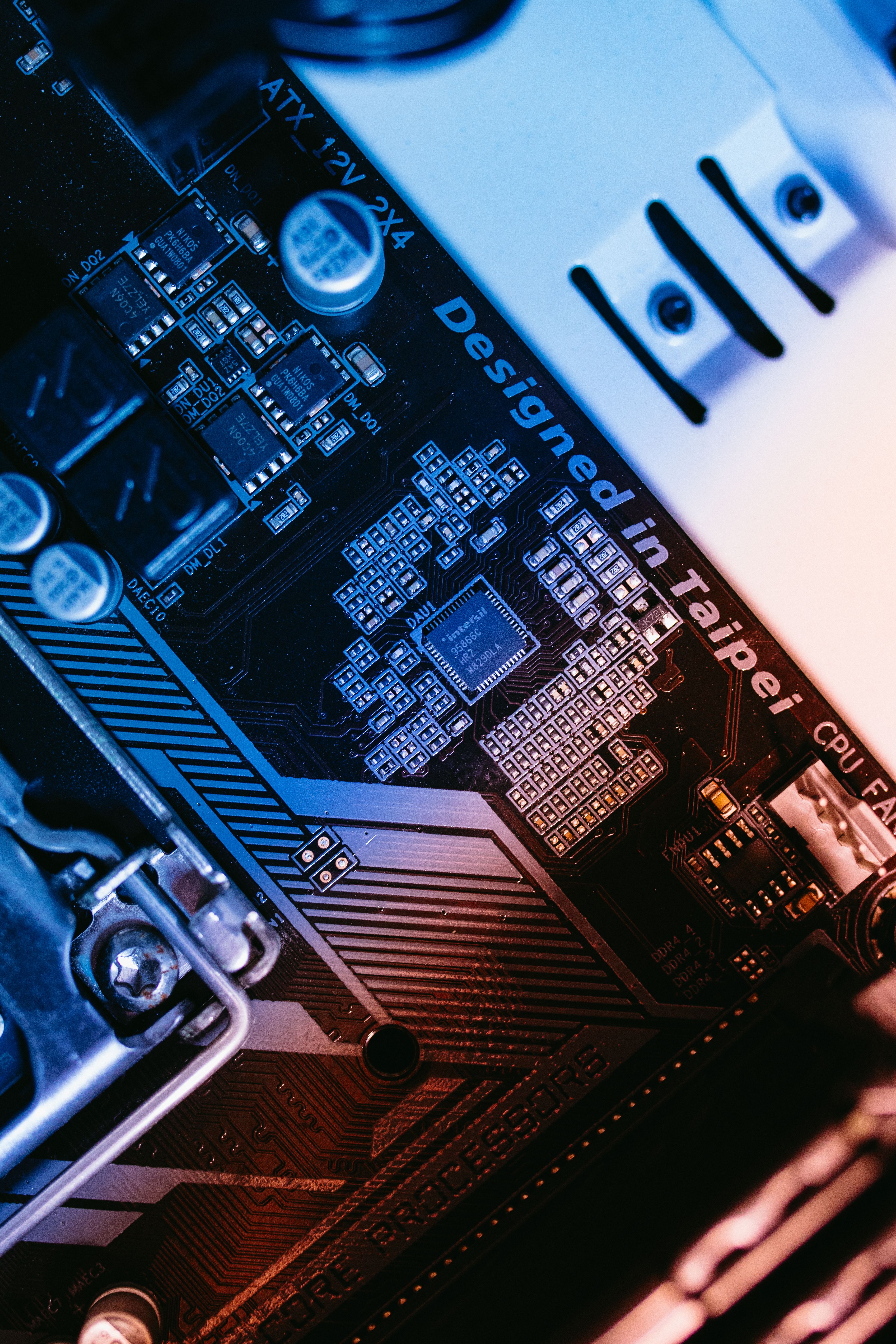
Wide-bandgap power semiconductors have become one of the most strategically important and most litigated areas in electronics, and their patent landscape is distinctive because value and risk are spread across the full stack from crystal to module. Silicon carbide and gallium nitride switch faster, tolerate higher voltages and temperatures, and lose less energy than conventional silicon, which is why they are central to electric-vehicle drivetrains, fast charging, solar and grid power conversion, and the power delivery of AI data centers; peer-reviewed reviews document these comparative properties and the trade-offs between the two materials.¹,² The intellectual property divides across several regions, each with different owners and maturity: the substrate and bulk-crystal growth that produces the raw material; the epitaxy that grows the active layers, including gallium nitride on silicon; the device design, such as the transistor and diode structures, whose failure and reliability modes are a distinct engineering concern;³ the packaging and thermal-management technologies that manage heat and switching losses;² and the application-level integration into drivetrains and power systems, where gallium-nitride high-electron-mobility transistors are increasingly used.⁴ Because a competitive product depends on several of these layers, freedom-to-operate is a multi-layer analysis rather than a single clearance.
The landscape is defined by intense litigation. Established wide-bandgap developers with deep substrate and device portfolios have asserted their patents against newer entrants, and the disputes have moved through trade-enforcement bodies and the federal courts. In a US International Trade Commission investigation into certain semiconductor devices, a final initial determination issued on December 2, 2025 found a violation as to one asserted patent and no violation as to a second, with the Commission determining to review the decision in part, a proceeding that remained under Commission review as of early 2026.⁶ In parallel, a wide-bandgap developer has asserted foundational gallium-nitride and silicon-carbide patents against a competitor in US federal court, with the case active on the district-court docket.⁷ Parallel proceedings are underway in other jurisdictions. This pattern signals a maturing field in which foundational substrate, epitaxy, and device patents create real barriers, and in which a single infringement finding in a key market can reshape a competitor's access to it. The ownership picture is concentrated but contested: across the Cypris corpus of more than 500 million patents and scientific papers, the most active assignees in the gallium-nitride power-device set are incumbent integrated device manufacturers, led by Japanese and European firms such as Mitsubishi Electric, Fuji Electric, Infineon, Toshiba, and Rohm, together with foundries and a small number of US developers, of which one substrate-and-device specialist is the clearest pure-play; the set holds on the order of 80,000 families on an indicative basis and grew roughly 2.4 times between 2018 and 2024, with China and the United States leading on assignee geography, followed by Japan, Germany, and South Korea. Because applications publish about eighteen months after filing, the most recent device and packaging filings are under-represented (2025 counts are partial), so the current frontier is more active than granted-patent counts suggest.
The strategic question is which layer to own, and the answer differs by material. In silicon carbide, the substrate and bulk-crystal layer is a durable barrier because high-quality crystal growth is difficult and capital-intensive, so much of the defensible value sits upstream. In gallium nitride, where devices are often grown on silicon wafers, the contested ground is more in epitaxy, device architecture, and packaging, and the litigation has concentrated there. Across both, packaging and thermal management are rising in importance as switching speeds increase,² and ultra-wide-bandgap approaches are an emerging frontier beyond today's materials.⁵ Reading the landscape by material, layer, and owner, and tracking the live proceedings, is what separates a workable position from a blocked one.
What creates FTO risk in wide-bandgap power semiconductors
Substrate and crystal-growth claims. These cover bulk silicon-carbide crystal and wafer production, a capital-intensive, upstream layer that is a durable barrier in silicon carbide.
Epitaxy claims. These cover the growth of active layers, including gallium nitride on silicon, a heavily contested layer central to gallium-nitride litigation.
Device-design claims. These cover transistor and diode structures and their edge terminations and gate designs, whose reliability and failure modes are a frequent center of disputes.³
Packaging and module claims. These cover thermal management, interconnection, and module construction, a layer rising in importance as switching speeds increase.²
Application-integration claims. These cover integration into drivetrains, chargers, and power systems, so a device can be free at the component level and constrained in a specific application.⁴
How AI-powered landscape and FTO analysis helps
A multi-layer, cross-border, heavily litigated landscape is beyond manual clearance. AI-powered analysis addresses this with semantic search that retrieves relevant substrate, epitaxy, device, and packaging claims regardless of terminology, attribution that normalizes incumbent and challenger owners to canonical entities across jurisdictions, claim-level analysis that separates the layers, and continuous monitoring that tracks new filings and the live disputes. Because wide-bandgap advances appear in scientific literature before they are patented, reading both patents and literature gives earlier warning of where the field is extending.
Where Cypris fits
Cypris runs patent landscape and freedom-to-operate analysis for multi-layer, litigated fields such as wide-bandgap power semiconductors across a corpus of more than 500 million patents and scientific papers, organized through a proprietary R&D ontology. The ontology clusters the landscape by material and layer, substrate, epitaxy, device, packaging, and application, and normalizes owners to canonical entities across jurisdictions, so a team sees how rights are distributed between incumbents and challengers rather than a flat list. Semantic search across patents and scientific literature surfaces relevant claims regardless of terminology and connects filings to the underlying materials and device research, which is where next-generation structures emerge first. Cypris Q, the platform's agentic layer, lets teams run landscape and FTO analysis conversationally and chain the attribution, clustering, and claim-level analysis across layers, and Agentic Monitoring tracks the landscape over time and flags new filings and developments as they publish. Cypris provides enterprise API partnerships with OpenAI, Anthropic, and Google, and is built with enterprise-grade security. Cypris serves hundreds of enterprise customers across pharmaceuticals, chemicals, advanced materials, energy, and other regulated industries.
FAQ
Why are wide-bandgap power semiconductors a patent hotspot? Wide-bandgap power semiconductors are a patent hotspot because silicon carbide and gallium nitride enable more efficient power electronics for electric vehicles, fast charging, renewables, and AI data centers, creating a large and fast-growing market. Value and risk are spread across substrate, epitaxy, device, and packaging layers. That breadth, plus intense competition, has produced heavy litigation.
What layers does the SiC and GaN landscape cover? The landscape covers substrate and bulk-crystal growth, epitaxy, device design, packaging and modules, and application integration. In silicon carbide the substrate layer is a durable upstream barrier, while in gallium nitride the contested ground is more in epitaxy, device design, and packaging. Freedom-to-operate must span the relevant layers for each material.
Why is this field so heavily litigated? The field is heavily litigated because foundational substrate, epitaxy, and device patents create real barriers, incumbents hold deep portfolios, and fast-growing challengers are building their own. Disputes have moved through the US International Trade Commission and the federal courts, with a December 2025 ITC determination finding a violation as to one patent and none as to another, and a separate district-court case over foundational gallium-nitride and silicon-carbide patents. A single ruling in a key market can reshape competitive access.
Where is the white space in wide-bandgap semiconductors? The white space includes packaging and thermal management as switching speeds rise, device architectures that design around crowded structures, gallium-nitride epitaxy and integration approaches, and application-level integration into drivetrains and power systems. The silicon-carbide substrate layer is a durable barrier held by incumbents. The higher-value opportunities are in packaging, device design, and integration.
How do silicon carbide and gallium nitride differ in the patent picture? They differ because silicon carbide value concentrates upstream, in difficult, capital-intensive crystal growth, while gallium nitride, often grown on silicon, concentrates contested IP in epitaxy, device architecture, and packaging. The litigation patterns reflect this. Freedom-to-operate strategy should therefore be tailored to the material.
Why does wide-bandgap analysis need scientific literature? Wide-bandgap analysis needs scientific literature because materials, device, and packaging advances appear in research before they are patented, so the literature gives the earliest signal. Analyzing patents alone gives a lagging view. Cypris analyzes both across more than 500 million patents and scientific papers.
What software helps analyze the SiC and GaN patent landscape? Software for the wide-bandgap landscape should cluster activity by material and layer, resolve incumbent and challenger owners to canonical entities across jurisdictions, search patents and scientific literature semantically, and monitor active litigation and new filings continuously. Cypris does this across more than 500 million patents and scientific papers using a proprietary R&D ontology, semantic search, Cypris Q, and Agentic Monitoring.
Which teams use wide-bandgap patent landscape analysis? Wide-bandgap patent landscape analysis is used by R&D, IP, and strategy teams at semiconductor, automotive, power-electronics, and energy companies, as well as investors assessing the sector. Because the field is litigated across the full stack and across borders, structured analysis is essential. Cypris serves hundreds of enterprise customers across advanced materials, energy, and other research-intensive industries.
Endnotes
- Stanley, C., Herzog, S., Viewegh, M., Biggerstaff, T., et al. (2026). Wide bandgap semiconductors for power electronics: comparative properties, applications, and reliability of GaN and SiC devices. Hardware, 4(1). https://doi.org/10.3390/hardware4010006
- Kim, J., Bae, S., Han, S., & Park, S. (2025). Thermal management of wide-bandgap power semiconductors: strategies and challenges in SiC and GaN power devices. Electronics, 14(21), 4193. https://doi.org/10.3390/electronics14214193
- Romano, G., Imburgia, A., Ala, G., Rizzo, G., et al. (2025). Comprehensive review of wide-bandgap devices: SiC MOSFET and its failure modes affecting reliability. Physchem, 5(1). https://doi.org/10.3390/physchem5010010
- Rusli, M., Jarndal, A., & Hamza, K. H. (2026). GaN HEMTs for electric vehicle power electronics: device architectures, reliability and next-generation wide-bandgap opportunities. Energies, 19(7), 1752. https://doi.org/10.3390/en19071752
- Adekunle, A. (2025). Review of ultra wide bandgap GaN-based HEMTs for high-efficiency power conversion. International Journal of Future Engineering Innovations, 2(3). https://doi.org/10.54660/ijfei.2025.2.3.77-83
- U.S. International Trade Commission. Certain semiconductor devices and products containing the same, Investigation No. 337-TA-1414 (Final Initial Determination, Dec. 2, 2025; Commission review in part). Federal Register / public-inspection record. https://public-inspection.federalregister.gov/2026-02297.pdf
- Wolfspeed, Inc. v. Navitas Semiconductor Corporation, U.S. District Court for the District of Delaware, No. 1:24-cv-01038 (docket). https://www.courtlistener.com/docket/69457003/parties/wolfspeed-inc-v-navitas-semiconductor-corporation
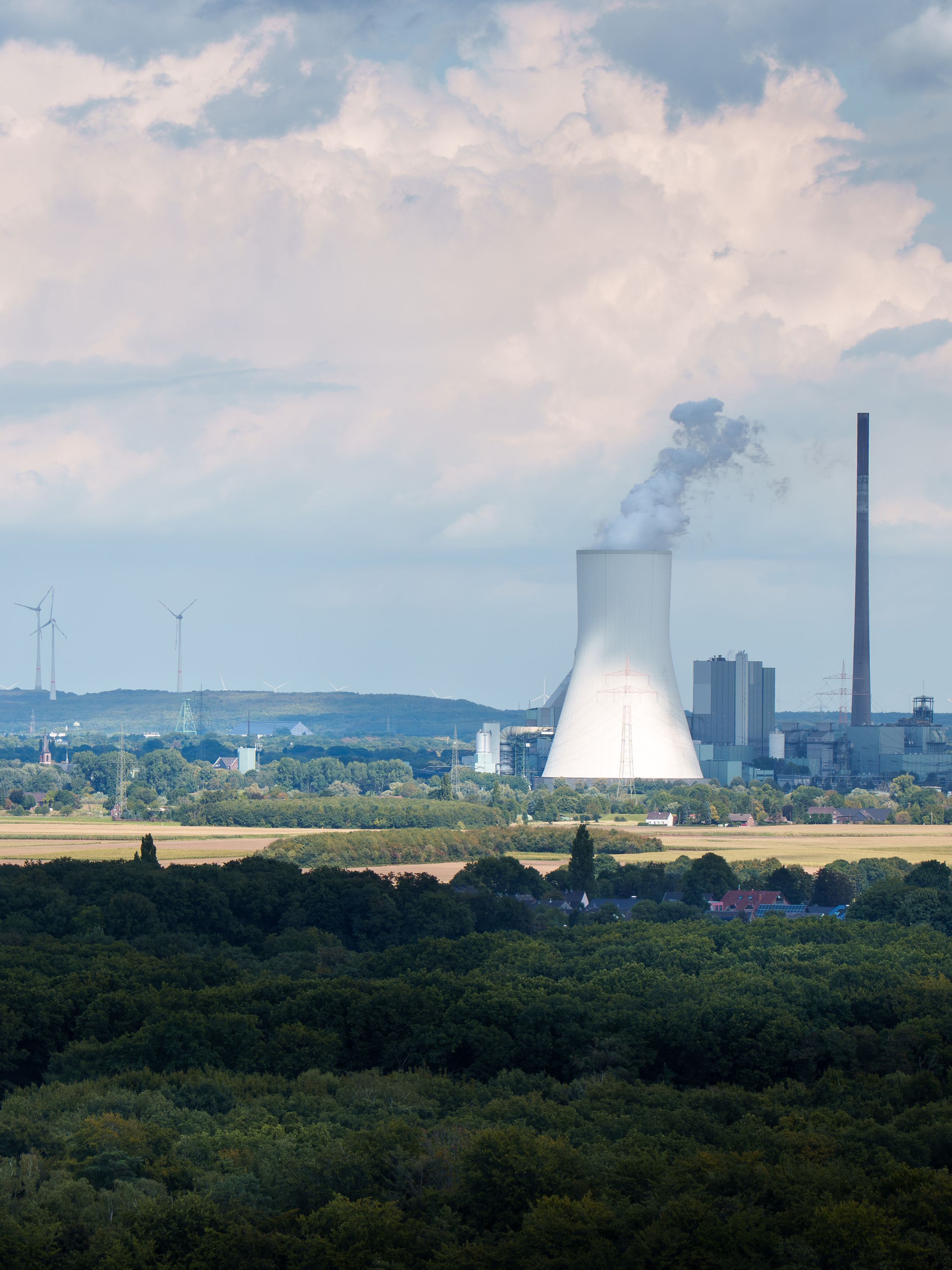
Small modular reactors and advanced nuclear designs have moved from concept toward licensing and deployment, and their patent landscape is distinctive because it spans several competing reactor families and a fuel supply chain that must be built alongside them. Where conventional nuclear plants are large, bespoke, and light-water-cooled, SMRs and advanced reactors are smaller, factory-built, and often use novel coolants, moderators, and fuels to achieve passive safety and flexible operation. The field divides into distinct regions of patenting: the reactor concepts themselves, including high-temperature gas-cooled reactors, molten-salt reactors, sodium-cooled fast reactors, integral light-water SMRs, and microreactors; the core, coolant, and moderator designs within each, from tristructural isotropic coated-particle fuel in gas-cooled reactors to fluoride fuel salts in molten-salt reactors;¹,²,³ the advanced fuels, especially TRISO particles and the high-assay low-enriched uranium, or HALEU, they require; the passive safety systems and control approaches that shut a reactor down without active intervention;⁵,⁶ and the modular manufacturing and construction methods that make factory production possible.⁴ Alongside these sit non-electric applications, from industrial heat and hydrogen to powering data centers. Because a viable design depends on several of these layers, and on a fuel supply that does not yet exist at scale, freedom-to-operate and white space analysis must span reactor, fuel, and manufacturing together.
The landscape is being reshaped by licensing progress and by a surge in demand. Regulators have modernized the framework for licensing advanced reactors, adopting a risk-informed, performance-based, and technology-inclusive rule intended to accommodate the range of SMR and advanced designs,⁷ while government programs are standing up a domestic supply of HALEU, the enriched fuel that many advanced reactors need and that has not been commercially produced at scale. Demand has accelerated sharply as technology companies contract for nuclear power to run data centers, drawing large investment. The competitive picture spans reactor developers pursuing different coolant and fuel choices, specialized fuel fabricators building TRISO and HALEU capacity, and established nuclear suppliers. This shows in the record: across the Cypris corpus of more than 500 million patents and scientific papers, the nuclear-anchored SMR, microreactor, TRISO, molten-salt, and HALEU set holds on the order of 2,017 families and grew from about 87 in 2020 to roughly 250 in 2024, with the most active assignees mixing large academic and institutional filers, led by Chinese universities and institutes, with reactor developers and fuel fabricators such as TerraPower, Mitsubishi Heavy Industries, BWXT, and Westinghouse and the US Department of Energy, and China ahead of the United States and South Korea on geography; a broad, unfiltered "microreactor" query returns far more families but is contaminated by unrelated chemical-microreactor art, so the nuclear-anchored figure is the defensible one. Because applications publish about eighteen months after filing, the most recent reactor and fuel filings are under-represented (2025 and 2026 counts are partial), so the current frontier is more active than granted-patent counts suggest.
The strategic question is which reactor family and layer to back, and the white space sits where technology and supply chain intersect. Advanced fuel, TRISO fabrication and the HALEU supply chain, is a critical, comparatively concentrated layer where scaling and cost are the barriers, so fabrication methods and fuel designs carry high value.¹ Coolant and materials that survive high temperatures and long fuel cycles, across gas, salt, and metal-cooled designs, passive safety systems, modular manufacturing and construction that lower cost and schedule, and non-electric applications such as process heat, hydrogen, and dispatchable power for data centers are all distinct, contested layers.²,³ Reading the landscape by reactor family, layer, and owner, and tracking both the patents and the underlying nuclear-engineering research, is what separates a crowded region from an open one.
Where the advanced-nuclear white space is
Advanced fuel and HALEU supply. TRISO fabrication methods and the high-assay low-enriched uranium supply chain are a critical, concentrated layer where scaling and cost are the barriers.¹
Coolant, moderator, and materials. Coolants and materials that survive high temperatures and long fuel cycles, across gas, salt, and metal-cooled designs, are a distinct, high-value layer.²,³
Passive safety systems. Systems and control approaches that shut a reactor down without active intervention are a differentiating capability central to SMR value.⁵,⁶
Modular manufacturing and construction. Factory-built modules and construction methods that lower cost and schedule are where the economic case is decided.⁴
Non-electric applications. Industrial heat, hydrogen production, and dispatchable power for data centers open distinct application and integration IP.
How AI-powered landscape and white space analysis helps
Resolving a landscape that spans several reactor families, a fuel supply chain, and manufacturing requires more than keyword search. AI-powered analysis addresses this with semantic search that clusters activity by reactor family, layer, and application across varied terminology, attribution that normalizes developer, fuel-fabricator, and supplier filers to canonical entities, and continuous monitoring that keeps pace with a fast-moving field. Because nuclear advances appear in scientific and engineering literature before they are patented, reading both patents and literature gives the earliest signal of where the frontier is moving.
Where Cypris fits
Cypris runs patent landscape and white space analysis for engineering-intensive fields such as small modular reactors and advanced nuclear across a corpus of more than 500 million patents and scientific papers, organized through a proprietary R&D ontology. The ontology clusters activity by reactor family, gas-cooled, molten-salt, sodium-cooled, light-water, and microreactor, and by layer, reactor design, advanced fuel, passive safety, and manufacturing, and normalizes developer, fuel-fabricator, and supplier filers to canonical entities, so a team can resolve which families and layers are crowded and which remain open as white space, and can separate genuine advanced-nuclear filings from unrelated art that shares terminology. Semantic search across patents and scientific literature connects filings to the underlying nuclear-engineering research, which is where advances appear first. Cypris Q, the platform's agentic layer, lets teams run landscape and white space analysis conversationally and chain the clustering, attribution, and gap analysis, and Agentic Monitoring tracks a defined family over time and flags new patents and papers as they publish. Cypris provides enterprise API partnerships with OpenAI, Anthropic, and Google, and is built with enterprise-grade security. Cypris serves hundreds of enterprise customers across pharmaceuticals, chemicals, advanced materials, energy, and other regulated industries.
FAQ
What is the small modular reactor patent landscape? The small modular reactor patent landscape is the set of patents covering factory-built, smaller nuclear reactors and advanced designs. It spans reactor families, high-temperature gas-cooled, molten-salt, sodium-cooled fast, light-water, and microreactors, plus advanced fuels, passive safety, and modular manufacturing. Each is a distinct region of patenting.
What are the main advanced reactor families? The main families are high-temperature gas-cooled reactors, molten-salt reactors, sodium-cooled fast reactors, integral light-water SMRs, and microreactors. They differ in coolant, moderator, fuel, and operating temperature. The choice of family shapes both the technical and the freedom-to-operate picture.
Why are TRISO and HALEU fuels important? TRISO and HALEU fuels are important because many advanced reactors depend on TRISO coated particles, which resist very high temperatures, and on high-assay low-enriched uranium, which is not yet commercially produced at scale. Building this fuel supply chain is a critical enabler. Fabrication methods and fuel designs are therefore a concentrated, high-value layer.
Why is data-center demand accelerating advanced nuclear? Data-center demand is accelerating advanced nuclear because technology companies need large amounts of reliable, carbon-free power, and have begun contracting for SMR and advanced-reactor output. This has drawn substantial investment and sharpened competition. It has also expanded interest in non-electric and dispatchable applications.
How does advanced-reactor licensing work? Advanced-reactor licensing in the United States distinguishes several steps, including design approval or certification, a construction permit, and an operating license, and regulators have adopted a modernized, risk-informed, technology-inclusive framework to accommodate advanced designs. A construction permit is not an operating license. Claims about a given project's status should be tied to the specific regulatory record.
Where is the white space in advanced nuclear? The white space includes advanced fuel and HALEU supply, coolant, moderator, and materials, passive safety systems, modular manufacturing and construction, and non-electric applications. The reactor-design and fuel layers are the most active. The most open, high-value opportunities are in fuel, materials, and manufacturing.
What software helps analyze the small modular reactor patent landscape? Software for the advanced-nuclear landscape should cluster activity by reactor family, layer, and application, resolve developer, fuel-fabricator, and supplier filers to canonical owners, separate genuine advanced-nuclear filings from unrelated art, search patents and scientific literature semantically, and monitor a fast-moving field continuously. Cypris does this across more than 500 million patents and scientific papers using a proprietary R&D ontology, semantic search, Cypris Q, and Agentic Monitoring.
Which teams use advanced-nuclear patent landscape analysis? Advanced-nuclear patent landscape analysis is used by R&D, IP, and strategy teams at reactor developers, fuel fabricators, nuclear suppliers, utilities, and technology buyers, as well as investors assessing the sector. Because the field spans reactor, fuel, and manufacturing layers, structured analysis is essential. Cypris serves hundreds of enterprise customers across energy and other research-intensive industries.
Endnotes
- International Atomic Energy Agency (2025). Coated particle fuels for high-temperature gas-cooled small modular reactors. https://doi.org/10.61092/iaea.zyya-k9sd
- Powers, J. J., & Gehin, J. C. (2016). Liquid-fuel molten salt reactors for thorium utilization. Nuclear Technology, 194(2). https://doi.org/10.13182/nt15-124
- Grimes, W. R. (1970). Molten-salt reactor chemistry. Nuclear Applications and Technology, 8(2). https://doi.org/10.13182/nt70-a28621
- Hannah, B. (2026). Technical assessment of molten salt reactor small modular reactors: design and licensing considerations. https://doi.org/10.5281/zenodo.20087242
- Zarei, M. (2020). State feedback control of power in a small modular reactor. Annals of Nuclear Energy, 144. https://doi.org/10.1016/j.anucene.2020.107743
- Diniz, R., et al. (2023). Reactivity calculation in molten salt reactors with an inverse kinetics model. Annals of Nuclear Energy, 190. https://doi.org/10.1016/j.anucene.2023.110130
- U.S. Nuclear Regulatory Commission (2026). 10 CFR Part 53 — risk-informed, technology-inclusive regulatory framework for advanced nuclear reactors (final rule). https://www.ecfr.gov/current/title-10/chapter-I/part-53