
A faster, more accurate way to explore innovation data—now available in Cypris.
For innovation teams, speed and accuracy aren’t optional—they’re critical. You need to quickly find all relevant documents, slice and dice datasets however you want, and trust that the results are complete and representative. With this in mind, we’ve upgraded how semantic search works inside Cypris.
Today, we’re launching an upgraded search infrastructure that gives users access to full, exact result sets—unlocking more powerful analysis, faster iteration, and deterministic filtering and charting.
Unlike traditional semantic or vector search engines—which make it difficult to count, filter, or chart large sets of matched documents—our new approach prioritizes transparency and performance while preserving semantic relevance.
Why we moved away from vector search
Our original implementation relied on semantic and vector search to capture the “meaning” behind user queries. But as our platform evolved, it became clear that these systems weren’t well-suited for our core use cases.
Users needed:
- Deterministic filtering (e.g., "how many results match this atom?")
- Transparent, complete result sets to power charts and dashboards
- Fast, repeatable queries that don’t change subtly over time
Modern vector search systems don’t easily support this level of transparency. They return approximate matches and abstract similarity scores, often making it hard to understand why a document was returned—or whether it’s the full picture.
So we made a decision: move away from vector search and lean into what traditional search engines do best.
A return to boolean and lexical search—with a twist
We rebuilt our search infrastructure on top of Elasticsearch’s powerful boolean and lexical search capabilities. This shift brings major advantages:
- Faster query speeds that dramatically improve iteration time
- Deterministic filtering and counts, so every chart is grounded in the full dataset
- Predictable, explainable results that users can trust
But we didn’t stop there.
To preserve the benefits of semantic understanding, we’ve rethought where that intelligence should live—not at query time, but at data ingestion.
Capturing semantic meaning at ingest time
Instead of computing document-query similarity during search, we enrich documents at the time of ingestion. Here’s how:
- Synonym expansion: We find related words and concepts not explicitly mentioned in the document and add them as fields, enabling semantic-style recall via lexical search.
- Stemming: Both queries and documents are reduced to their root forms, allowing consistent matches (e.g., “running” and “run”).
The result? You get the same functionality—semantically relevant results—without the opacity or latency tradeoffs of vector search.
What’s next: Reranking for even better relevance
We’re not done. Coming soon to Cypris is a reranking layer that boosts the most relevant results to the top of the list using lightweight vector techniques.
Here’s how it works:
- A standard lexical search retrieves the full result set.
- We take the top N results and rerank them using vector similarity, powered by Elasticsearch’s new hybrid scoring capabilities.
- You get faster queries with even better relevance—without compromising on counts or transparency.
This layered approach gives us the best of both worlds: precise filtering and fast queries, plus smarter ordering of results where it matters most.
We’re excited to bring this upgrade to our users, and we’re already seeing teams iterate faster and uncover insights more confidently. This is a foundational shift—and just the beginning of what’s to come.
Want a walkthrough of what’s changed? Reach out to our team.

Introducing our upgraded semantic search



A faster, more accurate way to explore innovation data—now available in Cypris.
For innovation teams, speed and accuracy aren’t optional—they’re critical. You need to quickly find all relevant documents, slice and dice datasets however you want, and trust that the results are complete and representative. With this in mind, we’ve upgraded how semantic search works inside Cypris.
Today, we’re launching an upgraded search infrastructure that gives users access to full, exact result sets—unlocking more powerful analysis, faster iteration, and deterministic filtering and charting.
Unlike traditional semantic or vector search engines—which make it difficult to count, filter, or chart large sets of matched documents—our new approach prioritizes transparency and performance while preserving semantic relevance.
Why we moved away from vector search
Our original implementation relied on semantic and vector search to capture the “meaning” behind user queries. But as our platform evolved, it became clear that these systems weren’t well-suited for our core use cases.
Users needed:
- Deterministic filtering (e.g., "how many results match this atom?")
- Transparent, complete result sets to power charts and dashboards
- Fast, repeatable queries that don’t change subtly over time
Modern vector search systems don’t easily support this level of transparency. They return approximate matches and abstract similarity scores, often making it hard to understand why a document was returned—or whether it’s the full picture.
So we made a decision: move away from vector search and lean into what traditional search engines do best.
A return to boolean and lexical search—with a twist
We rebuilt our search infrastructure on top of Elasticsearch’s powerful boolean and lexical search capabilities. This shift brings major advantages:
- Faster query speeds that dramatically improve iteration time
- Deterministic filtering and counts, so every chart is grounded in the full dataset
- Predictable, explainable results that users can trust
But we didn’t stop there.
To preserve the benefits of semantic understanding, we’ve rethought where that intelligence should live—not at query time, but at data ingestion.
Capturing semantic meaning at ingest time
Instead of computing document-query similarity during search, we enrich documents at the time of ingestion. Here’s how:
- Synonym expansion: We find related words and concepts not explicitly mentioned in the document and add them as fields, enabling semantic-style recall via lexical search.
- Stemming: Both queries and documents are reduced to their root forms, allowing consistent matches (e.g., “running” and “run”).
The result? You get the same functionality—semantically relevant results—without the opacity or latency tradeoffs of vector search.
What’s next: Reranking for even better relevance
We’re not done. Coming soon to Cypris is a reranking layer that boosts the most relevant results to the top of the list using lightweight vector techniques.
Here’s how it works:
- A standard lexical search retrieves the full result set.
- We take the top N results and rerank them using vector similarity, powered by Elasticsearch’s new hybrid scoring capabilities.
- You get faster queries with even better relevance—without compromising on counts or transparency.
This layered approach gives us the best of both worlds: precise filtering and fast queries, plus smarter ordering of results where it matters most.
We’re excited to bring this upgrade to our users, and we’re already seeing teams iterate faster and uncover insights more confidently. This is a foundational shift—and just the beginning of what’s to come.
Want a walkthrough of what’s changed? Reach out to our team.
Keep Reading

Are patents good for innovation? It’s a question that R&D and innovation teams have been asking for years. While the answer may not be clear-cut, there are certain benefits and drawbacks to consider when it comes to leveraging patents in order to foster creativity and spur technological advancement.
In this blog post, we’ll explore what a patent is, how it can lead to increased innovation both positively or negatively, the pros and cons of utilizing them within an organization, as well as potential strategies companies can use to maximize their value. So join us as we take a deep dive and answer the question: “are patents good for innovation?”
Table of Contents
Are Patents Good for Innovation?
The Pros and Cons of Patents for Innovators
How Can Companies Leverage Patents to Support Innovation?
What is a Patent?
A patent is a form of intellectual property that grants exclusive rights to an inventor for their invention. It gives the inventor legal protection from others who may try to copy, use, or sell their invention without permission. Patents are issued by governments and can be applied in many countries around the world.
Three Main Types of Patents
Utility Patents
A utility patent is the most common type of patent and covers inventions that are useful, such as machines, processes, or compositions of matter.
Examples include a new type of engine, a method for treating cancer with radiation therapy, or an improved formula for making soap.
Utility patents typically last 20 years from the date they are filed.
Design Patents
Design patents protect the ornamental design of an invention rather than its function. This could be anything from the shape of a bottle to the pattern on a piece of fabric.
Design patents generally last 14 years from when they’re granted by the USPTO. They’re often used to protect products like clothing and furniture designs that have unique shapes or patterns associated with them.
Plant Patents
Plant patents cover any new variety of plant that has been invented through human intervention such as hybridization or mutation breeding techniques (not naturally occurring).
Plant patents can also be obtained if someone discovers and reproduces a previously unknown species in cultivation—this is known as “plant introduction” and requires filing an application with both foreign and domestic patent offices in order to obtain protection worldwide.
Plant patents typically last 20 years from when they’re issued by the USPTO but may be extended up to 25 years under certain circumstances.
After learning about the different kinds of patents, let’s now find answers to the question: “Are patents good for innovation?”.
Patents lead to increased innovation. They provide legal protection from infringement, and recognition for inventors, and can be used to generate additional income streams. #innovation #patents Click to Tweet
Are Patents Good for Innovation?
Obtaining a patent can incentivize inventors by providing them with exclusive rights over their inventions, which allows them to monetize their ideas through licensing agreements or sales of the patented product. Additionally, patents allow inventors to protect themselves from competitors who might otherwise copy or use their inventions without permission. This protection encourages more people to innovate since they know that if they create something new and valuable, they will receive recognition for it in the form of a patent.
Obtaining a patent requires substantial investments of both time and money before any profits can be made from the invention. Additionally, different countries may have varying laws regarding what qualifies as an eligible patentable item, meaning not all innovations will qualify for legal protection in every country.
Furthermore, having too many restrictions placed upon an invention due to its protected status could limit its usefulness or impede further development efforts by other parties interested in improving upon it later on down the road (e.g., medical treatments).
Patents can be a powerful tool for innovators, but they come with both advantages and disadvantages that should be carefully weighed. To better understand the potential impact of a patent system on innovation, let’s take a look at the pros and cons of obtaining a patent system as well as some alternatives to doing so.
Key Takeaway: Patents can provide inventors with exclusive rights to their inventions, incentivizing them to innovate. However, obtaining a patent requires significant investments of both time and money as well as potential restrictions that could limit the invention’s usefulness or impede further development efforts.
The Pros and Cons of Patents for Innovators
Pros
Patents can be a great way for innovators to protect their ideas and inventions. By obtaining a patent, an inventor has the exclusive right to make, use, or sell their invention in the United States.
This means that no one else can make, use, or sell your invention without your permission.
Patents also provide incentives for inventors to promote innovation by allowing them to monetize their inventions through licensing agreements with companies who wish to use them.
Additionally, patents give inventors recognition for their work and serve as evidence of ownership if there is ever any dispute over an invention’s originator.
Cons
Obtaining patent rights is often expensive and time-consuming; it typically takes several years before an application is approved by the US Patent Office.
Furthermore, even after approval, there are ongoing costs associated with maintaining a patent such as renewal fees every few years which can add up quickly depending on how many patents you have obtained.
In addition, although patent rights provide protection from competitors using your idea or invention without permission they do not necessarily guarantee success; someone may still be able to create something similar enough that it doesn’t infringe upon your rights but still competes directly with you in the marketplace – this is known as “patent circumvention” and unfortunately there isn’t much legal recourse available against it other than costly litigation which most small businesses cannot afford anyway.
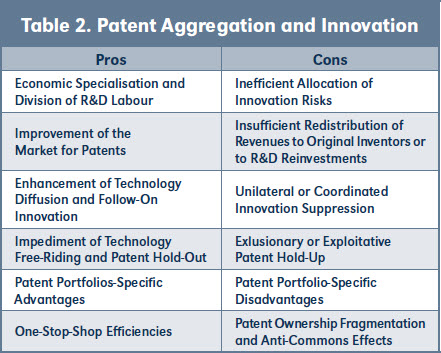
(Source)
How Can Companies Leverage Patents to Support Innovation?
Patents are a powerful tool for innovators, allowing them to protect their inventions and ideas from being copied or used without permission. Companies can leverage patents to support innovation in several ways.
One strategy is to make patents a defensive measure. By obtaining a patent on an invention, companies can prevent competitors from using the same technology or idea without permission.
This helps ensure that their innovations remain unique and valuable in the marketplace. Additionally, having patent protection can give companies more confidence when entering into negotiations with potential partners or investors since they know that their ideas are legally protected.
Another way that companies can make patents is as an offensive weapon against competitors who may be infringing upon their intellectual property rights. If a company believes another entity is using its patented technology without authorization, it may be able to take legal action against them by filing a lawsuit for patent infringement. This could result in damages being awarded to the company whose rights were violated and/or an injunction preventing further unauthorized use of the patented technology or idea.
Some companies also opt to license out their patented technologies and ideas rather than maintaining them as proprietary. This type of arrangement provides other entities with access to the innovations, while still granting financial remuneration back to the original inventor through royalty payments or other forms of compensation outlined in the agreement.
Licensing can not only monetize inventions but may also provide additional exposure for those creations, which could lead to further prospects such as partnerships with larger organizations or enhanced sales revenue due to increased brand recognition from successful licensing deals.
Overall, many different strategies are available for leveraging patents when trying to support innovation efforts within an organization. These include defensive measures such as obtaining patents on new inventions; harsh measures such as suing infringers; and even licensing out existing technologies and ideas so others may benefit from them while still receiving compensation back from those users themselves.
With careful consideration given to how best to utilize this toolset, innovators have great potential at hand when it comes to protecting what is theirs while simultaneously helping foster future growth opportunities along the way.
Key Takeaway: Patents can be used to protect inventions and ideas, take legal action against infringers, or even license out technologies for additional financial remuneration. Companies should consider how best to leverage this toolset in order to support innovation efforts.
Conclusion
Now we can answer the pressing question: “Are patents good for innovation?” Patents foster innovation by protecting their ideas and monetizing them. However, there are both pros and cons associated with the use of patents. Companies should consider these carefully when deciding whether or not to pursue patent protection for their innovations.
Ultimately, it is up to each company to decide if they believe that obtaining a patent will benefit their innovation efforts in the long run. The answer as to whether or not “Are patents good for innovation?” depends on the individual circumstances of each organization.
Patents foster innovation, but they can be difficult to manage. With the right tools and resources, companies can use patents as a tool for driving new ideas forward. Cypris provides research teams with the data sources needed to make informed decisions about patenting their innovations and products.
By centralizing these data sources into one platform, R&D and innovation teams will have access to insights faster than ever before – allowing them to drive meaningful change in less time! Join us today in making patents work for you!

.avif)
Can innovation be measured? The answer to this question may depend on the context. By understanding what innovation is and exploring tools for measuring its impact, teams can develop strategies that maximize the potential of their innovations.
In this blog post, we will discuss if and how innovation can be measured so you have an informed approach when taking steps toward maximizing your team’s efforts. Join us as we explore whether or not “can innovation be measured” holds true in today’s world.
Table of Contents
Tools for Measuring Innovation
Strategies to Maximize the Impact of Innovations
FAQs in Relation to Can Innovation Be Measured
Is innovation easy to measure?
How do companies measure innovation?
2. Return on Investment (ROI):
What is Innovation?
Innovation is the process of creating something new or improving upon an existing idea, product, or service. It can involve a combination of research and development (R&D), creativity, and problem-solving. Innovation can be incremental—such as making small improvements to an existing product—or disruptive—such as introducing a completely new concept that changes the way people do things.
Definition of Innovation:
Innovation is the process of developing new ideas or products through creative thinking and experimentation in order to improve upon current processes or products. It involves taking risks with limited resources in order to create something unique and valuable for customers.
There are numerous forms of innovation, ranging from technological innovations such as artificial intelligence and machine learning to business model innovations like subscription services, design improvements like ergonomic furniture, marketing initiatives such as influencer campaigns, social advancements including microfinance projects, policy developments for instance carbon taxes and organizational structure/processes enhancements e.g. agile methodologies.
Innovation activities bring about positive change by providing solutions to problems that previously had no answer. They also open up opportunities for businesses, allowing them to stand out from their competitors and attract more customers due to improved products/services offered at competitive prices. Additionally, they increase efficiency within organizations by streamlining processes while reducing costs associated with innovation activities which ultimately leads to increased profits over time.
Innovation is an essential part of any successful business, but measuring its impact can be difficult. By understanding the different types and innovation metrics available to measure innovation performance, organizations can better understand how their investments are paying off and use this knowledge to drive future success. Let’s explore further how can innovation be measured in more detail.
Innovation is the process of creating something new or improving upon an existing idea, product, or service. It can bring about positive change by providing solutions to problems and opening up opportunities for businesses. #innovation #innovate #R&D Click to Tweet
Can Innovation be Measured?
Establishing innovation metrics is a critical part of any research and development team’s success. It helps teams understand the impact of their work, identify areas for improvement, and track progress toward goals. Qualitative and quantitative measurements are two common methods used to measure innovation.
Qualitative measurement involves gathering information from interviews, surveys, focus groups, or other sources that provide subjective feedback about an innovation project. This type of data can be used to assess customer satisfaction with a product or service, evaluate how well an idea has been implemented in practice, or gauge public opinion on a particular issue. Qualitative measurement also provides insight into user experience and preferences which can help inform future innovations.
Quantitative measurement relies on numerical data such as sales figures or market share metrics to determine the success of an innovation project. This type of data is often more reliable than qualitative measures since it reflects actual outcomes rather than opinions or perceptions about those outcomes. Quantitative measurements can also be compared over time to track progress and make adjustments if necessary.
Metrics for measuring innovation vary depending on the industry but typically include indicators such as revenue growth rate, cost savings achieved through new processes or products developed by R&D teams, number of patents filed/granted per year, etc. These innovation metrics should be tailored specifically to each organization’s unique needs in order to accurately measure its performance against competitors in the marketplace. Additionally, organizations should consider developing their own innovation KPIs that reflect their specific objectives when measuring innovation projects within their company culture contextually speaking.
Measuring innovation performance is a complex task, but with the right tools and methods, it can be made easier. With that in mind, let’s explore some of the available tools on how can innovation be measured to help teams unlock greater insights from their data.
Key Takeaway: Measuring innovation performance is essential for any R&D team’s success. Qualitative and quantitative measurements are two common methods used to do this, which should be tailored to each organization’s specific needs. Key metrics include revenue growth rate, cost savings achieved, number of patents filedgranted per year etc.
Tools for Measuring Innovation
Software solutions are an integral tool for measuring innovation. These tools enable teams to track and analyze data, uncovering trends and patterns in their innovation activities. Furthermore, they can create visualizations of data which make complex information easier to comprehend.
Examples of software solutions include Cypris, a research platform tailored for R&D and innovation teams; Microsoft Power BI offering powerful analytics capabilities; Tableau providing interactive dashboards; as well as Jupyter Notebooks allowing users to write code in multiple languages.
Analytical tools are another valuable resource when measuring innovations. These tools enable teams to gain insights from their data by utilizing statistical techniques such as regression analysis or machine learning algorithms.
Examples of analytical tools include Python libraries like Scikit-learn and TensorFlow, IBM Watson Studio with its advanced analytics capabilities, SAS Visual Analytics Suite for predictive modeling, and Google Cloud Platform’s BigQuery ML service which allows users to construct models using SQL queries on large datasets stored in BigQuery tables.
Automation tools are essential when it comes to measuring innovations as they help streamline the innovation process by automating repetitive tasks such as collecting data from various sources or running tests on new products before launch. Popular automation platforms include Zapier, IFTTT (If This Then That), UiPath Orchestrator, and WorkFusion Intelligent Automation Cloud (IAC).
Additionally, there are several open-source automation frameworks available such as Selenium WebDriver and Appium that can be used with programming languages like Java or Python.
Measuring innovation can be an invaluable tool for R&D and Innovation teams to gain a competitive edge, but without the right innovation strategy in place, even the best ideas can fail to reach their full potential. By leveraging data and analytics to identify opportunities for improvement and develop a culture of continuous learning, teams can maximize the impact of their innovations. Now, let’s find out how can innovation be measured through different strategies.

(Source)
Strategies to Maximize the Impact of Innovations
Innovation is a key factor in the success of any business. However, it can be difficult to measure and maximize its impact. To ensure that your innovations are having the desired effect, it’s important to have an innovation strategy in place for identifying and prioritizing opportunities, developing a culture of continuous improvement and learning, and leveraging data and analytics to drive decisions and actions.
Identifying and Prioritizing Opportunities for Innovations: Identifying potential areas where innovation could benefit your organization is essential. This involves looking at the current innovation process or product within your organization as well as external trends or technologies that could help you improve them. Once these opportunities have been identified, they should be prioritized based on their potential value to the organization.
Developing a Culture of Continuous Improvement and Learning: Developing an organizational culture that encourages experimentation is key to maximizing the impact of innovations. This means creating an environment where employees feel comfortable trying new things without fear of failure or criticism from management or peers. It also requires providing training so employees understand how their work contributes to overall goals, as well as giving them access to resources such as data analysis tools that will enable them to make informed decisions about which innovation projects should be pursued further.
Collecting data on past experiments can provide valuable insights into what works best when innovating within an organization, as well as what does not work so well. By analyzing this data with predictive analytics tools such as machine learning algorithms, organizations can identify patterns in successful experiments which can then inform future decision-making around innovation initiatives. Additionally, using dashboards with real-time metrics allows teams to track progress against goals more easily while making adjustments quickly if needed; ensuring maximum return on investment from each project undertaken by the team.
By implementing strategies to maximize the impact of innovations, organizations can create a culture that values continuous improvement and learning, prioritize opportunities for innovation management, and leverage data-driven insights to make informed decisions. This in turn allows them to stay ahead of the curve and achieve long-term success. Now let’s explore how can innovation be measured.
Key Takeaway: Innovation can be measured and maximized by: 1) identifying and prioritizing opportunities for innovation; 2) developing a culture of continuous improvement and learning; 3) leveraging data analytics to drive decisions.
FAQs in Relation to Can Innovation Be Measured
Can innovation be measured?
Innovation is measured by the ability to create new products, services, or processes that have a positive impact on society. It can be quantified in terms of efficiency gains, cost savings, customer satisfaction, and market share growth. Innovation management requires an organization to take risks and experiment with ideas that may not always succeed but will ultimately lead to progress.
The success of innovation projects should be tracked over time through metrics such as return on investment (ROI), net present value (NPV), and total cost of ownership (TCO). Additionally, innovation should be assessed based on the impact it has had on customer experience, employee engagement, and organizational culture.
Is innovation easy to measure?
No, innovation is not easy to measure. It requires a comprehensive approach that takes into account multiple factors such as customer feedback, market trends, and technological advancements. Additionally, it involves the evaluation of various metrics such as cost savings, time-to-market efficiency, product quality, and customer satisfaction.
All these factors need to be carefully weighed in order to accurately assess the success or failure of an innovation project. Therefore, measuring innovation can be complex and challenging but with the right tools and innovation process in place, it can become more manageable.
How do companies measure innovation?
Companies measure innovation by looking at the success of their products and services in the market, customer feedback, employee engagement and satisfaction, financial performance metrics such as revenue growth or return on investment (ROI), patent applications filed, collaborations with other organizations or research institutions, time to market for new products/services, and any improvements made to existing products/services.
Innovation is also measured through surveys that assess how well a company’s culture encourages creativity and risk-taking. Finally, companies can use analytics tools to track user behavior on digital platforms like websites or mobile apps.
1. Time to Market
The speed at which an innovation is brought to market can be a measure of its success and impact. This metric looks at how quickly the product or service was developed, tested, and released for public consumption.
2. Return on Investment (ROI)
ROI measures the financial return from an investment in terms of profits generated relative to the cost incurred during the development and implementation of an innovation. It is used as a benchmark for evaluating whether or not it is worth investing resources into a particular project or idea.
3. User Engagement
User engagement measures how users interact with products or services over time, including frequency of use, length of sessions, number of active users, etc., providing insight into customer satisfaction levels and potential areas for improvement within the product/service offering itself.
Conclusion
In conclusion, innovation is an essential part of any successful business and can be measured in various ways. By utilizing the right tools and strategies to maximize the impact of innovations, businesses can ensure that their investments are well-spent and have a lasting effect on their organization. Ultimately, it is clear that with careful consideration and planning, companies can answer the question “can innovation be measured?” with confidence.
The key to success lies in understanding the different types of innovation, as well as the metrics used to measure it. Qualitative measures such as customer feedback and surveys provide valuable insights into how customers perceive products or services, while quantitative measures like market share and revenue growth help track progress over time.
Software solutions are available that allow teams to quickly collect data from multiple sources and analyze it for trends or patterns. Automation tools can also be used to automate processes like data collection or analysis so that teams have more time to focus on other tasks. Additionally, analytical tools can help identify opportunities for improvement by providing insights into areas where innovation performance could be improved.
Strategies should be developed to maximize the impact of innovations once they have been identified and measured. This includes identifying and prioritizing opportunities for innovation; developing a culture of continuous improvement; leveraging data analytics; and creating actionable plans based on these insights. By taking these steps, businesses will ensure that their investments in innovation yield a maximum return over time.
Are you an R&D or innovation team struggling to keep up with the pace of change? Are you looking for a way to measure your progress and innovations more effectively? Cypris is here to help.
Our research platform offers comprehensive data sources in one place, giving you fast access to insights that can drive success. Try us out today and see how we can revolutionize the way you innovate!