
A faster, more accurate way to explore innovation data—now available in Cypris.
For innovation teams, speed and accuracy aren’t optional—they’re critical. You need to quickly find all relevant documents, slice and dice datasets however you want, and trust that the results are complete and representative. With this in mind, we’ve upgraded how semantic search works inside Cypris.
Today, we’re launching an upgraded search infrastructure that gives users access to full, exact result sets—unlocking more powerful analysis, faster iteration, and deterministic filtering and charting.
Unlike traditional semantic or vector search engines—which make it difficult to count, filter, or chart large sets of matched documents—our new approach prioritizes transparency and performance while preserving semantic relevance.
Why we moved away from vector search
Our original implementation relied on semantic and vector search to capture the “meaning” behind user queries. But as our platform evolved, it became clear that these systems weren’t well-suited for our core use cases.
Users needed:
- Deterministic filtering (e.g., "how many results match this atom?")
- Transparent, complete result sets to power charts and dashboards
- Fast, repeatable queries that don’t change subtly over time
Modern vector search systems don’t easily support this level of transparency. They return approximate matches and abstract similarity scores, often making it hard to understand why a document was returned—or whether it’s the full picture.
So we made a decision: move away from vector search and lean into what traditional search engines do best.
A return to boolean and lexical search—with a twist
We rebuilt our search infrastructure on top of Elasticsearch’s powerful boolean and lexical search capabilities. This shift brings major advantages:
- Faster query speeds that dramatically improve iteration time
- Deterministic filtering and counts, so every chart is grounded in the full dataset
- Predictable, explainable results that users can trust
But we didn’t stop there.
To preserve the benefits of semantic understanding, we’ve rethought where that intelligence should live—not at query time, but at data ingestion.
Capturing semantic meaning at ingest time
Instead of computing document-query similarity during search, we enrich documents at the time of ingestion. Here’s how:
- Synonym expansion: We find related words and concepts not explicitly mentioned in the document and add them as fields, enabling semantic-style recall via lexical search.
- Stemming: Both queries and documents are reduced to their root forms, allowing consistent matches (e.g., “running” and “run”).
The result? You get the same functionality—semantically relevant results—without the opacity or latency tradeoffs of vector search.
What’s next: Reranking for even better relevance
We’re not done. Coming soon to Cypris is a reranking layer that boosts the most relevant results to the top of the list using lightweight vector techniques.
Here’s how it works:
- A standard lexical search retrieves the full result set.
- We take the top N results and rerank them using vector similarity, powered by Elasticsearch’s new hybrid scoring capabilities.
- You get faster queries with even better relevance—without compromising on counts or transparency.
This layered approach gives us the best of both worlds: precise filtering and fast queries, plus smarter ordering of results where it matters most.
We’re excited to bring this upgrade to our users, and we’re already seeing teams iterate faster and uncover insights more confidently. This is a foundational shift—and just the beginning of what’s to come.
Want a walkthrough of what’s changed? Reach out to our team.
Introducing our upgraded semantic search



A faster, more accurate way to explore innovation data—now available in Cypris.
For innovation teams, speed and accuracy aren’t optional—they’re critical. You need to quickly find all relevant documents, slice and dice datasets however you want, and trust that the results are complete and representative. With this in mind, we’ve upgraded how semantic search works inside Cypris.
Today, we’re launching an upgraded search infrastructure that gives users access to full, exact result sets—unlocking more powerful analysis, faster iteration, and deterministic filtering and charting.
Unlike traditional semantic or vector search engines—which make it difficult to count, filter, or chart large sets of matched documents—our new approach prioritizes transparency and performance while preserving semantic relevance.
Why we moved away from vector search
Our original implementation relied on semantic and vector search to capture the “meaning” behind user queries. But as our platform evolved, it became clear that these systems weren’t well-suited for our core use cases.
Users needed:
- Deterministic filtering (e.g., "how many results match this atom?")
- Transparent, complete result sets to power charts and dashboards
- Fast, repeatable queries that don’t change subtly over time
Modern vector search systems don’t easily support this level of transparency. They return approximate matches and abstract similarity scores, often making it hard to understand why a document was returned—or whether it’s the full picture.
So we made a decision: move away from vector search and lean into what traditional search engines do best.
A return to boolean and lexical search—with a twist
We rebuilt our search infrastructure on top of Elasticsearch’s powerful boolean and lexical search capabilities. This shift brings major advantages:
- Faster query speeds that dramatically improve iteration time
- Deterministic filtering and counts, so every chart is grounded in the full dataset
- Predictable, explainable results that users can trust
But we didn’t stop there.
To preserve the benefits of semantic understanding, we’ve rethought where that intelligence should live—not at query time, but at data ingestion.
Capturing semantic meaning at ingest time
Instead of computing document-query similarity during search, we enrich documents at the time of ingestion. Here’s how:
- Synonym expansion: We find related words and concepts not explicitly mentioned in the document and add them as fields, enabling semantic-style recall via lexical search.
- Stemming: Both queries and documents are reduced to their root forms, allowing consistent matches (e.g., “running” and “run”).
The result? You get the same functionality—semantically relevant results—without the opacity or latency tradeoffs of vector search.
What’s next: Reranking for even better relevance
We’re not done. Coming soon to Cypris is a reranking layer that boosts the most relevant results to the top of the list using lightweight vector techniques.
Here’s how it works:
- A standard lexical search retrieves the full result set.
- We take the top N results and rerank them using vector similarity, powered by Elasticsearch’s new hybrid scoring capabilities.
- You get faster queries with even better relevance—without compromising on counts or transparency.
This layered approach gives us the best of both worlds: precise filtering and fast queries, plus smarter ordering of results where it matters most.
We’re excited to bring this upgrade to our users, and we’re already seeing teams iterate faster and uncover insights more confidently. This is a foundational shift—and just the beginning of what’s to come.
Want a walkthrough of what’s changed? Reach out to our team.
Keep Reading
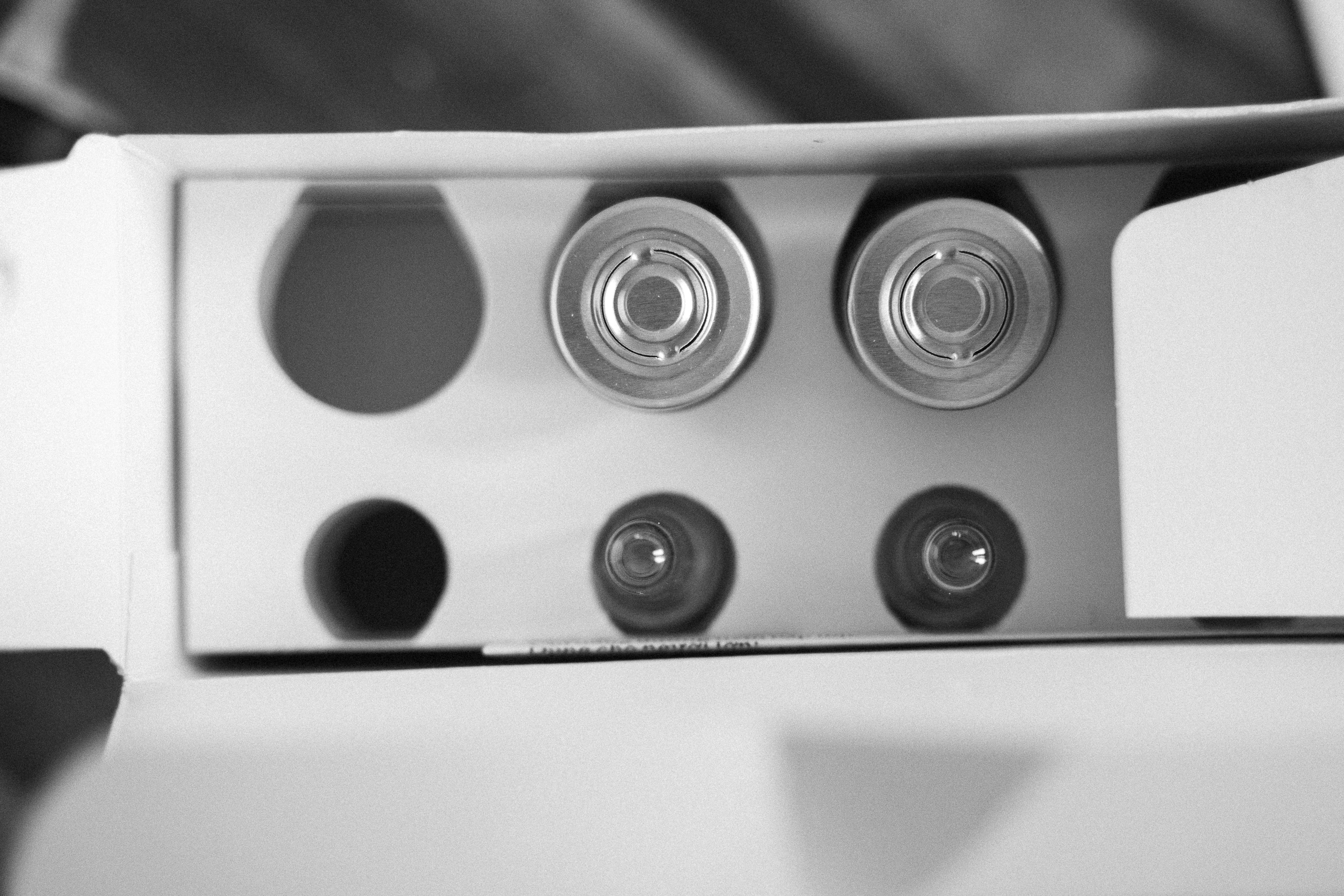
The solid-state battery race is being decided at the electrolyte, and the patent landscape divides along three chemistries: sulfide, oxide, and polymer. A solid-state battery replaces the liquid electrolyte of a conventional lithium-ion cell with a solid one, which can improve safety and enable higher-energy electrode pairings. The central engineering problem is that no single solid electrolyte class simultaneously optimizes the three properties that matter, room-temperature ionic conductivity, stability at the electrode interfaces, and manufacturability, so each class represents a different set of trade-offs and a different region of the patent landscape. Understanding where filing activity concentrates by class, and where it does not, is how R&D and IP teams locate defensible positions in one of the fastest-moving areas of energy patenting.
The scale of that activity is documented in primary data. A joint analysis by the European Patent Office and the International Energy Agency found that international patent families in electricity storage grew from 1,029 in 2000 to more than 7,000 in 2018, at an average of 14 percent per year between 2005 and 2018, roughly four times the economy-wide average.¹ Within that, solid-state lithium-ion filings grew faster still, at around 25 percent per year since 2010, reaching 211 international patent families in 2018, with Japan the dominant country of origin, and solid-state electrolyte activity rose several-fold over the decade.¹ More recent analysis reports that energy storage now accounts for roughly 40 percent of all energy-related patenting, confirming that the field has continued to accelerate.² Because applications publish about eighteen months after filing, the most recent activity is under-represented, so these figures understate the current state.
The three electrolyte classes occupy distinct positions defined by their physics. Sulfide electrolytes reach the highest room-temperature ionic conductivities, on the order of 10 to the minus two siemens per centimeter, comparable to or exceeding liquid electrolytes, but they are chemically and electrochemically unstable at the electrode interfaces and sensitive to moisture, so the dominant patenting and research effort targets interfacial stabilization and dry-processing manufacture.³,⁴ Oxide electrolytes, principally garnet-type structures, offer good stability and a wide electrochemical window with intermediate conductivity, typically in the 10 to the minus four to 10 to the minus three siemens per centimeter range, but they are hard and brittle, which makes achieving low-resistance interfaces and scalable, thin, dense layers the central challenge.⁵ Polymer electrolytes are the most manufacturable, compatible with existing roll-to-roll processing, but historically suffered from low room-temperature conductivity, on the order of 10 to the minus seven siemens per centimeter for early systems, though engineered solid polymer electrolytes have since reached the milli-siemens-per-centimeter range, which is why manufacturability arguments increasingly favor them despite the historical conductivity gap.⁶
What the three classes trade off
Sulfide. Highest ionic conductivity, comparable to liquid electrolytes, but poor interfacial and moisture stability; patenting concentrates on interface engineering and dry manufacturing.³
Oxide. Good stability and a wide electrochemical window with intermediate conductivity, but brittleness and interfacial resistance dominate the technical and patenting effort.⁵
Polymer. Best manufacturability and compatibility with existing processes, historically limited by low room-temperature conductivity that engineered systems are now closing.⁶
Emerging classes. Halide and composite electrolytes are an active newer area that combines properties across classes, and the interfacial-engineering literature increasingly treats all classes together.⁷
How to analyze the electrolyte landscape and find white space
Scope the analysis by electrolyte class and by the property being improved, since sulfide, oxide, and polymer activity concentrate on different problems and should be assessed separately.
Aggregate to the patent-family level and attribute to organizations, so international coverage is not double-counted and activity is correctly assigned by country and assignee.
Map patents against the underlying materials research, because solid-electrolyte advances appear in scientific literature before they are patented, so literature coverage gives the earliest signal.
Identify dense and sparse regions within each class, distinguishing crowded problems, such as sulfide interface stabilization, from open white space, such as specific composite or processing approaches.
Correct for publication lag and monitor continuously, since the most recent activity is under-represented and the field moves quickly.
Where Cypris fits
Cypris runs patent landscape and white space analysis for fast-moving fields such as solid-state batteries across a corpus of more than 500 million patents and scientific papers, organized through a proprietary R&D ontology. The ontology clusters activity by electrolyte class and by the property being improved, and normalizes organizations to canonical entities, so a team can resolve which classes and problems are crowded and which remain open as white space. Semantic search across patents and scientific literature connects filings to the underlying materials research, which matters in solid-state batteries because advances appear in the literature before they are patented. Cypris Q, the platform's agentic layer, lets teams run landscape and white space analysis conversationally and chain the class-level scoping, attribution, and gap analysis, and Agentic Monitoring tracks a defined chemistry over time and flags new patents and papers as they publish, which is essential where recent activity is under-represented by publication lag. Cypris provides enterprise API partnerships with OpenAI, Anthropic, and Google, and is built with enterprise-grade security. Cypris serves hundreds of enterprise customers across pharmaceuticals, chemicals, advanced materials, energy, and other regulated industries.
FAQ
What are the three main solid-state battery electrolyte classes?
The three main solid-state battery electrolyte classes are sulfide, oxide, and polymer. They trade off room-temperature ionic conductivity, stability at the electrode interfaces, and manufacturability, and no single class optimizes all three. Each occupies a distinct region of the patent landscape, with halide and composite electrolytes an emerging fourth area.
How do sulfide, oxide, and polymer electrolytes compare?
Sulfide electrolytes have the highest ionic conductivity, around 10 to the minus two siemens per centimeter, but poor interfacial and moisture stability. Oxide garnets offer good stability with intermediate conductivity but are brittle. Polymers are the most manufacturable but historically had low conductivity, which engineered systems are now improving.
How fast is solid-state battery patenting growing?
Solid-state battery patenting is growing quickly. Electricity-storage international patent families grew about 14 percent per year from 2005 to 2018, four times the economy-wide average, and solid-state lithium-ion filings grew around 25 percent per year since 2010. Energy storage now accounts for roughly 40 percent of all energy-related patenting.
Why does ionic conductivity differ so much between electrolyte classes?
Ionic conductivity differs between electrolyte classes because it is governed by the material's structure and ion-transport mechanism. Sulfides allow fast ion movement and reach conductivities comparable to liquids, oxides are intermediate, and polymers historically conducted far more slowly at room temperature. Engineering has narrowed the polymer gap substantially.
Which electrolyte class is winning?
No electrolyte class has decisively won, because each optimizes different properties. Sulfides lead on conductivity, oxides on stability, and polymers on manufacturability, and patenting concentrates on each class's specific weakness. The manufacturability advantage of polymers and the conductivity of sulfides are both driving heavy activity, with the outcome still open.
How do you find white space in the solid-state electrolyte landscape?
Finding white space in the solid-state electrolyte landscape means scoping by class and by the property being improved, mapping patents and scientific literature, and identifying the sparse regions within each class. Because advances appear in research first, literature coverage gives early signal. The white space is where a specific composition or processing approach is viable but few patents yet exist.
Why does solid-state battery analysis need scientific literature?
Solid-state battery analysis needs scientific literature because electrolyte and interface advances appear in materials research before they are patented, so the literature gives the earliest signal of a viable approach. Analyzing patents alone gives a lagging view. Cypris analyzes both across more than 500 million patents and scientific papers.
Why does publication lag matter in the battery patent landscape?
Publication lag matters because applications publish about eighteen months after filing, so the most recent solid-state activity is under-represented in current data. In a field growing this quickly, the latest figures understate the true state. Longer-window trends and continuous monitoring are more reliable.
Who uses solid-state battery patent landscape analysis?
Solid-state battery patent landscape analysis is used by R&D, innovation, IP, and strategy teams at battery makers, automotive and energy companies, materials developers, and their partners. It informs which electrolyte class to pursue, where to file, and where competitors are concentrated. Cypris serves hundreds of enterprise customers across energy, advanced materials, chemicals, and other regulated industries.
Endnotes
- International Energy Agency & European Patent Office (2020). Innovation in Batteries and Electricity Storage: A Global Analysis Based on Patent Data. https://www.iea.org/reports/innovation-in-batteries-and-electricity-storage
- International Energy Agency (2026). The State of Energy Innovation 2026. https://www.iea.org/reports/the-state-of-energy-innovation-2026
- Richter, F. H. et al. (2020). Interfacial challenges for all-solid-state batteries based on sulfide solid electrolytes. Journal of Materiomics. https://doi.org/10.1016/j.jmat.2020.09.003
- Gamo, H., Nagai, A. & Matsuda, A. (2023). Toward Scalable Liquid-Phase Synthesis of Sulfide Solid Electrolytes for All-Solid-State Batteries. Batteries. https://doi.org/10.3390/batteries9070355
- Wei, Z. et al. (2024). Oxide Solid Electrolytes in Solid-State Batteries. Batteries & Supercaps. https://doi.org/10.1002/batt.202400667
- Wei, Z., Guo, R., Li, C. & Peng, H. (2025). Why Will Polymers Win the Race for Solid-State Batteries? Advanced Science. https://doi.org/10.1002/advs.202510481
- Chae, S. et al. (2026). Interfacial Engineering for Layered Oxide Cathodes in All-Solid-State Batteries. Batteries & Supercaps. https://doi.org/10.1002/batt.70366

Perception is the part of an autonomous vehicle that turns raw sensor data into an understanding of the road, and its patent landscape is distinctive because value is distributed across a deep stack of sensing, calibration, fusion, and learning technologies. An autonomous vehicle carries an array of sensors, lidar, radar, cameras, and ultrasonics, and perception is the layer that combines them into a coherent, real-time model of the surroundings: detecting and classifying vehicles, pedestrians, and obstacles, tracking their motion, and locating the vehicle on a map. Large-scale multi-sensor benchmarks such as the Waymo Open Dataset have become the reference standard for training and evaluating this layer<sup>1</sup>. The intellectual property divides across several regions, each a distinct area of patenting: the sensors themselves, including lidar hardware; the calibration that aligns the sensors' coordinate frames, without which fusion outputs are biased; the sensor-fusion algorithms that combine the streams at different stages, whether early, feature-level, or late fusion<sup>3,4</sup>; the perception models that perform detection, tracking, and segmentation — an approach with roots in foundational architectures such as MV3D, which fused LiDAR and RGB views for 3D object detection<sup>7</sup>; the mapping and localization systems, including high-definition maps; and, increasingly, the end-to-end learning models that fold several of these steps into a single trained system. Because a working stack depends on several of these layers, freedom-to-operate and white space analysis must span them together.
The landscape is deep, concentrated among leaders, and geographically broad. A small number of established developers hold very large portfolios covering their full self-driving stacks, from sensing and mapping to on-vehicle compute; in Cypris's corpus, China and the United States are roughly neck-and-neck as the two largest filing jurisdictions, with automakers, technology companies, autonomous-driving startups, and universities all active, followed by strong filing in other major markets as foreign developers protect their positions there (see the landscape figures below). A defining technical debate now runs through the landscape: conventional modular pipelines, which separate perception, prediction, and planning into interpretable stages, versus end-to-end learning systems, which train a single model from sensor input to driving action and handle rare situations more flexibly but are harder to interpret and certify. Each approach generates its own IP. Because applications publish about eighteen months after filing, the most recent fusion and end-to-end-model filings are under-represented, so the current frontier is more active than granted-patent counts suggest.
The strategic question is which layer to own, and the white space sits where reliability is hardest. Sensor fusion that stays robust when sensors disagree or degrade, and calibration that holds during operation, are foundational and heavily worked but still advancing — the case for fusion in the first place rests on the fact that no single sensor modality is reliable across all conditions<sup>5</sup>, and combining complementary modalities such as 4D radar and LiDAR is one active response<sup>6</sup>. End-to-end learning models are the fastest-moving frontier, where much of the newest activity concentrates. Perception in adverse conditions, approaches that reduce dependence on high-definition maps, collaborative and vehicle-to-everything perception, and the simulation and validation methods needed to certify safety are all distinct, contested layers. Reading the landscape by layer and by owner, and tracking both the patents and the underlying computer-vision and machine-learning research, is what separates a crowded region from an open one.
Where the autonomous perception white space is
Robust sensor fusion. Fusion that stays accurate when sensors disagree, degrade, or are attacked is a foundational layer where reliability gains carry high value, spanning early, feature-level, and late fusion architectures<sup>3,4</sup>.
End-to-end learning models. Models that map sensor input to driving action in a single trained system are the fastest-moving frontier and the most active recent layer.
Adverse-condition and map-light perception. Perception in rain, fog, and low light, and approaches that reduce dependence on high-definition maps, are distinct, high-value layers, building on the case for multi-modal complementarity established in the fusion literature<sup>5,6</sup>.
Collaborative and vehicle-to-everything perception. Sharing perception between vehicles and infrastructure to see beyond line of sight is an emerging, less-crowded area.
Simulation and validation. Methods to test and certify perception safety, including for rare long-tail scenarios, are where deployment and regulatory approval are decided, and large real-world benchmarks such as the Waymo Open Dataset support this work<sup>1</sup>.
How AI-powered landscape and white space analysis helps
Resolving a landscape that spans sensing, calibration, fusion, perception models, mapping, and end-to-end learning requires more than keyword search. AI-powered analysis addresses this with semantic search that clusters activity by layer and approach across varied terminology, attribution that normalizes automaker, technology-company, startup, and university filers to canonical entities across jurisdictions, and continuous monitoring that keeps pace with a fast-moving field. Because perception advances appear in computer-vision and machine-learning literature before they are patented, reading both patents and literature gives the earliest signal of where the frontier and the white space are moving.
The competitive landscape by the numbers
Cypris's corpus puts the autonomous-driving-perception patent family set at roughly 36,227 families (Cypris corpus, indicative; 2025–26 partial). Filing has accelerated from 285 new families in 2015 to 1,249 in 2018 and 4,354 in 2024, with 2025 (6,749) and 2026 (6,012, partial) continuing that climb (Cypris corpus, indicative; 2025–26 partial). Jurisdiction distribution shows China (11,593 families, 612 assignees) and the United States (10,837 families, 354 assignees) essentially neck-and-neck at the top, followed by Germany (2,331), South Korea (953), Japan (722), Sweden (431), and Israel (267) (Cypris corpus, indicative; 2025–26 partial). Assignee concentration is led by Waymo (1,101 families), Aurora (1,000), Bosch (787), General Motors (685), Ford (637), Baidu (604), Nvidia (570), GM Cruise (470), and Zoox (444) (Cypris corpus, indicative; 2025–26 partial) — figures drawn from the Cypris corpus rather than any company's own disclosed portfolio size, since issuer-reported totals were not independently available for this set. These per-company totals should be treated as lower bounds: assignee names are not fully canonicalized in the underlying index (for example, GM Global Technology Operations filings sit apart from GM Cruise, and Baidu USA filings sit apart from Baidu's Beijing entity), so known name variants should be summed before publishing a definitive ranking.
Where Cypris fits
Cypris runs patent landscape and white space analysis for fast-moving, cross-disciplinary fields such as autonomous driving perception across a corpus of more than 500 million patents and scientific papers, organized through a proprietary R&D ontology. The ontology clusters activity by layer, sensing, calibration, fusion, perception models, mapping, and end-to-end learning, and normalizes automaker, technology-company, startup, and university filers to canonical entities across jurisdictions, so a team can resolve which layers are crowded and which remain open as white space. Semantic search across patents and scientific literature connects filings to the underlying computer-vision and machine-learning research, which is where perception advances appear first, often well ahead of the patent record. Cypris Q, the platform's agentic layer, lets teams run landscape and white space analysis conversationally and chain the clustering, attribution, and gap analysis, and Agentic Monitoring tracks a defined layer over time and flags new patents and papers as they publish. Cypris provides enterprise API partnerships with OpenAI, Anthropic, and Google, and is built with enterprise-grade security. Cypris serves hundreds of enterprise customers across pharmaceuticals, chemicals, advanced materials, energy, and other regulated industries.
FAQ
What is autonomous driving perception? Autonomous driving perception is the layer that turns data from lidar, radar, cameras, and other sensors into a real-time model of the vehicle's surroundings, detecting and tracking objects and localizing the vehicle. It sits between raw sensing and the prediction and planning that decide how the vehicle moves. It is central to the safety and capability of a self-driving system.
What layers does the perception patent landscape cover? The landscape covers the sensors themselves, calibration, sensor fusion, perception models for detection and tracking, mapping and localization, and end-to-end learning models<sup>3,4,7</sup>. Each is a distinct region of patenting with different owners. Freedom-to-operate and white space analysis must span them together.
Who holds the IP in autonomous perception? A small number of established developers hold very large portfolios covering their full self-driving stacks. In Cypris's corpus, Waymo, Aurora, and Bosch lead the assignee ranking, and China and the United States are roughly neck-and-neck as the two largest filing jurisdictions, with automakers, technology companies, startups, and universities all active (Cypris corpus, indicative; 2025–26 partial). Foreign developers also file heavily in other major markets to protect their positions.
What is the modular-versus-end-to-end debate? The modular-versus-end-to-end debate is the architectural choice between separating perception, prediction, and planning into distinct, interpretable stages, and training a single model that maps sensor input directly to driving action. Modular systems are easier to interpret and certify; end-to-end systems handle rare situations more flexibly but are harder to interpret. Each approach generates its own IP.
Why is sensor fusion necessary in the first place? Sensor fusion is necessary because no single sensor modality — lidar, radar, or camera — is reliable across all conditions on its own, so combining complementary modalities, such as 4D radar with LiDAR, improves robustness where any one sensor would fail<sup>5,6</sup>. This is why fusion architecture, spanning early, feature-level, and late fusion, is a foundational and heavily worked layer<sup>3,4</sup>. It remains an active area even though it is comparatively mature.
Where is the white space in autonomous perception? The white space includes robust sensor fusion, end-to-end learning models, adverse-condition and map-light perception, collaborative and vehicle-to-everything perception, and simulation and validation. The core sensing and fusion layers are heavily worked. The fastest-moving and most open opportunities are in end-to-end learning and in reliability under difficult conditions.
Why does perception analysis need scientific literature? Perception analysis needs scientific literature because computer-vision and machine-learning advances appear in research and conference proceedings before they are patented, so the literature gives the earliest signal in a fast-moving field. Analyzing patents alone gives a lagging view. Cypris analyzes both across more than 500 million patents and scientific papers.
What software helps analyze the autonomous driving perception patent landscape? Software for the perception landscape should cluster activity by layer and approach, resolve automaker, technology-company, startup, and university filers to canonical owners across jurisdictions, search patents and scientific literature semantically, and monitor a fast-moving field continuously. Cypris does this across more than 500 million patents and scientific papers using a proprietary R&D ontology, semantic search, Cypris Q, and Agentic Monitoring.
Which teams use autonomous perception patent landscape analysis? Autonomous perception patent landscape analysis is used by R&D, IP, and strategy teams at automakers, autonomous-driving and sensor companies, and technology firms, as well as investors assessing the sector. Because the landscape is deep, concentrated, and moving fast, structured analysis is essential. Cypris serves hundreds of enterprise customers across research-intensive and regulated industries.
Endnotes
- Sun P, Kretzschmar H, Vasudevan V, et al. (Google/Waymo). Scalability in perception for autonomous driving: Waymo Open Dataset. CVPR. 2020. DOI: 10.1109/cvpr42600.2020.00252.
- Mao Q, Zhang Y, et al. Multi-modal 3D object detection in autonomous driving: a survey. International Journal of Computer Vision. 2023. DOI: 10.1007/s11263-023-01784-z.
- Bi J, Wang L, et al. Multi-modal 3D object detection in autonomous driving: a survey and taxonomy. IEEE Transactions on Intelligent Vehicles. 2023. DOI: 10.1109/tiv.2023.3264658.
- Chehri A, et al. Multi-sensor fusion technology for 3D object detection in autonomous driving: a review. IEEE Transactions on Intelligent Transportation Systems. 2023. DOI: 10.1109/tits.2023.3317372.
- Tang Y, et al. Multi-modality 3D object detection in autonomous driving: a review. Neurocomputing. 2023. DOI: 10.1016/j.neucom.2023.126587.
- Wang L, et al. Multi-modal and multi-scale fusion 3D object detection of 4D radar and LiDAR. IEEE Transactions on Vehicular Technology. 2022. DOI: 10.1109/tvt.2022.3230265.
- Chen X, Ma H, et al. Multi-view 3D object detection network for autonomous driving (MV3D). CVPR. 2017. DOI: 10.1109/cvpr.2017.691.
- Cypris platform corpus analysis, autonomous-driving-perception patent families. Indicative figures; 2025–2026 partial.
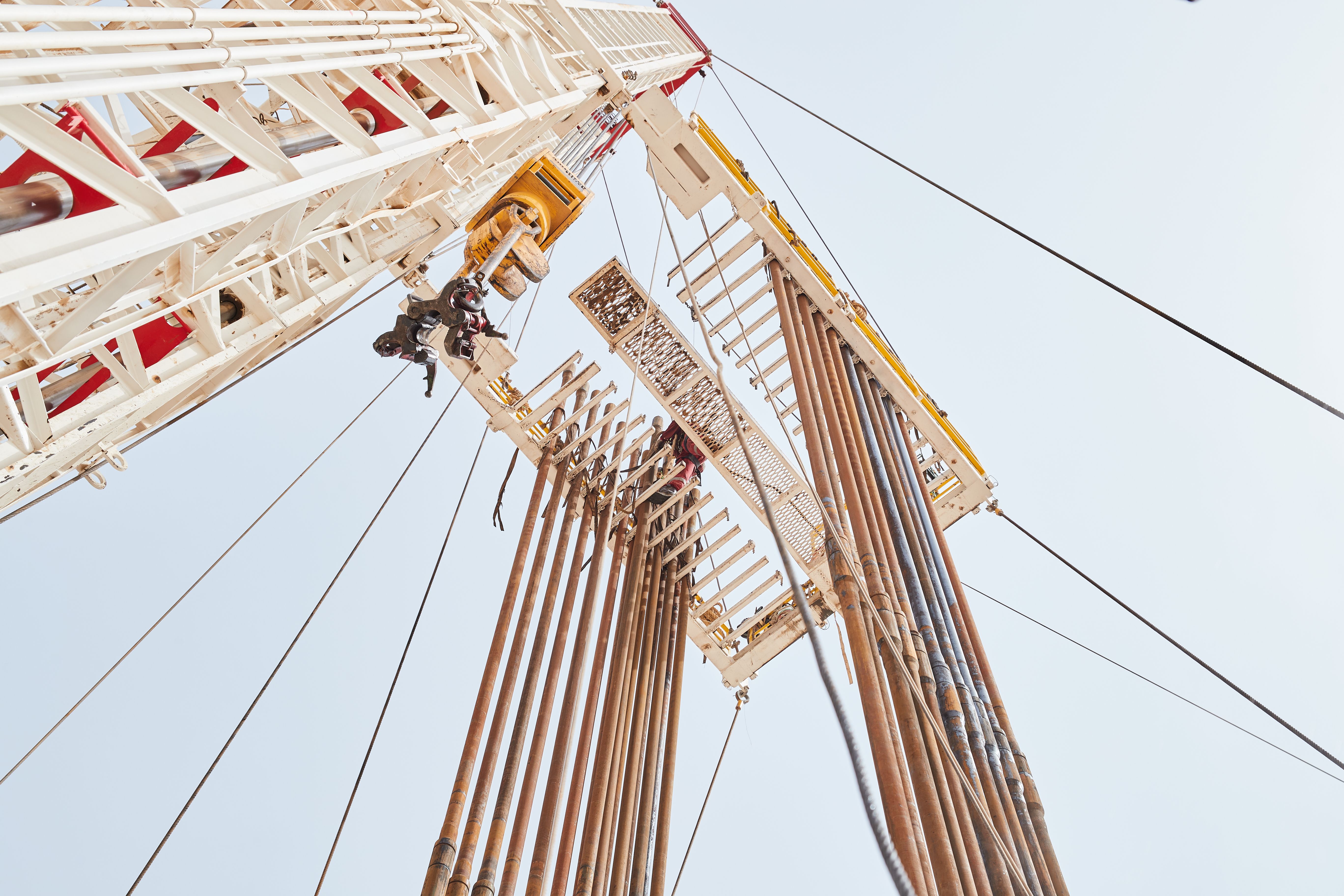
Enhanced geothermal systems have moved from research pilots to commercial deployment, and their patent landscape is being staked out as the field adapts oil-and-gas technology to a new purpose. Conventional geothermal power is limited to the few places where hot rock, natural permeability, and fluid coincide; enhanced geothermal systems remove that limitation by engineering a reservoir in hot dry rock, drilling injection and production wells, stimulating a network of fractures — through hydraulic, chemical, or thermal means — to create permeability, and circulating a working fluid to carry heat to the surface<sup>1</sup>. This promises round-the-clock, carbon-free baseload power in far more locations, and it is being built largely by transferring horizontal drilling, hydraulic fracturing, and downhole sensing from the shale industry, including multistage-fractured horizontal well pairs that improve heat extraction relative to single-fracture designs<sup>2</sup>. Field-scale designs illustrate the resource depths involved: a two-horizontal-well EGS project at the Zhacang field reached a bottom-hole temperature of 214°C at 4,700 meters<sup>3</sup>. The intellectual property divides across several regions, each a distinct area of patenting: open-loop reservoir stimulation, including well-pair architecture, horizontal wells, and fracture creation; closed-loop systems that circulate fluid through sealed wellbores without fracturing; advanced and non-mechanical drilling, including energy-based methods; downhole sensing and monitoring, such as distributed fiber-optic measurement; the working fluids themselves, from water to supercritical carbon dioxide; and integration with thermal energy storage for dispatchable output. Because a commercial project depends on several of these layers, freedom-to-operate and white space analysis must span the approaches and the enabling layers together.
The landscape has shifted decisively into a deployment era. A first-of-its-kind, roughly 500-megawatt commercial EGS project — Fervo Energy's Cape Station in Utah — is under construction, and the U.S. Department of Energy's and NREL's 2025 U.S. Geothermal Market Report documents materially improved drilling rates across Utah FORGE and Fervo's own drilling campaigns as shale techniques have been imported into geothermal<sup>7</sup>. The build is a phased, multi-year process rather than a single completed plant: a utility power-purchase agreement tied to one phase of Cape Station was amended in January 2025, with an expected commercial operation date of January 1, 2031, according to the California Public Utilities Commission record<sup>9</sup>, and financing and offtake structure are disclosed in Fervo's own SEC registration and periodic filings<sup>8</sup>. The competitive picture spans dedicated developers pursuing open-loop, horizontal well-pair designs; closed-loop specialists; the major oilfield-services companies bringing drilling, measurement, and sensing IP; and a set of drilling startups pursuing non-mechanical methods such as millimeter-wave, plasma, and laser rock removal to reach deeper, hotter resources. Because applications publish about eighteen months after filing, the most recent drilling, stimulation, and sensing filings are under-represented, so the current frontier is more active than granted-patent counts suggest.
The strategic question is which enabling layer to own, and the white space sits where cost and depth are the barriers. Drilling is the single largest cost in an EGS project — a cost-methodology lineage that traces back to early national-laboratory work on hot-dry-rock electricity economics<sup>6</sup> — so advanced and non-mechanical drilling methods that cut time and reach deeper, hotter rock are a high-value, fast-moving layer. Closed-loop architectures that avoid fracturing, working fluids such as supercritical carbon dioxide, superhot-rock and superdeep resources, downhole sensing that improves reservoir control, induced-seismicity mitigation — a risk that fracture-network modeling work is increasingly used to manage<sup>4</sup> — and integration with thermal storage for dispatchable power are all distinct, contested areas. Reading the landscape by approach, enabling layer, and owner, and tracking both the patents and the underlying geoscience and drilling research, is what separates a crowded region from an open one.
Where the enhanced geothermal white space is
Advanced and non-mechanical drilling. Energy-based drilling methods that cut drilling time and reach deeper, hotter rock address the single largest cost in an EGS project<sup>6,7</sup>.
Closed-loop architectures. Sealed-wellbore designs that circulate fluid without fracturing are a distinct approach that avoids some reservoir and seismicity risks.
Working fluids and superhot rock. Supercritical carbon dioxide and other working fluids, and access to superhot and superdeep resources, are high-value, less-crowded layers.
Downhole sensing and reservoir control. Distributed fiber-optic sensing and real-time reservoir characterization improve performance and reduce risk, including around induced seismicity<sup>4</sup>.
Seismicity mitigation and thermal-storage integration. Induced-seismicity management and integration with thermal energy storage for dispatchable output are distinct, strategically important layers.
How AI-powered landscape and white space analysis helps
Resolving a landscape that spans stimulation, drilling, sensing, and integration, built by transferring technology from oil and gas, requires more than keyword search. AI-powered analysis addresses this with semantic search that clusters activity by approach and enabling layer across varied terminology, attribution that normalizes developer, oilfield-services, and startup filers to canonical entities, and continuous monitoring that keeps pace with a fast-deploying field. Because geothermal advances appear in scientific and engineering literature before they are patented, reading both patents and literature gives the earliest signal of where cost and depth barriers are falling.
The competitive landscape by the numbers
Cypris's corpus puts the enhanced geothermal / hot-dry-rock / reservoir-stimulation patent family set at roughly 1,157 families (Cypris corpus, indicative; 2025–26 partial). Filing rose from single digits per year before 2010 to a plateau of roughly 68–142 new families per year between 2017 and 2024, peaking around 142 in 2022, with 2025 (86) and 2026 (59, partial) continuing (Cypris corpus, indicative; 2025–26 partial). China (781 families) and the United States (171) dominate, with Canada (25) and smaller tails in Europe and Australia (Cypris corpus, indicative; 2025–26 partial). The assignee ranking reflects the oil-and-gas technology-transfer story described above: Sinopec (40 families) and its Sinopec Petroleum Engineering unit (21) lead, alongside China University of Mining and Technology-Beijing (23), the University of Minnesota (15), Halliburton (12), Johns Hopkins University (11), and UT-Battelle/Oak Ridge National Laboratory (6) (Cypris corpus, indicative; 2025–26 partial) — a mix of oilfield-services majors, universities, and national labs that mirrors the field's drilling and stimulation lineage.
Where Cypris fits
Cypris runs patent landscape and white space analysis for fast-deploying energy fields such as enhanced geothermal systems across a corpus of more than 500 million patents and scientific papers, organized through a proprietary R&D ontology. The ontology clusters activity by approach, open-loop stimulation, closed-loop, and advanced drilling, and by enabling layer, drilling, sensing, working fluids, and integration, and normalizes developer, oilfield-services, and startup filers to canonical entities, so a team can resolve which approaches and layers are crowded and which remain open as white space. Semantic search across patents and scientific literature connects filings to the underlying geoscience and drilling research, which is where EGS advances appear first. Cypris Q, the platform's agentic layer, lets teams run landscape and white space analysis conversationally and chain the clustering, attribution, and gap analysis, and Agentic Monitoring tracks a defined layer over time and flags new patents and papers as they publish. Cypris provides enterprise API partnerships with OpenAI, Anthropic, and Google, and is built with enterprise-grade security. Cypris serves hundreds of enterprise customers across pharmaceuticals, chemicals, advanced materials, energy, and other regulated industries.
FAQ
What are enhanced geothermal systems? Enhanced geothermal systems create geothermal reservoirs where natural permeability is insufficient, by drilling well pairs into hot dry rock, stimulating a fracture network, and circulating a working fluid to carry heat to the surface<sup>1</sup>. This makes round-the-clock, carbon-free geothermal power possible in far more locations. The technology adapts drilling and stimulation from the oil-and-gas sector<sup>2</sup>.
Why is EGS a patenting hotspot now? EGS is a patenting hotspot now because the field has moved from pilots to commercial-scale projects such as Fervo Energy's Cape Station, developers have documented improved drilling times by importing shale techniques<sup>7</sup>, and technology firms have signed power deals for data centers backed by disclosed financing and offtake structures<sup>8,9</sup>. That deployment shift is driving filings across drilling, stimulation, and sensing.
What layers does the EGS landscape cover? The landscape covers open-loop reservoir stimulation, closed-loop well architectures, advanced and non-mechanical drilling, downhole sensing, working fluids, and thermal-storage integration. Each is a distinct region of patenting with different owners. Freedom-to-operate and white space analysis must span them together.
Where is the white space in enhanced geothermal systems? The white space includes advanced and non-mechanical drilling, closed-loop architectures, working fluids and superhot-rock access, downhole sensing and reservoir control, and seismicity mitigation and thermal-storage integration. Drilling is the largest cost, so drilling innovation is especially high-value. The most open opportunities are in cutting cost and reaching deeper, hotter rock.
Why is drilling the key cost in EGS? Drilling is the key cost because reaching hot rock deep underground and creating well pairs is capital-intensive, tracing back to cost-methodology work first developed for hot-dry-rock electricity at the national-laboratory level<sup>6</sup>, so reducing drilling time and reaching deeper, hotter resources directly determines project economics<sup>7</sup>. That is why advanced and non-mechanical drilling methods are such an active, high-value layer.
Is Cape Station a completed 500-megawatt plant today? Not yet — Cape Station is best described as a first-of-its-kind, roughly 500-megawatt commercial EGS project that is being built in phases<sup>7</sup>. A utility power-purchase agreement tied to one phase carries an expected commercial operation date of January 1, 2031, per the California Public Utilities Commission record<sup>9</sup>, so current statements should describe it as under construction with forward delivery dates rather than as fully operational.
Why does EGS analysis need scientific literature? EGS analysis needs scientific literature because drilling, stimulation, and sensing advances appear in geoscience and engineering research before they are patented, so the literature gives the earliest signal. Analyzing patents alone gives a lagging view. Cypris analyzes both across more than 500 million patents and scientific papers.
What software helps analyze the enhanced geothermal patent landscape? Software for the EGS landscape should cluster activity by approach and enabling layer, resolve developer, oilfield-services, and startup filers to canonical owners, search patents and scientific literature semantically, and monitor a fast-deploying field continuously. Cypris does this across more than 500 million patents and scientific papers using a proprietary R&D ontology, semantic search, Cypris Q, and Agentic Monitoring.
Which teams use enhanced geothermal patent landscape analysis? Enhanced geothermal patent landscape analysis is used by R&D, IP, and strategy teams at geothermal developers, oilfield-services and drilling companies, utilities, and technology buyers, as well as investors assessing the sector. Because the field is deploying fast and spans several enabling layers, structured analysis is essential. Cypris serves hundreds of enterprise customers across energy and other research-intensive industries.
Endnotes
- Niemi A, Tsang C-F, et al. Hydraulic stimulation strategies in enhanced geothermal systems (EGS): a review. Geomechanics and Geophysics for Geo-Energy and Geo-Resources. 2022. DOI: 10.1007/s40948-022-00516-w.
- Qu Z, et al. Evaluation of geothermal energy extraction in EGS with multiple fracturing horizontal wells. Renewable Energy. 2019. DOI: 10.1016/j.renene.2019.11.134.
- Lei Z, et al. Reservoir stimulation design and heat exploitation of a two-horizontal-well EGS, Zhacang field. Renewable Energy. 2021. DOI: 10.1016/j.renene.2021.10.101.
- Xu T, et al. Discrete element modeling for multistage hydraulic stimulation of a horizontal well in hot dry rock. Computers and Geotechnics. 2023. DOI: 10.1016/j.compgeo.2023.105274.
- Wang G, et al. Heat extraction mechanism in hot dry rock based on horizontal wells with multi-stage fracturing. Energy. 2026. DOI: 10.1016/j.energy.2026.140217.
- Pierce K, Livesay BJ (Sandia National Laboratories). An estimate of the cost of electricity production from hot-dry rock. 1993. DOE/OSTI.
- U.S. Department of Energy / National Renewable Energy Laboratory. U.S. Geothermal Market Report. 2025.
- Fervo Energy. SEC registration and periodic filings — Form S-1; Form 424(b)(4); Form 10-Q for the period ended June 30, 2026. sec.gov.
- California Public Utilities Commission. Power-purchase agreement filing tied to Cape Station, amended January 9, 2025. docs.cpuc.ca.gov.
- Cypris platform corpus analysis, enhanced geothermal / hot-dry-rock / reservoir-stimulation patent families. Indicative figures; 2025–2026 partial.