
As an R&D platform and custom report service, search functionality for our users is key.
That's why we're thrilled to announce our platform's user experience and research capabilities just got better. Meet Quick Search, a new search bar that delivers information to our users faster than ever.
What's New with this Launch?
The previous search functionality allowed for search only by keywords. With Quick Search, users can now search by patent and research paper titles in addition to keywords.
What's the User Experience Like?
As you type in your search (keyword, patent, or research paper) you'll see a live tally of the data by category available for that search.
From there, you can click into individual data sections or build a report pulling from all available data streams.
0:00/1×
Have questions or comments? Feel free to reach out to us at info@ipcypris.com for more information.
Meet Quick Search, Our New Functionality



As an R&D platform and custom report service, search functionality for our users is key.
That's why we're thrilled to announce our platform's user experience and research capabilities just got better. Meet Quick Search, a new search bar that delivers information to our users faster than ever.
What's New with this Launch?
The previous search functionality allowed for search only by keywords. With Quick Search, users can now search by patent and research paper titles in addition to keywords.
What's the User Experience Like?
As you type in your search (keyword, patent, or research paper) you'll see a live tally of the data by category available for that search.
From there, you can click into individual data sections or build a report pulling from all available data streams.
0:00/1×
Have questions or comments? Feel free to reach out to us at info@ipcypris.com for more information.
Keep Reading

What is the relationship between R&D investment and company success? Investing in research and development (R&D) can have a significant impact on the success of a company. However, it’s important to understand both the benefits and challenges associated with investing in R&D before taking this step.
In this blog post, we’ll explore the link between R&D investment and company success — from understanding its potential advantages and drawbacks to exploring strategies for maximizing ROI. We’ll also provide examples of companies that have seen tangible rewards after making a significant R&D investment.
So if you’re considering investing in research and development but want to ensure you get maximum returns, then read on!
Table of Contents
R&D Investment and Company Success Go Hand in Hand
Challenges of Investing in R&D
High Costs and Risk of Failure
Strategies for Maximizing R&D Investment Success
Set Clear Goals and Objectives
Leverage Technology to Streamline Processes
Examples of R&D Investment and Company Success
How to Measure the Success of Your R&D Investment
Track Key Performance Indicators (KPIs)
Monitor Return on Investment (ROI)
R&D Investment and Company Success Go Hand in Hand
Investing in research and development is an important part of any business strategy. Research & Development helps companies stay competitive, increase productivity, develop new products and services, reduce costs, and create more efficient processes.
It can also lead to increased investor confidence and a higher market value for the company.
The Internal Revenue Service offers an R&D tax credit for businesses that invest in qualified activities. These include:
- Developing new or improved products or processes.
- Conducting research on the functionality, performance, reliability, or quality of existing products.
- Creating prototypes.
- Testing product designs.
- Improving production methods.
- Researching technologies related to their core business operations.
In addition to potential financial benefits, investing in research can help attract top talent who are looking for opportunities with innovative companies.
It can also give your company a competitive edge by allowing you to develop cutting-edge technology before your competitors do so.
Additionally, it may open up opportunities for collaboration with universities and other organizations which could lead to further innovation down the line.
Finally, having a robust R&D program shows investors that your company is serious about its long-term growth prospects and has taken steps toward future success.
Investing in R&D can have a positive impact on both short-term operations as well as long-term strategic planning – making it an essential component of any successful business plan. Click To Tweet
Challenges of Investing in R&D
However, there are also several challenges associated with R&D investments that must be taken into consideration.
High Costs and Risk of Failure
Investing in R&D is expensive due to the costs associated with hiring staff, purchasing equipment, conducting experiments, etc.
Additionally, there is always a risk of failure when investing in R&D as projects may not yield the desired results or could take longer than expected to complete.
Long Development Cycles
Developing new products or technologies through R&D can often take years before they become available for commercial use. This long timeline makes it difficult for companies to remain competitive as their competitors may have already released similar products by the time theirs becomes available on the market.
Difficulty Measuring ROI
It can be challenging for companies to measure their return on investment (ROI) from an R&D project since its success cannot always be measured solely by financial metrics such as sales revenue or profits. Companies need to consider other factors such as customer feedback and public perception when measuring ROI from an R&D project.
To maximize success when investing in R&D projects, it’s important for companies to set clear goals and objectives at the start of each project so that progress can easily be tracked throughout its duration.
Additionally, data-driven decision-making should also be utilized whenever possible during development cycles so that decisions are based on facts rather than assumptions or guesswork.
Finally, leveraging technology such as automation tools can help streamline processes, thus reducing costs while increasing efficiency throughout all stages of development cycles.
Key Takeaway: R&D investments can be a great way to increase profitability and improve product quality, but there are several challenges associated with them. Companies should set clear goals and objectives at the start of each project, use data-driven decision-making, and leverage automation tools to streamline processes.
Strategies for Maximizing R&D Investment Success
To maximize the success of R&D investments, companies should set clear goals and objectives, utilize data-driven decision-making, and leverage technology to streamline processes.
Set Clear Goals and Objectives
Establishing clear goals is essential for any successful project or venture. Companies should define their desired outcomes before investing in R&D so that they have measurable criteria for assessing progress.
Additionally, setting realistic timelines will help ensure that projects are completed on time and within budget.
Data-Driven Decision Making
Data-driven decision-making allows companies to make R&D decisions based on facts rather than intuition or guesswork. By collecting relevant data points such as customer feedback, market trends, and competitive analysis, companies can gain valuable insights into what works best for them when it comes to developing new products or services.
Leverage Technology to Streamline Processes
Leveraging technology can significantly reduce the amount of time required for product development cycles while also improving accuracy and efficiency. Automation tools like Cypris provide teams with access to centralized data sources which enable faster time-to-insights while reducing manual labor costs.
By following these strategies, businesses can maximize their return on investment from research and development initiatives while minimizing risk factors such as cost overruns or delays due to unforeseen circumstances.
Additionally, proper planning and budgeting will help ensure that resources are allocated efficiently and effectively toward achieving desired outcomes.
Finally, ongoing monitoring and evaluation should be conducted in order to assess progress against objectives set out at the start of the project.

(Source)
Examples of R&D Investment and Company Success
Apple is a prime example of how investing in R&D can lead to great success. The company has been known for its innovation since the launch of the first iPhone in 2007, and it continues to invest heavily in research and development.
Apple’s R&D investments have allowed the company to develop new products such as the iPad, AirPods, and Apple Watch that have revolutionized the industry. These investments have also enabled them to stay ahead of competitors by creating unique features that customers love.
Amazon Web Services (AWS) is another company that has seen tremendous growth due to its investment in R&D. AWS provides cloud computing services that allow companies to store data securely on remote servers instead of local hardware or software systems. This technology has allowed Amazon to become one of the largest providers of cloud-based services worldwide, with over 1 million active customers using their platform every day.
Amazon’s investment in research and development allows the company to continually innovate and provide cutting-edge solutions for businesses across all industries.
Microsoft is yet another example of a successful business model based on investing heavily in research and development initiatives. Microsoft focuses on developing innovative technologies such as the Windows 10 operating system, Office 365 suite, Azure cloud computing platform, and HoloLens augmented reality devices which have enabled them to become an industry leader in providing enterprise solutions for businesses around the world.
Microsoft continues to invest billions each year into researching new technologies that will help make our lives easier while also allowing them to maintain its competitive edge against other tech giants like Google or Apple.
Key Takeaway: Investing in research and development can be a key factor for company success, as evidenced by the success of Apple, Amazon Web Services (AWS), and Microsoft. By investing in R&D initiatives, revolutionary products like Windows 10, Office 365, AirPods, and the iPhone have allowed these companies to stay ahead of their competition while also providing cutting-edge solutions to customers around the world.
How to Measure the Success of Your R&D Investment
Measuring the success of an R&D project is key to determining whether or not your investment is worth it. Tracking key performance indicators (KPIs), monitoring return on investment (ROI), and analyzing customer feedback are three effective methods to measure the success of an R&D investment.
Track Key Performance Indicators (KPIs)
KPIs provide insight into how well a project is performing against its objectives, such as cost savings, time-to-market, and customer satisfaction levels. Companies should track their KPIs regularly in order to identify areas that need improvement and adjust strategies accordingly.
For example, if a company’s goal was to reduce costs by 10%, tracking KPIs would help them determine if they were meeting this goal or not.
Monitor Return on Investment (ROI)
ROI measures the profitability of a project based on its costs versus its benefits over time. To calculate ROI accurately, companies must have accurate data about their investments and expected returns over time so they can compare actual results with expectations. By tracking ROI, companies can make informed decisions about which projects are worth investing in and which ones should be scrapped altogether.
Analyze Customer Feedback
Gathering customer feedback provides valuable insights into how customers perceive your product or service. Companies should analyze this feedback carefully in order to identify any gaps between customer expectations and reality so they can take steps toward improving products or services where necessary.
By utilizing these three methods, companies will be able to effectively measure the success of their R&D investments while also making informed decisions about future investments that will yield maximum returns.
Conclusion
R&D investment and company success go hand in hand. By understanding the benefits and challenges associated with R&D investment, developing strategies to maximize success, and measuring the success of your own R&D efforts, you can ensure that your company is making smart decisions when it comes to research and development investments.
Investing in R&D is the best way to stay ahead of the competition, but managing these investments can be time-consuming and challenging. Cypris provides an innovative platform that makes it easy to quickly access insights from data sources so you can make better decisions about your investment strategy and maximize your chances of success.
Don’t wait any longer – unlock your team’s potential with Cypris!

In the fast-paced world of innovation, data analysis tools and techniques in research have become essential for success. From collecting data to exploring potential insights, a variety of strategies are available to help teams make sense of their information.
In this blog post, we’ll explore some key data analysis tools and techniques in research that can provide your team with rapid time-to-insights. We’ll look at how to collect valuable datasets, use exploratory methods for uncovering patterns or trends, and apply predictive modeling approaches to forecast outcomes based on past events or behaviors.
Get ready to discover new ways you can take advantage of all that data!
Table of Contents
Data Analysis Tools and Techniques in Research
Predictive Modeling Techniques
FAQs About Data Analysis Tools and Techniques in Research
What are data analysis tools in research?
What are the four techniques for data analysis?
What Is Data Analysis?
Data analysis is the process of collecting, organizing, and interpreting data to gain insights and draw conclusions. It involves a variety of methods, techniques, and tools used to analyze large amounts of data.
One popular method for analyzing data is descriptive analytics which uses statistics to summarize the existing data. This type of analysis can help identify patterns or trends in the dataset that may be useful for decision-making.
For example, it can be used to identify customer segments or product categories with higher sales than others.
Another common technique is predictive analytics which uses statistical models such as regression analysis or machine learning algorithms to predict future outcomes based on past behavior.
This type of analysis can help companies make better decisions by providing an understanding of how different factors might affect their business performance in the future.
In addition to these two methods, there are several other techniques that can be used for analyzing data including cluster analysis (which groups similar items together), association rules (which looks at relationships between variables), and time series forecasting (which predicts future values based on historical trends).
All these techniques require specialized software tools such as SAS or R programming language for implementation.
Finally, it’s important not just to collect and analyze data but also to visualize it so that key insights are easily understood by stakeholders across an organization.
Visualization tools like Tableau allow users to create interactive charts and graphs from their datasets quickly and easily without having any coding experience necessary making them ideal for presenting complex information in a simple way.
Data Analysis Tools and Techniques in Research
Data collection is an essential part of any research project. There are several methods that can be used to collect data, each with its own advantages and disadvantages.
Surveys and Questionnaires
Surveys and questionnaires are one of the most common methods for collecting data. They provide a structured way to gather information from large numbers of people quickly and efficiently. The questions should be carefully designed to ensure they accurately capture the required information in a clear, concise manner.
This method has the advantage of being relatively inexpensive compared to other methods but may not always yield accurate results due to the potential bias of the respondents.
Focus Groups and Interviews
Focus groups involve gathering small groups together for discussions about specific topics related to the research project at hand. This method allows researchers to gain insight into how different individuals think about certain topics which can help inform decisions or shape further research activities.
However, this method is often more expensive than surveys or questionnaires since it requires more time investment from both participants and researchers alike.
Observational Studies
Observational studies involve observing behavior without directly intervening. For example, when studying the consumer behavior of online shoppers, researchers could observe shoppers’ interactions with websites without actually participating themselves to better understand user experience trends or customer preferences.
While observational studies offer valuable insights into real-world behaviors, they also require significant resources, such as personnel time, and equipment, which makes them costly endeavors.
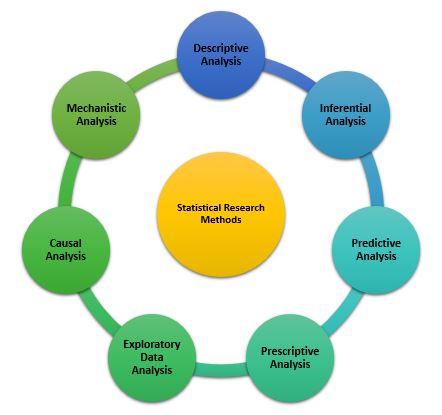
(Source)
Predictive Modeling Techniques
Predictive modeling is a powerful tool used to make predictions about future events based on past observations or trends in the data. This technique can be applied to many different types of problems, such as predicting customer churn, forecasting stock prices, and identifying fraud.
The three most common predictive modeling techniques are regression models, classification models, and clustering algorithms.
Regression Models
Regression models are used for predicting continuous outcomes such as sales revenue or temperature. These models use linear equations to map input variables (e.g., age) to an output variable (e.g., income).
Common examples of regression include linear regression and logistic regression.
Classification Models
Classification models are used for predicting discrete outcomes such as whether a customer will buy a product or not. These models use decision trees or support vector machines to classify data points into one of two categories – yes/no or true/false.
Examples of classification include binary classification and multi-class classification tasks like image recognition where each image is classified into one of several classes.
Clustering Algorithms
Clustering algorithms are unsupervised learning methods that group similar data points together without any prior knowledge about the groups themselves. Clustering can be used for market segmentation tasks where customers with similar characteristics are grouped together so they can be targeted with tailored marketing campaigns.
It can also be used for anomaly detection tasks where outliers in the dataset are identified and flagged for further investigation by experts. Popular clustering algorithms include k-means clustering and hierarchical clustering methods like agglomerative clustering
FAQs About Data Analysis Tools and Techniques in Research
What are data analysis tools in research?
Data analysis tools in research are used to analyze and interpret data from various sources. These tools can help researchers identify trends, correlations, and patterns in their data that may not be visible with traditional methods.
Commonly used data analysis tools and techniques in research include statistical software packages such as SPSS or SAS, visualization software like Tableau or Power BI, machine learning algorithms for predictive analytics, text mining techniques for natural language processing (NLP), and GIS mapping programs for spatial analysis.
All of these tools provide powerful insights into the underlying structure of a dataset and enable researchers to gain a deeper understanding of their research questions.
What are the four techniques for data analysis?
In data analytics and data science, there are four main types of data analysis: descriptive, diagnostic, predictive, and prescriptive.
Conclusion
Data analysis tools and techniques in research are essential for R&D and innovation teams to gain insights quickly. Data collection, exploratory data analysis (EDA), and predictive modeling techniques can all be used to help teams analyze their data more effectively.
Are you part of an R&D or innovation team? Do you want to unlock the power of data analysis tools and techniques in research and gain deeper insights faster? Cypris is your answer!
Our platform centralizes all the necessary data sources for research teams into one easy-to-use interface, giving you rapid time to insight. Join us today and discover how our powerful tools can help transform your workflows.

Clinical science research and development is an ever-evolving field. With the rise of technology, organizations are able to make breakthroughs faster than ever before – but this also means new challenges arise as well.
In this blog post series, we’ll explore how R&D teams can leverage technology for effective clinical science research and development, strategies to overcome common obstacles in the process, and a look into what the future may hold for clinical science R&D efforts.
Join us on our journey through clinical science research and development!
Table of Contents
What is Clinical Science Research and Development?
Benefits of Clinical Science Research And Development
Challenges of Clinical Science Research And Development
Leveraging Technology for Clinical Science R&D
Best Practices for Effective Clinical Science R&D
Strategies to Overcome Common Challenges in Clinical Science R&D
The Future of Clinical Science R&D
What is Clinical Science Research and Development?
Clinical Science Research and Development (R&D) is the process of creating new medical treatments, diagnostics, and devices to improve patient care. It involves the application of scientific principles for the purpose of developing new or improved products or services related to healthcare. This includes:
- Research into diseases or conditions.
- Development of drugs or other therapeutic interventions.
- Design and testing of medical devices.
- Evaluation of existing treatments.
- Analysis of data from clinical trials.
- Regulatory compliance with safety standards.
- Implementation strategies for successful adoption by healthcare providers.
Benefits of Clinical Science Research And Development
The primary benefit associated with clinical science R&D is its potential to provide better patient outcomes through improved treatments and technologies.
It can also lead to cost savings due to more efficient use of resources in both diagnosis and treatment processes.
Finally, it can create economic benefits through job creation in areas such as pharmaceutical manufacturing or biotechnology research.
Challenges of Clinical Science Research And Development
Researchers in this field face a major challenge navigating complex regulations surrounding drug approval processes, which can significantly delay product launch timelines.
Additionally, access and availability of quality data sources needed for conducting meaningful research and analytics may impede progress toward desired goals.
Finally, financial constraints often limit investments made into projects, sometimes resulting in project abandonment altogether.
Key Takeaway: Clinical Science research and development is an important part of the innovation process, providing teams with the data needed to create meaningful solutions. Cypris can help make this process easier by centralizing data sources into one platform for faster time to insights.
Leveraging Technology for Clinical Science R&D
Leveraging technology for clinical science R&D is essential to ensure that teams are able to effectively and efficiently develop innovative solutions.
Automation can help streamline processes, reduce costs, and improve accuracy. Data analysis tools allow researchers to quickly identify trends in data sets, while AI-powered solutions enable more accurate predictions of outcomes.
Automation
Automation in clinical science R&D helps automate tedious tasks such as data entry or document management so that teams can focus on the research itself. Automated systems also provide greater accuracy than manual processes by eliminating human error.
Additionally, automation reduces costs associated with labor-intensive tasks and increases efficiency by allowing teams to complete projects faster.
Data Analysis
Data analysis tools are critical for uncovering insights from large datasets quickly and accurately. These tools allow researchers to visualize data points, identify correlations between variables, and make informed decisions based on their findings. By leveraging these technologies, teams can gain a better understanding of their research results without spending time manually analyzing each dataset individually.
Artificial Intelligence
AI-powered solutions offer an even deeper level of insight into clinical science R&D projects. AI algorithms are able to detect patterns in complex datasets which may not be visible through manual inspection alone. This allows researchers to make more accurate predictions about potential outcomes from experiments or treatments before they occur in real-life scenarios.
Furthermore, AI-based models can be used for drug discovery or disease diagnosis applications where the speed of decision-making is critical.
Finally, AI has been shown to be effective at predicting future trends within certain industries which could prove beneficial when it comes time for commercialization efforts. Being able to anticipate customer demands ahead of time could give companies a competitive edge over those who do not leverage these technologies properly.

(Source)
Best Practices for Effective Clinical Science R&D
R&D and innovation teams must have clear goals and objectives in order to be successful. Establishing these goals should involve a thorough understanding of the project’s scope, timeline, budget, resources needed, and desired outcomes.
Additionally, it is important to ensure that all team members are on the same page when it comes to expectations for success.
Utilizing the right resources and tools can help R&D teams achieve their objectives more efficiently. For example, Cypris provides an integrated platform that centralizes data sources into one location so teams can access information quickly and easily.
Developing an agile process model allows R&D teams to adjust as needed based on feedback from stakeholders or changes in technology or market conditions. This type of flexibility enables them to remain competitive while still meeting their goals within a reasonable timeframe.
R&D and innovation teams: don’t let your goals get lost in the shuffle! Utilize Cypris to centralize data sources, develop an agile process model, and achieve success faster than ever before. #ResearchAndDevelopment #Innovation #Cypris Click To Tweet
Strategies to Overcome Common Challenges in Clinical Science R&D
Managing complexity with simplicity is a key strategy for overcoming common challenges in clinical science R&D. By breaking down complex tasks into smaller, more manageable pieces and focusing on one task at a time, teams can reduce the amount of effort required to complete projects while still achieving desired outcomes.
Additionally, utilizing tools such as Cypris that provide centralized data sources and automated processes can help streamline workflows and simplify project management.
Leveraging interdisciplinary teams to solve problems quickly and efficiently is another important strategy for overcoming common challenges in clinical science R&D. By bringing together experts from different fields – such as biology, chemistry, engineering, etc. – teams are able to identify potential solutions faster than if they were working alone.
Furthermore, by combining their knowledge base and expertise, each team member brings unique perspectives that can lead to innovative ideas which may not have been considered otherwise.
Identifying opportunities to streamline processes is an essential part of managing any research project effectively. This includes looking for ways to automate repetitive tasks or eliminate unnecessary steps from the workflow, so researchers can focus their efforts on areas where it will make the most impactful difference.
Utilizing platforms like Cypris makes this process easier by providing access to powerful analytics tools that allow users to quickly analyze data sets and uncover insights without having to manually comb through large amounts of information themselves
Don’t let complex clinical science R&D projects bog you down! Break it into smaller pieces, utilize interdisciplinary teams, and use tools like Cypris to simplify the process. #ClinicalScienceRnD #Cypris Click To Tweet
The Future of Clinical Science R&D
The future of clinical science R&D is bright, with advances in automation, AI, and machine learning leading the way.
Automation has already revolutionized the way clinical research is conducted, allowing for faster data collection and analysis.
AI-powered solutions are now being used to automate complex tasks such as drug discovery and development. These technologies have enabled researchers to quickly identify new potential treatments and drugs that could benefit patients around the world.
Increasing accessibility to data sources is also helping drive innovation in this field. With access to more information than ever before, researchers can better understand how diseases develop, progress, and respond to treatment options. This increased understanding allows them to make informed decisions about which therapies should be pursued further or abandoned altogether.
Improved collaboration across teams has also been made possible by technology advancements. With remote working capabilities now commonplace in many organizations, it’s easier than ever for scientists from different disciplines to work together on projects without having to physically meet up or travel long distances.
Machine learning algorithms are becoming increasingly important in clinical science R&D. They can be used for predictive analytics as well as uncovering patterns within large datasets that may not be noticed by humans alone.
Cloud computing provides a secure platform where sensitive patient data can be stored securely while still being accessible remotely, making it easier for scientists around the world to collaborate on projects without worrying about security breaches.
Conclusion
With the right tools and resources in place, teams can make significant progress toward achieving their R&D goals. Cypris provides a platform for clinical science research and development teams to centralize data sources into one comprehensive system. By providing rapid time to insights, Cypris helps teams unlock the potential of clinical science research and development faster than ever before.
Are you looking for a way to accelerate your clinical science research and development? Cypris is the perfect platform for R&D and innovation teams. With our easy-to-use interface, powerful data sources, and rapid time to insights, you can quickly gain meaningful results from your research efforts.
Join us today as we revolutionize the future of medical discovery!