Metal-Organic Framework (MOF) Patent Landscape in 2026
Writen By:
Cypris Research Team
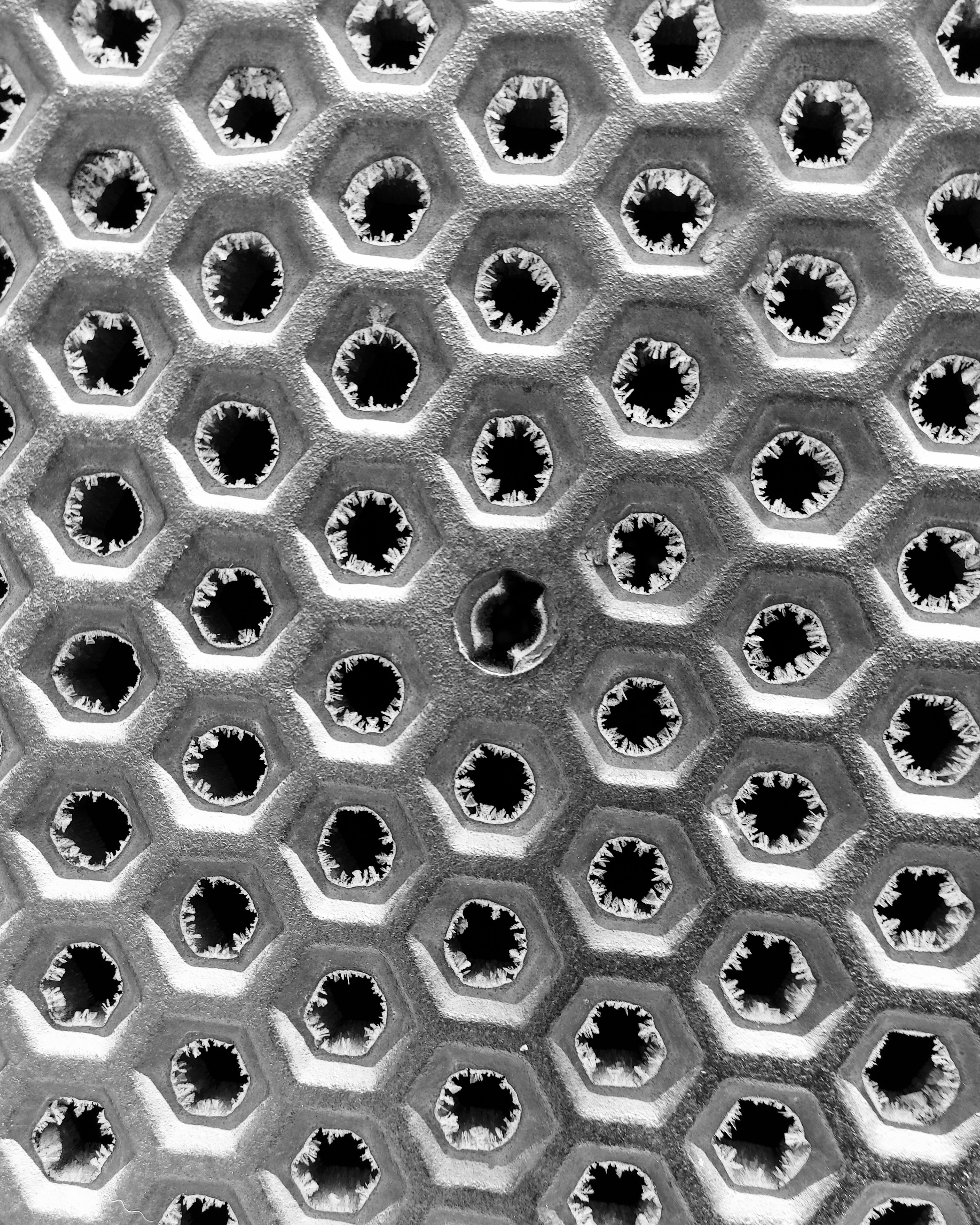


Metal-organic frameworks have moved from a laboratory curiosity to a commercial materials platform, and their patent landscape is being staked out just as the field reaches scale. A MOF is a porous crystalline material built by linking metal nodes with organic linkers into an ordered framework, producing extraordinarily high surface areas and pores that can be tuned for a target molecule; more than 20,000 distinct MOFs had already been reported by the early 2010s, and the reticular chemistry behind them has continued to mature.¹,² Recognition by the 2025 Nobel Prize in Chemistry, awarded to Susumu Kitagawa, Richard Robson, and Omar Yaghi for the development of metal-organic frameworks, underscored the field's arrival and named applications from carbon-dioxide capture and toxic-gas storage to water harvesting, catalysis, and the separation of per- and polyfluoroalkyl substances from water.³ The intellectual property now divides across three broad regions: the specific framework compositions and structures themselves; the synthesis, shaping, and manufacturing processes that turn a powder into a usable, scalable product; and the application-level systems that integrate a MOF into a working device. Because MOFs serve many functions, freedom-to-operate and white space analysis must span all of them.
The commercial tipping point is reshaping the patent picture. After years in which scale-up and cost were the barriers, industrial-scale production of MOFs for carbon capture has begun, and a wave of startups is pursuing modular capture systems that are easier to scale than incumbent solvent processes, alongside chemical majors moving into manufacturing. Direct air capture of carbon dioxide has been demonstrated in purpose-designed frameworks from the laboratory through pilot scale, distinct from higher-concentration point-source capture.⁶ The scale of activity is large: across the Cypris corpus of more than 500 million patents and scientific papers, the MOF and reticular-chemistry space holds well over 100,000 de-duplicated families and has sustained high-volume filing since around 2018, with the assignee base led by academic institutions and chemical majors such as Sinopec, BASF, and ExxonMobil also prominent, while China accounts for the large majority of families, ahead of the United States, Japan, Germany, and South Korea. This shift moves value from the bare framework composition, where foundational academic estates are concentrated, toward the synthesis, shaping, and system-integration layers. Because applications publish about eighteen months after filing, the most recent synthesis and application filings are under-represented, so the current frontier is more active than granted-patent counts suggest.
The landscape divides by application, and the white space sits where a MOF must survive real conditions at low cost. Water stability, cycling durability, and inexpensive, scalable synthesis are the recurring bottlenecks; the criteria for a high-performance water-adsorbing framework, pore size and shape, hydrophilicity, and stability, are well defined but hard to meet at once.⁴ Carbon capture, both point-source and direct air capture, is the most active application and the one drawing the most new entrants; gas separation, increasingly through mixed-matrix membranes,⁷ and gas adsorption and storage⁸ are established; atmospheric water harvesting has advanced from concept toward passive devices,⁵ and newer uses such as direct lithium extraction and contaminant removal are earlier and less crowded. Underlying all of them is the reticular-design principle that lets chemists build frameworks to order for a target function.⁹ Reading the landscape by composition, synthesis route, and application is what separates a crowded region from an open one.
Where the MOF white space is
Water-stable, low-cost frameworks. MOFs that keep performance under humidity and real operating conditions, made by inexpensive routes, are the central bottleneck and a high-value, still-open target.⁴
Scalable synthesis and shaping. Converting powders into pellets, monoliths, and coatings by manufacturable processes is where deployment is decided and where hard-to-design-around process IP concentrates.
Direct air capture sorbents. MOFs tuned for capturing dilute atmospheric carbon dioxide are an active, high-value frontier distinct from point-source capture.⁶
Non-carbon separations. Direct lithium extraction, contaminant and per- and polyfluoroalkyl-substance removal, and other selective separations are earlier and less crowded application layers.
System integration. Contactors, modules, and regeneration systems that turn a MOF into a working unit are a distinct engineering layer separate from the framework chemistry.
How AI-powered landscape and white space analysis helps
Resolving a materials platform that spans many framework chemistries, synthesis routes, and application areas requires more than keyword search. AI-powered analysis addresses this with semantic search that clusters activity by composition, synthesis route, and application across varied terminology, attribution that normalizes academic and commercial filers to canonical entities and tracks new entrants, and continuous monitoring that keeps pace with a field reaching commercial scale. Because MOF advances appear in scientific literature before they are patented, reading both patents and literature gives the earliest signal of where deployable materials are emerging.
Where Cypris fits
Cypris runs patent landscape and white space analysis for materials platforms such as metal-organic frameworks across a corpus of more than 500 million patents and scientific papers, organized through a proprietary R&D ontology. The ontology clusters activity by framework composition, by synthesis and shaping route, and by application, carbon capture, gas separation and storage, water harvesting, catalysis, and mineral recovery, and normalizes filers to canonical entities, so a team can resolve which compositions, routes, and applications are crowded and which remain open as white space, and can track new entrants as the field scales. Semantic search across patents and scientific literature connects filings to the underlying materials chemistry research, which is where MOF advances appear first. Cypris Q, the platform's agentic layer, lets teams run landscape and white space analysis conversationally and chain the clustering, attribution, and gap analysis, and Agentic Monitoring tracks a defined application over time and flags new patents and papers as they publish. Cypris provides enterprise API partnerships with OpenAI, Anthropic, and Google, and is built with enterprise-grade security. Cypris serves hundreds of enterprise customers across pharmaceuticals, chemicals, advanced materials, energy, and other regulated industries.
FAQ
What is the metal-organic framework patent landscape? The metal-organic framework patent landscape is the set of patents covering MOFs, porous crystalline materials built from metal nodes and organic linkers, and their uses. It divides across framework compositions, synthesis and shaping processes, and application-level systems. Each application, from carbon capture to gas storage, is a distinct region of the landscape.
Why are MOFs a patenting hotspot now? MOFs are a patenting hotspot now because the field has reached a commercial tipping point, with industrial-scale production beginning for carbon capture and a wave of startups pursuing modular systems. Recognition by the 2025 Nobel Prize in Chemistry has further raised the field's profile. That shift is concentrating new filings in synthesis and application layers.
What application areas does the MOF landscape cover? The MOF landscape covers carbon capture from flue gas and directly from air, gas separation and storage, water harvesting, catalysis, sensing, drug delivery, and recovery of critical minerals such as lithium. Each demands different framework and system properties. Freedom-to-operate and white space analysis must span all of them.
Where is the white space in MOFs? The white space sits where a MOF must survive real conditions cheaply: water-stable, low-cost frameworks and scalable synthesis and shaping are the central bottlenecks, and direct air capture sorbents, non-carbon separations, and system integration are less crowded. The bare framework composition is where foundational estates concentrate. The higher-value opportunities are in deployability.
How is MOF value shifting from composition to manufacturing? MOF value is shifting because, as the field scales, the barrier moves from discovering a framework to making it durable and affordable at volume. Foundational composition estates are concentrated among a few academic groups, while synthesis, shaping, and system-integration IP is where deployment is now decided. That is where much of the defensible, hard-to-design-around value sits.
Why does MOF analysis need scientific literature? MOF analysis needs scientific literature because new frameworks, synthesis routes, and application concepts appear in materials research before they are patented, so the literature gives the earliest signal. Analyzing patents alone gives a lagging view. Cypris analyzes both across more than 500 million patents and scientific papers.
What software helps analyze the MOF patent landscape? Software for the MOF landscape should cluster activity by framework composition, synthesis route, and application, resolve academic and commercial filers to canonical owners, search patents and scientific literature semantically, and monitor a scaling field continuously. Cypris does this across more than 500 million patents and scientific papers using a proprietary R&D ontology, semantic search, Cypris Q, and Agentic Monitoring.
Which teams use MOF patent landscape analysis? MOF patent landscape analysis is used by R&D, innovation, IP, and strategy teams at chemicals, materials, carbon-capture, and energy companies, as well as investors and research institutions. It informs where to invest, where to file, and where competitors are concentrated. Cypris serves hundreds of enterprise customers across chemicals, advanced materials, energy, and other regulated industries.
Endnotes
- O'Keeffe, M., Cordova, K. E., Furukawa, H., & Yaghi, O. M. (2013). The chemistry and applications of metal-organic frameworks. Science, 341(6149). https://doi.org/10.1126/science.1230444
- Li, H., Rampal, N., & Yaghi, O. M. (2025). Reticular chemistry: past, present, and future. Molecular Frontiers Journal. https://doi.org/10.1142/s2529732525300034
- Royal Swedish Academy of Sciences (2025, October 8). The Nobel Prize in Chemistry 2025 [press release]. https://www.nobelprize.org/prizes/chemistry/2025/press-release/
- Furukawa, H., Queen, W. L., Yaghi, O. M., et al. (2014). Water adsorption in porous metal-organic frameworks and related materials. Journal of the American Chemical Society, 136(11). https://doi.org/10.1021/ja500330a
- Diercks, C. S., Kalmutzki, M. J., & Yaghi, O. M. (2018). Metal-organic frameworks for water harvesting from air. Advanced Materials, 30(37). https://doi.org/10.1002/adma.201704304
- Yao, M.-S., et al. (2023). Direct air capture of CO2 in designed metal-organic frameworks at lab and pilot scale. Carbon Capture Science & Technology, 8. https://doi.org/10.1016/j.ccst.2023.100145
- Chai, M., Hou, J., & Chen, R. (2023). Metal-organic framework-based mixed matrix membranes for gas separation: recent advances and opportunities. Carbon Capture Science & Technology, 8. https://doi.org/10.1016/j.ccst.2023.100130
- Sculley, J., Yu, J., Zhou, H.-C., et al. (2011). Carbon dioxide capture-related gas adsorption and separation in metal-organic frameworks. Coordination Chemistry Reviews, 255(15-16). https://doi.org/10.1016/j.ccr.2011.02.012
- Chen, Z., Kirlikovali, K. O., Li, P., & Farha, O. K. (2022). Reticular chemistry for highly porous metal-organic frameworks: the chemistry and applications. Accounts of Chemical Research, 55(4). https://doi.org/10.1021/acs.accounts.1c00707