Perovskite Tandem Solar Patent Landscape in 2026
Writen By:
Cypris Research Team
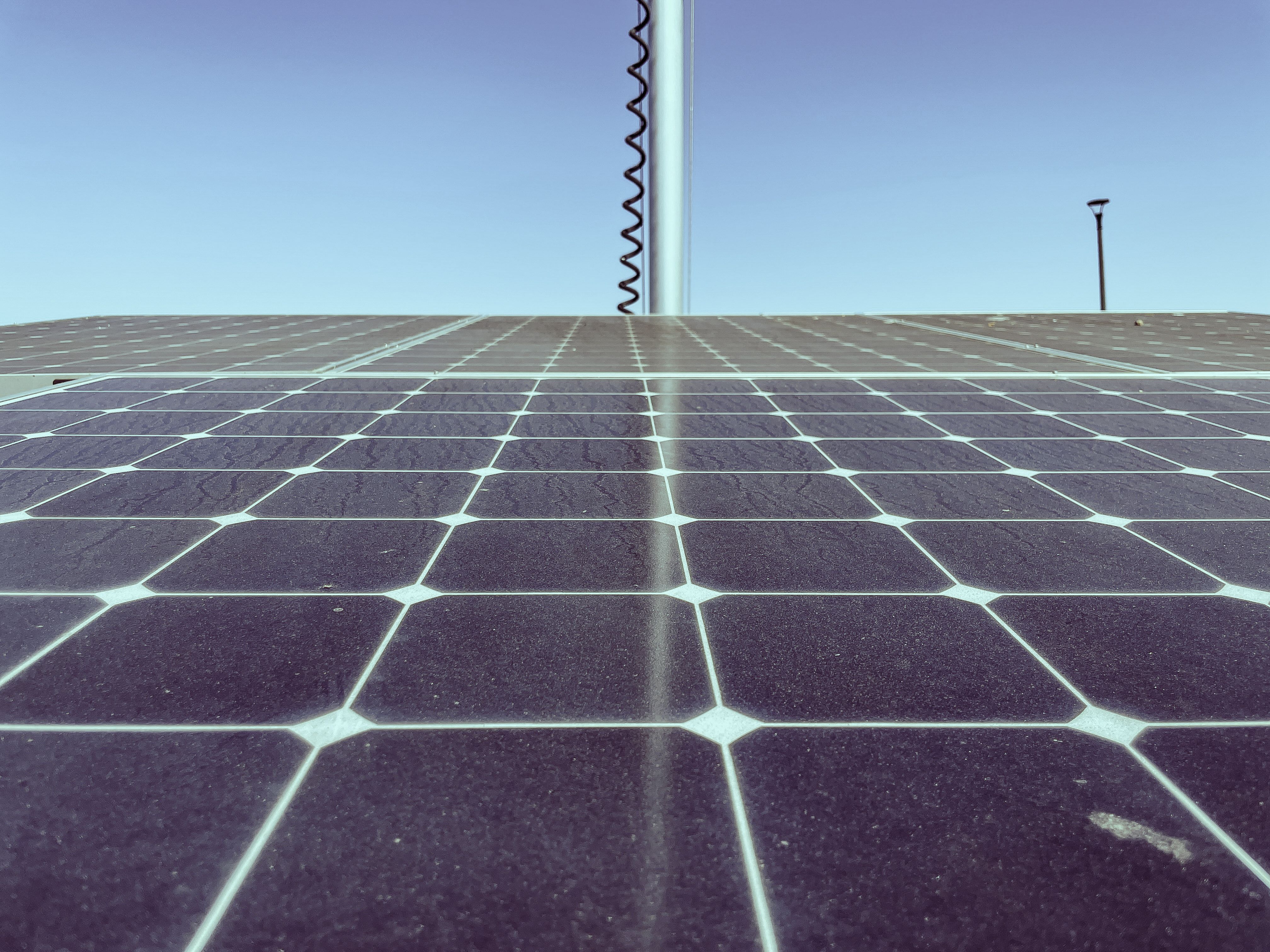


Perovskite-silicon tandem solar cells are the leading path to higher photovoltaic efficiency, and their patent landscape has become unusually central to competition because the field is commercializing through licensing as much as through manufacturing. A tandem cell places a wide-bandgap perovskite layer on top of a conventional silicon cell, so the two absorb different parts of the solar spectrum and the stack converts more sunlight than either alone, surpassing the single-junction limit that constrains standard silicon.¹,² The theoretical ceiling for a silicon-based tandem is about 43.2 percent, far above the roughly 33 percent limit of a single-junction silicon cell, which is what makes the architecture so attractive.³ The intellectual property divides across several regions, each with different owners and maturity: the perovskite compositions and their stability chemistry; the passivation and interface layers that raise efficiency and lifetime; the tandem device architecture, including the recombination layers that join the sub-cells; the texturing and deposition processes used to build the stack; and the encapsulation and manufacturing that make a durable module. Because a working tandem depends on all of these, freedom-to-operate and white space analysis must span the full stack.
The landscape is being shaped by patents and cross-licensing in real time. Certified efficiencies have climbed steeply: the current certified perovskite/silicon tandem record stands at 34.85 percent, achieved by LONGi and certified by the US National Renewable Energy Laboratory in 2025, and peer-reviewed work now describes certified perovskite/silicon efficiencies approaching 35 percent, with the live record register maintained on the NREL Best Research-Cell Efficiency Chart.⁴,⁵,⁶ These are laboratory cell records rather than commercial-module ratings, and translating them to industry-compatible cells and full modules is a distinct challenge the field is actively working through.¹⁰ Multi-junction routes are advancing in parallel, with triple-junction perovskite/perovskite/silicon devices exceeding 30 percent.⁷ Holders of strong foundational portfolios have begun licensing their technology to large manufacturers, signaling that IP position, not only manufacturing capacity, will determine who benefits from the transition. That structure is visible in the patent record: across the Cypris corpus of more than 500 million patents and scientific papers, the perovskite-tandem space is a comparatively small, fast-moving set of a few thousand de-duplicated families that stepped up sharply in 2025, and its most active assignees mix national laboratories such as CEA and CNRS, the perovskite specialist Oxford PV, and large silicon-module manufacturers, with China, the United States, South Korea, and France the leading jurisdictions; because assignee names are not fully canonicalized, manufacturer totals are best read as indicative. Because applications publish about eighteen months after filing, the most recent composition and process filings are under-represented, so the current frontier is more active than granted-patent counts suggest.
The strategic question is which layer to own, and the white space sits where durability is hardest to achieve. Perovskite stability under heat, humidity, and light remains the central unsolved problem, and the degradation mechanisms and stabilization techniques that address it are an area of intense, well-mapped research,⁸ as are the barrier and encapsulation designs that protect the cell over its service life.⁹ Compositions, passivation chemistries, and encapsulation that extend lifetime therefore carry high, defensible value, while tandem architecture and light-management texturing are contested and improving quickly, and scalable deposition and manufacturing are where laboratory records must survive the move to gigawatt production. Reading the landscape by composition, layer, and process, and tracking both the patents and the underlying materials research, is what separates a crowded region from an open one.
Where the perovskite tandem white space is
Stability and encapsulation. Compositions, passivation, and encapsulation that keep efficiency under heat, humidity, and light are the central unsolved problem and the highest-value, still-open target.⁸,⁹
Wide-bandgap perovskite compositions. Formulations tuned for the top cell that resist phase segregation are a contested, fast-moving composition layer.
Tandem architecture. Recombination layers, interconnection, and two-terminal versus four-terminal designs are a distinct device-engineering layer.⁷
Texturing and light management. Surface texturing and optical designs that maximize capture across the stack are an active process-IP area.
Scalable deposition and manufacturing. Moving high-efficiency processes from small cells to gigawatt-scale modules is where cost is decided and where durable process IP concentrates.¹⁰
How AI-powered landscape and white space analysis helps
Resolving a device landscape that spans compositions, interface and architecture layers, and manufacturing processes, across institutions and regions moving at different speeds, requires more than keyword search. AI-powered analysis addresses this with semantic search that clusters activity by layer and process across varied terminology, attribution that normalizes academic and commercial filers to canonical entities and tracks the licensing structure, and continuous monitoring that keeps pace with a fast-commercializing field. Because perovskite advances appear in scientific literature before they are patented, reading both patents and literature gives the earliest signal of where the frontier is moving.
Where Cypris fits
Cypris runs patent landscape and white space analysis for fast-commercializing energy fields such as perovskite tandem solar across a corpus of more than 500 million patents and scientific papers, organized through a proprietary R&D ontology. The ontology clusters activity by layer, perovskite composition, passivation and interfaces, tandem architecture, texturing and deposition, and encapsulation and manufacturing, and normalizes filers to canonical entities, so a team can resolve which layers are crowded and which remain open as white space, and can see the licensing structure clearly rather than as a flat list. Semantic search across patents and scientific literature connects filings to the underlying materials and device research, which is where perovskite advances appear first. Cypris Q, the platform's agentic layer, lets teams run landscape and white space analysis conversationally and chain the clustering, attribution, and gap analysis, and Agentic Monitoring tracks a defined layer over time and flags new patents and papers as they publish. Cypris provides enterprise API partnerships with OpenAI, Anthropic, and Google, and is built with enterprise-grade security. Cypris serves hundreds of enterprise customers across pharmaceuticals, chemicals, advanced materials, energy, and other regulated industries.
FAQ
What is the perovskite tandem solar patent landscape? The perovskite tandem solar patent landscape is the set of patents covering perovskite-silicon and all-perovskite tandem cells that exceed the single-junction efficiency limit. It divides across perovskite compositions and stability, passivation and interfaces, tandem architecture, texturing and deposition, and encapsulation and manufacturing. Each is a distinct region with different owners and maturity.
Why is IP so central to perovskite tandem solar? IP is central because the field is commercializing through licensing as much as through manufacturing, with holders of strong foundational portfolios licensing their technology to large manufacturers. Foundational process and architecture patents are concentrated among a few institutions and companies. That makes licensing and freedom-to-operate, not only production capacity, decisive.
What layers does the perovskite tandem landscape cover? The landscape covers perovskite composition and stability chemistry, passivation and interface layers, tandem device architecture including recombination layers, texturing and deposition processes, and encapsulation and manufacturing. A working tandem depends on all of them. Freedom-to-operate and white space analysis must span the full stack.
Where is the white space in perovskite tandem solar? The white space sits where durability is hardest: stability and encapsulation, wide-bandgap compositions that resist phase segregation, tandem architecture, light-management texturing, and scalable deposition. Stability under heat, humidity, and light is the central unsolved problem. The highest-value, most defensible positions are in lifetime and manufacturability.
Why is stability the key problem in the patent record? Stability is the key problem because perovskites can degrade under heat, humidity, and light, so the compositions, passivation, and encapsulation that extend lifetime are where the most valuable and defensible IP concentrates. Efficiency records matter, but durable modules require solving stability. The patent record reflects intense activity in these layers.
Why does perovskite analysis need scientific literature? Perovskite analysis needs scientific literature because new compositions, passivation chemistries, and device architectures appear in materials research before they are patented, so the literature gives the earliest signal. Analyzing patents alone gives a lagging view. Cypris analyzes both across more than 500 million patents and scientific papers.
What software helps analyze the perovskite tandem solar patent landscape? Software for the perovskite tandem landscape should cluster activity by device layer and process, resolve academic and commercial filers and the licensing structure to canonical owners, search patents and scientific literature semantically, and monitor a fast-commercializing field continuously. Cypris does this across more than 500 million patents and scientific papers using a proprietary R&D ontology, semantic search, Cypris Q, and Agentic Monitoring.
Which teams use perovskite tandem patent landscape analysis? Perovskite tandem patent landscape analysis is used by R&D, innovation, IP, and strategy teams at solar manufacturers, materials developers, and equipment makers, as well as investors and research institutions. It informs which layer to back, where to file, where to license, and where competitors are concentrated. Cypris serves hundreds of enterprise customers across energy, advanced materials, chemicals, and other regulated industries.
Endnotes
- Zhang, F., Shi, Y., & Berry, J. J. (2024). Perovskite/silicon tandem solar cells: insights and outlooks. ACS Energy Letters, 9(4). https://doi.org/10.1021/acsenergylett.4c00172
- Zheng, X., Tan, H., et al. (2023). Efficient perovskite/silicon tandem solar cells on industrially compatible textured silicon. Advanced Materials, 35(10). https://doi.org/10.1002/adma.202207883
- Schubert, M. C., Glunz, S. W., et al. (2025). Elucidating the efficiency limit of silicon-based monolithic tandem cells through the combination of Auger and Shockley-Queisser limits. EES Solar. https://doi.org/10.1039/d5el00085h
- Chen, W., Mularso, K. T., Jung, H. S., & Jo, B., et al. (2026). Strategies toward maximizing power conversion efficiency in all-perovskite tandem solar cells. Solar RRL. https://doi.org/10.1002/solr.202500911
- LONGi (2025, April 16). LONGi breaks world record for crystalline silicon-perovskite tandem solar cell efficiency (34.85%). https://www.longi.com/en/news/silicon-perovskite-tandem-solar-cells-new-world-efficiency
- National Renewable Energy Laboratory. Best research-cell efficiency chart. https://www.nrel.gov/pv/cell-efficiency
- Aydin, E., Xu, L., De Wolf, S., et al. (2024). Four-terminal perovskite/perovskite/silicon triple-junction tandem solar cells with over 30% power conversion efficiency. ACS Energy Letters, 9(8). https://doi.org/10.1021/acsenergylett.4c01292
- Ahn, N., & Choi, M. (2023). Towards long-term stable perovskite solar cells: degradation mechanisms and stabilization techniques. Advanced Science, 10(35). https://doi.org/10.1002/advs.202306110
- Yang, Z., Liu, Z., Chen, W., et al. (2020). Barrier designs in perovskite solar cells for long-term stability. Advanced Energy Materials, 10(26). https://doi.org/10.1002/aenm.202001610
- Jost, M., et al. (2021). 27.9% efficient monolithic perovskite/silicon tandem solar cells on industry-compatible bottom cells. Solar RRL, 5(6). https://doi.org/10.1002/solr.202100244