
The brain processes 70,000 thoughts each day using 100 billion neurons that connect at more than 500 trillion points through synapses that travel 300 miles/hour. More and more, scientific advances are breaking down what's really going on behind these numbers. In this blog, we'll look at innovation in the area of artificial brain cells specifically.
Groundbreaking advances in artificial brain cell research are bridging the gap between man and machine, and paving the way for life-changing advances. Innovation in the artificial brain cell space is skyrocketing—experiencing a 61.79% growth rate over the past 5 years. The fastest growing category is Medical with an 133.33% increase in new patents filed over the last 5 years. Additionally, the IT Computing and Data Processing category is seeing a lot of filings by new entrants, so it might be an emerging space worth looking into.
Let’s take a look at the recent research that’s transforming the artificial brain cell space.
Artificial Neurons & Dopamine

Researchers at Nanjing University of Posts and Telecommunications and the Chinese Academy of Sciences in China and Nanyang Technological University and the Agency for Science Technology and Research in Singapore recently developed an artificial neuron with the ability to communicate using the neurotransmitter dopamine. Dopamine is our feel-good neurotransmitter, involved in the brain’s reward system.
The research team built an artificial neuron that can both release and receive dopamine. The neuron was made using graphene and a carbon nanotube electrode, to which they added a sensor to detect dopamine and a device called a memristor. If enough dopamine is detected by the sensor, a component called a memristor triggers the release of more dopamine at the other end through a heat-activated hydrogel.
To test the ability of the artificial neuron to communicate, they placed it in a petri dish alongside rat brain cells and found that the neuron was able to sense and respond to dopamine created and sent by the rat brain cells. The artificial neuron was also able to product some of its own, which triggered a response in the rat brain cells. Additionally, their results revealed that they could activate a small mouse muscle sample by sending dopamine to a sciatic nerve, which they use to move a robot hand.
Reviving Deceased Animal Brains
In 2019, Yale scientists restored cellular function in 32 pig brains that had been deceased for hours. The team used a system called BrainEx, which consisted of computer-controlled pumps and filters that sent a nourishing solution through a dead, surgically exposed brain, with an ebb and flow that mimics the body's natural circulation. The proprietary solution was based on hemoglobin, the oxygen-ferrying protein in red blood cells, and was made to show up during ultrasound scans, to enable researchers to track its flow through the brain. The process was found to restore circulation and oxygen flow to a dead brain.
Continuing their research, the same team published findings this month on reviving pig organs, rather than just the brain. Researchers connected pigs that had been dead for one hour to a system called OrganEx that pumped a blood substitute throughout the animals’ bodies. The solution they circulated contained the animal’s blood, as well as 13 compounds including as anticoagulants — to slow the decomposition of the bodies and quickly restore some organ function. Although OrganEx helped to preserve the integrity of some brain tissue, researchers did not observe any coordinated brain activity that would indicate the animals had regained any consciousness or sentience.
Graphene Synapses

A team at The University of Texas at Austin just published their research on how they developed synaptic transistors for brain-like computers using the thin, flexible material graphene. These transistors are similar to synapses in the human brain. Synapses connect neurons in the brain to neurons in the rest of the body and from those neurons to the muscles.
Graphene and nafion, a polymer membrane material, were used to create the backbone of the synaptic transistor. These materials demonstrate the ability for the pathways to strengthen over time as they are used more often, a type of neural muscle memory. When it comes to computing, this means that devices will improve in their ability and speed to recognize and interpret images over time.
Notably, these transistors are biocompatible, which means they can interact with living cells and tissue. For medical devices that interact with the human body, biocompatibility is key. Currently, most materials used for these early brain-like devices are toxic, so they would not be able to contact living cells.
Whether through creating artificial cells capable of transmitting and receiving dopamine, or reviving deceased brain cells in pigs, research is transforming our relationship to technology, and our understanding of the brain. To learn more about patents and new innovations in the artificial brain cell space, visit cypris.ai and get started with access to the innovation dashboard.
Sources:
https://www.nytimes.com/2022/08/03/science/pigs-organs-death.html
https://www.health.harvard.edu/mind-and-mood/dopamine-the-pathway-to-pleasure
Ting Wang et al, A chemically mediated artificial neuron, Nature Electronics (2022). DOI: 10.1038/s41928-022-00803-0
https://www.nature.com/articles/d41586-022-02112-0
https://techxplore.com/news/2022-08-graphene-synapses-advance-brain-like.html
https://www.miragenews.com/graphene-synapses-advance-brain-like-computers-833930/
https://healthybrains.org/brain-facts/#:~:text=Your brain is a three,that travel 300 miles%2Fhour.
Research Advances in Artificial Brain Cells


The brain processes 70,000 thoughts each day using 100 billion neurons that connect at more than 500 trillion points through synapses that travel 300 miles/hour. More and more, scientific advances are breaking down what's really going on behind these numbers. In this blog, we'll look at innovation in the area of artificial brain cells specifically.
Groundbreaking advances in artificial brain cell research are bridging the gap between man and machine, and paving the way for life-changing advances. Innovation in the artificial brain cell space is skyrocketing—experiencing a 61.79% growth rate over the past 5 years. The fastest growing category is Medical with an 133.33% increase in new patents filed over the last 5 years. Additionally, the IT Computing and Data Processing category is seeing a lot of filings by new entrants, so it might be an emerging space worth looking into.
Let’s take a look at the recent research that’s transforming the artificial brain cell space.
Artificial Neurons & Dopamine
Researchers at Nanjing University of Posts and Telecommunications and the Chinese Academy of Sciences in China and Nanyang Technological University and the Agency for Science Technology and Research in Singapore recently developed an artificial neuron with the ability to communicate using the neurotransmitter dopamine. Dopamine is our feel-good neurotransmitter, involved in the brain’s reward system.
The research team built an artificial neuron that can both release and receive dopamine. The neuron was made using graphene and a carbon nanotube electrode, to which they added a sensor to detect dopamine and a device called a memristor. If enough dopamine is detected by the sensor, a component called a memristor triggers the release of more dopamine at the other end through a heat-activated hydrogel.
To test the ability of the artificial neuron to communicate, they placed it in a petri dish alongside rat brain cells and found that the neuron was able to sense and respond to dopamine created and sent by the rat brain cells. The artificial neuron was also able to product some of its own, which triggered a response in the rat brain cells. Additionally, their results revealed that they could activate a small mouse muscle sample by sending dopamine to a sciatic nerve, which they use to move a robot hand.
Reviving Deceased Animal Brains
In 2019, Yale scientists restored cellular function in 32 pig brains that had been deceased for hours. The team used a system called BrainEx, which consisted of computer-controlled pumps and filters that sent a nourishing solution through a dead, surgically exposed brain, with an ebb and flow that mimics the body's natural circulation. The proprietary solution was based on hemoglobin, the oxygen-ferrying protein in red blood cells, and was made to show up during ultrasound scans, to enable researchers to track its flow through the brain. The process was found to restore circulation and oxygen flow to a dead brain.
Continuing their research, the same team published findings this month on reviving pig organs, rather than just the brain. Researchers connected pigs that had been dead for one hour to a system called OrganEx that pumped a blood substitute throughout the animals’ bodies. The solution they circulated contained the animal’s blood, as well as 13 compounds including as anticoagulants — to slow the decomposition of the bodies and quickly restore some organ function. Although OrganEx helped to preserve the integrity of some brain tissue, researchers did not observe any coordinated brain activity that would indicate the animals had regained any consciousness or sentience.
Graphene Synapses
A team at The University of Texas at Austin just published their research on how they developed synaptic transistors for brain-like computers using the thin, flexible material graphene. These transistors are similar to synapses in the human brain. Synapses connect neurons in the brain to neurons in the rest of the body and from those neurons to the muscles.
Graphene and nafion, a polymer membrane material, were used to create the backbone of the synaptic transistor. These materials demonstrate the ability for the pathways to strengthen over time as they are used more often, a type of neural muscle memory. When it comes to computing, this means that devices will improve in their ability and speed to recognize and interpret images over time.
Notably, these transistors are biocompatible, which means they can interact with living cells and tissue. For medical devices that interact with the human body, biocompatibility is key. Currently, most materials used for these early brain-like devices are toxic, so they would not be able to contact living cells.
Whether through creating artificial cells capable of transmitting and receiving dopamine, or reviving deceased brain cells in pigs, research is transforming our relationship to technology, and our understanding of the brain. To learn more about patents and new innovations in the artificial brain cell space, visit cypris.ai and get started with access to the innovation dashboard.
Sources:
https://www.nytimes.com/2022/08/03/science/pigs-organs-death.html
https://www.health.harvard.edu/mind-and-mood/dopamine-the-pathway-to-pleasure
Ting Wang et al, A chemically mediated artificial neuron, Nature Electronics (2022). DOI: 10.1038/s41928-022-00803-0
https://www.nature.com/articles/d41586-022-02112-0
https://techxplore.com/news/2022-08-graphene-synapses-advance-brain-like.html
https://www.miragenews.com/graphene-synapses-advance-brain-like-computers-833930/
https://healthybrains.org/brain-facts/#:~:text=Your brain is a three,that travel 300 miles%2Fhour.
Keep Reading

Innovation can be a driver of development, a generator of fresh openings, and a stimulant of imagination. But the question remains: can innovation be taught? Learning how to foster innovation to make significant progress, create new opportunities, and spark creativity is worth considering.
By understanding what makes up an innovative mindset and utilizing tools and techniques for teaching innovation, we can begin to uncover whether or not this skill set can truly be learned. In this article, we answer: can innovation be taught?
Table of Contents
Tools and Techniques for Teaching Innovation
Challenges to Teaching Innovation in the Workplace
What Is Innovation?
Innovation involves generating novel solutions, goods, services, or techniques that are of value. Innovation can be a transformative power in any field and has become indispensable for numerous organizations’ success. Innovation requires critical thinking, creative problem-solving skills, and a willingness to take risks.
Innovation involves introducing something novel or different into the marketplace with the intention of improving upon existing solutions or filling an unmet need. Innovation can be classified as incremental (refining existing products/services), radical (creating new ones), or transformational (developing fresh markets).
Can innovation be taught? Organizations can remain competitive by staying abreast of emerging trends and technologies while also preparing for future challenges through the numerous benefits of fostering innovation.
With proper training programs in place, natural talent can be identified earlier. Online courses make education more accessible than ever before. Life-long learning helps people stay ahead in their careers.
Creative problem-solving skills are encouraged among students leading to better educational outcomes. Professional development assists employees in increasing their skill sets quickly. Embracing innovation can be an effective strategy for businesses to outpace their rivals.
Educating innovatively is not a straightforward endeavor. There are resources accessible that can assist educators in achieving this. Design thinking processes and methodologies provide structure around how problems should be approached. Ideation techniques and exercises encourage students to think outside the box when coming up with solutions.
Problem-solving strategies and frameworks offer guidance on how best to tackle complex issues as well as provide frameworks within which learners can practice their skillset safely without fear of failure – a key ingredient for successful innovators.
Key Takeaway: Innovation is a key ingredient for success, and teaching it can be done through the use of design thinking processes, ideation techniques, and problem-solving strategies. By providing learners with frameworks to practice their skills safely without fear of failure, organizations can remain competitive in today’s market.
Can Innovation Be Taught?
Can innovation be taught? Yes, but it necessitates comprehension of the core elements that lead to an effective result. In teaching innovation, it is important to lay the groundwork for problem-solving and analytical skills.
Learning how to identify opportunities, develop solutions, and implement them is essential for innovators. Experience also plays an important part in teaching innovation by providing real-world examples of success and failure which helps shape ideas into reality. Mentorship is another vital element in teaching innovation as it guides experienced professionals who have been through similar situations before.
Education provides the necessary foundation for teaching innovation, with certain processes and methodologies such as design thinking or ideation techniques like brainstorming exercises, and problem-solving strategies using frameworks to break down complex problems into smaller pieces. These tools are essential building blocks for coming up with inventive solutions to tough challenges faced by R&D teams. Utilizing these methods in conjunction with experience and mentorship can help foster innovative thinking that leads to successful outcomes.
Careful consideration must be taken when attempting to teach innovation, as there are still some major challenges that can hinder success. These include:
- A lack of resources or support from stakeholders can limit time and budget constraints.
- A dearth of understanding about what constitutes good practice.
- Simply not having enough know-how within the team itself to draw upon when concocting new ideas.
Overall, while there are many obstacles standing in the way of how to successfully foster innovation, investing in innovative education programs can yield great rewards both personally and professionally for those involved with R&D teams looking for fresh perspectives on their projects. Whether they’re commercialization engineers/teams working on product development initiatives or senior directors and VPs leading research and development efforts within their organizations, making sure everyone has access to these types of educational opportunities should be considered a top priority.
In the end, different strategies and approaches can be used to instruct creativity. By utilizing these methods, R&D and Innovation teams are better equipped to foster a culture of creativity within their organizations.
Key Takeaway: Can innovation be taught? Innovation can be developed, yet it requires a commitment to education and experience for one to reap its full benefits. Mentorship is also a key component when teaching innovation as it guides experienced professionals who have been through similar situations before. With these pieces in place, R&D teams will be able to gain fresh perspectives on their projects for successful outcomes.
Tools and Techniques for Teaching Innovation
Can innovation be taught? Imparting the ability to innovate is essential for equipping the next generation of professionals with a key ingredient of success.
Design thinking processes and methodologies provide an excellent foundation for learning how to innovate, while ideation techniques and exercises help build creative problem-solving skills. Problem-solving strategies and frameworks can be used to identify potential solutions to problems or challenges that may arise during the innovation process.
Design Thinking
Design thinking focuses on understanding user needs to develop innovative solutions. It involves researching customer behavior, exploring ideas through brainstorming sessions, prototyping concepts quickly, testing with customers in real-world settings, iterating designs based on feedback from users and finally launching products into the market.
This method prompts teams to explore creative possibilities when formulating fresh concepts, prompting them not only to contemplate existing user requirements but also potential ones.
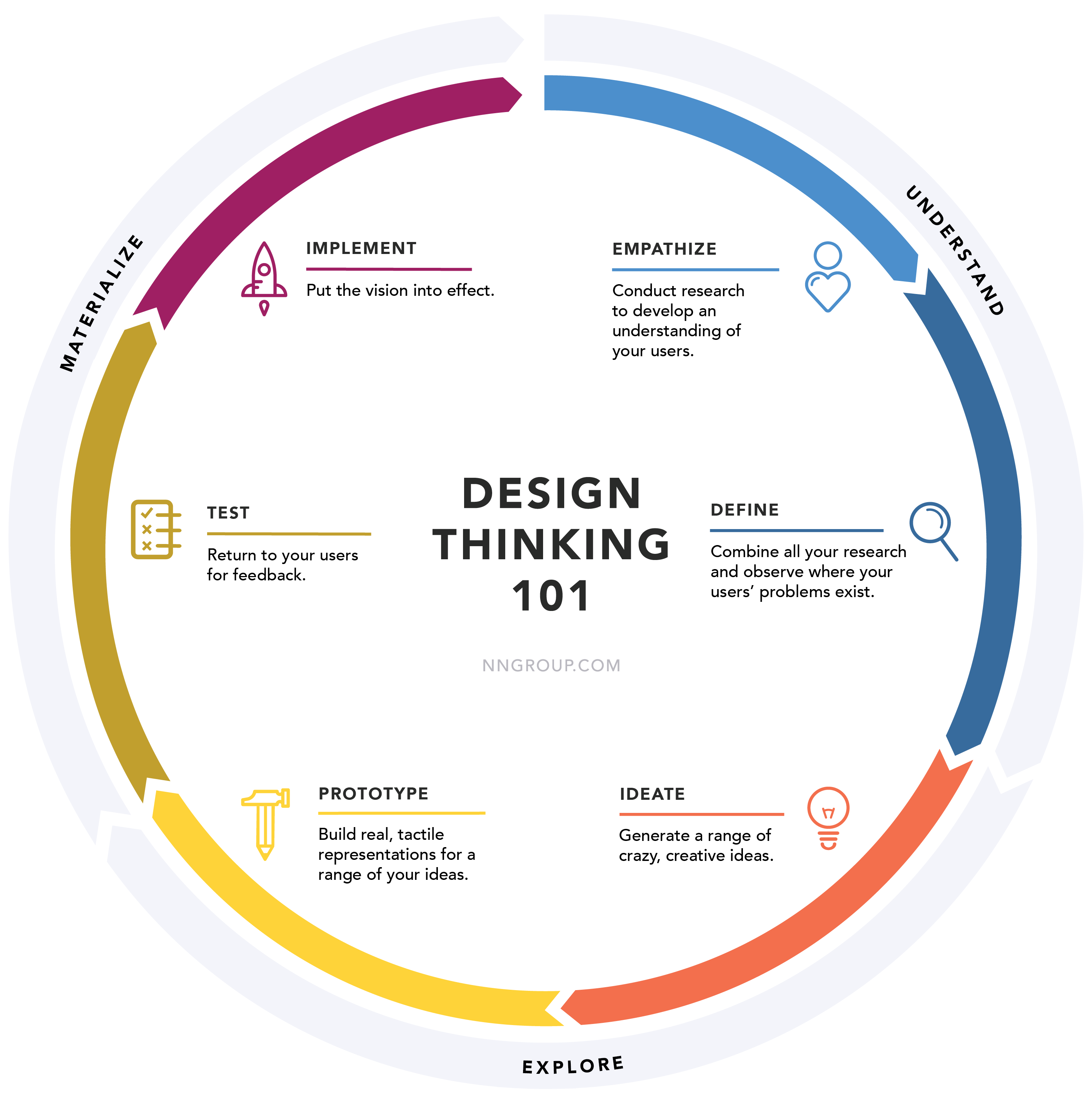
(Source)
Problem-solving Frameworks
Problem-solving frameworks are another important tool for teaching innovation. These frameworks provide a structured way of approaching problems by breaking them down into smaller components and then finding solutions for each component separately.
For example, using the Six Thinking Hats technique encourages students to consider different perspectives when tackling a problem—such as looking at it from an emotional or analytical point of view—and can help them come up with more innovative solutions than they would have otherwise thought of.
Another useful tool for teaching innovation is role-playing activities that simulate real-world scenarios in which teams must work together to solve problems quickly and efficiently.
By putting themselves in someone else’s shoes, students gain valuable insights into how others think about problems differently than they do—which can lead to more creative solutions overall.
Additionally, these types of activities foster collaboration among team members while also helping build confidence in their abilities to tackle difficult challenges head-on without fear or hesitation.
Encouraging Experimentation
Finally, encouraging experimentation through hands-on projects can be an effective way to teach innovation because it allows students to explore new concepts without worrying about making mistakes along the way. This is a key element of successful innovators who “fail fast” to learn quickly from their experiences and move forward with better ideas next time around.
Giving feedback throughout this innovation process also helps reinforce good practices while allowing room for improvement so that everyone involved feels like they are contributing something meaningful towards achieving success together as a team
By leveraging the right tools and techniques, teaching innovation can be made more accessible to teams of all sizes. However, various difficulties must be addressed to guarantee the successful adoption of inventive approaches.
Key Takeaway: Educators need to cultivate innovation for success, which can be accomplished by employing design-focused strategies, brainstorming activities, problem-solving approaches, and other resources. By leveraging these methods while keeping creativity, collaboration, and critical thinking at the forefront, we can give our next-generation professionals a head start on becoming innovative thinkers.
Challenges to Teaching Innovation in the Workplace
Can innovation be taught? One of the biggest challenges to teaching innovation in the workplace is getting employees to think outside the box. It can be difficult for people who are used to doing things a certain way or have been trained in specific processes, to break away from those habits and try something new.
This can be especially true when it comes to introducing new technology or software into an organization. Employees may not understand how it works or why they should use it, leading them to resist change and stick with what they know.
Another challenge is encouraging creativity among team members. Innovation requires creative thinking and problem-solving skills that some employees may lack due to their training or experience level.
Leaders must find ways to foster creativity by providing resources such as brainstorming sessions, workshops on design thinking, and other activities that promote out-of-the-box thinking within their teams.
A third challenge is managing expectations around innovation initiatives.
Organizations often have high hopes for these projects but don’t always provide enough guidance or support for them to succeed, This can lead employees to feel overwhelmed and discouraged if they don’t see results quickly enough.
To ensure success, leaders need to set realistic goals while also providing adequate resources so that teams have everything they need at their disposal to reach those objectives efficiently and effectively.
Finally, staying up-to-date with industry trends is essential for any successful innovation initiative. However, this can be a daunting task given the ever-changing nature of technology today!
Companies must invest time into researching current trends to stay ahead of competitors while also keeping their teams informed about emerging technologies so that everyone has access to up-to-date information needed for successful projects down the line.
Key Takeaway: Teaching something new can be difficult, but with the right resources and aid it is achievable. Educators must first understand what innovation is before creating a comprehensive learning management system that encourages collaboration among peers and promotes experimentation without fear of failure or criticism. With these steps in place, we can help ensure future generations are equipped to succeed professionally while having access to better quality jobs for greater economic stability worldwide.
Conclusion
Can innovation be taught? Innovative thinking is essential for organizational success, and offering educational resources to staff that focus on fostering innovative ideas can be advantageous for both employers and employees.
Design thinking processes and methodologies provide useful frameworks for guiding teams through creative problem-solving activities. Ideation techniques such as brainstorming or storyboarding help participants generate ideas quickly while encouraging out-of-the-box thinking. Problem-solving strategies like SWOT analysis or Six Sigma can help identify underlying issues related to a project’s success or failure.
The biggest challenge when it comes to teaching innovation is often the lack of resources or support from stakeholders due to limited time and budget constraints. To overcome this hurdle, companies should invest in innovative education programs that focus on developing an entrepreneurial mindset among their staff members. This way, they can become more creative problem solvers who are better equipped to handle new challenges within their organizations.
Unlock the power of data-driven insights with Cypris. Our platform helps R&D and innovation teams quickly identify opportunities for improvement, so they can focus on what matters most: creating innovative solutions.

As part of an innovation team, you might have come across various patent applications in your career. However, “weird patents” hold a unique place in the world of intellectual property. These unconventional inventions can spark curiosity and even offer valuable insights for R&D managers, product development engineers, scientists, and other research professionals.
In this blog post, we will delve into the fascinating realm of weird patents by discussing their definition and providing some notable examples. We will also explore the benefits of obtaining such peculiar patents for inventors or companies looking to protect their ideas.
Table of Contents
- Weird Patents: Bizarre Personal Inventions
- Mustache Guard by V.A. Gates
- Device for Waking Persons from Sleep by Samuel S. Applegate
- Unusual Safety Patents
- Parachute Head Attachment by Benjamin Oppenheimer
- Electric Doormat Alarm System by Samuel S.Applegate
- Fashion with a Twist of Functionality
- Greenhouse Helmet Invention by Waldemar Anguita
- Weather-Adaptable Costumes by Rod Spongberg
- Strange Culinary and Entertainment Patents
- Slot Machine-style Plant Dispenser System by Richard Bruce Bernardi II
- Interactive Commercial-to-Video Game Conversion Patent by Sony
- Conclusion
Weird Patents: Bizarre Personal Inventions
Throughout history, inventors have patented peculiar personal devices that range from practical to downright bizarre. These peculiar patents can reflect the special requirements and longings of their inventors, while some may even appear to have been taken directly from a futuristic story.
Take a deeper dive into some of these odd patents which might make you question why they issued vague patents!
Mustache Guard by V.A. Gates
In 1876, V.A. Gates was issued a patent for his invention: the mustache guard. This device was designed to protect facial hair during meals by covering the wearer’s mustache with a small shield attached to eyeglasses or another head-mounted apparatus.
The idea behind this strange invention was to keep food particles and liquids away from one’s precious facial hair while eating or drinking.

Device for Waking Persons from Sleep by Samuel S. Applegate
If you think your alarm clock is annoying, imagine being woken up by small blocks hitting your face. That’s exactly what Samuel S.Applegate had in mind when he filed his patent application in 1882 for his “Device for waking persons from sleep.”
The contraption would release small blocks suspended above the sleeper’s face at predetermined intervals causing pain upon impact and effectively rousing them awake.

Inventions like these showcase the creativity and ingenuity of inventors throughout history. While some may seem strange or even comical today, they serve as reminders that innovation can come from unexpected places and inspire us to think outside the box when tackling everyday challenges.
The bizarre personal inventions show the ingenuity of inventors, who have come up with unique solutions to everyday problems. With safety being a priority for many people, it is interesting to see how unusual patents are created to address potential hazards.
Key Takeaway: We take a look at some of the most unusual and creative inventions patented throughout history. From VVV.A. Gates’ mustache guard to Samuel S Applegate’s device for waking people from sleep, these bizarre patents show how inventors have come up with out-of-the-box solutions to everyday problems. You’ll go asking: how were they issued vague patents?
Unusual Safety Patents
In the world of innovation, inventors have come up with some truly bizarre ideas to ensure safety in various situations. Some of these unusual patents focus on unique measures that may seem like they were pulled straight from a science fiction novel but are attempts at solving real-world problems.
Parachute Head Attachment by Benjamin Oppenheimer
The 1879 patent filed by Benjamin Oppenheimer proposed a parachute attachment for wearers’ heads, designed to allow people to jump safely from burning buildings. This invention aimed to provide an alternative escape route during emergencies when traditional exits might be blocked or inaccessible.
The concept involved attaching a small parachute directly onto the wearer’s headgear and deploying it as they leaped out of windows or other high locations. Although this idea may not have taken off in practice, it demonstrates early efforts toward personal safety innovations.
Electric Doormat Alarm System by Samuel S.Applegate
Inventor Samuel S.Applegate was granted a patent for his electric doormat alarm system which aimed at enhancing home security. When someone stepped on the mat, an electrical circuit would be completed and trigger an alarm within the house, alerting occupants about potential intruders or unwanted visitors.
While modern-day security systems have evolved far beyond Applegate’s initial design, this quirky invention showcases how inventors were thinking outside the box even back then when it came to protecting their homes and families.
Beyond these two examples mentioned above lies countless more peculiar inventions that never quite made their way into mainstream use but still serve as fascinating insights into human creativity and ingenuity throughout history. These weird patents remind us that innovation often stems from the most unexpected places and can inspire modern-day inventors to push boundaries in their quest for new solutions.
Inventors must consider safety patents as a means of creating novel answers to common issues. Moving on from safety patents, fashion with a twist of functionality is another unique way that inventors can bring innovative ideas to life.
Key Takeaway: Innovators have come up with some truly bizarre inventions to ensure safety, such as Benjamin Oppenheimer’s parachute head attachment and Samuel S. Applegate’s electric doormat alarm system – which shows us that innovation can often stem from the most unexpected places. These weird patents remind us of human creativity and ingenuity throughout history.
Fashion with a Twist of Functionality
Inventors have always been fascinated by the idea of combining fashion and functionality, leading to some truly bizarre patents. These unusual creations not only serve as conversation starters but also offer practical benefits for their users.
Greenhouse Helmet Invention by Waldemar Anguita
The greenhouse helmet, invented by Waldemar Anguita, is an excellent example of this fusion. This transparent dome-like headdress is equipped with air filters and miniature shelves for potted plants, allowing wearers to breathe fresh oxygen produced by the plants while protecting them from polluted air.
Weather-Adaptable Costumes by Rod Spongberg
Rod Spongberg’s patented weather-adaptable costumes provide another interesting blend of fashion and function. These garments feature built-in ventilation or insulation systems that adjust based on external conditions, ensuring optimal comfort in various weather situations. While these outfits might not make it onto mainstream runways anytime soon, they showcase innovative solutions for everyday challenges faced by people living in different climates.
Inventions like these demonstrate how creative minds are constantly pushing the boundaries of what’s possible in fashion. While some may view these patents as mere curiosities, they also serve as reminders that innovation can come from unexpected places and inspire future breakthroughs in various industries.
Key Takeaway: We examine some of the more unusual patents, such as Waldemar Anguita’s greenhouse helmet and Rod Spongberg’s weather-adaptable costumes. All these inventions show that innovation can come from unexpected places and inspire future breakthroughs in various industries.
Strange Culinary and Entertainment Patents
In the realm of unusual patents, some inventors have focused their creativity on culinary-related innovations. These inventions not only add a touch of novelty to the kitchen but also aim to improve our eating habits and overall dining experience.
Slot Machine-style Plant Dispenser System by Richard Bruce Bernardi II
Rather than relying on traditional serving methods, Richard Bruce Bernardi II’s patented slot machine-style plant dispenser system adds an element of fun while promoting healthier eating habits.
The invention prevents chefs from pinching food off plates and encourages portion control measures by dispensing plants in predetermined amounts through a rotating drum mechanism. This inventive system for portion control and fun dining has the potential to bring healthful eating options into restaurants, cafeterias, or even home kitchens.
Interactive Commercial-to-Video Game Conversion Patent by Sony
Moving away from culinary inventions, we find ourselves immersed in the world of entertainment where companies love exploring new ways to engage audiences. One such example is Sony’s innovative method for converting television commercials into interactive networked video games. Their published patent application details how viewers can interact with advertisements using their gaming consoles or other devices connected via a network like Wi-Fi or Bluetooth.
This technology could potentially revolutionize advertising as it merges two popular forms of media – TV commercials and video games – creating immersive experiences that keep users engaged while providing targeted marketing opportunities for brands.
Though some patents may appear strange, they often represent innovative solutions to real-world problems that can lead to meaningful progress. However, these peculiar inventions often reflect creative thinking and problem-solving skills which can lead to groundbreaking advancements in various industries. From culinary delights to immersive entertainment experiences, these weird patents showcase human ingenuity at its finest.
Key Takeaway: We talk about Richard Bruce Bernardi II’s slot machine-style plant dispenser system to Sony’s interactive commercial-to-video game conversion patent. Both inventions show how far inventive minds can go when it comes to pushing boundaries and thinking outside the box.
Conclusion
Weird patents are an interesting and unique way to protect intellectual property. Obtaining a weird patent can be challenging due to the complexity of existing laws. With patent knowledge at hand, innovators have access to all the information they need for obtaining a weird patent quickly and efficiently.
Unlock the potential of weird patents with Cypris, an R&D and innovation platform designed to provide rapid time-to-insights. Join us today to discover how you can use our powerful data sources for your research needs.

When it comes to protecting intellectual property, understanding what a utility patent vs design patent is is crucial for R&D Managers, Product Development Engineers, and Senior Directors of Research & Innovation. These two types of patents serve distinct purposes in safeguarding innovations and designs. In this blog post, we will delve into the key distinctions between utility patents and design patents.
We’ll start by defining both utility and design patents before highlighting their unique characteristics. Next, we will explore the benefits of obtaining a utility patent such as protection for inventions, increased market share, and financial gain from licensing or selling the invention.
Subsequently, we will discuss the advantages associated with securing a design patent including protection for ornamental designs, the ability to enforce rights in court, and exclusive rights to sell products featuring those designs. Lastly, cost considerations like filing fees and attorney costs for both types of patents along with maintenance fees will be addressed.
This basic guide aims to provide valuable insights on choosing utility patent vs design patent while navigating through complex intellectual property matters in research & innovation domains.
Table of Contents
- Utility Patent vs Design Patent
- Functional Protection With Utility Patents
- Ornamental Coverage through Design Patents
- Duration and Maintenance Fees
- 20-year Duration for Utility Patents
- 15-year Duration for Design Patents
- Filing Separate Applications for Dual Protection
- Eligibility Criteria for Dual Protection
- The Process of Filing Separate Applications
- Conclusion
Utility Patent vs Design Patent
When it comes to protecting your invention, understanding the differences between utility patents and design patents is crucial. These two types of intellectual property rights serve distinct purposes and protect different aspects of an invention. This section will look at a utility patent vs design patent, along with their respective coverage.
Functional Protection With Utility Patents
Utility patent applications include the protection of the functional components of an invention, such as processes, machines, or compositions of matter. This type of patent covers how a product works or its method for achieving a specific result. According to the United States Patent and Trademark Office (USPTO), for an invention to qualify for a utility patent application, it must be novel, non-obvious, and have some practical use.
- Novelty: The invention must not have been previously disclosed in any prior art.
- Non-Obviousness: The innovation should not be easily deduced by someone skilled in that particular field.
- Usefulness: The creation must provide some real-world benefit or solve a problem faced by consumers.
Ornamental Coverage through Design Patents
In contrast to utility patents which focus on functionality, a design patent protects the ornamental appearance or visual characteristics of an item. This can include aspects like shape configuration or surface ornamentation applied to consumer goods.
Design patent applications must demonstrate that the design is novel, non-obvious, and purely ornamental. It’s important to note that a design patent does not cover any functional aspects of an invention.
- Novelty: The design should be unique and distinguishable from existing designs or prior art.
- Non-Obviousness: The aesthetic features cannot be easily derived from other known designs by someone skilled in the field.
- Ornamentality: The visual elements must serve no functional purpose beyond their appearance.

While utility patents safeguard the practical components of an invention, such as how it works or its method for achieving specific results, design patents protect only its ornamental appearance. Understanding these distinctions can help inventors determine which type of protection best suits their needs and ensure they file appropriate patent applications with national patent offices.
Utility patent applications include providing functional protection for inventions, while design patents offer ornamental coverage.
Key Takeaway: Utility patent applications include protecting the functional aspects of an invention, such as processes and machines, while design patents cover its visual features. The former requires novelty, non-obviousness, and usefulness to qualify for patent protection; the latter needs only uniqueness, non-obviousness, and ornamentality. In a nutshell: utility covers what something does; design looks at how it appears.
Duration and Maintenance Fees
When considering the protection of your invention, it is essential to understand the varying durations and maintenance fees associated with both types of intellectual property rights. While utility patents generally last 20 years from their first filing date, design protections typically have a shorter lifespan at 15 years.
20-year Duration for Utility Patents
A utility patent protects functional components such as processes or machines and lasts for 20 years from the earliest filing date in most cases. Nevertheless, this period may be subject to modifications contingent upon elements such as Patent Term Adjustment (PTA) or Patent Term Extension (PTE).
During this time frame, inventors are required to pay three separate maintenance fee payments – due at 3.5, 7.5, and 11.5 years after issuance – to keep their patents active.
15-year Duration for Design Patents
In contrast to utility patents’ longer term of protection, design patents, which cover ornamental appearance or visual characteristics of an item such as consumer goods or packaging designs last only for a total duration of 15 years without any ongoing payment obligations once granted by the United States Patent and Trademark Office (USPTO).
Maintenance fees play a crucial role in ensuring that valuable inventions continue receiving legal coverage throughout their respective lifespans. It also allows national patent offices like USPTO to fund operations efficiently through these charges collected over time.
- Utility patents: 20-year duration, three maintenance fee payments required
- Design patents: 15-year duration, no ongoing payment obligations once granted
To ensure your invention receives the appropriate protection and to avoid any unnecessary expenses or loss of rights, it is crucial to work with a knowledgeable patent attorney who can guide you through the complexities of utility and design patent applications. By understanding these key differences in durations and fees associated with each type of intellectual property right, R&D managers and engineers can make informed decisions when seeking legal coverage for their innovations.
Utility patents provide 20 years of protection, while design patents offer 15 years; however, it is possible to receive dual protection by filing separate applications.
Key Takeaway: Utility patent protects for 20 years and requires three separate maintenance fees to be paid at 3.5, 7.5, and 11.5 years after issuance. On the other hand design patents have a 15-year lifespan with no further payment obligations once granted by USPTO. R&D teams need to understand these key differences to make informed decisions about protecting their inventions.
Filing Separate Applications for Dual Protection
You might not need to choose a utility patent vs a design patent. You can apply for dual protection.
When an invention possesses both functional components and distinctive aesthetic features, it may be eligible for dual protection under utility and design patent laws. In these cases, inventors should file separate applications to cover each aspect of their creation. This section will discuss the eligibility criteria for dual protection and guide on filing separate patent applications.
Eligibility Criteria for Dual Protection
To qualify for dual protection, an invention must meet specific requirements set by the United States Patent and Trademark Office (USPTO). For a utility patent application, the invention must have a practical use or function that is novel, non-obvious, and useful. Examples include processes, machines, articles of manufacture, or composition of matter.
- Novelty: The invention must not already exist in the prior art. This includes patents granted previously or published documents describing similar inventions.
- Non-obviousness: The invention cannot be easily designed by someone skilled in its field based on existing knowledge.
- Usefulness: The claimed process or product has some practical purpose beyond mere aesthetics.
In contrast to utility patents, a design patent protects the ornamental appearance of an item rather than its functionality. To qualify as a valid subject matter under US law provisions governing designs:
- The visual characteristics must be new & original;
- An integral part of consumer goods; li >
- Serving no utilitarian function other than decoration
The Process of Filing Separate Applications
To secure both utility and design patent protection, inventors must file separate applications with the USPTO. The following steps outline this process:
- Prepare a detailed description of your invention, including drawings or photographs that clearly illustrate its functional components (for utility patents) and ornamental appearance (for design patents).
- Consult with a qualified patent professional who can guide you through the intricate filing process and guarantee that all legal specifications are adhered to.
- Submit your completed utility patent application(s) along with any required fees to the USPTO. This may include filing provisional applications first if necessary for strategic reasons such as securing an earlier priority date.
Similarly, submit your design patent application(s), ensuring that it focuses solely on the visual characteristics of your invention without delving into its functionality.
Monitor both applications closely throughout their respective examination processes at national patent offices. Respond promptly to any office actions issued by examiners requesting additional information or amendments in support of granting protections sought under each category: Utility and Design Law provisions respectively.
When seeking dual protection for inventions possessing both functional components and distinctive aesthetic features, it is crucial to understand eligibility criteria set forth by governing authorities like USPTO, then follow prescribed procedures diligently so as not only to maximize chances at obtaining desired IP rights but also to minimize potential risks associated.
Key Takeaway: You might not need to choose a utility patent vs design patent. You might not need to choose a utility patent vs design patent. We looked at the eligibility criteria and procedures necessary to file separate patent applications for inventions that possess both functional components and aesthetic features, to obtain dual protection. It’s important to understand the requirements set by governing authorities like USPTO before embarking on this endeavor, so as not to miss out on any potential IP rights or run into any legal pitfalls.
Conclusion
When considering whether to obtain a utility patent vs design patent for your invention, it is important to understand the differences between them and their respective benefits.
Moreover, the cost of obtaining either type of patent should be taken into account. Taking into account the various aspects, a judicious selection of either utility or design patenting can be made to safeguard your intellectual property.
Unlock the power of your R&D and innovation teams with Cypris, our comprehensive research platform that provides rapid time to insights. Utilize design patents or utility patents for maximum protection when filing an invention – let us help you make informed decisions!