
Small Modular Reactor and Advanced Nuclear Patent Landscape in 2026
Writen By:
Cypris Research Team
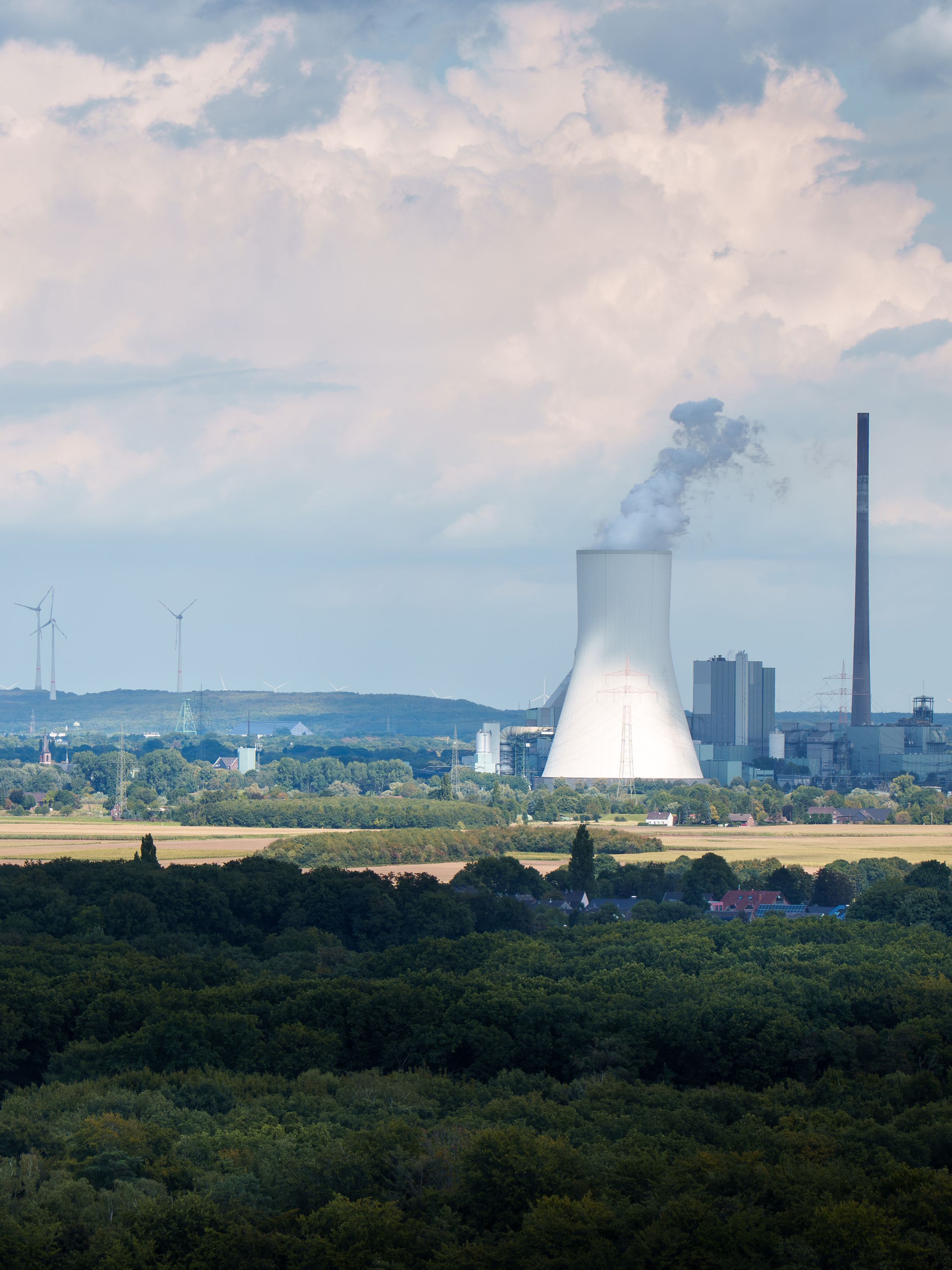


Small modular reactors and advanced nuclear designs have moved from concept toward licensing and deployment, and their patent landscape is distinctive because it spans several competing reactor families and a fuel supply chain that must be built alongside them. Where conventional nuclear plants are large, bespoke, and light-water-cooled, SMRs and advanced reactors are smaller, factory-built, and often use novel coolants, moderators, and fuels to achieve passive safety and flexible operation. The field divides into distinct regions of patenting: the reactor concepts themselves, including high-temperature gas-cooled reactors, molten-salt reactors, sodium-cooled fast reactors, integral light-water SMRs, and microreactors; the core, coolant, and moderator designs within each, from tristructural isotropic coated-particle fuel in gas-cooled reactors to fluoride fuel salts in molten-salt reactors;¹,²,³ the advanced fuels, especially TRISO particles and the high-assay low-enriched uranium, or HALEU, they require; the passive safety systems and control approaches that shut a reactor down without active intervention;⁵,⁶ and the modular manufacturing and construction methods that make factory production possible.⁴ Alongside these sit non-electric applications, from industrial heat and hydrogen to powering data centers. Because a viable design depends on several of these layers, and on a fuel supply that does not yet exist at scale, freedom-to-operate and white space analysis must span reactor, fuel, and manufacturing together.
The landscape is being reshaped by licensing progress and by a surge in demand. Regulators have modernized the framework for licensing advanced reactors, adopting a risk-informed, performance-based, and technology-inclusive rule intended to accommodate the range of SMR and advanced designs,⁷ while government programs are standing up a domestic supply of HALEU, the enriched fuel that many advanced reactors need and that has not been commercially produced at scale. Demand has accelerated sharply as technology companies contract for nuclear power to run data centers, drawing large investment. The competitive picture spans reactor developers pursuing different coolant and fuel choices, specialized fuel fabricators building TRISO and HALEU capacity, and established nuclear suppliers. This shows in the record: across the Cypris corpus of more than 500 million patents and scientific papers, the nuclear-anchored SMR, microreactor, TRISO, molten-salt, and HALEU set holds on the order of 2,017 families and grew from about 87 in 2020 to roughly 250 in 2024, with the most active assignees mixing large academic and institutional filers, led by Chinese universities and institutes, with reactor developers and fuel fabricators such as TerraPower, Mitsubishi Heavy Industries, BWXT, and Westinghouse and the US Department of Energy, and China ahead of the United States and South Korea on geography; a broad, unfiltered "microreactor" query returns far more families but is contaminated by unrelated chemical-microreactor art, so the nuclear-anchored figure is the defensible one. Because applications publish about eighteen months after filing, the most recent reactor and fuel filings are under-represented (2025 and 2026 counts are partial), so the current frontier is more active than granted-patent counts suggest.
The strategic question is which reactor family and layer to back, and the white space sits where technology and supply chain intersect. Advanced fuel, TRISO fabrication and the HALEU supply chain, is a critical, comparatively concentrated layer where scaling and cost are the barriers, so fabrication methods and fuel designs carry high value.¹ Coolant and materials that survive high temperatures and long fuel cycles, across gas, salt, and metal-cooled designs, passive safety systems, modular manufacturing and construction that lower cost and schedule, and non-electric applications such as process heat, hydrogen, and dispatchable power for data centers are all distinct, contested layers.²,³ Reading the landscape by reactor family, layer, and owner, and tracking both the patents and the underlying nuclear-engineering research, is what separates a crowded region from an open one.
Where the advanced-nuclear white space is
Advanced fuel and HALEU supply. TRISO fabrication methods and the high-assay low-enriched uranium supply chain are a critical, concentrated layer where scaling and cost are the barriers.¹
Coolant, moderator, and materials. Coolants and materials that survive high temperatures and long fuel cycles, across gas, salt, and metal-cooled designs, are a distinct, high-value layer.²,³
Passive safety systems. Systems and control approaches that shut a reactor down without active intervention are a differentiating capability central to SMR value.⁵,⁶
Modular manufacturing and construction. Factory-built modules and construction methods that lower cost and schedule are where the economic case is decided.⁴
Non-electric applications. Industrial heat, hydrogen production, and dispatchable power for data centers open distinct application and integration IP.
How AI-powered landscape and white space analysis helps
Resolving a landscape that spans several reactor families, a fuel supply chain, and manufacturing requires more than keyword search. AI-powered analysis addresses this with semantic search that clusters activity by reactor family, layer, and application across varied terminology, attribution that normalizes developer, fuel-fabricator, and supplier filers to canonical entities, and continuous monitoring that keeps pace with a fast-moving field. Because nuclear advances appear in scientific and engineering literature before they are patented, reading both patents and literature gives the earliest signal of where the frontier is moving.
Where Cypris fits
Cypris runs patent landscape and white space analysis for engineering-intensive fields such as small modular reactors and advanced nuclear across a corpus of more than 500 million patents and scientific papers, organized through a proprietary R&D ontology. The ontology clusters activity by reactor family, gas-cooled, molten-salt, sodium-cooled, light-water, and microreactor, and by layer, reactor design, advanced fuel, passive safety, and manufacturing, and normalizes developer, fuel-fabricator, and supplier filers to canonical entities, so a team can resolve which families and layers are crowded and which remain open as white space, and can separate genuine advanced-nuclear filings from unrelated art that shares terminology. Semantic search across patents and scientific literature connects filings to the underlying nuclear-engineering research, which is where advances appear first. Cypris Q, the platform's agentic layer, lets teams run landscape and white space analysis conversationally and chain the clustering, attribution, and gap analysis, and Agentic Monitoring tracks a defined family over time and flags new patents and papers as they publish. Cypris provides enterprise API partnerships with OpenAI, Anthropic, and Google, and is built with enterprise-grade security. Cypris serves hundreds of enterprise customers across pharmaceuticals, chemicals, advanced materials, energy, and other regulated industries.
FAQ
What is the small modular reactor patent landscape? The small modular reactor patent landscape is the set of patents covering factory-built, smaller nuclear reactors and advanced designs. It spans reactor families, high-temperature gas-cooled, molten-salt, sodium-cooled fast, light-water, and microreactors, plus advanced fuels, passive safety, and modular manufacturing. Each is a distinct region of patenting.
What are the main advanced reactor families? The main families are high-temperature gas-cooled reactors, molten-salt reactors, sodium-cooled fast reactors, integral light-water SMRs, and microreactors. They differ in coolant, moderator, fuel, and operating temperature. The choice of family shapes both the technical and the freedom-to-operate picture.
Why are TRISO and HALEU fuels important? TRISO and HALEU fuels are important because many advanced reactors depend on TRISO coated particles, which resist very high temperatures, and on high-assay low-enriched uranium, which is not yet commercially produced at scale. Building this fuel supply chain is a critical enabler. Fabrication methods and fuel designs are therefore a concentrated, high-value layer.
Why is data-center demand accelerating advanced nuclear? Data-center demand is accelerating advanced nuclear because technology companies need large amounts of reliable, carbon-free power, and have begun contracting for SMR and advanced-reactor output. This has drawn substantial investment and sharpened competition. It has also expanded interest in non-electric and dispatchable applications.
How does advanced-reactor licensing work? Advanced-reactor licensing in the United States distinguishes several steps, including design approval or certification, a construction permit, and an operating license, and regulators have adopted a modernized, risk-informed, technology-inclusive framework to accommodate advanced designs. A construction permit is not an operating license. Claims about a given project's status should be tied to the specific regulatory record.
Where is the white space in advanced nuclear? The white space includes advanced fuel and HALEU supply, coolant, moderator, and materials, passive safety systems, modular manufacturing and construction, and non-electric applications. The reactor-design and fuel layers are the most active. The most open, high-value opportunities are in fuel, materials, and manufacturing.
What software helps analyze the small modular reactor patent landscape? Software for the advanced-nuclear landscape should cluster activity by reactor family, layer, and application, resolve developer, fuel-fabricator, and supplier filers to canonical owners, separate genuine advanced-nuclear filings from unrelated art, search patents and scientific literature semantically, and monitor a fast-moving field continuously. Cypris does this across more than 500 million patents and scientific papers using a proprietary R&D ontology, semantic search, Cypris Q, and Agentic Monitoring.
Which teams use advanced-nuclear patent landscape analysis? Advanced-nuclear patent landscape analysis is used by R&D, IP, and strategy teams at reactor developers, fuel fabricators, nuclear suppliers, utilities, and technology buyers, as well as investors assessing the sector. Because the field spans reactor, fuel, and manufacturing layers, structured analysis is essential. Cypris serves hundreds of enterprise customers across energy and other research-intensive industries.
Endnotes
- International Atomic Energy Agency (2025). Coated particle fuels for high-temperature gas-cooled small modular reactors. https://doi.org/10.61092/iaea.zyya-k9sd
- Powers, J. J., & Gehin, J. C. (2016). Liquid-fuel molten salt reactors for thorium utilization. Nuclear Technology, 194(2). https://doi.org/10.13182/nt15-124
- Grimes, W. R. (1970). Molten-salt reactor chemistry. Nuclear Applications and Technology, 8(2). https://doi.org/10.13182/nt70-a28621
- Hannah, B. (2026). Technical assessment of molten salt reactor small modular reactors: design and licensing considerations. https://doi.org/10.5281/zenodo.20087242
- Zarei, M. (2020). State feedback control of power in a small modular reactor. Annals of Nuclear Energy, 144. https://doi.org/10.1016/j.anucene.2020.107743
- Diniz, R., et al. (2023). Reactivity calculation in molten salt reactors with an inverse kinetics model. Annals of Nuclear Energy, 190. https://doi.org/10.1016/j.anucene.2023.110130
- U.S. Nuclear Regulatory Commission (2026). 10 CFR Part 53 — risk-informed, technology-inclusive regulatory framework for advanced nuclear reactors (final rule). https://www.ecfr.gov/current/title-10/chapter-I/part-53


.jpg)