Targeted Protein Degradation Patent Landscape and Freedom-to-Operate in 2026
Writen By:
Cypris Research Team
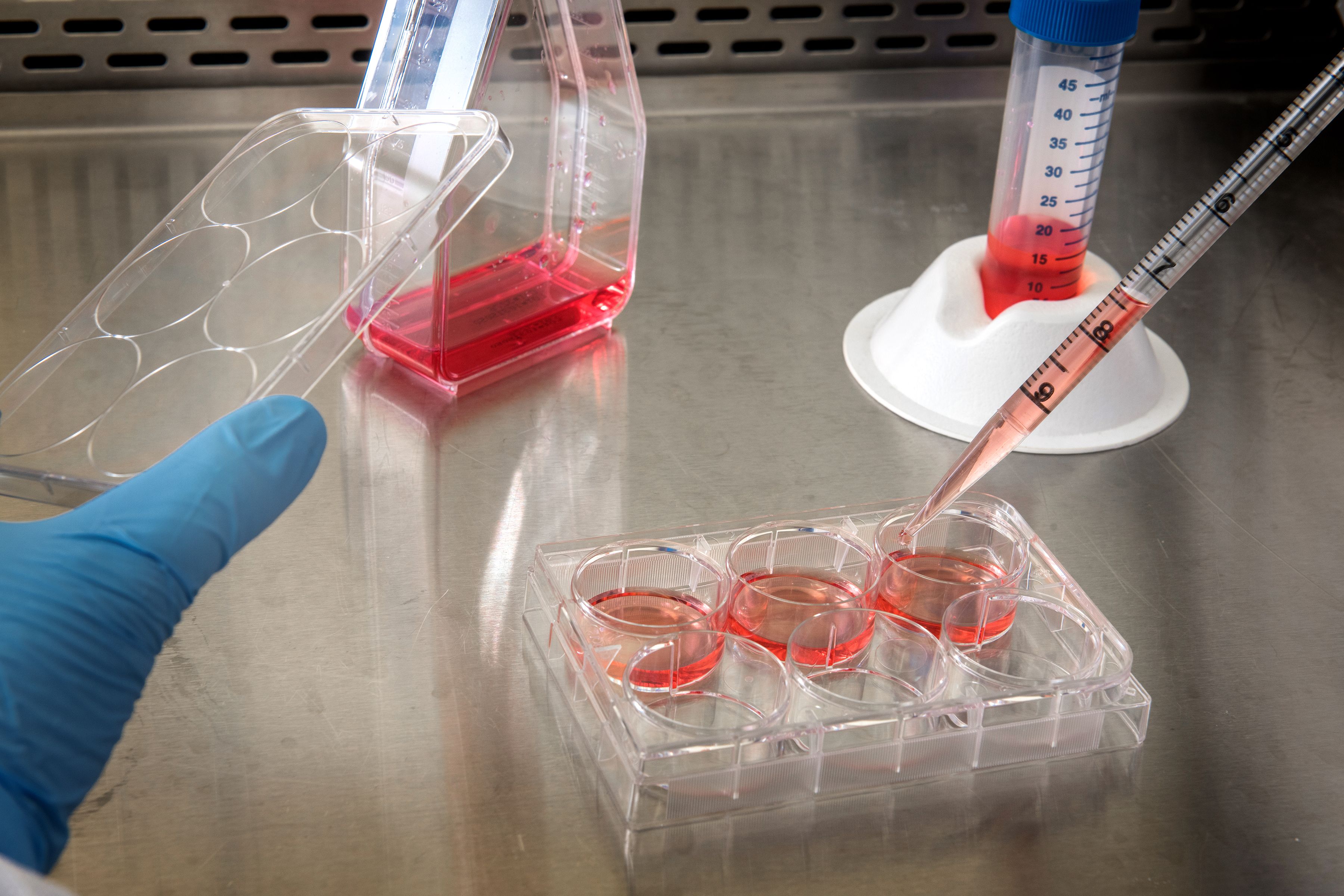


Targeted protein degradation has become one of the most closely watched modalities in drug discovery, and its patent landscape is distinctive because a degrader is a modular molecule whose parts are patented separately. Rather than blocking a protein's active site the way a conventional inhibitor does, a degrader recruits the cell's ubiquitin-proteasome system to destroy the target protein outright, which makes it possible to address targets that lack a druggable pocket.¹ The two most advanced approaches are proteolysis-targeting chimeras, or PROTACs, which are heterobifunctional molecules built from a ligand that binds the target protein, a linker, and a ligand that binds an E3 ubiquitin ligase, and molecular glues, which are smaller, single-piece molecules that induce proximity between the target and an E3 ligase by reprogramming the ligase's surface to recruit a neosubstrate.²,³ A growing set of related modalities, including lysosome-targeting and autophagy-targeting chimeras and degrader-antibody conjugates, extends the field further, and the chemical space of molecular glues in particular is only beginning to be mapped.⁴ Because the E3-ligase binder, the target ligand, the linker, and the whole composite molecule can each be claimed independently and are often held by different owners, freedom-to-operate for a degrader is a multi-layer, multi-owner analysis rather than a single clearance.
The field has moved from concept to the market, which has raised the stakes across every layer. In May 2026 vepdegestrant (VEPPANU), an oral PROTAC estrogen-receptor degrader developed by Arvinas and Pfizer, received US Food and Drug Administration approval, becoming the first approved PROTAC therapy, and the partners had earlier moved to out-license its commercialization.⁸,⁹ A steady stream of degrader deals has followed, including a second Monte Rosa–Novartis molecular-glue collaboration announced in September 2025 with a $120 million upfront payment and total potential value up to $5.7 billion.¹⁰ Foundational intellectual property traces to the academic origins of the PROTAC concept and to the E3-ligase-binder chemistries: the large majority of clinical-stage degraders recruit the cereblon ligase, with von Hippel-Lindau the other principal handle, even as the field works to expand to the other canonical E3 ligases and beyond.³,⁵ Patent activity around the von Hippel-Lindau layer alone is now substantial enough to sustain dedicated patent reviews.⁷ This concentration is visible in the record: across the Cypris corpus of more than 500 million patents and scientific papers, the degrader set holds on the order of 4,292 families and grew from roughly 134 in 2020 to about 814 in 2024, with the most active assignees including Dana-Farber, C4 Therapeutics, and Arvinas, and China (about 1,492 families) modestly ahead of the United States (about 1,205); 2025 and 2026 counts are partial because of the publication lag.
The strategic picture turns on where defensible, hard-to-design-around IP sits. The human genome encodes more than six hundred E3 ligases, but only a handful have been harnessed for degradation, so novel E3-ligase binders are a high-value, comparatively open layer, and the molecular-glue field, where rational design is still early, is another.¹,⁶ Because a degrader assembled from a known target ligand and a known E3 binder may face freedom-to-operate exposure on either component plus the linker, the durable value increasingly lies in new E3 chemistries, glue scaffolds, tissue- or ligase-selective designs, orally bioavailable degraders, and expansion beyond oncology into immunology and neuroscience.² Reading the landscape by layer and by owner, and tracking both the patents and the underlying chemistry and cell-biology research, is what separates a workable position from a blocked one.
What creates FTO risk in targeted protein degradation
E3-ligase-binder claims. These cover the chemistries that recruit an E3 ligase, such as cereblon and von Hippel-Lindau binders and newer ligases, a foundational and heavily contested layer.³,⁷
Target-ligand claims. These cover the warhead that binds the protein of interest, which can carry its own separate IP from inhibitor programs.
Linker claims. These cover the chemistry connecting the two ligands in a PROTAC, a distinct layer that materially affects degradation and is independently patentable.
Composite-molecule and molecular-glue claims. These cover the specific bifunctional degrader or single-piece glue, the layer most directly tied to a clinical candidate.²
Mechanism, formulation, and modality claims. These cover degradation mechanisms, formulations, and emerging modalities such as lysosome-targeting chimeras and degrader-antibody conjugates.
How AI-powered landscape and FTO analysis helps
A modular, multi-owner, fast-moving landscape is beyond manual clearance. AI-powered analysis addresses this with semantic search that retrieves relevant E3-binder, target-ligand, linker, and composite-molecule claims regardless of terminology, attribution that resolves academic and commercial owners and the license chains to canonical entities, claim-level analysis that separates the layers, and continuous monitoring that tracks new filings and deals. Because degrader advances appear in scientific literature before they are patented, reading both patents and literature gives earlier warning of where the field is heading.
Where Cypris fits
Cypris runs patent landscape and freedom-to-operate analysis for modular, contested fields such as targeted protein degradation across a corpus of more than 500 million patents and scientific papers, organized through a proprietary R&D ontology. The ontology clusters the landscape by layer, E3-ligase binder, target ligand, linker, and composite molecule, and normalizes academic and commercial owners to canonical entities, so a team sees how rights are distributed across the many parties rather than a flat list. Semantic search across patents and scientific literature surfaces relevant claims regardless of terminology and connects filings to the underlying research, which is where new E3 chemistries and glue scaffolds emerge first. Cypris Q, the platform's agentic layer, lets teams run landscape and FTO analysis conversationally and chain the attribution, clustering, and claim-level analysis across layers, and Agentic Monitoring tracks the landscape over time and flags new filings and developments as they publish. Cypris provides enterprise API partnerships with OpenAI, Anthropic, and Google, and is built with enterprise-grade security. Cypris serves hundreds of enterprise customers across pharmaceuticals, chemicals, advanced materials, energy, and other regulated industries.
FAQ
What is targeted protein degradation? Targeted protein degradation is a modality that eliminates a disease-causing protein by recruiting the cell's ubiquitin-proteasome system, rather than inhibiting the protein's activity. The leading approaches are PROTACs, which are bifunctional molecules, and molecular glues, which are single-piece molecules. It can address targets that lack a druggable pocket.
Why is freedom-to-operate hard for degraders? Freedom-to-operate is hard for degraders because a PROTAC is built from an E3-ligase binder, a target ligand, and a linker, each independently patentable and often held by different owners, and the composite molecule is a further layer. Molecular glues add their own scaffold IP. FTO must therefore be assessed layer by layer across multiple estates.
What claim types create FTO risk in TPD? Five claim types create FTO risk? E3-ligase-binder claims, target-ligand claims, linker claims, composite-molecule and molecular-glue claims, and mechanism, formulation, and modality claims. Each covers a distinct layer and can be held by a different owner. The E3-binder and composite-molecule layers are especially decisive.
Has any PROTAC been approved? Yes. In May 2026, vepdegestrant, an oral PROTAC estrogen-receptor degrader developed by Arvinas and Pfizer, received US FDA approval, becoming the first approved PROTAC therapy. Its approval marks the transition of targeted protein degradation from clinical development toward the market. Many other degraders remain in trials.
Why are novel E3 ligases important? Novel E3 ligases are important because the genome encodes more than six hundred E3 ligases but only a few have been harnessed for degradation, so binders for new ligases open a high-value, comparatively uncrowded layer. They can enable tissue- or context-selective degradation and help design around crowded cereblon and von Hippel-Lindau chemistries. Much of the field's future white space lies here.
Where is the white space in targeted protein degradation? The white space includes novel E3-ligase binders, molecular-glue scaffolds and rational glue design, tissue- and ligase-selective degraders, orally bioavailable degraders, and expansion beyond oncology into immunology and neuroscience. The cereblon and von Hippel-Lindau chemistries are comparatively crowded. The durable, defensible value is in new E3 chemistries and glues.
Why does TPD analysis need scientific literature? TPD analysis needs scientific literature because new E3 binders, glue scaffolds, and degradation mechanisms appear in research before they are patented, so the literature gives the earliest signal. Analyzing patents alone gives a lagging view. Cypris analyzes both across more than 500 million patents and scientific papers.
What software helps analyze the targeted protein degradation patent landscape? Software for the TPD landscape should resolve academic and commercial owners and license chains to canonical entities, cluster the E3-binder, target-ligand, linker, and composite-molecule layers, search patents and scientific literature semantically, and monitor deals and new filings continuously. Cypris does this across more than 500 million patents and scientific papers using a proprietary R&D ontology, semantic search, Cypris Q, and Agentic Monitoring.
Endnotes
- Cowan, A. D., & Ciulli, A. (2022). Driving E3 ligase substrate specificity for targeted protein degradation: lessons from nature and the laboratory. Annual Review of Biochemistry, 91. https://doi.org/10.1146/annurev-biochem-032620-104421
- Fasching, B., Gaínza, P., Oleinikovas, V., Thomä, N. H., et al. (2023). From thalidomide to rational molecular glue design for targeted protein degradation. Annual Review of Pharmacology and Toxicology, 63. https://doi.org/10.1146/annurev-pharmtox-022123-104147
- Ishida, T., & Ciulli, A. (2020). E3 ligase ligands for PROTACs: how they were found and how to discover new ones. SLAS Discovery, 26(4). https://doi.org/10.1177/2472555220965528
- Poongavanam, V., et al. (2024). Molecular glue chemical space and design. Drug Discovery Today. https://doi.org/10.1016/j.drudis.2024.104205
- Zhang, X., et al. (2025). The expanding E3 ligase-ligand landscape for PROTAC technology. Targets, 3(4). https://doi.org/10.3390/targets3040030
- Belcher, B. P., Ward, C. C., & Nomura, D. K. (2021). Ligandability of E3 ligases for targeted protein degradation applications. Biochemistry, 62(3). https://doi.org/10.1021/acs.biochem.1c00464
- Urbina, F., Robertson, N., Hallatt, A. J., & Ciulli, A. (2025). A patent review of von Hippel-Lindau (VHL)-recruiting chemical matter (2019–present). Expert Opinion on Therapeutic Patents, 35(3). https://doi.org/10.1080/13543776.2024.2446232
- Arvinas, Inc. (2026, May 1). Arvinas announces FDA approval of VEPPANU (vepdegestrant) for the treatment of ESR1m, ER+/HER2- advanced breast cancer. https://ir.arvinas.com/news-releases/news-release-details/arvinas-announces-fda-approval-veppanu-vepdegestrant-treatment
- Arvinas, Inc. (2025, September 17). Arvinas provides update on collaboration with Pfizer and announces further actions to support value creation. https://ir.arvinas.com/news-releases/news-release-details/arvinas-provides-update-collaboration-pfizer-and-announces
- Monte Rosa Therapeutics, Inc. (2025, September 15). Monte Rosa Therapeutics announces collaboration with Novartis for degraders to treat immune-mediated diseases. https://ir.monterosatx.com/news-releases/news-release-details/monte-rosa-therapeutics-announces-collaboration-novartis