The Power of Data Analysis Tools and Techniques in Research


In the fast-paced world of innovation, data analysis tools and techniques in research have become essential for success. From collecting data to exploring potential insights, a variety of strategies are available to help teams make sense of their information.
In this blog post, we’ll explore some key data analysis tools and techniques in research that can provide your team with rapid time-to-insights. We’ll look at how to collect valuable datasets, use exploratory methods for uncovering patterns or trends, and apply predictive modeling approaches to forecast outcomes based on past events or behaviors.
Get ready to discover new ways you can take advantage of all that data!
Table of Contents
Data Analysis Tools and Techniques in Research
Predictive Modeling Techniques
FAQs About Data Analysis Tools and Techniques in Research
What are data analysis tools in research?
What are the four techniques for data analysis?
What Is Data Analysis?
Data analysis is the process of collecting, organizing, and interpreting data to gain insights and draw conclusions. It involves a variety of methods, techniques, and tools used to analyze large amounts of data.
One popular method for analyzing data is descriptive analytics which uses statistics to summarize the existing data. This type of analysis can help identify patterns or trends in the dataset that may be useful for decision-making.
For example, it can be used to identify customer segments or product categories with higher sales than others.
Another common technique is predictive analytics which uses statistical models such as regression analysis or machine learning algorithms to predict future outcomes based on past behavior.
This type of analysis can help companies make better decisions by providing an understanding of how different factors might affect their business performance in the future.
In addition to these two methods, there are several other techniques that can be used for analyzing data including cluster analysis (which groups similar items together), association rules (which looks at relationships between variables), and time series forecasting (which predicts future values based on historical trends).
All these techniques require specialized software tools such as SAS or R programming language for implementation.
Finally, it’s important not just to collect and analyze data but also to visualize it so that key insights are easily understood by stakeholders across an organization.
Visualization tools like Tableau allow users to create interactive charts and graphs from their datasets quickly and easily without having any coding experience necessary making them ideal for presenting complex information in a simple way.
Data Analysis Tools and Techniques in Research
Data collection is an essential part of any research project. There are several methods that can be used to collect data, each with its own advantages and disadvantages.
Surveys and Questionnaires
Surveys and questionnaires are one of the most common methods for collecting data. They provide a structured way to gather information from large numbers of people quickly and efficiently. The questions should be carefully designed to ensure they accurately capture the required information in a clear, concise manner.
This method has the advantage of being relatively inexpensive compared to other methods but may not always yield accurate results due to the potential bias of the respondents.
Focus Groups and Interviews
Focus groups involve gathering small groups together for discussions about specific topics related to the research project at hand. This method allows researchers to gain insight into how different individuals think about certain topics which can help inform decisions or shape further research activities.
However, this method is often more expensive than surveys or questionnaires since it requires more time investment from both participants and researchers alike.
Observational Studies
Observational studies involve observing behavior without directly intervening. For example, when studying the consumer behavior of online shoppers, researchers could observe shoppers’ interactions with websites without actually participating themselves to better understand user experience trends or customer preferences.
While observational studies offer valuable insights into real-world behaviors, they also require significant resources, such as personnel time, and equipment, which makes them costly endeavors.
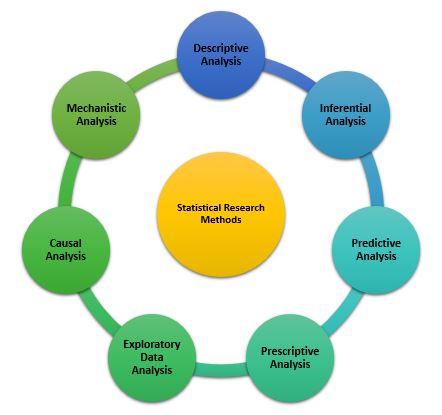
(Source)
Predictive Modeling Techniques
Predictive modeling is a powerful tool used to make predictions about future events based on past observations or trends in the data. This technique can be applied to many different types of problems, such as predicting customer churn, forecasting stock prices, and identifying fraud.
The three most common predictive modeling techniques are regression models, classification models, and clustering algorithms.
Regression Models
Regression models are used for predicting continuous outcomes such as sales revenue or temperature. These models use linear equations to map input variables (e.g., age) to an output variable (e.g., income).
Common examples of regression include linear regression and logistic regression.
Classification Models
Classification models are used for predicting discrete outcomes such as whether a customer will buy a product or not. These models use decision trees or support vector machines to classify data points into one of two categories – yes/no or true/false.
Examples of classification include binary classification and multi-class classification tasks like image recognition where each image is classified into one of several classes.
Clustering Algorithms
Clustering algorithms are unsupervised learning methods that group similar data points together without any prior knowledge about the groups themselves. Clustering can be used for market segmentation tasks where customers with similar characteristics are grouped together so they can be targeted with tailored marketing campaigns.
It can also be used for anomaly detection tasks where outliers in the dataset are identified and flagged for further investigation by experts. Popular clustering algorithms include k-means clustering and hierarchical clustering methods like agglomerative clustering
FAQs About Data Analysis Tools and Techniques in Research
What are data analysis tools in research?
Data analysis tools in research are used to analyze and interpret data from various sources. These tools can help researchers identify trends, correlations, and patterns in their data that may not be visible with traditional methods.
Commonly used data analysis tools and techniques in research include statistical software packages such as SPSS or SAS, visualization software like Tableau or Power BI, machine learning algorithms for predictive analytics, text mining techniques for natural language processing (NLP), and GIS mapping programs for spatial analysis.
All of these tools provide powerful insights into the underlying structure of a dataset and enable researchers to gain a deeper understanding of their research questions.
What are the four techniques for data analysis?
In data analytics and data science, there are four main types of data analysis: descriptive, diagnostic, predictive, and prescriptive.
Conclusion
Data analysis tools and techniques in research are essential for R&D and innovation teams to gain insights quickly. Data collection, exploratory data analysis (EDA), and predictive modeling techniques can all be used to help teams analyze their data more effectively.
Are you part of an R&D or innovation team? Do you want to unlock the power of data analysis tools and techniques in research and gain deeper insights faster? Cypris is your answer!
Our platform centralizes all the necessary data sources for research teams into one easy-to-use interface, giving you rapid time to insight. Join us today and discover how our powerful tools can help transform your workflows.

.png)