
Currently, there are 741 startups operating in the NFT space, with a total funding pool of $2.96B USD.
The top 3 startups are Sorare, Yuga Labs, and and OpenSea. Sorare recently received Series B, and has a total funding pool of $6.8M USD, while Yuga Labs has $4.5M USD in funding. OpenSea received Series C, with $3M USD in funding.
For more data on startups operating within NFTs or another area of interest, visit ipcypris.com to get started. You can also explore recently filed patents for free via the global patent search engine.
Top 10 startups to watch in the NFT space


Currently, there are 741 startups operating in the NFT space, with a total funding pool of $2.96B USD.
The top 3 startups are Sorare, Yuga Labs, and and OpenSea. Sorare recently received Series B, and has a total funding pool of $6.8M USD, while Yuga Labs has $4.5M USD in funding. OpenSea received Series C, with $3M USD in funding.
For more data on startups operating within NFTs or another area of interest, visit ipcypris.com to get started. You can also explore recently filed patents for free via the global patent search engine.
Keep Reading
A freedom-to-operate search answers a specific question: can a company make, use, or sell a product without infringing someone else's active patent claims. This differs from a novelty or prior art search, which asks whether an invention is new. FTO asks whether launching it is safe, and getting the answer wrong carries direct commercial risk, not just a delayed filing.
The consequences of an incomplete FTO analysis are not abstract. Patent infringement verdicts routinely reach into the hundreds of millions of dollars, and a single missed blocking patent can force a hardware redesign, a halted product line, or years of litigation over technology that could have been designed around during development. For a mid-size company, a university spinout, or any organization without a large in-house IP function, a nine-figure verdict or a multi-year injunction is not a survivable event. The FTO analysis conducted during development is often the only real risk mitigation mechanism a program has.
A growing share of that analysis is now being run with general-purpose AI tools that were never built for it. These tools reason from training data rather than a live patent record, so their outputs adopt the format and tone of an FTO report without the underlying data infrastructure to support it. The result is a specific and dangerous failure mode: an incomplete analysis delivered with high confidence, with no signal to the reader that the coverage is partial. A team that treats that output as a finished FTO clearance is taking on risk it cannot see.
How to run an AI-powered FTO report
A rigorous AI-powered FTO analysis moves through several linked steps, and the quality of the output depends on how carefully each one is done, not just on which model is generating the summary. The most reliable version of this process runs as an agentic workflow: rather than a single prompt, a sequence of connected steps that search, verify, and stratify against a live patent record, ideally over a structured R&D ontology and connected to the patent data through a protocol such as MCP (the Model Context Protocol).
The first step is defining the product or process precisely enough to search against. A vague description produces a vague search. The scope should specify the technical architecture, the materials or methods involved, and the specific claims of function the product makes, since claim-level FTO risk is assessed against exactly this level of detail, not a general category description.
The second step is running that scope against the patent corpus at the level of the claims themselves, not a keyword index. Claim language is technical and often uses different terminology across different filings for the same underlying concept, so a search that only matches literal keywords will miss patents that a human examiner would immediately recognize as relevant. A capable AI-powered search reads claim text semantically and against the scope's technical features, rather than pattern-matching surface language.
The third step is verifying every result against a real, current legal record: assignee, filing date, publication status, and whether a patent is active, abandoned, or subject to a terminal disclaimer. This is the step where general-purpose AI tools fail most visibly. A model reasoning from training data will sometimes infer an assignee rather than retrieve it, producing plausible-looking attributions that are not actually verifiable. In an FTO context, an unverified assignee is functionally equivalent to no assignee, since it cannot support a licensing inquiry or a risk assessment.
The fourth step is risk stratification, not a flat list of matches. A useful FTO report groups results by risk level, distinguishing patents whose claims directly read on the proposed product from patents that are only tangentially related. It should also surface portfolio-level patterns, since a single company sometimes files a coordinated set of patents covering a composition, an architecture, and a manufacturing method for the same underlying technology. Clearing one patent in that set does not resolve exposure to the portfolio as a whole, and a report that only lists individual hits without connecting them will understate real risk.
The fifth step is monitoring the result afterward, not treating it as a one-time report. An FTO position reflects the patent landscape at the moment the search was run, and new filings can change that picture before a product actually launches, particularly on programs with long development timelines. A cleared position from eighteen months ago is not the same as a cleared position today.
Where Cypris fits
Cypris treats freedom-to-operate as one stage in a connected R&D decision process rather than an isolated search task. It runs on a corpus of more than 500 million patents and scientific papers organized through a proprietary R&D ontology, so an FTO query surfaces claim-level risk across a full technology landscape rather than a list of patents that happen to share keywords with a product description. Because the ontology drives semantic search, a blocking patent that describes the same underlying claim in different terminology is surfaced rather than missed. Cypris Q, the platform's agentic layer, runs FTO agents that flag blocking risk directly and connect that assessment to the prior art and white space work that typically precedes an FTO decision, so a team moves through the full stage-gate process in one environment as an agentic workflow rather than a set of disconnected searches. Cypris pairs FTO assessment with Agentic Monitoring, so a cleared freedom-to-operate position continues to be tracked as new filings enter the space rather than going stale the moment the initial report is delivered. Cypris is reachable through MCP (the Model Context Protocol), so FTO analysis can run inside the AI clients an R&D or IP team already uses. Cypris meets enterprise-grade security requirements and serves hundreds of enterprise customers across pharmaceuticals, chemicals, advanced materials, and other regulated industries.
How to choose FTO patent search software
The deciding question is whether the assessment needs to stand alone or connect to the rest of an R&D decision. Legacy, patent-centric analytics platforms provide credible FTO analysis for a defined product or process, built primarily for IP professionals running structured, deliberate searches. A platform built for continuous R&D decision-making, such as Cypris, is the better fit for teams that want FTO risk assessed as part of the same workflow as prior art and white space analysis, with the resulting position monitored afterward rather than treated as a one-time report. Given that a mistaken or incomplete FTO assessment carries direct commercial risk, the completeness and currency of the underlying data should weigh more heavily than convenience or price alone.
FAQ
**What is a freedom-to-operate (FTO) search?**
A freedom-to-operate search determines whether making, using, or selling a specific product or process would infringe another party's active patent claims in a given jurisdiction. It differs from a novelty or prior art search, which asks whether an invention is new. FTO asks whether commercializing it is legally safe.
**How do I run an AI-powered FTO report?** Define the product or process precisely, including its technical architecture and specific claims of function. Search that scope against the patent corpus at the claim level using semantic rather than keyword matching. Verify every result against a current legal record, including assignee, filing date, and legal status. Stratify results by risk level rather than listing flat matches, and check for coordinated patent filings covering the same technology from a single source. Monitor the cleared position afterward, since new filings can change the picture before launch.
**What is the best FTO patent search software?**
The strongest FTO software connects claim-level analysis to the rest of an R&D decision process rather than treating FTO as an isolated search. Cypris runs FTO assessment on a corpus of more than 500 million patents and scientific papers organized through a proprietary R&D ontology, surfacing claim-level risk and monitoring it afterward rather than delivering a one-time report.
**How is an FTO search different from a patentability search?** A patentability search asks whether an invention is novel enough to be granted a patent. An FTO search asks whether commercializing that invention would infringe someone else's existing patent, regardless of whether the invention itself is novel. An invention can be patentable and still infringe another company's active claims.
**Why is a freedom-to-operate search necessary before a product launch?**
Launching a product that infringes an active patent can result in injunctions, damages, and forced redesigns after significant investment has already been made. An FTO search conducted during development identifies blocking claims early enough to design around them, license them, or reconsider the approach before launch costs are sunk.
**Can AI tools identify all blocking patents automatically?** No FTO process guarantees complete automatic identification, and general-purpose AI tools carry a specific risk: they can produce a confident, well-formatted report while missing most of the relevant landscape, with no signal to the reader that the analysis is incomplete. Claim scope, prosecution history, and continuation chains require careful interpretation, and platforms with claim-level analysis grounded in a live patent corpus reduce that risk far more than tools reasoning from training data alone.
**Is free patent search software sufficient for an FTO clearance?**
Free patent search tools are useful for an initial, informal scan, but they provide no claim-scope analysis, risk stratification, or systematic FTO methodology. A genuine FTO clearance intended to support a product launch decision should rely on a platform or process built specifically for FTO.
**How does FTO search relate to white space and prior art analysis?** The three are linked but distinct. White space analysis identifies where a technology area is open for investment. Prior art search evaluates whether a specific invention is novel. FTO search evaluates whether commercializing a specific, already-defined product risks infringing existing claims. Teams typically move through white space, then prior art, then FTO as a program advances toward launch.
**Can AI agents run a freedom-to-operate analysis?**
AI agents can run much of an FTO analysis when they are grounded in a live patent record rather than training data. An agentic workflow can define the scope, run semantic search over a structured R&D ontology, verify results against the legal record, and stratify risk as connected steps rather than a single prompt. Connecting those agents to patent data through a protocol such as MCP (the Model Context Protocol) lets the analysis run inside an existing AI client, though high-stakes launches still benefit from expert review.
**Should FTO risk be monitored after the initial assessment?** Yes. A freedom-to-operate position reflects the patent landscape at the time of the search, and new filings can change that picture before a product actually launches, particularly for programs with long development timelines. Platforms that pair FTO assessment with ongoing monitoring keep a cleared position current rather than treating it as a one-time report.
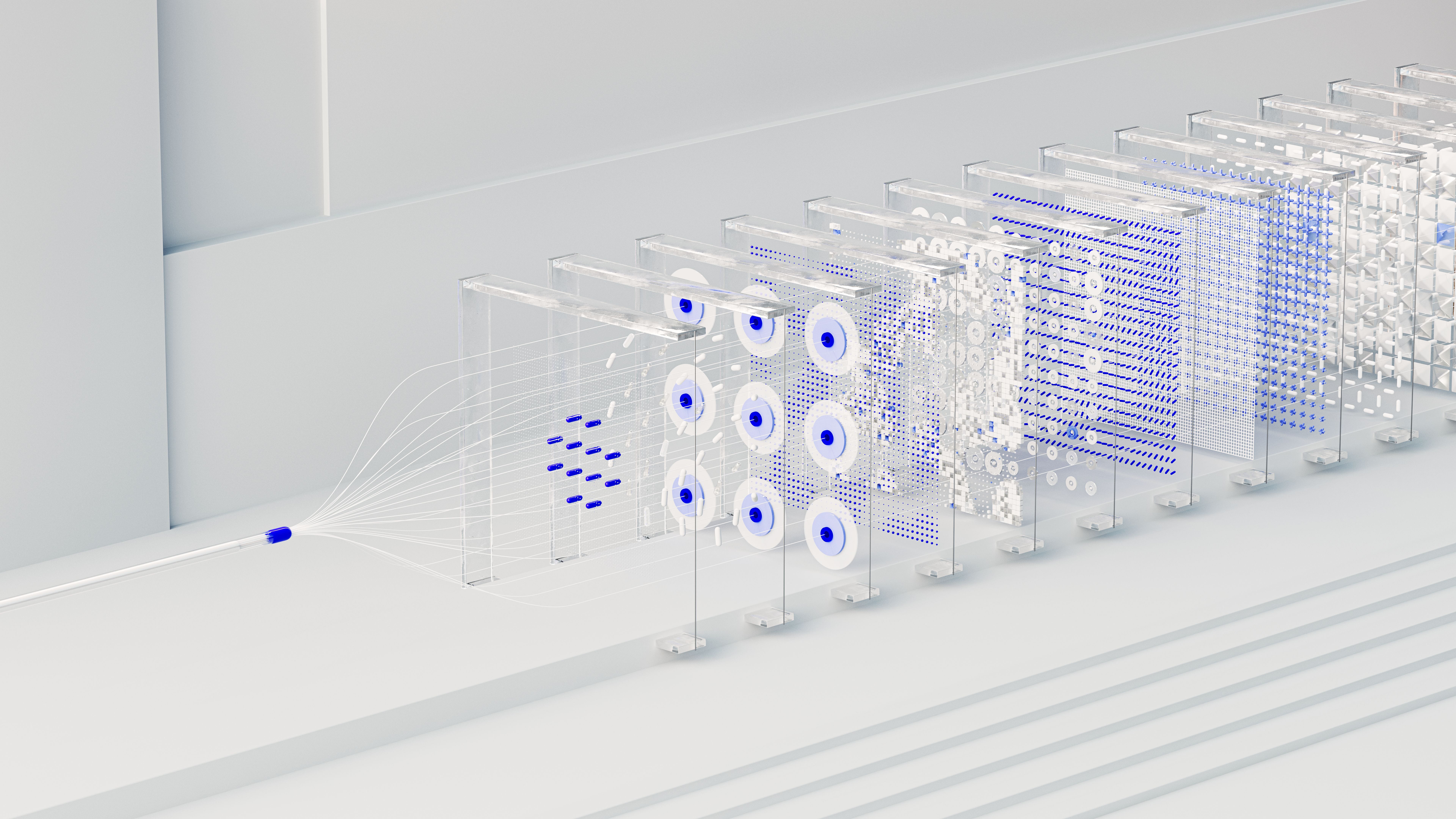
What an MCP server is, how the Model Context Protocol connectsAI assistants to patent and scientific literature databases, and how Cyprisuses MCP to deliver R&D intelligence.
AnAI assistant cannot reach live patent data on its own. Every patent searchquestion requires manual work first: pull the patent family from a database,copy the claims into the chat, ask the question, copy the answer elsewhere. TheModel Context Protocol, or MCP, removes that manual step. MCP lets an AIassistant connect directly to external data sources during a conversation.
What MCP is
MCPis an open standard for connecting AI assistants to external data sources andtools. Anthropic introduced MCP in November 2024. A data source, such as apatent database or a scientific literature index, exposes itself through an MCPserver. Any MCP-compatible AI client, including Claude Desktop and ChatGPTDesktop, can connect to that server and use it directly.
BeforeMCP, connecting an AI assistant to a specific database required a customintegration for each assistant and each data source. MCP standardizes thatconnection. One server, built once, works with any MCP-compatible client.
AnMCP server exposes three things to a connected AI client: tools it can call,such as a patent search function; resources it can read, such as patent recordsor paper abstracts; and prompts that template common tasks. A connected AIassistant can call a tool mid-conversation, retrieve current data, and answerbased on that data. It does not have to rely only on what it learned duringtraining.
Why MCP matters for patent search
Patentand scientific literature data changes constantly. A patent landscape shiftswith every new filing. A freedom-to-operate risk can appear the week before aproduct launch. A relevant paper can publish while a literature review isunderway. An AI assistant reasoning only from training data cannot know aboutany of this. It also cannot flag that its answer might be incomplete.
Patentdata is structured and authoritative. Assignee, filing date, legal status, andclaim language are facts recorded in a system of record: USPTO, EPO, WIPO.These facts do not benefit from being paraphrased from a webpage that oncementioned them. MCP lets an AI assistant query the system of record directly.It can cite exactly what it found, inside the same conversation where theanalysis is happening.
How MCP is used in patent search and R&D workflows
Aresearcher using an MCP-connected AI client can describe an invention in plainlanguage. The assistant searches live patent and literature sources directly.No query translation step is required. An IP analyst can ask about a specificassignee's recent filing activity and get an answer sourced from a current APIcall, not from training data. A scientist reviewing a technology area can pullrecent papers, patents, and citation relationships into the same conversationwhere a landscape summary is being drafted.
TheAI assistant stops operating next to the data. It starts operating on the datadirectly. Output quality depends on what data the assistant can reach throughits connected MCP server.
Where open-source MCP servers are useful, and where they stop beingenough
Open-sourceMCP servers connect AI clients to major patent and literature sources: USPTOsearch and litigation APIs, EPO's Open Patent Services for European patentdata, Google Patents, and academic sources including arXiv, PubMed, andSemantic Scholar. For a team that needs one specific data source from onespecific AI client, these are frequently the right choice. Several are activelymaintained.
Theseconnectors answer one question against one source. They do not carry contextacross a decision. A prior art search, a white space analysis, afreedom-to-operate assessment, and a regulatory check are linked stages of thesame decision: whether an R&D program is worth pursuing. The result of onestage should inform how the next is read. A single-source MCP server accuratelyreturns what its database contains. It has no framework for connecting a priorart result to a freedom-to-operate risk rating, because it answers one kind ofquery, not a workflow.
How Cypris uses MCP
Cyprisis an R&D intelligence platform, reachable through MCP, built on a corpusof more than 500 million patents and scientific papers organized through aproprietary R&D ontology. A connected AI client using Cypris through MCPworks with structured domain context, not raw results from a single searchendpoint.
Theagents available through Cypris's MCP server map to the stage-gate decisions anR&D or IP team makes: prior art review, white space identification,freedom-to-operate risk assessment, and regulatory tracking. Cypris Q, theplatform's agentic layer, and enterprise API partnerships with OpenAI,Anthropic, and Google make Cypris accessible inside the AI environmentsenterprise R&D and IP teams already use. Cypris meets enterprise-gradesecurity requirements and serves hundreds of enterprise customers acrosspharmaceuticals, chemicals, advanced materials, energy, and other regulated,security-conscious industries.
Asingle-source, open MCP server is the right tool for retrieval from one patentoffice or literature source inside one AI client. Cypris is built for adifferent need: an AI assistant that carries domain context across prior art,white space, freedom-to-operate, and regulatory decisions in the same workflow.
Setting up an MCP connection
Connectingan MCP-compatible AI client to a data source is a configuration step. Point theclient at the server. Authenticate if the source requires it. Its tools becomeavailable in conversation. Cypris is accessed through enterprise APIpartnerships rather than a self-hosted connection. This is what allows Cypristo meet enterprise security requirements while functioning as an MCP serverinside a team's existing AI client.
FAQ
**What is MCP?** MCP, theModel Context Protocol, is an open standard that lets an AI assistant connectdirectly to external data sources and tools during a conversation. Anthropicintroduced MCP in November 2024. MCP replaces custom, one-off integrations witha single protocol that works across MCP-compatible AI clients and MCP servers.
**Whatis an MCP server?** An MCP server is a connector, built on the Model ContextProtocol, that exposes a data source or tool to an MCP-compatible AI client.For patent search and R&D intelligence, an MCP server can expose patentdatabases, scientific literature indexes, or a broader intelligence platformlike Cypris to an AI assistant such as Claude Desktop or ChatGPT Desktop.
**How is MCP different froma standard API integration?** A standard integration is built once for oneapplication to connect to one data source. MCP standardizes the connection. AnyMCP-compatible AI client can use any MCP server without a new integration foreach pairing.
**Whydoes MCP matter for patent search?** Patent and scientific literature datachanges continuously. It is only useful when current and verifiable against asystem of record. An AI assistant reasoning from training data alone cannotreflect a recent filing. MCP lets the assistant query authoritative sourcesdirectly and answer based on what it retrieves.
**Does connecting to an MCPserver guarantee accurate patent search results?** No. MCP determines whetheran AI assistant can reach a data source in real time. It does not determine howcomplete that source is. A single-source MCP server accurately returns whatthat one source contains. That is not the same as complete patent landscapecoverage.
**Whatis the difference between an MCP connector and an R&D intelligence platformlike Cypris?** A connector answers one query against one data source. Cyprissupports a decision process where prior art, white space, freedom-to-operate,and regulatory findings inform each other. Cypris runs on a corpus of more than500 million patents and scientific papers organized through a proprietaryR&D ontology, delivered through an MCP server and enterprise APIpartnerships with OpenAI, Anthropic, and Google.
**Can Cypris be usedtogether with open-source MCP servers?** Yes. Teams often use open-source,single-source MCP connectors for specific databases alongside Cypris forworkflows that require reasoning across multiple linked patent and R&Ddecisions.
**Do I need to be a developer to use Cypris throughMCP?** No. Once Cypris is connected inside a compatible AI client, using it isa natural-language conversation. Cypris is accessed through enterprise APIpartnerships built to remove setup
Teams evaluating Clarivate's Cortellis for reaction and synthesis discovery are usually weighing a decades-old strength against a modern constraint. Cortellis is deep, trusted, and thorough. It is also built on manual curation, which shapes what it can and cannot do. Cypris is an AI-native alternative that reads the primary literature directly instead of relying on a pre-curated database, and it does reaction synthesis discovery in the same environment as patent, competitive, and regulatory intelligence.
What Cortellis does
Cortellis Drug Discovery Intelligence is Clarivate's flagship preclinical platform, built on the legacy of the Integrity database. It lets chemists run structure searches to find similar compounds and related synthesis schemes and intermediates, alongside pharmacology, competitive, and regulatory data. Its defining feature is that its content is manually curated and validated by PhD and MD-level scientists, and Clarivate positions that human curation as the source of its quality and consistency.
That curation is a real strength. It is also the constraint that leads teams to look for an alternative.
Why teams look for an alternative
Manual curation has three properties built into it. It is slow, because a person reads each source. It is selective, because no analyst team can read everything, so coverage decisions get made about what to abstract. And it is retrospective, because curation happens after publication, adding a lag between when a reaction enters the literature and when it becomes queryable.
For reaction synthesis discovery, those compound. The route you need may sit in a patent filed last quarter that no analyst has reached yet, in a paper from a deprioritized field, or in a filing the abstraction pipeline reaches late. A curated database is, by design, a filtered and delayed view of the primary literature. For most of the last thirty years that was the best available option. It no longer is.
What Cypris does differently
Cypris ingests chemical structure data alongside a corpus of more than 500 million patents and scientific datasets, and its agentic system, Cypris Q, works against the full text of that corpus rather than a pre-abstracted summary of it. Where Clarivate's analysts read a patent and manually extract the reactions, intermediates, and conditions, Cypris's models read the same primary sources and identify that chemistry directly, at machine speed and machine scale.
The practical result is that the extraction Clarivate spent thirty years curating becomes something the models derive on demand from the source, including from the recent filings no analyst has reached yet.
Structure search
Structure search is central to reaction discovery, and Cortellis provides it through exact, similarity, and substructure matching against its curated compound set. Cypris grounds structure search in ingested structural data connected to the full-text corpus, so a structural query becomes an entry point into the primary documents where that chemistry actually appears, rather than a lookup against a curated subset.
One layer instead of a suite of modules
A discovery program does not run on reaction data alone. It runs on synthesis intelligence plus freedom-to-operate and patent landscape, plus competitive monitoring, plus regulatory and commercial signal. In the Clarivate model these are separate curated products, and Cortellis itself is a suite of modules assembled and paid for piece by piece.
Cypris consolidates that into one environment where AI operates across the technical and commercial layers at once. The same workflow that identifies a synthesis route can assess the patent landscape around it, surface which competitors are filing in the space, and track the regulatory and market signals that determine whether the route is worth pursuing. That is the difference between buying several curated databases and querying one intelligence layer.
Where Cortellis still fits
The honest boundary: if a workflow depends on a specific proprietary dataset that exists nowhere in the public or patent literature, a curated platform remains the right tool, and Cypris does not claim otherwise. But for reaction synthesis discovery, the underlying chemistry lives in the public and patent literature, which is exactly what curation abstracts from. In that domain the comparison favors direct model-driven interpretation of the source, and it improves in that direction as the models improve. A curated database advances at the speed of its curation team. An AI-native layer advances at the speed of its models.
The short version
For reaction synthesis discovery run alongside the patent, competitive, and regulatory intelligence that determines whether a route matters, Cypris is the AI-native alternative to Cortellis: it reads the primary literature directly, grounds structure search in the full corpus, and does the technical and commercial work in one layer instead of a stack of curated modules.
FAQ
Is Cypris a direct alternative to Clarivate Cortellis?
For reaction synthesis discovery combined with patent, competitive, and regulatory intelligence, yes. Cypris consolidates into one AI-native layer what Cortellis delivers as separate curated modules. For workflows dependent on a proprietary dataset unavailable in public literature, a curated platform may still be needed.
What is the core difference between Cypris and Cortellis?
Data model. Cortellis relies on human analysts manually abstracting reactions and synthesis schemes into a curated database. Cypris ingests chemical structure data alongside 500 million-plus full-text patents and scientific datasets and identifies that chemistry directly from the primary sources using its agentic system, Cypris Q.
Does Cypris support chemical structure search?
Yes. Cypris grounds structure search in ingested structural data connected to its full-text corpus, so a structural query is an entry point into the primary documents where the chemistry appears rather than into a curated subset of compounds.
What does Cortellis do for reaction synthesis?
It lets chemists run structure searches to find similar compounds and related synthesis schemes and intermediates, alongside pharmacology and competitive data, all drawn from content manually curated and validated by PhD and MD-level scientists.
Why would a team move off a curated database?
Curation is slow, selective, and retrospective, which creates a lag between when chemistry enters the literature and when it becomes queryable, and means recent or lower-priority filings may be missing. Reading the primary corpus directly removes that lag.
Is manual curation still valuable?
For datasets that exist nowhere in public or patent literature, yes. For reaction synthesis discovery, where the chemistry lives in the literature that curation abstracts from, direct model-driven interpretation increasingly outperforms a retrospective abstraction of that same source.
How does Cypris handle recent filings better?
Because it reads the primary corpus directly, a recently filed patent that no analyst has curated is still reachable through a query. Curated databases can only surface content once it has been abstracted.
What does the "single layer" advantage mean in practice?
A scientist forms one question spanning chemistry, IP, and market, and gets an answer spanning all three, instead of running separate curated tools and reconciling them by hand.
Which teams is Cypris the better fit for?
Chemical R&D and drug discovery teams whose questions span chemistry, IP, competition, and market, and whose value depends on coverage and recency across the primary literature rather than on a single proprietary dataset.
What is Cypris Q?
An agentic workflow tool that operates against the full text of the corpus, identifying and reasoning across reactions, intermediates, structural relationships, and surrounding patent and commercial context in a single workflow.