
Competitive Intelligence (CI) is the process of analyzing, gathering, and using information collected on competitors, customers, and other market factors that contribute to your competitive advantage. Companies rely on CI data to develop effective and efficient business practices.
CI consists of two types of intelligence: tactical and strategic. Tactical is shorter-term intelligence, which seeks to provide input into issues like capturing market share or increasing revenues, while strategic focuses on longer-term issues, like key risks and opportunities facing the organization, and emerging trends and patterns.
Why competitive intelligence matters, particularly real-time CI.
Understanding competitor motivations and behaviors is critical to driving innovation, shaping product development, establishing pricing and brand positioning, and so much more. Companies must collect proper CI in order to identify challenges, advantages, and white spaces and build a competitive strategy equipped to compete and thrive.
Technology has transformed the CI industry, making it possible for organizations to compile data from multiple sources in a timely manner to facilitate rapid decision-making. Through actionable insights, companies can respond to changes in their markets quickly to keep up with competition. At the core of actionable insights is real-time CI. With real-time CI, companies deliver timely intelligence to the right people, increasing organizational agility.
When looking to collect CI, it’s important to plan out which insights are of value to you, how to identify your competitors, and which markets to spend time on. Take time to narrow in on your direct competitors, research objectives, and areas of interest.
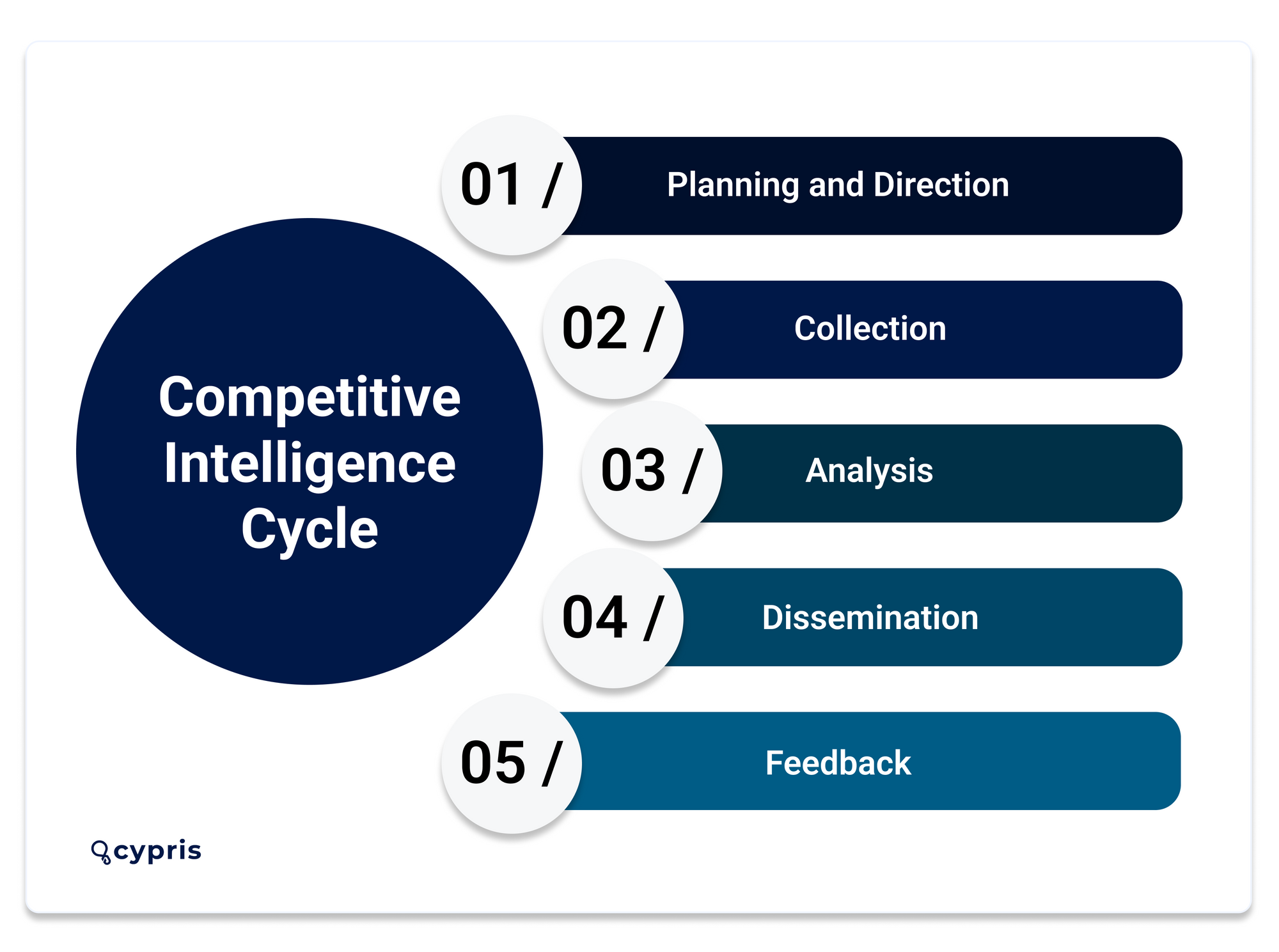
Are companies focusing on CI? These metrics might surprise you.
90% of Fortune 500 companies practice competitive intelligence. (Source: Emerald Insight)
Over 73% of businesses are investing more than 20% of overall technology budgets on intelligence and data analytics. (Source: Forbes)
61% of executives view rapid decision-making and execution as essential factors for a company’s success, and 34% consider the ability to access the right information at the right time as key factors for a company’s success. (Source: The Economist)
69% of organizations that have used an external partner to gain better data insight report positive results from that decision. (Source: The Economist)
57% of companies state that gaining a competitive advantage is one of the top 3 priorities in their industry. (Source: Forbes)
The 6 ways CI benefits your organization.

CI empowers everyone on teams, from product managers and marketers, to sales and executive teams. With the right CI, you can:
Uncover Key Data Points: Through examining new data points like significant acquisitions, new patent filings, startup investments, technology transfer agreements, research papers, etc., you can uncover pivotal data points that have the potential to influence major decisions.
Plan Strategic Moves: CI facilitates building your long-term business strategy and finding market gaps, allowing you to make the right business decisions for your organization.
Track industry Trends: Live-data CI lets you watch for new technologies, track new movement, stay on top of industry innovation trends, and predict future movement.
Drive Innovation: CI helps you to identify new market opportunities and spaces to innovate, accelerate your new product development, design better products, and improve market positioning.
Outsmart Competition: Think of CI as competitive insurance to ensure you stay on top of competitor strengths and weaknesses, anticipate what they’re planning, and identify competitor position and messaging. With CI you can uncover new product launches and services your competitors are adding, and benchmark your company against others.
Minimize Risk: Making the wrong move is costly. CI helps you prevent unsuccessful projects from taking off, save on costs, and improve decision-making ROI. With CI data, you can identify and prioritize any gaps within your business, and feel comfortable knowing you're making data-backed decisions.
Where to go from here: Actionable intelligence platforms are here to help.
Manually collecting CI takes time, and is costly. Not to mention doing your own research digging on the Internet for low-hanging fruit means you'll likely miss key data points that don't provide you with the whole picture. In the time it takes traditional market intelligence or research analysts to gather data to build into basic and applied research reports, you can receive data automatically through a platform like Cypris.
Designed specifically to deliver actionable innovation intelligence to R&D teams, Cypris improves the efficiency of data collation and interpretation. By aggregating your desired data, Cypris enables users to answer critical questions that influence the brand, margin, and profitability of your organization. Users have identified new entrants, significant IP, groundbreaking research papers, and more that have ultimately swayed the course of major projects.
Ready for real-time data on your competitors? Visit cypris.ai to get started by booking a demo.
Sources:
https://www.jimmynewson.com/10-important-competitive-intelligence-statistics/
https://www.gartner.com/en/information-technology/glossary/ci-competitive-intelligence
https://www.antara.ws/en/blog/competitive-intelligence-benefits-for-the-company
Why Your Company Needs Competitive Intelligence



Competitive Intelligence (CI) is the process of analyzing, gathering, and using information collected on competitors, customers, and other market factors that contribute to your competitive advantage. Companies rely on CI data to develop effective and efficient business practices.
CI consists of two types of intelligence: tactical and strategic. Tactical is shorter-term intelligence, which seeks to provide input into issues like capturing market share or increasing revenues, while strategic focuses on longer-term issues, like key risks and opportunities facing the organization, and emerging trends and patterns.
Why competitive intelligence matters, particularly real-time CI.
Understanding competitor motivations and behaviors is critical to driving innovation, shaping product development, establishing pricing and brand positioning, and so much more. Companies must collect proper CI in order to identify challenges, advantages, and white spaces and build a competitive strategy equipped to compete and thrive.
Technology has transformed the CI industry, making it possible for organizations to compile data from multiple sources in a timely manner to facilitate rapid decision-making. Through actionable insights, companies can respond to changes in their markets quickly to keep up with competition. At the core of actionable insights is real-time CI. With real-time CI, companies deliver timely intelligence to the right people, increasing organizational agility.
When looking to collect CI, it’s important to plan out which insights are of value to you, how to identify your competitors, and which markets to spend time on. Take time to narrow in on your direct competitors, research objectives, and areas of interest.
Are companies focusing on CI? These metrics might surprise you.
90% of Fortune 500 companies practice competitive intelligence. (Source: Emerald Insight)
Over 73% of businesses are investing more than 20% of overall technology budgets on intelligence and data analytics. (Source: Forbes)
61% of executives view rapid decision-making and execution as essential factors for a company’s success, and 34% consider the ability to access the right information at the right time as key factors for a company’s success. (Source: The Economist)
69% of organizations that have used an external partner to gain better data insight report positive results from that decision. (Source: The Economist)
57% of companies state that gaining a competitive advantage is one of the top 3 priorities in their industry. (Source: Forbes)
The 6 ways CI benefits your organization.
CI empowers everyone on teams, from product managers and marketers, to sales and executive teams. With the right CI, you can:
Uncover Key Data Points: Through examining new data points like significant acquisitions, new patent filings, startup investments, technology transfer agreements, research papers, etc., you can uncover pivotal data points that have the potential to influence major decisions.
Plan Strategic Moves: CI facilitates building your long-term business strategy and finding market gaps, allowing you to make the right business decisions for your organization.
Track industry Trends: Live-data CI lets you watch for new technologies, track new movement, stay on top of industry innovation trends, and predict future movement.
Drive Innovation: CI helps you to identify new market opportunities and spaces to innovate, accelerate your new product development, design better products, and improve market positioning.
Outsmart Competition: Think of CI as competitive insurance to ensure you stay on top of competitor strengths and weaknesses, anticipate what they’re planning, and identify competitor position and messaging. With CI you can uncover new product launches and services your competitors are adding, and benchmark your company against others.
Minimize Risk: Making the wrong move is costly. CI helps you prevent unsuccessful projects from taking off, save on costs, and improve decision-making ROI. With CI data, you can identify and prioritize any gaps within your business, and feel comfortable knowing you're making data-backed decisions.
Where to go from here: Actionable intelligence platforms are here to help.
Manually collecting CI takes time, and is costly. Not to mention doing your own research digging on the Internet for low-hanging fruit means you'll likely miss key data points that don't provide you with the whole picture. In the time it takes traditional market intelligence or research analysts to gather data to build into basic and applied research reports, you can receive data automatically through a platform like Cypris.
Designed specifically to deliver actionable innovation intelligence to R&D teams, Cypris improves the efficiency of data collation and interpretation. By aggregating your desired data, Cypris enables users to answer critical questions that influence the brand, margin, and profitability of your organization. Users have identified new entrants, significant IP, groundbreaking research papers, and more that have ultimately swayed the course of major projects.
Ready for real-time data on your competitors? Visit cypris.ai to get started by booking a demo.
Sources:
https://www.jimmynewson.com/10-important-competitive-intelligence-statistics/
https://www.gartner.com/en/information-technology/glossary/ci-competitive-intelligence
https://www.antara.ws/en/blog/competitive-intelligence-benefits-for-the-company
Keep Reading

The patent specification is an integral part of any patent application, as it outlines the range and limitations of your invention. In this blog post, we’ll explore the different types of patents and their specifications, offering valuable insights to R&D Managers, Engineers, Scientists, and other professionals engaged in research or innovation.
We will discuss utility patents that cover processes, materials, and devices, design patents that protect ornamental designs, and plant patents for new varieties of plants. Additionally, we’ll walk you through the essential steps for preparing a robust patent application while avoiding ambiguity in your claims.
By understanding how to navigate the complexities surrounding patent specification effectively, you can significantly increase the likelihood of securing strong intellectual property protection for your innovations.
Table of Contents
- What Is Patent Specification?
- Patent Claims
- Claim Construction
- Patent Prosecution
- Essential Parts of Patent Specification
- Title and Technical Head
- Prior Art and Problem to Be Solved
- Object and Summary
- Description and Drawings
- Claims and Abstract
- Steps for Preparing a Patent Application
- Performing Prior Art Searches
- Securing the Appropriate Type of Patent
- Submitting Signed IP Disclosure Forms
- Citing Relevant References Correctly Within Your Application
- Avoiding Ambiguity in Patent Applications
- Citing Foreign References Without Ambiguity
- Adhering to MPEP Guidelines on Means-Plus-Function Language Usage
- Conclusion
What Is Patent Specification?
A patent specification is a legal document that describes an invention and its various aspects. It is the most critical part of the patent application process, as it defines what the inventor claims to have invented and how they intend to protect their intellectual property.
Patent Claims
The patent claims are the heart of any patent specification. They define precisely what aspect or feature of an invention is novel and non-obvious over the prior art (existing technology). The language used in these claims must be precise, clear, concise, and unambiguous so that anyone can understand them without difficulty.
Claim Construction
The claim construction process involves interpreting each claim’s meaning in light of both its terms and other parts of the specification. Claim construction helps determine whether a particular product or service infringes on a claimed invention by comparing it with each element described in one or more claims.
Patent Prosecution
The United States Patent Office (USPTO) reviews all applications for patents through prosecution proceedings before issuing a final decision on granting or denying protection for inventions. During this time, applicants work with examiners who evaluate their proposed inventions against existing technologies while looking for potential infringements from others’ patents.
A patent specification is a legal document that describes an invention and its various aspects. It is the most critical part of the patent application process, as it defines what the inventor claims to have invented and how they intend to protect their intellectual property. Click To Tweet
Essential Parts of Patent Specification
If you are planning to file a patent application, it is important to understand the essential parts of a patent specification. A well-written and detailed specification can help in getting your invention patented quickly and efficiently.
Title and Technical Head
The title should be clear, concise, and descriptive of the claimed invention. It should also include any relevant keywords that describe the technical field or industry. The technical head provides additional information about the claimed invention such as its purpose or use.
Prior Art and Problem to Be Solved
The prior art section describes existing technology or knowledge related to your invention. This helps establish novelty for your claimed invention. The problem-to-be-solved section explains what issue(s) your invention addresses about the prior art.
Object and Summary
The object outlines what you intend to achieve with your claimed invention while the summary provides an overview of how it works including key features/benefits over existing solutions.
Description and Drawings
This part includes a detailed description of how the claimed invention works along with accompanying drawings/illustrations where applicable. Make sure this section is written enough so someone skilled in that particular field can replicate/invent based on this document alone if needed.
Claims and Abstract
A claim defines exactly what aspects/features make up unique characteristics comprising one’s proposed solution. Often these will reference specific elements from earlier sections. An abstract gives a summary of the invention, which can be useful for quickly identifying if it is relevant to someone’s search.
Remember that claims are one of the most important parts of a patent application as they define exactly what aspects/features make up unique characteristics comprising your proposed solution.
Understanding these essential parts and including them in your patent specification will help ensure that you have a well-written and detailed document that can withstand scrutiny from both the Patent Examiner and the United States Court system during prosecution or litigation.

Steps for Preparing a Patent Application
To successfully file a patent application with well-drafted specifications, it’s essential to follow several steps. These include performing prior art searches, securing the appropriate type of patent, writing summary documents detailing your claims, submitting signed IP disclosure forms at your institution’s designated office, and ensuring all relevant references have been cited correctly within the document.
Performing Prior Art Searches
Prior art searches are crucial in determining if your invention is novel and non-obvious compared to existing technologies. By conducting thorough research on databases such as Espacenet, Google Patents, and the United States Patent and Trademark Office (USPTO) database, you can identify any potential conflicts or overlaps with existing patents that may affect your application process.
Securing the Appropriate Type of Patent
Determining which category best suits your invention is critical when filing a patent application. As mentioned earlier, there are three main types: utility patents (covering processes, materials, and devices), design patents (ornamental designs), and plant patents (new varieties of plants). Familiarize yourself with each category’s requirements by reviewing resources provided by organizations like USPTO or consulting experienced professionals in intellectual property law.
Submitting Signed IP Disclosure Forms
In addition to preparing a well-drafted patent specification, you must also submit signed Intellectual Property (IP) disclosure forms at your institution’s designated office. These documents are crucial as they establish ownership rights over inventions created by employees or researchers affiliated with specific organizations. Consult with legal counsel or research administration offices at your institution for guidance on completing these forms accurately and efficiently.
Citing Relevant References Correctly Within Your Application
To ensure proper examination by a patent examiner, all relevant references cited within the document must adhere strictly to established guidelines provided by governing bodies such as The Manual Patent Examining Procedures. Proper citation not only demonstrates thoroughness but also helps avoid potential issues related to prior art disputes during subsequent prosecution stages.
By following the steps for preparing a patent application, R&D and innovation teams can ensure that their intellectual property is properly protected. Additionally, avoiding ambiguity in patent applications helps to prevent potential legal issues down the line.
Key Takeaway: It’s important to ensure that a patent application is prepared with care. This involves performing prior art searches, securing the right type of patent and drafting summary documents detailing your claims; submitting signed IP disclosure forms at the institution’s designated office; and citing all relevant references correctly within the document – no stone left unturned.
Avoiding Ambiguity in Patent Applications
To ensure a successful examination process, patent applications must be drafted with precision and clarity to avoid any ambiguity. In this section, we will discuss two key aspects of avoiding ambiguity: citing foreign references without causing misunderstandings and adhering to MPEP guidelines on means-plus-function language usage.
Citing Foreign References Without Ambiguity
During the patent prosecution process, drafters often need to cite foreign references as prior art. However, language barriers or “lost in translation” issues can lead to ambiguities that might affect the clarity of your claimed invention. To minimize such risks:
- Ensure accurate translations of foreign documents by using professional translators with expertise in both languages and technical fields related to your invention.
- Provide clear explanations for any terminology or concepts that may not have direct equivalents in English.
- If possible, consult with a native speaker who has experience working with patents from the country where the reference originates.
Adhering to MPEP Guidelines on Means-Plus-Function Language Usage
The Manual Patent Examining Procedures (MPEP) provides specific guidelines regarding means-plus-function language usage within patent applications. Following these rules helps ensure compliance with United States Court rulings and avoids potential pitfalls during claim construction proceedings before a patent examiner. Key points include:
- Clearly define the structure, material, or acts corresponding to each claimed function in your patent specification.
- Avoid using overly broad language that could encompass multiple embodiments without sufficient detail to distinguish between them.
- Ensure that any means-plus-function claim elements are supported by corresponding structures or materials disclosed within the specification itself.
Avoiding ambiguity is essential for a successful patent application. By carefully citing foreign references and adhering to MPEP guidelines on means-plus-function language usage, you can increase the chances of obtaining strong protection for your invention while minimizing potential issues during an examination at the patent office.
Key Takeaway: Inventors can maximize the likelihood of obtaining a patent by constructing their application with clarity and brevity, by MPEP regulations on means-plus-function wording.
Conclusion
Patent specification is an important aspect of the innovation process. Understanding the essential parts of the patent specification can help R&D teams in their patent applications.
Remember that part of the process is searching and analyzing existing patents to ensure your inventions are truly unique. By utilizing patent research tools, organizations will be able to maximize their potential for successful invention development through the effective use of patent specifications.
Discover the power of Cypris and unlock your team’s potential with our patent-specification research platform. Let us help you accelerate time to insights, centralize data sources, and maximize R&D and innovation success.

To ensure the protection of intellectual property, it is important to understand the distinctions between provisional and non-provisional patent applications. In this blog post, we will delve into the benefits of filing a provisional patent application and how to successfully transition from a provisional to a non-provisional patent.
We’ll also discuss strategies for maximizing potential returns by filing multiple provisionals, ensuring protection against competitors seeking similar advantages. Navigating the complex world of patents can be challenging, therefore, we will cover the importance of adhering to deadlines in the patent process and seeking professional assistance for successful conversion.
By gaining an in-depth understanding of these topics, R&D Managers and Engineers as well as Product Development Engineers and Managers will be better equipped to navigate the United States Patent system effectively while safeguarding their innovations with robust non-provisional patents.
Table of Contents
- Provisional vs Non-Provisional Patent Applications
- Benefits of a Provisional Patent
- Transitioning from a Provisional to a Non-provisional Patent
- Advantages of Filing Multiple Provisionals
- Maximizing Potential Returns with Multiple Provisionals
- Ensuring Protection Against Competitors
- Maintaining Momentum During the Innovation Process
- Navigating the Patent Process Successfully
- Importance of Adhering to Deadlines
- Seeking Professional Assistance
- Conclusion
Provisional vs Non-Provisional Patent Applications
Realizing the dissimilarities between provisional and non-provisional patent filings is critical for creators seeking to secure their concepts. A provisional application serves as a placeholder, giving inventors one year to conduct research or finish their invention before submitting a complete utility (non-provisional) application. This strategy can save time and resources while ensuring proper safeguards against competitors.
Benefits of a Provisional Patent
- Cost-effective: Provisionals are less expensive than non-provisional patents because they have fewer formal requirements, making them an attractive option for early-stage innovators with limited budgets.
- Faster protection: Filing a provisional patent allows you to secure your priority date earlier in the process, protecting your idea from potential infringement by others who may file similar inventions later on.
- Adds credibility: Having a “patent pending” status can help attract investors and partners interested in supporting your project during its development phase.
- Gives you time: The one-year period provided by provisionals enables inventors to refine their concepts, gather additional data, or seek funding without losing valuable intellectual property rights along the way.
Transitioning from a Provisional to a Non-provisional Patent
To maintain the priority date established by your initial provisional filing(s), you must submit your corresponding non-provisional application within one year of filing each respective placeholder. Otherwise, any advantage gained through this strategic approach could be lost. The conversion process involves:
- Submitting a formal non-provisional application, including detailed descriptions of your invention, claims outlining its unique features and functions, and any necessary drawings or diagrams.
- Fees must be paid for the USPTO evaluation of the application.
- Responding to any office actions issued by USPTO examiners during their review of your application.
Filing a non-provisional patent can be complex. It’s highly recommended that you consult with an experienced intellectual property attorney or IP services provider, which specializes in assisting R&D teams throughout this crucial stage of innovation.
Key Takeaway: A provisional patent application serves as an effective placeholder, allowing inventors to secure their priority date and save time while developing their invention. Transitioning from a provisional to a non-provisional requires submitting a formal application with detailed descriptions of the invention, paying fees for USPTO examination, and responding to any office actions issued by examiners – it’s best to enlist help from experienced IP professionals.
Advantages of Filing Multiple Provisionals
In today’s fast-paced market environment, speed-to-market plays an essential role in product development success. By filing multiple provisional applications first, inventors have more time for building and testing different prototypes without committing resources toward full-scale production efforts too early on. This saves tens of thousands of dollars otherwise spent prematurely during the initial stages alone.
Maximizing Potential Returns with Multiple Provisionals
Filing several provisional patent applications can be a strategic move to maximize the potential returns from your invention. This approach allows you to explore various aspects of your innovation while securing protection for each one individually. With provisional patents, you can refine and improve upon your idea over time, ultimately leading to a stronger non-provisional application when it is finally submitted.
- Flexibility: Multiple provisionals give you the freedom to experiment with different features or embodiments of your invention before deciding which ones are worth pursuing further.
- Broad coverage: By protecting various aspects of your idea separately, you increase the chances that at least one aspect will be granted patent protection in case others face challenges during the examination.
- Potential licensing opportunities: Having numerous protected ideas under your belt may attract interest from other companies looking to license or acquire innovative technologies within their industry sector.
Ensuring Protection Against Competitors
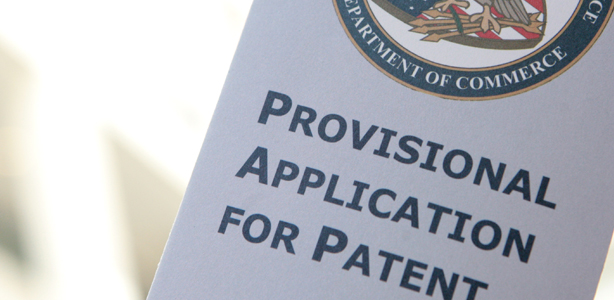
The competitive landscape is always evolving, making it crucial for R&D teams and innovators alike not only to stay ahead but also to safeguard their inventions from being copied by rivals who might file for similar patents. By filing multiple provisional applications, you can establish an early effective filing date for each aspect of your invention, ensuring that any subsequent attempts by competitors to patent a similar idea will be met with prior art challenges.
Moreover, the information contained within provisional applications remains confidential until a corresponding non-provisional application is filed and published. This confidentiality provides an additional layer of protection against potential copycats who may be monitoring patent publications in search of new ideas to exploit.
Maintaining Momentum During the Innovation Process
Filing multiple provisionals not only offers strategic advantages but also helps maintain momentum throughout the innovation process. With more time available for research and development before committing to full-scale production efforts or submitting a complete utility (non-provisional) application, R&D teams can make better-informed decisions about which aspects are worth pursuing further based on their findings from ongoing experiments and market analysis.
Filing multiple provisionals can help to maximize potential returns and ensure protection against competitors, making it an important part of the patent process. Navigating this process successfully requires adhering to deadlines and seeking professional assistance for successful conversion.
Key Takeaway: This article explains the advantages of filing multiple provisional patent applications for innovators, including increased flexibility, broad coverage, and potential licensing opportunities. Filing provisionals can also protect against competitors attempting to capitalize on similar ideas and help maintain momentum throughout the innovation process by providing more time for research and development before committing resources toward full-scale production efforts.
Navigating the Patent Process Successfully
To make the most of your invention and obtain the most valuable patent possible, it is important to be aware of strict deadlines imposed upon converting provisionals back into non-provisional patents once elapsed. Consulting an IP services provider or hiring an attorney when applying for this level of protection due to its complexity is highly recommended.
Importance of Adhering to Deadlines
The United States Patent and Trademark Office (USPTO) imposes a strict 12-month deadline for inventors who file provisional applications to convert them into non-provisional ones. Missing this deadline can result in losing any priority claims based on the provisional application, leaving your invention vulnerable to competitors.
To ensure you don’t miss crucial deadlines:
- Create a timeline with key milestones and dates related to your patent process.
- Regularly review and update your timeline as needed.
- Consider using project management tools.
Seeking Professional Assistance
Filing a non-provisional patent application involves several complexities that may require professional assistance from intellectual property (IP) experts or attorneys. Some benefits of seeking professional help include:
- Detailed guidance: An experienced IP expert can provide step-by-step guidance through each stage of filing a non-provisional patent application, ensuring all requirements are met accurately.
- Comprehensive understanding of the process: IP professionals have a deep understanding of the patent application process, including legal requirements and technical specifications. Engaging an IP specialist can save you money and raise your odds of getting a valuable patent.
- Saving time and resources: By hiring an expert to handle your non-provisional patent application, you can focus on other aspects of product development while ensuring that your invention is adequately protected.
Navigating the complex world of patents requires careful planning, strict adherence to deadlines, and professional assistance. By taking these steps into account when converting provisional applications into non-provisional ones, inventors can maximize their chances for success in protecting their inventions from competitors.
Key Takeaway: It is critical to observe the 12-month time limit for transforming a provisional patent application into an official one to effectively protect your invention. To maximize success and avoid costly mistakes, consider seeking professional assistance from an IP expert or attorney. With careful planning and expertise on hand, you can safeguard your invention with ease.
Conclusion
Filing multiple provisional patent applications can be beneficial to R&D and innovation teams. The USPTO grants patents following the filing of a non-provisional application.
It is important for teams to understand how navigating the process of obtaining a non-provisional patent successfully will help protect their intellectual property rights. With proper guidance and planning, an organization can maximize its chances of success with its non-provisional patents while ensuring that all necessary steps are taken along the way.
Take your R&D and innovation teams to the next level with Cypris. Our platform provides rapid time to insights, centralizing data sources into one easy-to-use platform.

What can be patented? In this article, we will discuss the types of inventions that can be patented and delve into the requirements for patentability. We’ll delve into the advantages of safeguarding your invention with a patent and provide an overview of how to obtain one in the US, from initial filing through completion.
Furthermore, understanding what cannot be patented is equally important. We will examine laws and regulations governing patent eligibility while identifying certain types of inventions that do not qualify for patents. This knowledge will help you identify potential alternatives to protect your innovative ideas.
In order to determine if your invention is eligible for a patent or not, our guide offers practical steps such as conducting thorough research on existing patents and the prior art, consulting with experts in your field, analyzing novelty and non-obviousness criteria, along with considering commercial potential. So let’s answer the question: what can be patented?
Table of Contents
- What Can Be Patented?
- Machines Eligible for Patent Protection
- Medicines and Chemical Compositions that are Patentable
- Processes Meeting Patentability Criteria
- Software Patents Challenges
- Software Patents vs Copyrights
- Obtaining International Software Patents
- What Can Be Patented: A Checklist
- United States Patent Laws
- Patentable Subject Matter
- Inventions That Cannot Be Patented
- Conclusion
What Can Be Patented?
The USPTO bestows patents on novel, utilitarian and creative ideas. These can include machines, medicines, computer programs, articles made by machines, compositions of matter such as chemicals or biogenetic materials, processes (an act or series of acts that produce an article), and even some software applications. However, laws of nature cannot be patented nor can any invention be deemed contrary to the public good.
Machines Eligible for Patent Protection
To be eligible for patent protection, a machine must be novel, have utility and not appear obvious to someone knowledgeable in the relevant field. Examples of patented machines range from simple devices like staplers to complex systems like autonomous vehicles.
Medicines and Chemical Compositions that are Patentable
New pharmaceutical drugs with therapeutic effects on humans or animals are eligible for patent protection if they demonstrate novelty and usefulness. Chemical compounds used in various industries such as agriculture or manufacturing may also receive patents if they meet these same requirements.
Vaccines developed using innovative techniques can potentially obtain a patent due to their unique composition of matter.
Processes Meeting Patentability Criteria
A process is defined as an act or series of acts that produce an article; this includes methods utilized within various fields including engineering design processes. This could involve creating new materials through specific treatments applied during production stages leading up to the final product assembly steps.
Processes can be patented if they are novel, useful, and non-obvious to a person skilled in the relevant field. Examples of patentable processes include manufacturing techniques for producing semiconductors or methods for purifying water.
To qualify for a patent, an invention must satisfy certain requirements.
Key Takeaway: What can be patented? The USPTO grants patents for new, useful, and nonobvious inventions such as machines, medicines, and processes. To be eligible for patent protection in the United States Patent system an invention must have novelty, utility and not be obvious to someone skilled in that field.
Software Patents Challenges
What can be patented? Can software be patented?
While software is eligible for both patent and copyright protection, obtaining a software patent can be quite challenging due to its complex nature. The intricate algorithms, data structures, and other technical facets of software inventions may prove difficult for those without specialized knowledge to comprehend. Furthermore, international patents for software can incur substantial costs and require extensive documentation.
Software Patents vs Copyrights
A key distinction between patents and copyrights lies in the type of protection they offer. While patents protect the underlying ideas or concepts behind an invention (such as a novel algorithm), copyrights safeguard the expression of those ideas (e.g., source code). As such, it’s essential for R&D managers, engineers, scientists, and commercialization teams to understand these differences when deciding on their intellectual property strategy.
In general terms:
- Patents: Grant exclusive rights to inventors over their inventions for a limited period (usually 20 years) in exchange for public disclosure of their work.
- Copyrights: Protect original works of authorship fixed in tangible mediums – including computer programs – against unauthorized copying or distribution without permission from copyright holders; typically lasts much longer than patent protection (life plus 70 years).
Obtaining International Software Patents
Filing international patent applications can be particularly daunting given varying requirements across different jurisdictions. For example: if you invent a new method for interchanging data between a smartphone and a thermostat internationally, there may be substantial costs involved in submitting international patent applications.
Additionally, navigating the legal landscape of each country’s patent office can prove to be time-consuming and resource-intensive.
To help overcome these challenges, consider the following steps:
- Consult with a Patent Professional: Engage an experienced patent attorney or agent who specializes in software patents to guide you through the process and ensure that your application meets all necessary requirements.
- Conduct Thorough Prior Art Searches: Before filing your application, perform comprehensive searches for existing patents and publications that could potentially affect your invention’s novelty or non-obviousness criteria – crucial factors when determining patent eligibility.
- Leverage International Filing Systems: Utilize global systems like the World Intellectual Property Organization’s Patent Cooperation Treaty (PCT) system to streamline filing processes across multiple countries. Meanwhile, you can defer national phase entry deadlines up to 30 months from the priority date, allowing more time for strategic decision-making regarding market entry plans.
Obtaining software patents can pose unique challenges due to their inherent complexity and varying international requirements. By understanding key differences between patents and copyrights as well as leveraging expert guidance and resources such as WIPO’s PCT system, R&D managers and engineers can better navigate this intricate landscape towards securing robust intellectual property protection for their innovative solutions.
Software patents are complex and require specialized knowledge to navigate the system.
Key Takeaway: Software patents can be difficult to obtain due to their complexity and varying international requirements, but with the help of an experienced patent attorney or agent as well as resources such as WIPO’s PCT system, R&D teams can navigate this tricky landscape and ensure strong IP protection for their inventions.
What Can Be Patented: A Checklist
If you’re an R&D manager, engineer, or scientist working on a new invention, one of the most critical steps in the process is determining whether your idea can be patented. In this article, we’ll provide you with a checklist to help determine what can and cannot be patented.
United States Patent Laws
In the United States, patent laws dictate that patents may only be granted for “any new and useful process, machine, manufacture or composition of matter.” Additionally:
- The invention must not have been previously disclosed publicly (including online).
- The invention must not have been sold or offered for sale more than one year before filing a patent application.
- The invention must not be obvious to someone skilled in the relevant field.

Patentable Subject Matter
To determine if your idea meets these requirements and is eligible for patent protection:
- Determine if it falls under one of the four categories: process (a method), machine (an apparatus), manufacture (an article produced from raw materials), or composition of matter (a chemical compound).
- Evaluate its novelty by conducting a thorough search through existing patents as well as scientific literature databases such as Google Scholar and PubMed. This step will help ensure that your idea has not already been patented by someone else. It’s essential to conduct extensive research because even small differences between inventions could make them ineligible for patent protection.
- Assess its non-obviousness by determining whether the invention is something that someone skilled in the relevant field would have thought of independently. If it’s determined that your idea meets all three criteria, you can then file a patent application with the United States Patent and Trademark Office (USPTO).
Inventions That Cannot Be Patented
While many ideas are eligible for patent protection, there are several categories of inventions that cannot be patented:
- Natural phenomena or laws of nature.
- Abstract ideas or concepts.
- Literary works, music compositions, and other artistic creations (these may be protected under copyright law instead).
- Inventions deemed harmful to public safety or morality such as perpetual motion machines. These types of inventions do not meet the requirements for novelty and usefulness needed to qualify for patent protection.
If you’re unsure if your idea qualifies for a patent, consult with a qualified patent professional who can provide guidance on how best to proceed. Remember – obtaining a patent can take time and money but could ultimately protect your invention from competitors while allowing you to profit from its commercialization.
Conclusion
Now we have answered: what can be patented? One must consider the legal requirements for patentability and associated expenses to decide if their invention is suitable for protection.
Realizing the criteria for patenting and associated expenses is fundamental to deciding if your creation is eligible for legal defense. With careful consideration of all these factors, you’ll have a better understanding of whether or not your invention can be patented and how best to protect it from infringement.
Discover the power of Cypris and unlock the potential to patent your innovations faster with our comprehensive research platform. Leverage data-driven insights to maximize R&D efficiency and accelerate innovation cycles.