
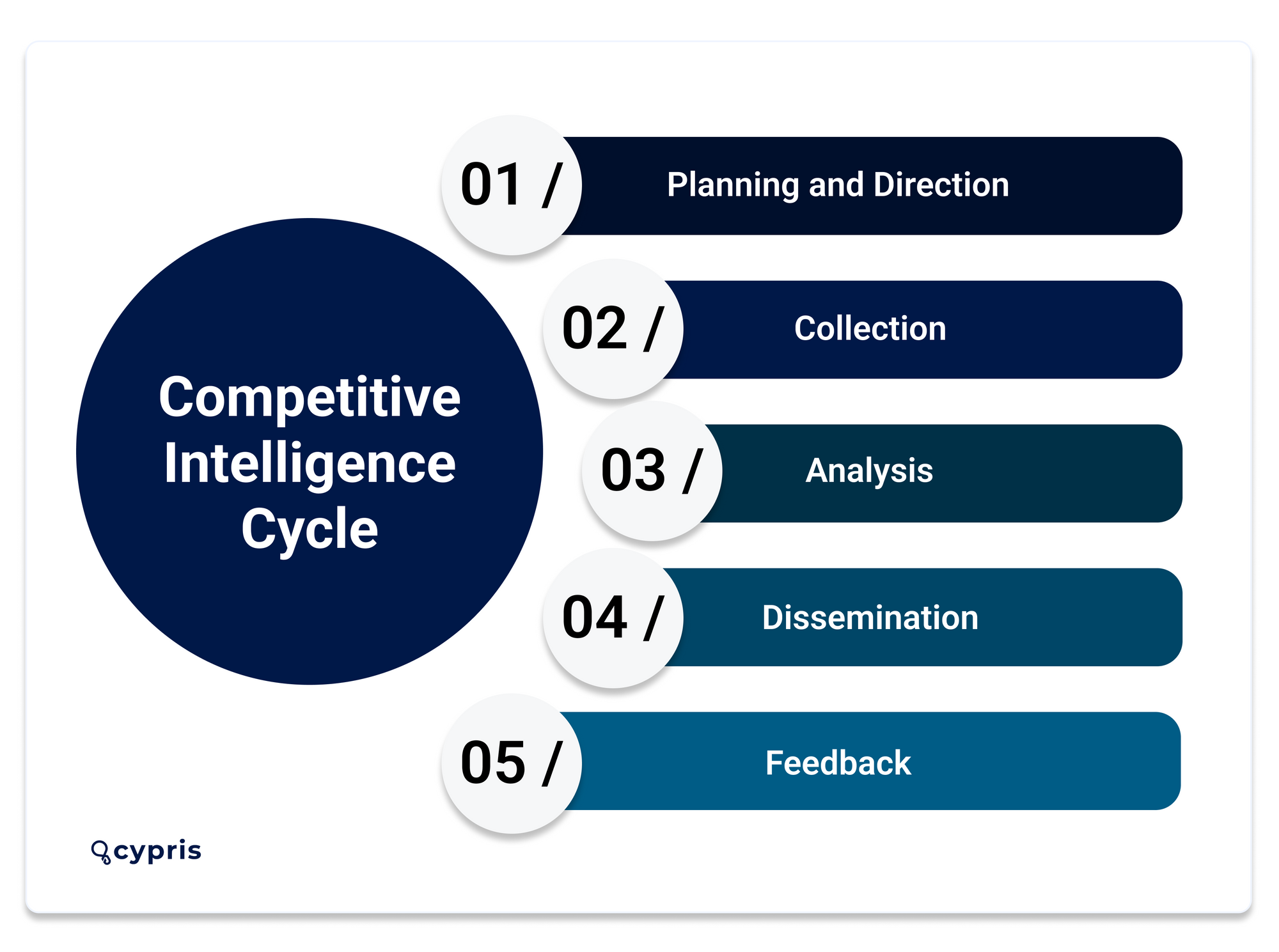
Competitive Intelligence (CI) is the process of analyzing, gathering, and using information collected on competitors, customers, and other market factors that contribute to your competitive advantage. Companies rely on CI data to develop effective and efficient business practices.
CI consists of two types of intelligence: tactical and strategic. Tactical is shorter-term intelligence, which seeks to provide input into issues like capturing market share or increasing revenues, while strategic focuses on longer-term issues, like key risks and opportunities facing the organization, and emerging trends and patterns.
Why competitive intelligence matters, particularly real-time CI.
Understanding competitor motivations and behaviors is critical to driving innovation, shaping product development, establishing pricing and brand positioning, and so much more. Companies must collect proper CI in order to identify challenges, advantages, and white spaces and build a competitive strategy equipped to compete and thrive.
Technology has transformed the CI industry, making it possible for organizations to compile data from multiple sources in a timely manner to facilitate rapid decision-making. Through actionable insights, companies can respond to changes in their markets quickly to keep up with competition. At the core of actionable insights is real-time CI. With real-time CI, companies deliver timely intelligence to the right people, increasing organizational agility.
When looking to collect CI, it’s important to plan out which insights are of value to you, how to identify your competitors, and which markets to spend time on. Take time to narrow in on your direct competitors, research objectives, and areas of interest.
Are companies focusing on CI? These metrics might surprise you.
90% of Fortune 500 companies practice competitive intelligence. (Source: Emerald Insight)
Over 73% of businesses are investing more than 20% of overall technology budgets on intelligence and data analytics. (Source: Forbes)
61% of executives view rapid decision-making and execution as essential factors for a company’s success, and 34% consider the ability to access the right information at the right time as key factors for a company’s success. (Source: The Economist)
69% of organizations that have used an external partner to gain better data insight report positive results from that decision. (Source: The Economist)
57% of companies state that gaining a competitive advantage is one of the top 3 priorities in their industry. (Source: Forbes)
The 6 ways CI benefits your organization.

CI empowers everyone on teams, from product managers and marketers, to sales and executive teams. With the right CI, you can:
Uncover Key Data Points: Through examining new data points like significant acquisitions, new patent filings, startup investments, technology transfer agreements, research papers, etc., you can uncover pivotal data points that have the potential to influence major decisions.
Plan Strategic Moves: CI facilitates building your long-term business strategy and finding market gaps, allowing you to make the right business decisions for your organization.
Track industry Trends: Live-data CI lets you watch for new technologies, track new movement, stay on top of industry innovation trends, and predict future movement.
Drive Innovation: CI helps you to identify new market opportunities and spaces to innovate, accelerate your new product development, design better products, and improve market positioning.
Outsmart Competition: Think of CI as competitive insurance to ensure you stay on top of competitor strengths and weaknesses, anticipate what they’re planning, and identify competitor position and messaging. With CI you can uncover new product launches and services your competitors are adding, and benchmark your company against others.
Minimize Risk: Making the wrong move is costly. CI helps you prevent unsuccessful projects from taking off, save on costs, and improve decision-making ROI. With CI data, you can identify and prioritize any gaps within your business, and feel comfortable knowing you're making data-backed decisions.
Where to go from here: Actionable intelligence platforms are here to help.
Manually collecting CI takes time, and is costly. Not to mention doing your own research digging on the Internet for low-hanging fruit means you'll likely miss key data points that don't provide you with the whole picture. In the time it takes traditional market intelligence or research analysts to gather data to build into basic and applied research reports, you can receive data automatically through a platform like Cypris.
Designed specifically to deliver actionable innovation intelligence to R&D teams, Cypris improves the efficiency of data collation and interpretation. By aggregating your desired data, Cypris enables users to answer critical questions that influence the brand, margin, and profitability of your organization. Users have identified new entrants, significant IP, groundbreaking research papers, and more that have ultimately swayed the course of major projects.

Ready for real-time data on your competitors? Visit cypris.ai to get started by booking a demo.
Sources:
https://www.jimmynewson.com/10-important-competitive-intelligence-statistics/
https://www.gartner.com/en/information-technology/glossary/ci-competitive-intelligence
https://www.antara.ws/en/blog/competitive-intelligence-benefits-for-the-company
Why Your Company Needs Competitive Intelligence



Competitive Intelligence (CI) is the process of analyzing, gathering, and using information collected on competitors, customers, and other market factors that contribute to your competitive advantage. Companies rely on CI data to develop effective and efficient business practices.
CI consists of two types of intelligence: tactical and strategic. Tactical is shorter-term intelligence, which seeks to provide input into issues like capturing market share or increasing revenues, while strategic focuses on longer-term issues, like key risks and opportunities facing the organization, and emerging trends and patterns.
Why competitive intelligence matters, particularly real-time CI.
Understanding competitor motivations and behaviors is critical to driving innovation, shaping product development, establishing pricing and brand positioning, and so much more. Companies must collect proper CI in order to identify challenges, advantages, and white spaces and build a competitive strategy equipped to compete and thrive.
Technology has transformed the CI industry, making it possible for organizations to compile data from multiple sources in a timely manner to facilitate rapid decision-making. Through actionable insights, companies can respond to changes in their markets quickly to keep up with competition. At the core of actionable insights is real-time CI. With real-time CI, companies deliver timely intelligence to the right people, increasing organizational agility.
When looking to collect CI, it’s important to plan out which insights are of value to you, how to identify your competitors, and which markets to spend time on. Take time to narrow in on your direct competitors, research objectives, and areas of interest.
Are companies focusing on CI? These metrics might surprise you.
90% of Fortune 500 companies practice competitive intelligence. (Source: Emerald Insight)
Over 73% of businesses are investing more than 20% of overall technology budgets on intelligence and data analytics. (Source: Forbes)
61% of executives view rapid decision-making and execution as essential factors for a company’s success, and 34% consider the ability to access the right information at the right time as key factors for a company’s success. (Source: The Economist)
69% of organizations that have used an external partner to gain better data insight report positive results from that decision. (Source: The Economist)
57% of companies state that gaining a competitive advantage is one of the top 3 priorities in their industry. (Source: Forbes)
The 6 ways CI benefits your organization.
CI empowers everyone on teams, from product managers and marketers, to sales and executive teams. With the right CI, you can:
Uncover Key Data Points: Through examining new data points like significant acquisitions, new patent filings, startup investments, technology transfer agreements, research papers, etc., you can uncover pivotal data points that have the potential to influence major decisions.
Plan Strategic Moves: CI facilitates building your long-term business strategy and finding market gaps, allowing you to make the right business decisions for your organization.
Track industry Trends: Live-data CI lets you watch for new technologies, track new movement, stay on top of industry innovation trends, and predict future movement.
Drive Innovation: CI helps you to identify new market opportunities and spaces to innovate, accelerate your new product development, design better products, and improve market positioning.
Outsmart Competition: Think of CI as competitive insurance to ensure you stay on top of competitor strengths and weaknesses, anticipate what they’re planning, and identify competitor position and messaging. With CI you can uncover new product launches and services your competitors are adding, and benchmark your company against others.
Minimize Risk: Making the wrong move is costly. CI helps you prevent unsuccessful projects from taking off, save on costs, and improve decision-making ROI. With CI data, you can identify and prioritize any gaps within your business, and feel comfortable knowing you're making data-backed decisions.
Where to go from here: Actionable intelligence platforms are here to help.
Manually collecting CI takes time, and is costly. Not to mention doing your own research digging on the Internet for low-hanging fruit means you'll likely miss key data points that don't provide you with the whole picture. In the time it takes traditional market intelligence or research analysts to gather data to build into basic and applied research reports, you can receive data automatically through a platform like Cypris.
Designed specifically to deliver actionable innovation intelligence to R&D teams, Cypris improves the efficiency of data collation and interpretation. By aggregating your desired data, Cypris enables users to answer critical questions that influence the brand, margin, and profitability of your organization. Users have identified new entrants, significant IP, groundbreaking research papers, and more that have ultimately swayed the course of major projects.
Ready for real-time data on your competitors? Visit cypris.ai to get started by booking a demo.
Sources:
https://www.jimmynewson.com/10-important-competitive-intelligence-statistics/
https://www.gartner.com/en/information-technology/glossary/ci-competitive-intelligence
https://www.antara.ws/en/blog/competitive-intelligence-benefits-for-the-company
Keep Reading

The pace of innovation is accelerating. As businesses compete for the latest products and services, companies must keep up with the demand for faster development cycles and shorter time-to-market windows. But how do technologies speed up the innovation process?This article explores how technology can be used to optimize research and development (R&D) processes, as well as its potential benefits, challenges, strategies for implementation, and examples of successful projects that have leveraged tech tools in their R&D initiatives. Let’s discover: how do technologies speed up the innovation process.
Table of Contents
How Do Technologies Speed Up the Innovation Process?
Benefits of Technology in Innovation
Challenges of Technology in Innovation
Strategies for Implementing Technology in the Innovation Process
Develop an Action Plan for Adopting Technologies
Establish Clear Goals and Objectives
How Do Technologies Speed Up the Innovation Process?
How do technologies speed up the innovation process? By leveraging the power of technologies such as AI, ML, and automation tools, R&D teams can gain a competitive edge in innovation processes.
Artificial Intelligence
Artificial intelligence (AI) is a powerful tool for streamlining the innovation process. AI can be used to automate mundane tasks and free up employees’ time, allowing them to focus on more creative endeavors.For example, AI-powered chatbots can handle customer service inquiries quickly and accurately, freeing up customer service representatives to spend their time innovating new products or services. Similarly, AI algorithms can be used to analyze large datasets to identify patterns that could lead to breakthroughs in product development or marketing strategies.
Machine Learning
Machine learning (ML) takes automation one step further by enabling computers to learn from data without being explicitly programmed. ML algorithms are capable of recognizing complex patterns in data that would otherwise take humans an immense amount of time and effort—if they were even able to detect it at all!This makes ML an invaluable tool for uncovering insights into consumer behavior or market trends that may have gone unnoticed before. By leveraging these insights, companies can develop innovative solutions faster than ever before.
Data Analysis
Data analysis is another key technology for speeding up the innovation process. With access to vast amounts of data from various sources such as social media platforms or web analytics tools, businesses can gain deeper insight into customer needs and preferences. This allows them to create better products tailored specifically for their target audience with greater accuracy and efficiency than ever before.Additionally, data analysis techniques like predictive analytics enable organizations to anticipate future trends so they can stay ahead of the competition when it comes to developing new ideas and products
Automation
Automation technologies allow machines to do tedious work instead of humans which saves both time and money while increasing productivity significantly.For instance, automated robots are increasingly being used in manufacturing plants across industries where they perform repetitive tasks with high precision speed.Furthermore, automation also helps reduce human errors thereby improving quality control processes within organizations.Accelerating innovation within companies requires the help of technology. AI, ML, data analysis, and automation are just some of the tools that free up valuable employee time from mundane tasks. This helps drive innovation.

(Source)
Benefits of Technology in Innovation
How do technologies speed up the innovation process? Technology is an important tool to drive innovation. It can provide several benefits, including increased efficiency, improved collaboration, and cost savings.
Increased Efficiency
Technology can help streamline processes and reduce manual labor by automating tasks that would otherwise take up valuable time. For example, data analysis tools such as machine learning algorithms can quickly analyze large datasets to uncover insights that would have taken much longer to discover manually.This allows teams to focus their efforts on more strategic activities instead of mundane tasks.
Improved Collaboration
Technology also enables better collaboration between team members who may be located in different parts of the world or even within the same office space. Communication tools like Slack allow for quick messaging between team members while project management software like Asana enables teams to track progress and stay organized with ease.Additionally, cloud-based storage solutions make it easy for everyone on the team to access important documents from any device at any time without having to worry about security concerns or compatibility issues across multiple platforms.
Reduce Costs
Finally, technology can help save money in a variety of ways by reducing overhead costs associated with manual labor and eliminating redundant processes that require additional resources or personnel hours. Automated systems are often cheaper than hiring new employees or outsourcing certain tasks, helping to keep budgets under control while still allowing companies to remain competitive in today’s marketplace.Additionally, investing in technologies such as artificial intelligence (AI) and blockchain could potentially yield long-term cost savings down the line if implemented correctly into existing business models and operations strategies.Technology can be a powerful tool to speed up the innovation process, providing teams with increased efficiency, improved collaboration, and cost savings.
Key Takeaway: Technology can improve the innovation process by increasing efficiency, enabling better collaboration, and reducing overhead costs. Benefits include automated tasks, communication tools, cloud storage solutions, and blockchain investments.
Challenges of Technology in Innovation
Security Concerns
Technology can be a double-edged sword when it comes to innovation. On one hand, technology can provide an efficient and cost-effective way to collaborate on projects, but on the other hand, it also opens up potential security risks.Companies must ensure that their data is secure from external threats such as hackers or malicious software. This means having strong passwords in place for all users, regularly updating software and hardware systems, and investing in robust cybersecurity solutions. Additionally, companies should consider implementing multi-factor authentication for access to sensitive information or systems.
Adapting to Change
Technology is constantly evolving and changing at a rapid pace. As new technologies emerge, R&D teams must be able to quickly adapt to stay ahead of the competition.This requires staying up-to-date with industry trends and understanding how new technologies may impact existing processes or products. Companies should also invest in training programs so that employees are equipped with the necessary skills needed for success in this ever-changing landscape.Companies should strive for a balance between using technology tools while still allowing room for creative thinking by their team members, which could lead them towards innovative solutions they would not have thought of otherwise without human input into the process.Although technology can offer great opportunities for innovation, it also presents challenges such as security concerns, adapting to change, and over-reliance on technology. To ensure successful innovation processes, organizations must carefully evaluate the use of technologies to maximize their benefits while minimizing potential risks.
Technology can be a powerful tool for innovation, but companies must ensure their data is secure and employees are equipped with the necessary skills to stay ahead of the competition. #innovation #technology #cybersecurity Click to Tweet
Strategies for Implementing Technology in the Innovation Process
How do technologies speed up the innovation process? Innovation processes are constantly evolving and adapting to new technologies. There should be an innovation strategy in place to keep up with the rapid pace of change.
Develop an Action Plan for Adopting Technologies
To ensure the successful implementation of technology in the innovation process, it is important to develop an action plan for the adoption and utilization of new technologies. This plan should include a timeline for implementation, as well as clear goals and objectives that need to be met throughout the process.
Utilize Existing Resources
Utilizing existing resources can help support the transition from old systems to new ones. Companies should look into leveraging their current personnel, tools, or platforms to ease the transition into using more advanced technologies. Additionally, companies may want to consider outsourcing certain tasks or components of their innovation process if they do not have access to the necessary resources internally.
Establish Clear Goals and Objectives
Establishing clear goals and objectives for each step of the process is essential when implementing technology in an innovation process. Companies should define what success looks like at each stage so that progress can be tracked effectively over time. Additionally, teams should establish metrics that will measure performance against these goals and objectives regularly to identify areas where improvements could be made or additional investments could be beneficial.The key to the successful implementation of technology in the innovation process is to develop an action plan, utilize existing resources, and establish clear goals and objectives. By measuring success with established metrics and KPIs, organizations can identify areas for improvement and optimize their efforts for greater efficiency.
Technology can be a powerful tool to speed up the innovation process. To ensure successful implementation, create an action plan with clear goals and objectives and leverage existing resources. #innovation #technology #R&D Click to Tweet
Conclusion
How do technologies speed up the innovation process? Technologies allow teams to do work quickly and efficiently, enabling them to make decisions faster and more accurately.However, it is important to remember that technology alone cannot guarantee success. It must be used in conjunction with other strategies such as effective communication and collaboration between team members.Ultimately, the rate of innovation depends on how well teams can leverage technology within their processes. With careful planning and implementation of appropriate tools, organizations can gain significant benefits from using technology in their innovation efforts.Are you an R&D or innovation team looking for a way to speed up the innovation process? Cypris is here to help.Our research platform provides teams with centralized data sources and rapid time-to-insights so that your team can quickly develop new ideas into successful products. Don’t wait any longer – join us today and experience how our solutions can revolutionize your development cycle!

How do entrepreneurs encourage innovation? The success of any business depends on its ability to come up with creative and innovative solutions.
But what does it take to be an innovator in today’s competitive market? How can entrepreneurs promote innovation within their organizations? What challenges do they face when trying to implement new ideas and measure their impact on business performance?
These are all questions we’ll explore in this article as we look at how entrepreneurs can drive innovation forward. From understanding what constitutes true innovation to learning strategies for successful implementation, let’s answer: how do entrepreneurs encourage innovation?
Table of Contents
How Do Entrepreneurs Encourage Innovation?
Investing in Employee Capacity Building
Using Technologies for Efficiency
Leading and Inspiring Innovation
Challenges Faced by Entrepreneurs When Encouraging Innovation
Overcoming Resistance to Change
Strategies for Successful Implementation of Innovative Ideas
Developing a Clear Vision and Plan for Implementation
Building a Team with the Right Skillset and Mindset
Measuring the Impact of Innovations on Business Performance
How Do Entrepreneurs Encourage Innovation?
How do entrepreneurs encourage innovation? Entrepreneurs have a critical role in fostering an innovative environment. They are in a good position to inspire innovation by setting an example of risk-taking, creativity, and leadership.
Investing in Employee Capacity Building
Entrepreneurs understand that their employees are the backbone of any successful venture. To encourage innovation, they must invest in capacity building for their staff.
This includes providing them with the necessary resources and training to develop new skills and knowledge. It also means creating an environment where creativity is encouraged and failure is accepted as part of the learning process.
Fostering a Creative Culture
Innovation requires more than just technical know-how. It needs an innovative environment that encourages out-of-the-box thinking and experimentation.
Entrepreneurs should strive to create an open culture where ideas are welcomed from all levels of the organization, regardless of rank or seniority.
They should also provide incentives for employees who come up with innovative solutions, such as bonuses or recognition awards, which will further motivate others to think creatively about how to solve problems or improve processes.
Using Technologies for Efficiency
Technology has revolutionized many aspects of business operations over the past few decades, from customer service automation to data analytics tools. Entrepreneurs should not forget their potential when it comes to encouraging innovation too!
By leveraging technologies like artificial intelligence (AI) and machine learning (ML), businesses can automate mundane tasks so that teams have more time available for brainstorming new ideas or developing prototypes faster than ever before.
Additionally, using cloud computing services allows companies to access powerful computing resources on demand without having to invest heavily upfront in hardware infrastructure costs. Making it easier than ever before for entrepreneurs looking to stay ahead of the competition through technological innovations!
Leading and Inspiring Innovation
Entrepreneurs must inspire innovation within their organizations. After all, if you want your team members to take risks then you need to show them that you’re willing to do so yourself.
As well as setting ambitious goals and challenging assumptions regularly, entrepreneurs should be vocal about celebrating successes no matter how small they may seem at first glance. This helps build confidence amongst teams while reinforcing positive behaviors associated with risk-taking behavior which ultimately leads to greater innovation outcomes over time!
Entrepreneurs have the unique ability to foster an environment that encourages innovation. Identifying opportunities for innovation is a key part of this process.
Entrepreneurs can look for potential solutions to problems, or find ways to improve existing products and services. They should also be open to new ideas from their team members, customers, and other stakeholders to identify innovative opportunities.
Key Takeaway: Entrepreneurs can foster an innovative culture by providing resources, encouraging risk-taking, and recognizing successful innovations.
Challenges Faced by Entrepreneurs When Encouraging Innovation
Encouraging innovation within an organization can be a difficult task for entrepreneurs. So how do entrepreneurs encourage innovation given these challenges?
Overcoming Resistance to Change
Overcoming resistance to change is one of the biggest challenges entrepreneurs face. People are often resistant to new ideas and processes, which can make it hard for entrepreneurs to get their teams on board with any changes or innovations they want to implement.
To overcome this challenge, entrepreneurs must create an environment where employees feel comfortable expressing their opinions and ideas without fear of judgment or criticism. They should also ensure that everyone understands the benefits of any proposed changes so that people are more likely to accept them.

(Source)
Managing Risk and Uncertainty
Managing risk and uncertainty is another challenge faced by entrepreneurs when encouraging innovation in their organizations. Innovative projects often involve some degree of risk due to the unknowns associated with them, such as potential costs, timeline delays, or technical difficulties.
Entrepreneurs need to have a clear understanding of these risks before moving forward with any project so that they can plan accordingly and manage expectations from stakeholders appropriately. Additionally, having contingency plans in place will help minimize disruption if something does go wrong during implementation.
Despite the challenges faced by entrepreneurs when encouraging innovation, they can implement a strategy that drives innovation. They can do this with a clear vision and plan for implementation, leveraging technology to support the process, and building a team with the right skill set and mindset.
Key Takeaway: Entrepreneurs must create an environment that encourages innovation by 1) fostering open communication and collaboration; 2) understanding the risks associated with new projects; and 3) having contingency plans in place.
Strategies for Successful Implementation of Innovative Ideas
How do entrepreneurs encourage innovation? For entrepreneurs and businesses alike, innovation is essential for staying competitive in today’s ever-changing marketplace. Implementing innovative ideas successfully requires careful planning and execution to ensure that they are implemented effectively and efficiently.
Developing a Clear Vision and Plan for Implementation
A clear vision of what success looks like must be established before any implementation begins. This should include goals such as cost savings, increased efficiency, and improved customer experience as well as detailed steps on how to achieve them. Having this plan in place will help keep everyone focused on the same objectives while guiding the implementation process.
Building a Team with the Right Skillset and Mindset
When implementing innovative ideas it is important to have team members who are open-minded and willing to think outside of the box when necessary. The team should also possess skillsets relevant to their tasks such as coding abilities if working with technology or design capabilities if creating products/services from scratch.
Having these skillsets available within your team will make it easier for them to tackle any challenges that may arise during implementation more quickly.
Leveraging Technology
Leveraging technology can greatly improve efficiency when implementing innovative ideas by automating certain processes which would otherwise take up valuable time and resources if done manually. Additionally, using tools such as project management software can provide visibility over the progress being made toward achieving goals set out at the beginning of each project, ensuring that nothing gets overlooked along the way.
By leveraging the right skillset, mindset, and technology, entrepreneurs can successfully implement innovative ideas to drive business performance. However, it is important to measure the impact of these innovations to ensure they are achieving desired results.
Key Takeaway: Entrepreneurs can encourage innovation by developing a clear vision and plan, building a team with the right skill set and mindset, and leveraging technology to improve efficiency.
Measuring the Impact of Innovations on Business Performance
How do entrepreneurs encourage innovation? Measuring the impact of innovations on business performance is an important part of any successful innovation strategy.
Establishing KPIs
Establishing key performance indicators (KPIs) is a great way to track progress and measure success. KPIs are metrics that help entrepreneurs assess how their innovations are impacting their businesses.
Common KPIs include customer satisfaction, revenue growth, cost savings, and time-to-market for new products or services. Tracking progress against these KPIs helps entrepreneurs identify areas where they can improve their strategies and make adjustments as needed.
Analyzing Results
Analyzing results from tracking progress against KPIs is also essential to determine whether or not the innovation has been successful in achieving its goals. This analysis should take into account both quantitative data such as financials and qualitative data such as customer feedback to get a full picture of the impact of the innovation on business performance.
Adjustments may need to be made if results indicate that the innovation isn’t having its desired effect on business performance or if it’s taking too long for benefits to materialize.
In addition, entrepreneurs should consider other factors when measuring the impact of innovations on business performance such as competitive advantages gained through early adoption or market disruption caused by introducing new products or services ahead of competitors. These types of measures can provide valuable insights into how effective an entrepreneur’s innovative ideas have been at driving value for their businesses over time compared with traditional methods used by competitors in similar industries.
Measuring ROI
Finally, measuring return on investment (ROI) is another important factor when assessing how well an innovation has performed relative to expectations set before implementation began. ROI calculations compare costs associated with developing and launching an innovative idea with expected returns based upon projected sales figures or other financial metrics related to anticipated gains from implementing the idea successfully within a given timeframe. This allows entrepreneurs to determine whether their investments in innovation have been worthwhile and if they should continue investing in similar initiatives in the future.
Key Takeaway: Measuring the impact of innovations on business performance is essential to any successful innovation strategy. Entrepreneurs should track progress against KPIs, analyze quantitative and qualitative data, consider competitive advantages and market disruption, and calculate ROI to determine how effective their innovative ideas have been at driving value for their businesses.
Conclusion
Entrepreneurs play a key role in encouraging innovation. But how do entrepreneurs encourage innovation?
They can create an environment that encourages creativity and risk-taking while providing the resources needed to develop innovative ideas. This is how they create an environment that drives innovation. By setting clear goals, measuring progress, and rewarding success, entrepreneurs can ensure their teams can make meaningful contributions to their business through innovation.
Looking for tools to help your companies transform into innovative organizations? Cypris has the tools you need.
Cypris is the market intelligence solution for R&D teams, with 250M+ research papers, 150M+ global patents, and more. Get rapid time-to-insights for R&D teams, only with Cypris.

For organizations looking to stay ahead of the curve, understanding how data analytics works and implementing a successful strategy for leveraging its power is essential. With the proper use of data analysis tools, companies can gain insights that inform decision-making processes related to product development, market trends, customer preferences, and more. Learning how data analytics can drive innovation is vital to a company’s success.
By taking advantage of data analytics within an organization’s research and development (R&D) initiatives or other areas where innovation matters most, it can fuel new discoveries and lead teams toward success in their projects.
We will explore what data analytics are, how it contributes to innovation, and the challenges associated with analyzing data. So let’s learn together how data analytics can drive innovation.
Table of Contents
How Data Analytics Can Drive Innovation
Leveraging Data to Identify Opportunities for Innovation
Utilizing Predictive Analysis to Guide Decision Making
Challenges in Implementing a Data Analytics Strategy for Innovation
Securing the Right Resources and Expertise
Ensuring Quality and Accuracy of Datasets
Technology to Aid Data-Driven Innovation Processes
How Data Analytics Can Drive Innovation
Data analytics is the process of collecting, organizing, and analyzing data to gain insights into trends and patterns. It can be used to drive innovation by leveraging data to identify opportunities for improvement, utilizing predictive analytics to guide decision-making, and using machine learning algorithms to automate processes and enhance efficiency.
Leveraging Data to Identify Opportunities for Innovation
By using big data analytics, drawing data from multiple sources such as customer feedback surveys or product usage logs, organizations can uncover hidden patterns that may indicate potential areas for innovation.
This could include identifying new markets or products that have not yet been explored or understanding customer needs in greater detail so that existing products can be improved upon.
Utilizing Predictive Analysis to Guide Decision Making
Predictive analytics uses historical data combined with statistical models to forecast future outcomes. Organizations can use this type of analysis when considering new initiatives or investments in order to better understand their chances of success before committing resources.
This helps them make more informed decisions about where they should focus their efforts in order to maximize returns on investment while minimizing risk exposure.
Analysis-Based Strategies
Companies can also use data analysis to develop strategies for launching new products or services based on customer feedback and market research. By studying customer reviews, surveys, and social media posts, companies can get a better understanding of what customers want from their offerings and how they should go about introducing them into the marketplace.
Streamline Operations
Data analytics can also be used to improve operational efficiency by identifying areas where processes could be streamlined or automated using technology such as machine learning algorithms or AI-driven automation tools. This helps reduce costs while increasing productivity so companies have more resources available for developing innovative solutions for their customers’ needs.
With the power of data science, businesses are able to make informed decisions regarding product and service development while gaining valuable insights into what consumers truly want from their offerings. This is how data analytics can drive innovation.
With these advantages in hand, it is not surprising that many organizations heavily rely on data-driven decision-making when innovating.
Key Takeaway: Data analytics can drive innovation by leveraging data to identify opportunities, utilizing predictive analysis to guide decision making, and streamlining operations. Organizations can use this type of analysis when considering new initiatives or investments in order to better understand their chances of success before committing resources.
Challenges in Implementing a Data Analytics Strategy for Innovation
Data analytics is a powerful tool for driving innovation, but it can be difficult to implement. Part of how data analytics can drive innovation is by facing these challenges head-on. Companies must ensure they have the right resources and expertise in place when using data in their innovation process.
This includes having access to quality and accurate data sources, as well as skilled personnel who understand how to interpret the data. Additionally, companies may need to overcome resistance from within their organization when implementing a new strategy that relies on data analytics.
Securing the Right Resources and Expertise
Companies must first make sure they have access to the necessary resources and expertise required for successful implementation of a data analytics strategy.
This includes hiring or training employees with knowledge of predictive analysis techniques such as machine learning algorithms, statistical modeling, and natural language processing (NLP).
They also need to have access to high-quality datasets that are relevant to their industry or research goals. Organizations should consider investing in software tools that enable them to easily analyze large volumes of complex datasets quickly and accurately.
Ensuring Quality and Accuracy of Datasets
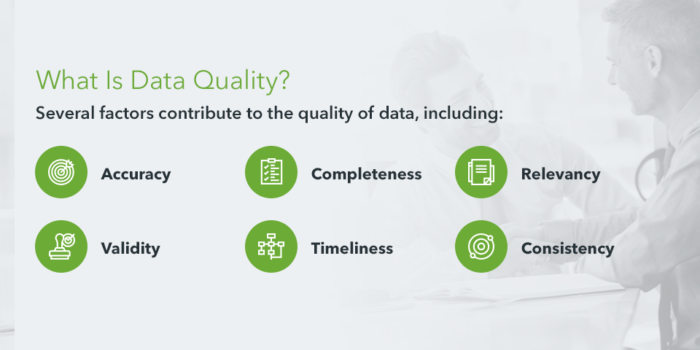
Organizations must take steps to ensure the quality and accuracy of their underlying data points in order for any data-driven innovation process to be successful. This includes:
- Validating incoming datasets against known standards.
- Conducting regular checks on existing databases.
- Employing automated processes such as anomaly detection.
- Leveraging external services like third-party APIs
- Using AI/ML models for cleaning up noisy or incomplete information.
Doing so will enable organizations to produce reliable results from their analyses over time.
(Source)
The challenges in implementing a data analytics strategy for innovation are complex and varied, but the rewards of successful implementation can be immense.
Key Takeaway: Data analytics can drive innovation, but organizations must first secure the right resources and expertise as well as high-quality datasets to ensure success. This includes personnel with knowledge of predictive analysis techniques, access to relevant datasets, and software tools for analyzing large volumes of data quickly and accurately.
Technology to Aid Data-Driven Innovation Processes
Technology is a huge part of how data analytics can drive innovation. By leveraging data to identify opportunities, utilizing predictive analytics to guide decision-making, and using machine learning to automate processes and enhance efficiency, organizations can unlock new sources of value from their existing resources.
Cloud Computing
Cloud computing and big data platforms are essential components of any successful data analytics strategy. These technologies provide the scalability and flexibility needed to manage large datasets quickly and efficiently.
Cloud-based solutions also enable teams to access insights from anywhere in the world with an internet connection, allowing them to make decisions faster than ever before.
Artificial Intelligence
Artificial intelligence (AI) is another key technology that enables organizations to get more out of their innovation processes. AI-powered algorithms can be used for automation tasks such as predicting customer behavior or identifying patterns in complex datasets that would otherwise be difficult or impossible for humans alone.
Additionally, AI can help generate insights by uncovering relationships between different variables that may not have been obvious before.
Augmented Reality
Augmented reality (AR) offers an alternative way of interacting with complex datasets, enabling users to explore information visually by overlaying it onto physical objects or environments. This allows for a deeper understanding of how different factors interact and influence each other without having to manually analyze every single piece of data individually.
AR tools make it easier for teams to spot trends and draw meaningful conclusions from their analyses more quickly than ever before. It also provides an engaging experience that encourages exploration and collaboration among team members who might not otherwise have interacted with one another’s work.
Overall, technology plays an important role in helping organizations drive innovation through data analytics initiatives. It enables them to process larger amounts of information faster while also providing ways for users to engage with these findings in meaningful ways beyond just looking at raw numbers on a page. This ultimately leads to greater success when it comes time to implement changes based on what has been discovered during the course of these investigations.
Key Takeaway: Data analytics can be a powerful tool for driving innovation, as it enables organizations to process larger amounts of data faster and more efficiently. Cloud computing, big data platforms, AI algorithms, and AR tools are essential components of any successful strategy that will help teams uncover relationships between different variables and draw meaningful conclusions from their analyses.
Conclusion
By leveraging the power of data, organizations can gain a better understanding of their customers, products, and operations to identify opportunities for improvement. This is how data analytics can drive innovation.
However, implementing a successful data analytics strategy requires careful planning and consideration of potential challenges such as technology integration or lack of resources. With the right approach and best practices in place, businesses can use data analytics to unlock new levels of efficiency and productivity that will help them stay ahead in an ever-evolving market landscape.
Are you looking to drive innovation in your R&D and innovation teams? Look no further than Cypris. Our research platform offers a one-stop shop for data sources, allowing your team to quickly gain insights into potential solutions.
With our powerful analytics tools, you can find the answers you need faster and easier than ever before! Take advantage of this revolutionary solution today – join us on the path towards innovative success with Cypris!