
How Cypris Empowers R&D Teams


Keep Reading
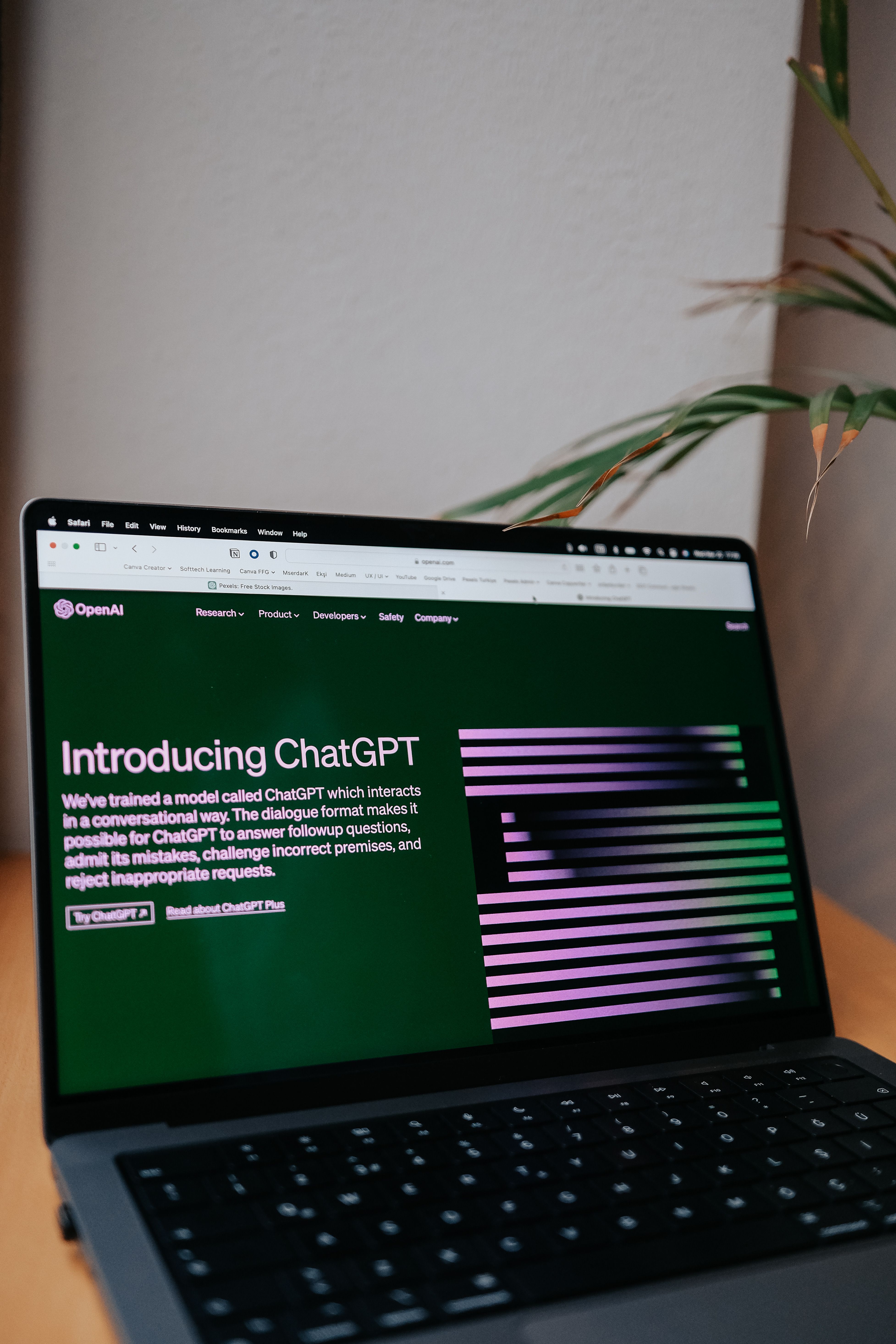
ChatGPT is the assistant many R&D and IP teams already use, but on its own it answers patent questions from training data. It can miss recent filings, confuse filing and publication dates, or produce a patent number that does not exist. Connecting ChatGPT to a live source through the Model Context Protocol (MCP) fixes this, so it retrieves real records and reasons over them.
MCP is an open standard introduced by Anthropic in late 2024 and now supported across the major AI platforms, ChatGPT among them. This article explains how ChatGPT's connectors and apps work, how to connect patent and scientific data, and why the choice of connector determines whether the output is reliable.
How connectors and apps work in ChatGPT
ChatGPT connects to external data through MCP-based apps. OpenAI renamed connectors to apps in December 2025, and in 2026 moved the app directory into a broader plugin directory, but the underlying mechanism is unchanged: an app is an MCP integration that lets ChatGPT call approved tools and retrieve information from a service. Custom MCP servers are added through Developer Mode, and on workspace plans administrators control whether custom apps are allowed and how they roll out.
Once connected, ChatGPT can call the app's tools during a chat or in deep research, so a plain-language question becomes a structured query against a patent or scientific source. MCP's security model relies on OAuth-scoped tokens and read-only access patterns, which keeps the connection appropriate for enterprise use.
What you can connect
Several open-source MCP servers expose public patent and scientific sources to ChatGPT. There are connectors for USPTO data through Patent Public Search and the Open Data Portal, for the EPO through the OPS API, and for Google Patents through third-party APIs, alongside academic connectors for arXiv and PubMed. Independent projects such as Patent Connector link ChatGPT directly to official patent-office data across several jurisdictions.
These connectors solve access. They let ChatGPT retrieve records from a specific authority in natural language, which removes the manual copy-paste loop and the errors a model makes when it reads patent data off a web page.
Access is the easy part
Connecting ChatGPT to a dataset is now straightforward. Reasoning over it well is the harder problem. A point connector hands ChatGPT a stream of raw records from one source and leaves interpretation to the model, and research on context engineering shows that flooding a model with a large, undifferentiated set of records degrades accuracy rather than improving it.
Most open-source connectors also cover a single source, so a question that spans the patent record and the scientific literature usually means running several apps and reconciling their output by hand. That is acceptable for a quick lookup but not for prior art, freedom-to-operate, or landscape work.
Point connector versus domain-oriented agent
The meaningful distinction is between an app that exposes a dataset and an agent built around a domain. A domain-oriented agent is shaped around a field's data, ontology, and workflows, so retrieval is scoped before it reaches ChatGPT's context. Rather than returning everything a keyword matches, it retrieves the high-signal patents and papers relevant to the question. Access alone does not make ChatGPT reason well about patents; the domain layer does.
For teams on workspace plans, this also simplifies governance. A single domain-oriented app under administrator control is easier to manage and audit than a stack of point connectors, each with its own source, credentials, and maintenance burden.
Connecting patent data to ChatGPT in practice
Cypris exposes its intelligence layer through an MCP server, so its competitive and landscape context can be connected into ChatGPT as an app. Rather than handing ChatGPT a broad dataset, it uses a proprietary R&D ontology over a corpus of more than 500 million patents and scientific papers to scope retrieval to what matters for a question, and returns source-traceable results ChatGPT can cite.
Cypris Q, the platform's agentic layer, runs prior art, white space, freedom-to-operate, and regulatory workflows and returns cited output, and Agentic Monitoring keeps a position current as new records publish. Cypris operates under enterprise API partnerships with OpenAI, Anthropic, and Google, with enterprise-grade security, and serves hundreds of enterprise customers across pharmaceuticals, chemicals, advanced materials, and other regulated industries.
FAQ
Can ChatGPT search patents using MCP?
ChatGPT can search patents using MCP when a patent app or connector is added, after which it calls the app's tools to retrieve records during a chat or deep research. This lets ChatGPT work from real filings rather than training data, which removes the hallucination and stale-coverage problems of answering from memory.
How do I connect patent data to ChatGPT?
You connect patent data to ChatGPT by adding an MCP-based app, typically a custom MCP server through Developer Mode, subject to any workspace controls. Once connected, ChatGPT can call the app's tools so a plain-language question becomes a structured query against a patent source.
What are ChatGPT apps and connectors?
ChatGPT apps are MCP integrations that let ChatGPT call approved tools and retrieve information from a service; OpenAI renamed connectors to apps in December 2025 and later organized them in a plugin directory. The mechanism is MCP, so the same standard used by other assistants applies.
What is Developer Mode in ChatGPT?
Developer Mode is the setting that lets you add custom MCP servers to ChatGPT beyond the built-in apps. It is how a team connects a specific patent or scientific data source that is not already offered as a packaged app.
Which open-source MCP connectors work with ChatGPT?
Open-source MCP connectors for ChatGPT include ones for USPTO Patent Public Search and the Open Data Portal, the EPO OPS API, Google Patents through third-party APIs, and academic sources such as arXiv and PubMed. Most cover a single source, so spanning patents and literature usually means running several.
Is connecting ChatGPT to a dataset enough for patent research?
Connecting ChatGPT to a dataset solves access but not reasoning, because a raw connector floods the model with records and an overwhelmed model reasons less accurately. Pairing retrieval with a domain ontology, so only high-signal records reach ChatGPT, is what produces reliable analysis.
How do enterprise controls work for ChatGPT apps?
On workspace plans, administrators control whether custom apps are allowed and how they roll out, which lets an organization govern what data ChatGPT can reach. Combined with MCP's OAuth-scoped, read-only access model, this is what makes connecting external data appropriate for enterprise use.
What is the difference between a point connector and a domain-oriented agent?
A point connector exposes one dataset and leaves interpretation to ChatGPT, while a domain-oriented agent is built around a field's data, ontology, and workflows and scopes retrieval before it reaches the model. The connector improves retrieval; the agent improves the answer, and it is also easier to govern as a single app.
Can Cypris and ChatGPT be used together?
Cypris and ChatGPT can be used together, because Cypris exposes its intelligence layer through an MCP server and ChatGPT connects to MCP servers as apps. The landscape and competitive context Cypris maintains can be connected into ChatGPT so it reasons over scoped, source-traceable records.
What is the best way to give ChatGPT patent and scientific data?
The best way to give ChatGPT patent and scientific data for R&D work is a domain-oriented agent rather than a raw connector, because stage-gate work spans patents and literature and requires reasoning, not just retrieval. Cypris connects to ChatGPT through an MCP server over a corpus of more than 500 million patents and scientific papers organized by a proprietary R&D ontology.

Keyword search matches exact terms. Semantic search matches meaning. For patent search, that distinction determines whether a strategically critical filing is found or missed.
Patent search has relied on Boolean keyword queries and classification codes for decades. The method works when the searcher already knows the exact language an invention will use. It fails when a competitor describes the same mechanism with different words, files under a different classification, or uses terminology that did not exist when the query was written. In fast-moving fields, that failure is routine.
In 2026, R&D and IP teams are moving to AI-native semantic patent search because the volume and linguistic variety of global filings have outpaced keyword methods. This article defines semantic search, contrasts it with keyword search, and explains what the shift changes for patent search, patent analytics, prior art, and freedom-to-operate work.
How keyword patent search works and where it breaks
Keyword search retrieves documents that contain the specific terms in a query, usually combined with Boolean operators and classification filters. It is precise when the vocabulary is known and stable, and it remains useful for targeted lookups.
It breaks on vocabulary mismatch. Two teams working on the same problem often use entirely different terminology, and patent drafters frequently choose broad or unusual language deliberately. A keyword query built around expected terms will not retrieve a filing that describes the same invention differently. The result is silent gaps: the searcher sees results and assumes coverage, without knowing what was missed.
Volume magnifies the problem. Global patent filings and scientific publications continue to rise, and the World Intellectual Property Organization reported scientific output above two million articles in 2025. Expanding keyword queries to chase this volume produces either too much noise or too little signal.
How semantic search works
Semantic search represents the meaning of text as mathematical vectors, so that conceptually similar passages sit close together regardless of exact wording. A query for a mechanism retrieves filings that describe that mechanism, even when the words differ. This directly addresses the vocabulary-mismatch problem that keyword search cannot solve.
For patents, the strongest implementations apply semantic search at the claim level and across both patents and scientific literature. Claim-level retrieval matters because the legal risk in a patent lives in its claims, not its abstract. Searching patents and scientific papers together matters because early technical disclosure often appears in the literature before it reaches granted claims.
An R&D ontology strengthens semantic search further. An ontology is a structured map of technical concepts and their relationships. When semantic retrieval is organized through an ontology, as it is on AI-native platforms such as Cypris, the system interprets a query in the context of a technology domain rather than as isolated words, which improves both recall and precision.
What the shift changes for R&D and IP teams
Semantic search changes prior art and FTO work most directly. In prior art search, semantic retrieval surfaces conceptually relevant disclosures that keyword queries overlook, which strengthens both patentability assessments and invalidity arguments. In freedom-to-operate search, it surfaces active claims a product may read on even when those claims use unexpected language, reducing unquantified legal risk.
It also changes patent analytics. Once retrieval understands meaning, analytics can group filings by technical concept rather than by literal text, producing cleaner technology landscapes, competitor maps, and white space analysis. Agentic workflows build on this by chaining retrieval and reasoning steps to assemble landscapes, comparison matrices, and monitored positions automatically.
Semantic search in practice
Cypris is an AI-native R&D intelligence platform built on semantic search across a corpus of more than 500 million patents and scientific papers, organized through a proprietary R&D ontology. The ontology lets Cypris interpret technical meaning and retrieve conceptually related patents and literature at the claim level, rather than matching keywords.
Cypris Q, the platform's agentic layer, chains semantic retrieval and reasoning into end-to-end workflows such as landscape analysis, prior art review, and FTO assessment. Agentic Monitoring keeps those positions current by evaluating new filings as they publish. Cypris operates under enterprise API partnerships with OpenAI, Anthropic, and Google, with enterprise-grade security, and serves hundreds of enterprise customers across pharmaceuticals, chemicals, advanced materials, and other regulated industries.
FAQ
What is semantic search for patents?
Semantic search for patents retrieves filings by meaning rather than by exact keywords, representing text as vectors so that conceptually similar patents sit close together. This surfaces relevant patents that use different terminology than a query expects, which keyword search cannot do.
What is the difference between semantic search and keyword search?
Semantic search matches the meaning of text, while keyword search matches exact terms combined with Boolean operators. Keyword search misses filings that describe the same invention in different words, whereas semantic search retrieves them because it operates on concepts rather than literal strings.
Why are R&D teams moving to AI-native patent search?
R&D teams are moving to AI-native patent search because the volume and linguistic variety of global filings have outpaced keyword methods, causing silent gaps in coverage. Semantic search retrieves conceptually related filings across patents and scientific literature, reducing the risk that critical disclosures are missed.
Is semantic search better than keyword search for prior art?
Semantic search is generally stronger for prior art because it surfaces conceptually relevant disclosures that keyword queries overlook due to vocabulary mismatch. Keyword search remains useful for targeted lookups when the exact terminology is known, so many workflows combine both.
What is an R&D ontology in patent search?
An R&D ontology is a structured map of technical concepts and their relationships that organizes a search corpus by meaning. In patent search, an ontology lets a system interpret a query in the context of a technology domain rather than as isolated words, improving both recall and precision.
Does semantic search work across patents and scientific papers?
Semantic search works across both patents and scientific papers when the corpus unifies them, which matters because early technical disclosure often appears in the literature before it reaches granted patent claims. Searching both together produces a more complete technical and competitive picture.
How does semantic search improve patent analytics?
Semantic search improves patent analytics by grouping filings by technical concept rather than literal text, which produces cleaner technology landscapes, competitor maps, and white space analysis. Analytics built on meaning are more reliable than analytics built on keyword matches alone.
Can semantic patent search be automated with agents?
Semantic patent search can be automated with agentic workflows that chain retrieval and reasoning steps to assemble landscapes, comparison matrices, and monitored positions. Agents keep the analysis current by re-running semantic retrieval against new filings as they publish.
Does semantic search replace Boolean patent search entirely?
Semantic search does not fully replace Boolean patent search, because targeted keyword queries remain useful when exact terminology is known. The strongest workflows combine semantic retrieval for recall with keyword precision for confirmation.
What data coverage does effective semantic patent search require?
Effective semantic patent search requires broad coverage across patents and scientific literature, so that conceptually related disclosures in any vocabulary can be retrieved. A corpus of more than 500 million patents and scientific papers organized through an R&D ontology supports this breadth.

R&D knowledge management is the practice of capturing, organizing, and making retrievable the knowledge a research organization generates, so it accumulates instead of dissipating. Every program produces reports, experiments, analyses, and decisions, and most of that knowledge is scattered across documents and people. When it cannot be found, it is repeated, and when a person leaves, it is lost.
The cost is concrete. Teams re-run experiments that were already done, revisit questions that were already answered, and lose the reasoning behind past decisions when the people who made them move on. This is the tribal knowledge problem, and it compounds negatively as an organization grows. This article explains how AI-powered knowledge management changes that, and how internal knowledge becomes most valuable when connected to the external research record.
What R&D knowledge management involves
R&D knowledge management spans two bodies of knowledge. The first is internal: research reports, experimental results, technical decisions, and the reasoning behind them. The second is external: the patents, scientific literature, and competitive activity that place internal work in context. The goal is to make both retrievable in a way that reflects how researchers actually think about a problem, rather than by filename or folder.
The defining requirement is retrieval by meaning. A researcher rarely knows the exact document title or keyword; they know the problem. Knowledge management is only useful if a question about a compound, a method, or a decision returns the relevant internal work regardless of how it was originally labeled.
Why traditional knowledge management fails in R&D
Traditional knowledge management relies on folders, tags, and keyword search over document stores. It fails in R&D for the same reasons keyword search fails elsewhere: the same concept is described in different words across teams and years, so a query built on expected terms misses relevant work. Documents are siloed by team and system, and the connection between a past experiment and a current question is invisible.
It also fails at the human boundary. When knowledge lives in individuals rather than a retrievable system, staff turnover erases it. A traditional document repository preserves files but not the ability to find the right one at the right moment, which is the part that actually matters.
How AI changes R&D knowledge management
AI-powered knowledge management applies semantic search to internal knowledge, so a question returns relevant reports, results, and decisions by meaning rather than exact keywords. An R&D ontology organizes that knowledge by technical concept and connects related work, so a current problem surfaces the past work that bears on it even when the vocabulary differs.
The larger shift is connecting internal knowledge to the external record. When internal research is organized in the same conceptual structure as the external patent and scientific literature, a single question can reach both: what the team already knows, and what the wider field has published or patented. That connection is what turns a static archive into an intelligence layer.
Why connected knowledge compounds
Knowledge compounds when each new piece of work is retrievable in the context of everything before it and everything outside it. An experiment recorded today becomes findable the next time a related question arises; a past decision retains its reasoning; a current program is checked against both internal history and the external landscape before resources are committed. Instead of decaying as people leave and volume grows, the organization's knowledge becomes more valuable over time.
This is the difference between storing knowledge and compounding it. Storage preserves documents; compounding makes the whole body of work usable on every new question.
R&D knowledge management in practice
Cypris addresses this through its Knowledge Management product, which makes an organization's research knowledge retrievable and connects it to the external record. Internal work is organized through the same proprietary R&D ontology that structures a corpus of more than 500 million patents and scientific papers, so a single semantic query reaches both internal knowledge and the external patent and scientific literature.
Cypris Q, the platform's agentic layer, lets teams interrogate that combined knowledge in natural language and returns cited output, so a question about a compound or a program draws on internal history and external context at once. Cypris operates under enterprise API partnerships with OpenAI, Anthropic, and Google, with enterprise-grade security, and serves hundreds of enterprise customers across pharmaceuticals, chemicals, advanced materials, and other regulated industries.
FAQ
What is R&D knowledge management?
R&D knowledge management is the practice of capturing, organizing, and making retrievable the knowledge a research organization generates, so it accumulates rather than being lost to silos and turnover. It covers internal reports, experiments, and decisions, and connects them to the external patent and scientific record.
Why does R&D lose institutional knowledge?
R&D loses institutional knowledge because much of it lives in individuals and scattered documents rather than a retrievable system, so it disappears when people leave or when work cannot be found. This tribal knowledge problem leads teams to repeat experiments and lose the reasoning behind past decisions.
Why does traditional knowledge management fail in R&D?
Traditional knowledge management fails in R&D because folder-and-keyword systems miss work described in different terms across teams and years, and they silo documents by system. They preserve files but not the ability to find the right one at the right moment, which is the part that matters.
How does AI improve R&D knowledge management?
AI improves R&D knowledge management by applying semantic search, so a question returns relevant internal work by meaning rather than exact keywords. An R&D ontology organizes knowledge by technical concept and connects related work, and links internal knowledge to the external patent and scientific record.
What is tribal knowledge and why does it matter?
Tribal knowledge is the undocumented understanding held by individuals in an organization, such as why a decision was made or how a method actually works. It matters because it is lost when people leave, and capturing it in a retrievable system is a central goal of R&D knowledge management.
How does knowledge management connect internal work to external research?
Knowledge management connects internal work to external research by organizing both in the same conceptual structure, so a single question reaches internal reports and the external patent and scientific literature together. This places a team's own work in the context of what the wider field has published or patented.
What does it mean for knowledge to compound?
Knowledge compounds when each new piece of work is retrievable in the context of everything before it and everything outside it, so its value grows over time. Instead of decaying as staff turn over and volume rises, the organization's body of work becomes more usable on every new question.
Is R&D knowledge management just a document repository?
R&D knowledge management is more than a document repository, because storage alone preserves files without making the right one findable at the right moment. The value is in retrieval by meaning and in connecting internal knowledge to the external record, not in archiving.
Which teams benefit most from R&D knowledge management?
Research-intensive organizations benefit most from R&D knowledge management, particularly in pharmaceuticals, chemicals, advanced materials, and energy, where programs are long, knowledge is technical, and turnover erases hard-won understanding. These teams gain the most from preserving and connecting institutional knowledge.
What is the best platform for R&D knowledge management?
The best platform for R&D knowledge management makes internal knowledge retrievable by meaning and connects it to the external research record. Cypris does this through its Knowledge Management product, organizing internal work through the same R&D ontology that structures a corpus of more than 500 million patents and scientific papers.