
How Cypris Supports Technology Transfer


Keep Reading

Multiple studies concur that listening to music has a powerful impact on the brain. In fact, it's been shown to reduce things like anxiety, stress, blood pressure, pain, and improve sleep quality, mood, alertness, immune function, memory, and so much more. In the past year, new literature has brought to light the music's impact on cognitive ability and brain plasticity, in particular. In this blog, we’ll dive into the market outlook, innovation activity within the space, and recent scientific literature centered on how music improves cognitive abilities, particularly in relation to playing musical instruments, listening to your favorite music, and dancing.
Market outlook:
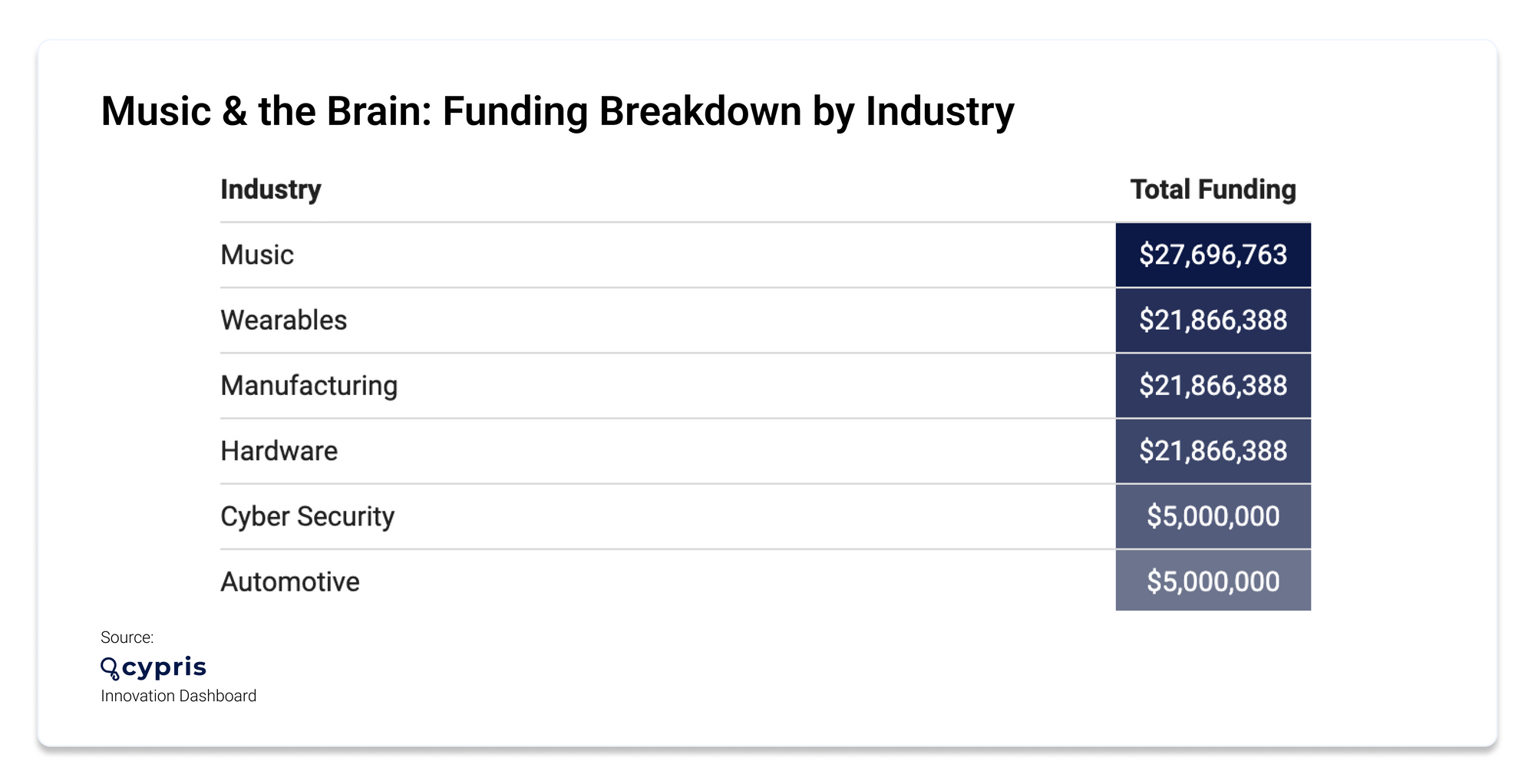
We used the Cypris Innovation Dashboard to pull data on the research area of music and the brain. According to our report, 15 new organizations entered the space last year, the majority of which were based in USA. Of the 15 organizations, 11 were startups. Below, you can see the funding breakdown for startups by industry.
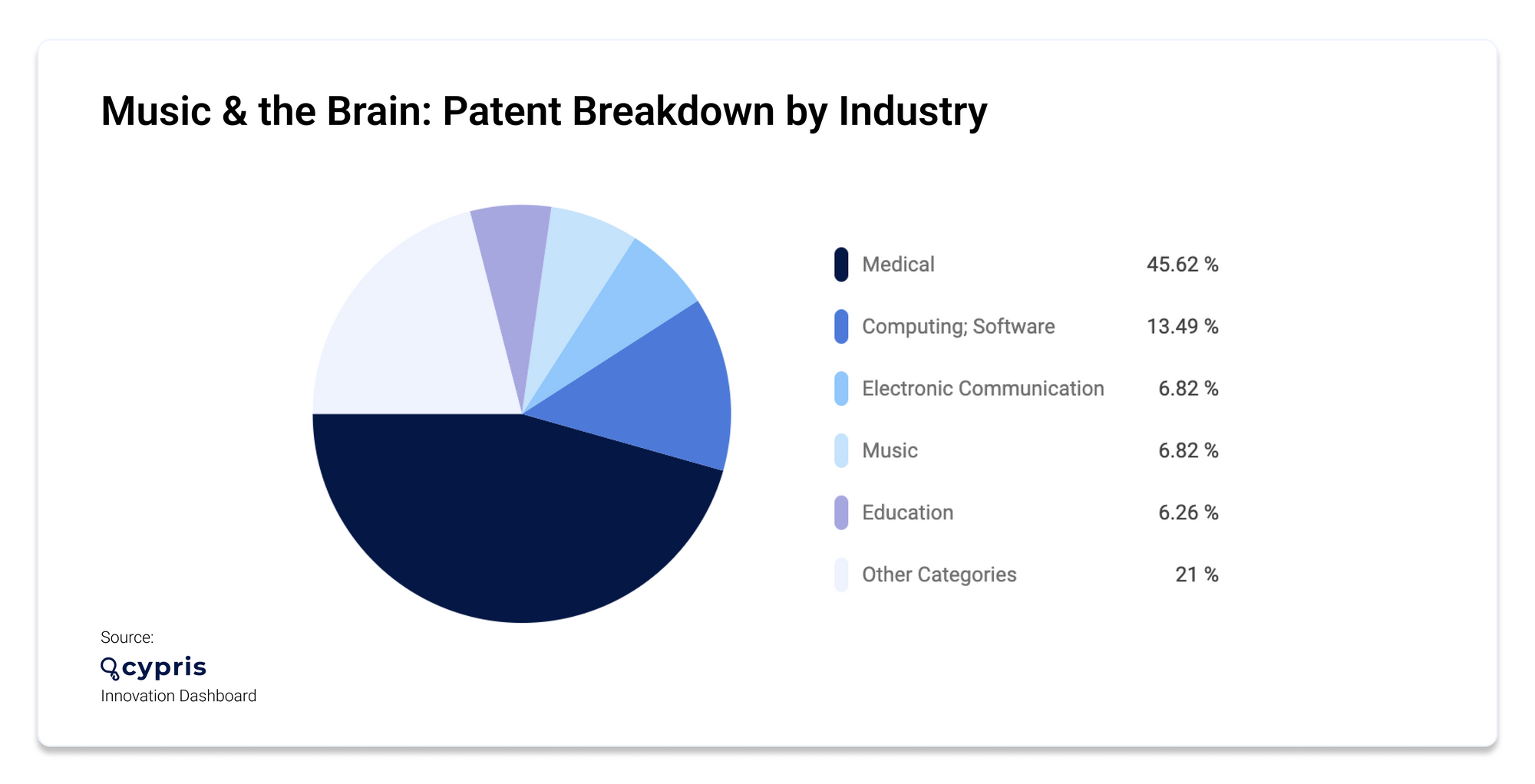
Scientific literature in the field saw the addition of 4,382 new research papers in the last year, while only 64 new patents were published in the space. Most of the patent activity centered on medical applications, with computing software coming in second.
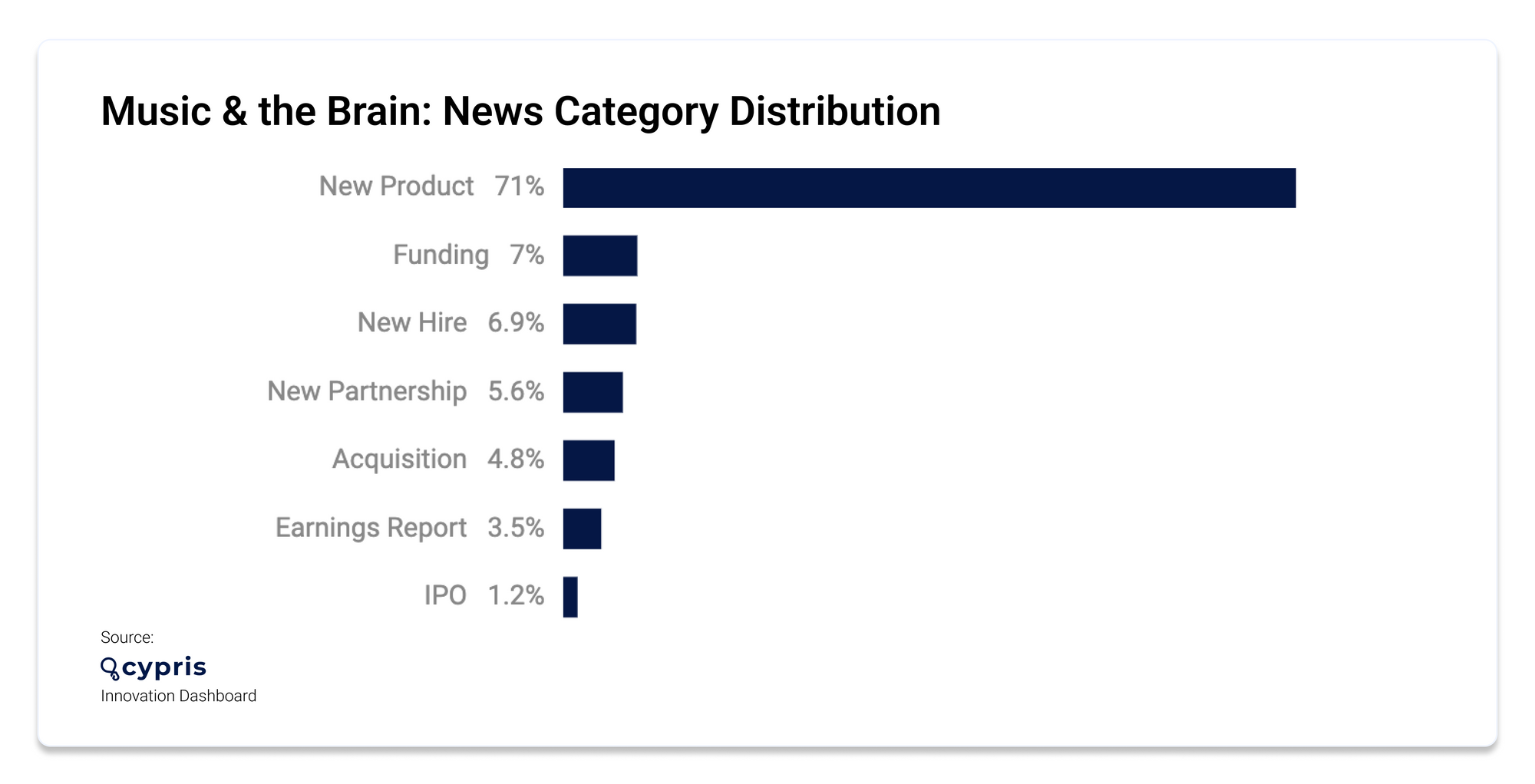
News coverage in the space boomed—with 89,798 news articles written in the last year, 71.05% of which were in the New Product category.
Research on music’s impact on cognitive ability
Let's take a look at the recent research studies examining the connection between music and brain function:

Playing a musical instrument in childhood improves cognitive ability in older age
The University of Edinburgh tested the cognitive ability of participants twice in their lives—at age 11 and age 70—using questions that included verbal reasoning, spatial awareness and numerical analysis portions. Out of the 366 study participants, 117 reported some experience of playing a musical instrument primarily during childhood and adolescence. Most commonly participants played the piano, but the instruments were wide ranging.
The results revealed that people with more experience of playing a musical instrument showed greater lifetime improvement on a test of cognitive ability than those with less or no experience. Researchers found that this was the case even when accounting for their socio-economic status, years of education, childhood cognitive ability, and their health in older age.
However, the researchers did note that the results don’t prove musical training boosts cognitive ability due to other confounding factors like parental influence, which could play a role.
Emeritus Professor Ian Deary, formerly Director of the Centre for Cognitive Ageing and Cognitive Epidemiology at the University of Edinburgh, said: “We have to emphasize that the association we found between instrument-playing and lifetime cognitive improvement was small, and that we cannot prove that the former caused the latter.
“However, as we and others search for the many small effects that might contribute toward some people’s brains aging more healthily than others, these results are worth following up.”

Listening to your favorite music improves brain plasticity
Patients in Toronto experiencing early-stage cognitive decline participated in a study where they each listened to a curated playlist that featured music that held significant meaning in their lives. The 14 participants, six of whom were musicians and eight non-musicians, listened to their playlist for an hour per day for three weeks.
MRI scans taken before and after the listening period compared their responses to new music they hadn't previously heard, and the long-known music they were attached to. Music, in general, activated the brain’s auditory cortex, but the familiar music lit up significant regions of the brain, including the prefrontal cortex. The prefrontal cortex is responsible for higher order executive functioning like decision-making, personality expression, and regulating emotions. Whether they were musicians or not, all participants demonstrated improved cognition.
Dr Michael Thaut is the senior author of the study, as well as being the director of the Music and Health Science Research Collaboratory, Tier One Canada Research Chair in Music, Neuroscience and Health, and professor at the University of Toronto's Faculty of Music and Temerty Faculty of Medicine.
"We have new brain-based evidence that autobiographically-salient music—that is, music that holds special meaning for a person, like the song they danced to at their wedding—stimulates neural connectivity in ways that help maintain higher levels of functioning," says Dr. Thaut.

Dancing to groovy music improves cognitive function
Researchers from University of Tsukuba in Japan performed functional near-infrared spectroscopy (fNIRS) with a color-word matching task on participants to examine inhibitory executive function before and after listening to music, as well as conducted a survey about the subjective experience of listening to groove music. Their goal was to examine the effect of groove music on executive function or brain activity in regions associated with executive function, such as the left dorsolateral prefrontal cortex (l-DLPFC).
Their findings revealed that dancing to ‘music with a groove’ can boost cognition, executive function and overall brain performance, as well as prevent diseases like dementia.
“The results were surprising,” explains lead author Professor Hideaki Soya. “We found that groove rhythm enhanced executive function and activity in the l-DLPFC only in participants who reported that the music elicited a strong groove sensation and the sensation of being clear-headed.”
Notably, those who were most familiar with the music experienced more improved brain function.
Whether it comes to playing an instrument as a child, listening to your favorite tunes, or dancing to groovy music, music has a profound impact on cognitive ability and brain plasticity. If you're curious to learn more about another topic of interest using data from our innovation dashboard, visit cypris.ai to get started.
Sources:
Cypris Innovation Dashboard, query: Music and the brain
https://www.nature.com/articles/s41598-022-11324-3
https://www.ed.ac.uk/news/2022/music-in-childhood-boosts-brains-in-later-life
https://www.mirror.co.uk/news/uk-news/learning-play-musical-instrument-child-28199852
https://www.abc.net.au/classic/read-and-watch/news/favourite-music-can-boost-brain-function/13661074
https://www.sciencedaily.com/releases/2022/05/220527101244.htm


With the growing interest in space flight and deep space exploration, more research is focusing on how to make life outside of earth habitable for human beings, and at what cost. In this blog, we’ll look at the market landscape of space travel, recent innovation activity, and scientific literature to gain a full picture of where our understanding of life beyond earth is headed.
Market Overview:
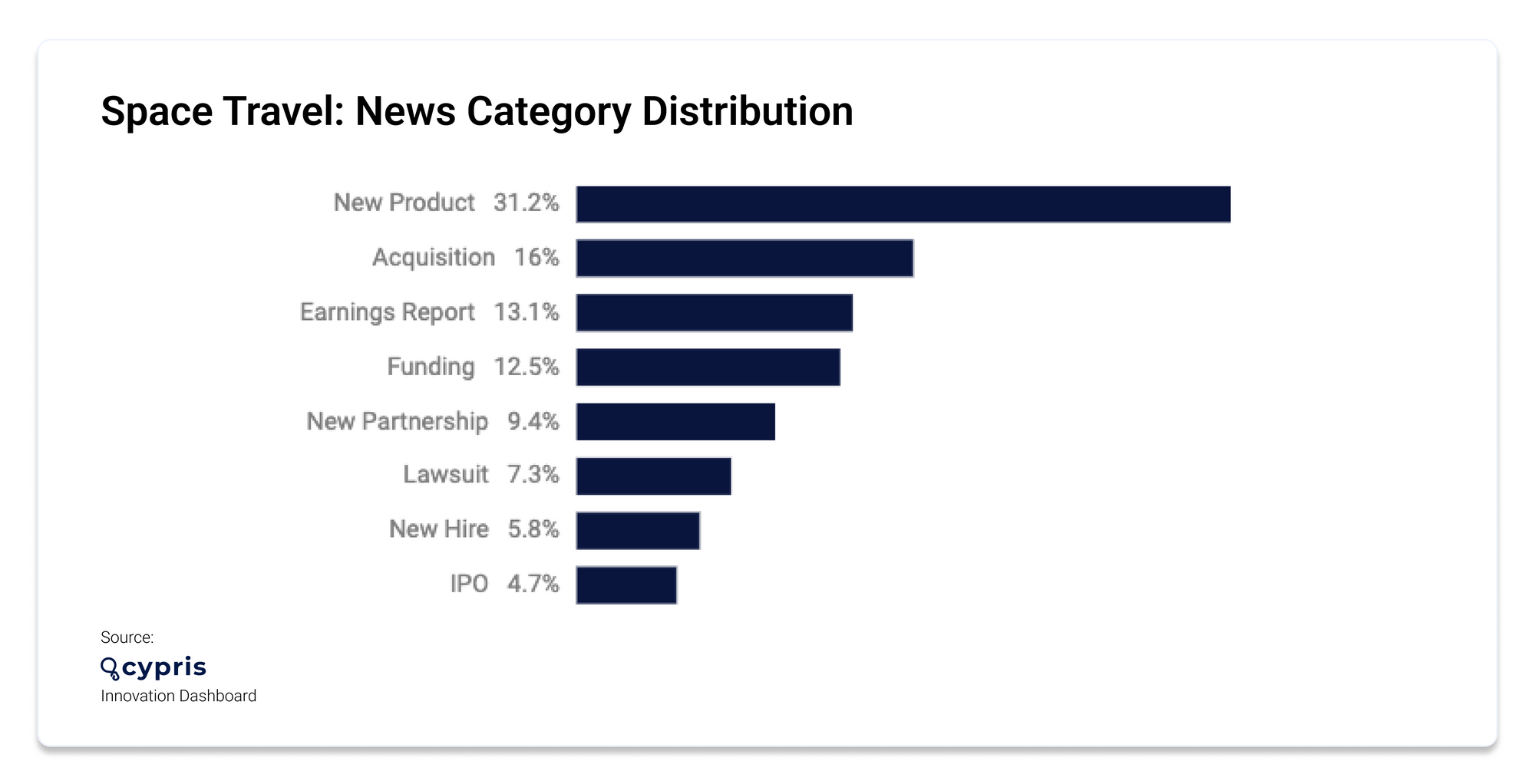
According to the Cypris Innovation Dashboard, over the past year alone, 15 new organizations entered the space travel industry (13 of which were startups) and the majority were based in USA. The past year also saw 406 new patents across 22 different countries, 10,549 new research papers, and 26,156 news articles published in the space. The majority of news articles focused on new products, and across the board media coverage was positive.
Of the patents published, 15.46% were created by the top 3 entities: NANJING SANLE GROUP CO LTD, ANHUI HUADONG PHOTOELEC TECH, and EMULATE INC. Below, you can see the breakdown of patent activity by region.
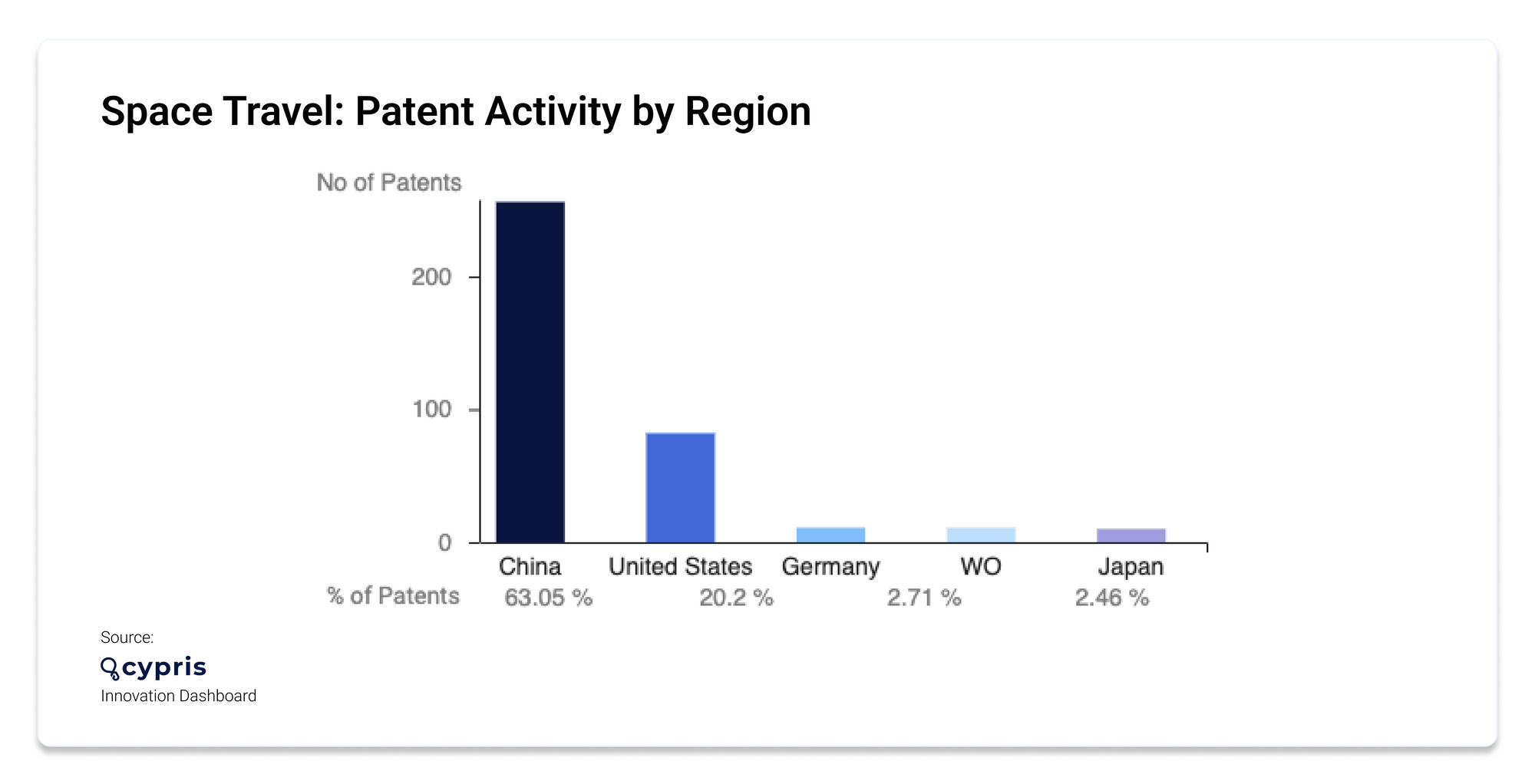
In the recent months, a number of new scientific studies have been released on efforts to make life in outer space habitable for human beings, and the impact of travel on the body and brain. Let's dive into a few of these findings.
Creating Oxygen in Space Using Magnets:

Researchers at the University of Warwick have invented a new way to make oxygen for astronauts using magnets. To provide oxygen in space, NASA currently uses centrifuges, which are large machines that require significant mass, power, and maintenance. As a result, scientists have been looking for a sustainable way to create air in space.
This study focused on the phenomenon of magnetically-induced buoyancy. The researchers engineered a procedure to detach gas bubbles from electrode surfaces in microgravity environments at the Bremen Drop Tower. The results revealed for the first time that gas bubbles can be ‘attracted to’ and ‘repelled from’ a neodymium magnet in microgravity within various solutions.
According to Dr. Katharina Brinkert of the University of Warwick Department of Chemistry Center for Applied Space Technology and Microgravity (ZARM), “Efficient phase separation in reduced gravitational environments is an obstacle for human space exploration and known since the first flights to space in the 1960s. This phenomenon is a particular challenge for the life support system onboard spacecraft and the International Space Station (ISS) as oxygen for the crew is produced in water electrolyzer systems and requires separation from the electrode and liquid electrolyte.”
The results of this study could help generate breathable atmospheres for future space travel to the moon and Mars.
Space Travel’s Impact on the Body's Bone Mass & Stem Cells:
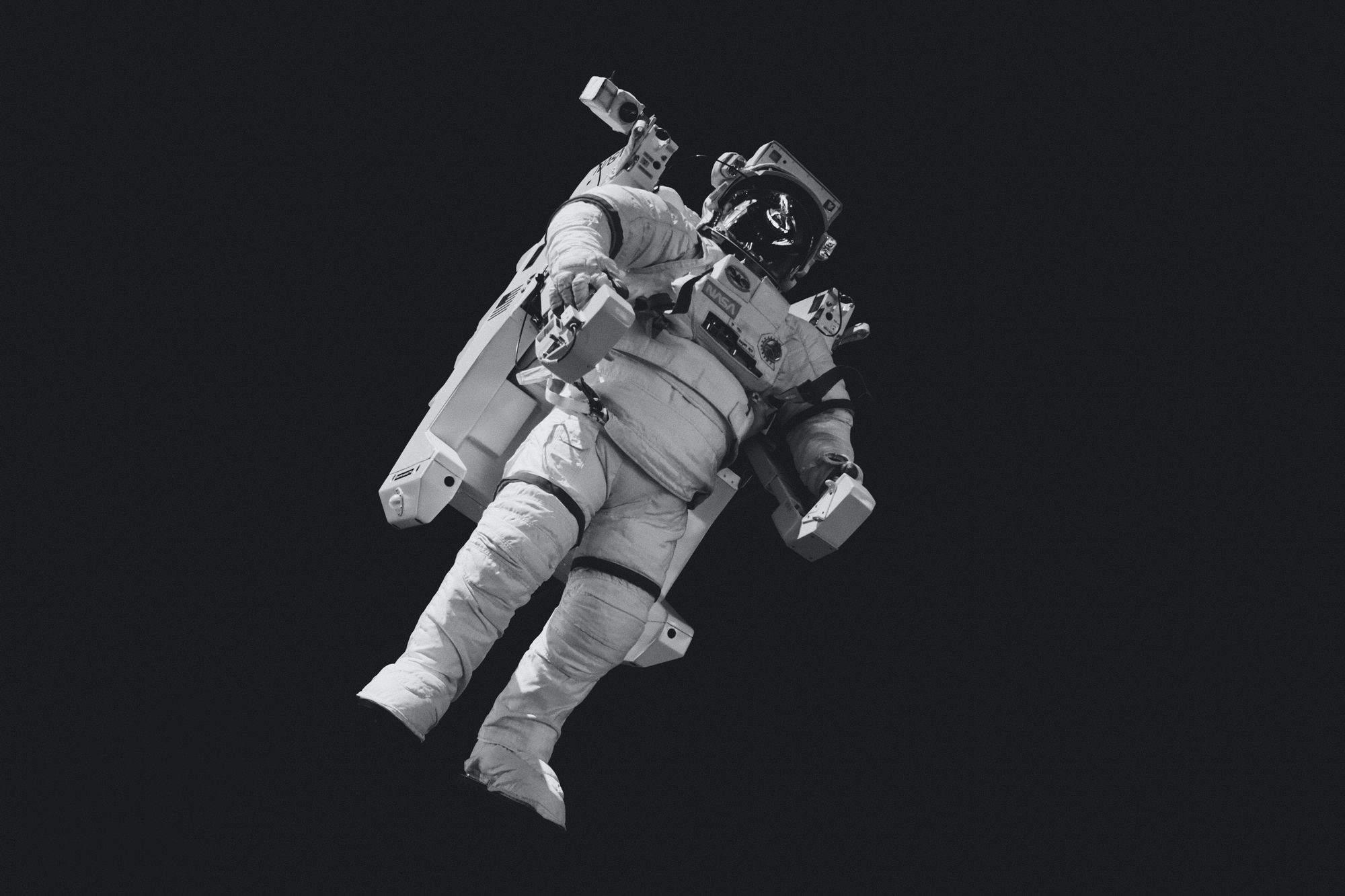
For those who stay in space for longer periods of time, the most prominent side effect is the loss of bone mass. New research now claims that living in space can also accelerate the process of bone aging, and irreparably damage bone structure.
The study assessed 14 male and three female astronauts, average age 47, whose missions ranged from four to seven months in space, with an average of about 5-1/2 months. The results showed that 1 year after their return from space, the astronauts on average exhibited 2.1% reduced bone mineral density at the tibia and 1.3% reduced bone strength. Nine of the 17 astronauts had not completely recovered a full year after returning from space.
"Astronauts experienced significant bone loss during six-month spaceflights - loss that we would expect to see in older adults over two decades on Earth, and they only recovered about half of that loss after one year back on Earth," Gabel said.
Additionally, another recent study focused on 14 astronauts from NASA’s space shuttle program whose white blood samples were stored for 20 years. Researchers found that the astronauts were more likely to have somatic mutations in their genes. The DNA mutations in blood-forming stem cells are at the root of several types of blood cancer.
Space Travel’s Impact on the Brain:
We know that space travel impacts the body, but what does it do to the brain? In this study, 12 cosmonauts who spent an average of six months aboard the International Space Station were scanned in an MRI scanner pre-flight, ten days after flight, and at a follow-up time point seven months after flight.
The results revealed "significant microstructural changes" in the white matter that manages communications within the brain, and to and from the rest of the body, as well as fluid shifts. In particular, the research team spotted changes in neural tracts related to sensory and motor functions, and believe this could have something to do with the cosmonauts' adaptation to life in microgravity while in outer space.
Whether through creating oxygen in outer space, or studying how travel impacts the brain and body, significant advances are being made in the space travel industry. For more data on patents and innovative research papers in the space travel field, visit cypris.ai and get started with access to the innovation dashboard.
If you’d like to explore recent patents filed, you can search through our global patent search engine for free here: https://cypris.ai/patents/allrecords
Sources:
Cypris innovation dashboard cypris.ai ; Query: space travel
https://www.precedenceresearch.com/space-tourism-market
https://interestingengineering.com/science/first-researchers-invent-oxygen-magnets-space-exploration
https://www.nature.com/articles/s41526-022-00212-9
https://www.sciencedaily.com/releases/2022/07/220729173222.htm
https://www.nature.com/articles/s41598-022-13461-1
https://www.slashgear.com/946243/scientists-discover-space-travel-accelerates-aging/
https://www.frontiersin.org/articles/10.3389/fncir.2022.815838/full