
A powerful new foundation for custom queries—built on Lucene and designed for R&D precision.
Over the past few years, Cypris has helped innovation teams make faster, more informed decisions by centralizing critical insights across datasets like patents, academic papers, and company activity. But until now, our search experience relied on a legacy query system with limited capabilities, offering little support for advanced search features or dataset-level customization.
Today, we’re excited to introduce an upgraded Advanced Search on Cypris, a complete overhaul of our query engine and search experience, powered by the open-standard Lucene query syntax. This update introduces a more robust and flexible search foundation, unlocking new ways to query data, build complex filters, and extract precisely what you need across patents, research, and more.
Why we rebuilt our search system from the ground up
Cypris’ original query syntax, a proprietary format used internally for years, limited users’ ability to craft advanced queries or tailor searches to specific datasets. It lacked modern capabilities like proximity searches, field-level customization, or true Boolean logic. This made it difficult to build a reliable and intuitive experience for both casual users and advanced researchers.
By moving to Lucene, we’re adopting a powerful, industry-standard query language that makes it easier for developers to build advanced features—and gives users access to a far more capable and flexible search toolset.
What’s new in Advanced Search
1. Custom Queries by Dataset
You can now layer queries to search across datasets or tailor filters to each one. For example, you can run a broad query on drone delivery, and then add separate layers to focus on patents by a specific assignee and papers from a specific country or funding agency.
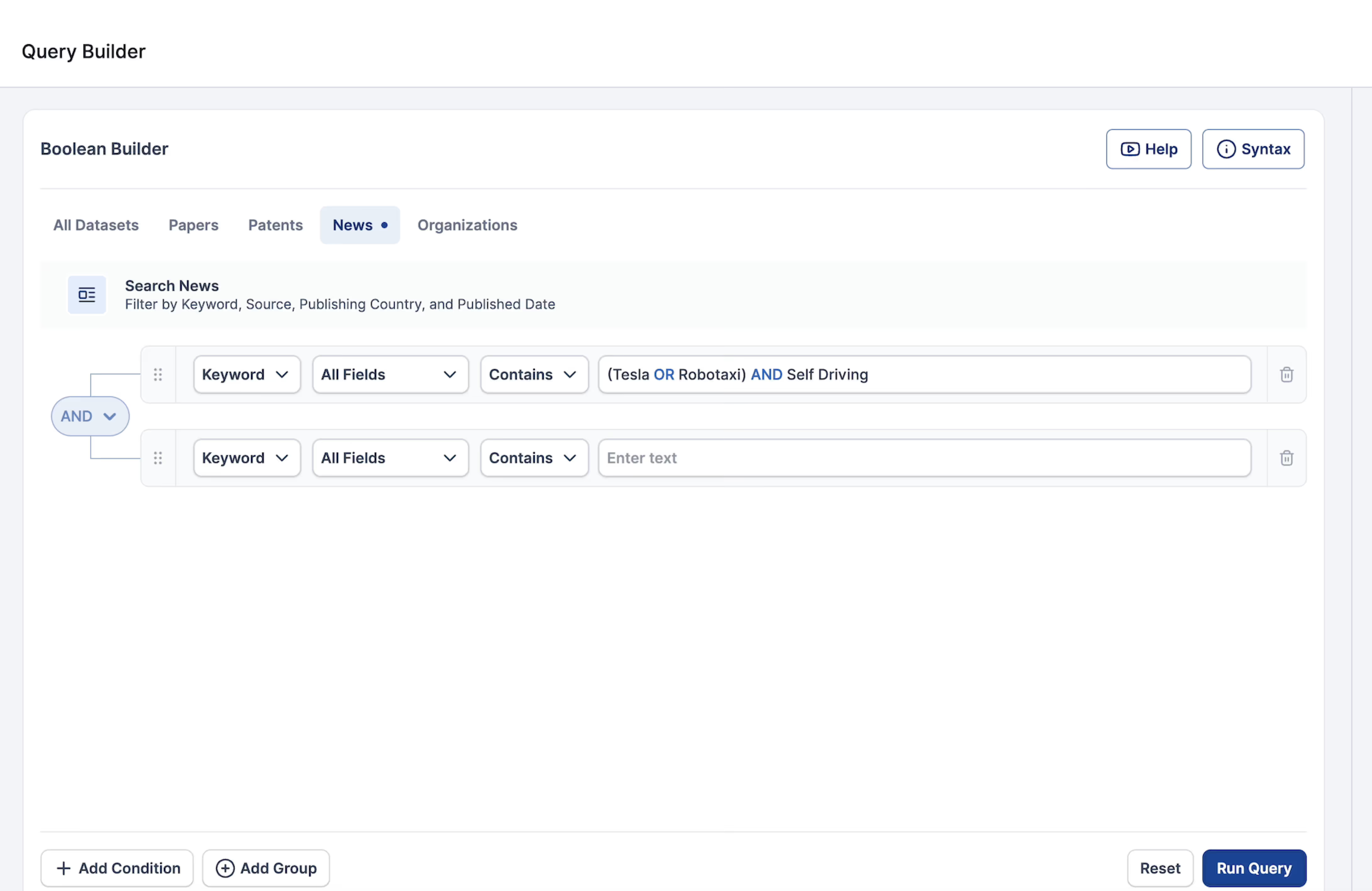
Navigating the All Datasets tab introduces a new level of complexity—and power—by allowing users to apply dataset-specific logic within a single, unified query workflow. While querying multiple datasets simultaneously might seem straightforward, the underlying differences in schema, metadata, and available fields between our proprietary datasets make this a deeply technical challenge. Patents, for example, include claims, application numbers, and multiple date fields (filed, granted, updated), while academic papers use DOIs, have different structural conventions, and emphasize different metadata. In the past, we sidestepped this complexity by translating general queries like ((drone_allText)) into dataset-specific logic under the hood. Now, instead of obscuring that logic, we allow users to opt in to it. The builder provides progressive layers of customization: start with intuitive keyword searches across all fields, then move into the advanced builder for field-specific targeting, fuzzy logic, and term boosting, and finally, tailor query logic by dataset—such as specifying different countries of interest for papers vs. patents. This approach preserves flexibility while giving users full control, and with tools like our real-time Live Analysis and “Your Query” panel, we make it easy to understand how every decision affects the results.
2. More Fields to Query
We’re exposing deeper fields across datasets—giving you explicit control over the dimensions of your search. For the first time, users can now search academic papers by DOI, a critical identifier previously unsupported on the platform. You can also query by:
- Author or inventor names
- Organizations or assignees
- Countries, journals, funding agencies, and more
3. Full Boolean Support
Advanced Search now leverages powerful Boolean logic—AND, OR, NOT, and grouping—enabling more precise control over search logic and improving performance and accuracy.
4. Lucene Syntax Features
Use built-in Lucene features to create expressive, complex searches:
- Proximity searches to find terms near each other
- Fuzzy searches for flexible matching
- Exact phrase matching
- Boosting to prioritize results (e.g., prioritize results mentioning AI 3x more than others)
- Prefix/Postfix queries to match phrases that start or end a certain way
- Range queries for fields like date, funding amounts, or numerical values
A more powerful user experience
Our new search interface is built to help you tap into these capabilities without needing to know the syntax from the start. You’ll find:
- A Query Builder to guide you through complex searches
- A Help Video to onboard users to Lucene-style searches
- Inline examples and tips for writing queries using grouping, boosting, and more
Built for precision, speed, and customization
With Lucene as our foundation, search results are now not only more flexible but also faster and more accurate. Semantic search continues to offer natural-language ease of use, while Boolean search gives power users the performance and structure they need to uncover insights with greater specificity.
Whether you’re an innovation analyst drilling into AI patents or a business development lead scanning academic papers from Chilean researchers—Advanced Search is built to help you get to the signal, faster.
Available now to all users
Advanced Search is live and available across the Cypris platform today. If you’re already using Cypris, you’ll find the new search interface in your dashboard, complete with updated syntax documentation and walkthroughs.
We’re excited to see what you’ll build, discover, and analyze with this new capability. This is just the beginning—we’ll continue expanding the fields, syntax features, and customization options as we push the boundaries of what intelligent search can do for R&D.
Introducing Advanced Search on Cypris


A powerful new foundation for custom queries—built on Lucene and designed for R&D precision.
Over the past few years, Cypris has helped innovation teams make faster, more informed decisions by centralizing critical insights across datasets like patents, academic papers, and company activity. But until now, our search experience relied on a legacy query system with limited capabilities, offering little support for advanced search features or dataset-level customization.
Today, we’re excited to introduce an upgraded Advanced Search on Cypris, a complete overhaul of our query engine and search experience, powered by the open-standard Lucene query syntax. This update introduces a more robust and flexible search foundation, unlocking new ways to query data, build complex filters, and extract precisely what you need across patents, research, and more.
Why we rebuilt our search system from the ground up
Cypris’ original query syntax, a proprietary format used internally for years, limited users’ ability to craft advanced queries or tailor searches to specific datasets. It lacked modern capabilities like proximity searches, field-level customization, or true Boolean logic. This made it difficult to build a reliable and intuitive experience for both casual users and advanced researchers.
By moving to Lucene, we’re adopting a powerful, industry-standard query language that makes it easier for developers to build advanced features—and gives users access to a far more capable and flexible search toolset.
What’s new in Advanced Search
1. Custom Queries by Dataset
You can now layer queries to search across datasets or tailor filters to each one. For example, you can run a broad query on drone delivery, and then add separate layers to focus on patents by a specific assignee and papers from a specific country or funding agency.
Navigating the All Datasets tab introduces a new level of complexity—and power—by allowing users to apply dataset-specific logic within a single, unified query workflow. While querying multiple datasets simultaneously might seem straightforward, the underlying differences in schema, metadata, and available fields between our proprietary datasets make this a deeply technical challenge. Patents, for example, include claims, application numbers, and multiple date fields (filed, granted, updated), while academic papers use DOIs, have different structural conventions, and emphasize different metadata. In the past, we sidestepped this complexity by translating general queries like ((drone_allText)) into dataset-specific logic under the hood. Now, instead of obscuring that logic, we allow users to opt in to it. The builder provides progressive layers of customization: start with intuitive keyword searches across all fields, then move into the advanced builder for field-specific targeting, fuzzy logic, and term boosting, and finally, tailor query logic by dataset—such as specifying different countries of interest for papers vs. patents. This approach preserves flexibility while giving users full control, and with tools like our real-time Live Analysis and “Your Query” panel, we make it easy to understand how every decision affects the results.
2. More Fields to Query
We’re exposing deeper fields across datasets—giving you explicit control over the dimensions of your search. For the first time, users can now search academic papers by DOI, a critical identifier previously unsupported on the platform. You can also query by:
- Author or inventor names
- Organizations or assignees
- Countries, journals, funding agencies, and more
3. Full Boolean Support
Advanced Search now leverages powerful Boolean logic—AND, OR, NOT, and grouping—enabling more precise control over search logic and improving performance and accuracy.
4. Lucene Syntax Features
Use built-in Lucene features to create expressive, complex searches:
- Proximity searches to find terms near each other
- Fuzzy searches for flexible matching
- Exact phrase matching
- Boosting to prioritize results (e.g., prioritize results mentioning AI 3x more than others)
- Prefix/Postfix queries to match phrases that start or end a certain way
- Range queries for fields like date, funding amounts, or numerical values
A more powerful user experience
Our new search interface is built to help you tap into these capabilities without needing to know the syntax from the start. You’ll find:
- A Query Builder to guide you through complex searches
- A Help Video to onboard users to Lucene-style searches
- Inline examples and tips for writing queries using grouping, boosting, and more
Built for precision, speed, and customization
With Lucene as our foundation, search results are now not only more flexible but also faster and more accurate. Semantic search continues to offer natural-language ease of use, while Boolean search gives power users the performance and structure they need to uncover insights with greater specificity.
Whether you’re an innovation analyst drilling into AI patents or a business development lead scanning academic papers from Chilean researchers—Advanced Search is built to help you get to the signal, faster.
Available now to all users
Advanced Search is live and available across the Cypris platform today. If you’re already using Cypris, you’ll find the new search interface in your dashboard, complete with updated syntax documentation and walkthroughs.
We’re excited to see what you’ll build, discover, and analyze with this new capability. This is just the beginning—we’ll continue expanding the fields, syntax features, and customization options as we push the boundaries of what intelligent search can do for R&D.
Keep Reading
Lipid nanoparticles are the delivery system that made mRNA medicines practical, and their patent landscape is distinctive because the delivery layer, rather than the therapeutic payload, is frequently the binding freedom-to-operate constraint. An LNP is built from four carefully selected lipid components, an ionizable lipid that carries the nucleic acid and enables its release inside the cell, a helper phospholipid, cholesterol, and a PEG-lipid that stabilizes the particle, combined in specific molar ratios and manufactured by a defined process.¹ The ionizable lipid is the primary determinant of potency, protonating in the acidic endosome to release the cargo, which is why it is the most heavily engineered and contested element,² and the lipid molar ratio is a first-order formulation variable that developers optimize through statistical design-of-experiments screens.³ Each of these elements can be claimed independently, and the ionizable lipid and the molar-ratio composition are the most heavily contested, so freedom-to-operate for an mRNA vaccine, an RNA therapeutic, or a gene-editing product delivered by LNP is a layered analysis across many owners rather than a single clearance of the drug substance.
The landscape is dense, multi-owner, and among the most litigated in biotechnology. The foundational LNP work traces to a small set of academic and company lineages, and rights have been licensed to many developers, so a single product can implicate several estates at once. The stakes are large: in March 2026, Genevant Sciences and Arbutus Biopharma reached a global settlement with Moderna resolving their lipid-nanoparticle patent dispute for up to $2.25 billion, comprising a $950 million upfront payment and a further $1.3 billion contingent on a pending appellate ruling over a government-use defense.⁴,⁵,⁶ Multiple parallel lipid-nanoparticle suits remain pending across US, European, and Canadian forums, and outcomes have turned on the specific patents asserted rather than on any single view of the technology. The concentration of rights is visible in the patent record: across the Cypris corpus of more than 500 million patents and scientific papers, the LNP and ionizable-lipid space holds on the order of 29,400 de-duplicated families, with filings inflecting sharply during the COVID-19 period, roughly tripling between 2020 and 2023, and the most active assignees, led by mRNA and RNA-therapeutics developers, mapping onto the same entities visible in the litigation; the United States leads on geography, followed by China, with a notable Canadian share reflecting the field's foundational lipid lineage. Because applications publish about eighteen months after filing, the newest lipid, targeting, and process filings are under-represented, so the current frontier is more active than granted-patent counts suggest.
The practical consequence is that delivery IP now shapes the economics of the entire RNA field. A developer typically needs freedom to operate on the ionizable lipid and the composition, plus the formulation and manufacturing process, and that can mean licensing from or designing around several holders. The durable value is concentrating in novel ionizable lipids, where iterative and structure-activity design continues to yield new, patentable chemistries,⁷ down to fine distinctions such as lipid isomerism that measurably change performance,⁸ in compositions that fall outside the contested molar-ratio claims, in targeting chemistries that reach tissues beyond the liver, and in manufacturing processes. Reading the landscape by lipid, layer, and owner, and tracking the live proceedings, is what separates a workable position from a blocked one.
What creates FTO risk in LNP delivery
Ionizable lipid claims. These cover the structures that carry and release the nucleic acid, the most heavily contested layer and the frequent center of litigation.²
Molar-ratio and composition claims. These cover the specific percentage ranges of the four lipid components, a layer that can block a formulation independently of the individual lipids.³
PEG-lipid and helper-lipid claims. These cover the stabilizing and structural lipids, a distinct and separately owned layer.
Formulation and manufacturing claims. These cover the process by which LNPs are assembled at scale, where practical, hard-to-design-around barriers concentrate.
Targeting and application claims. These cover tissue-targeting chemistries and specific cargo applications, so a delivery system can be free for one use and blocked for another.
How AI-powered landscape and FTO analysis helps
A dense, multi-owner, heavily litigated delivery landscape is beyond manual clearance. AI-powered analysis addresses this with semantic search that retrieves relevant ionizable-lipid, composition, PEG-lipid, formulation, and targeting claims regardless of terminology, attribution that resolves the many company and academic owners to canonical entities and captures the license chains, claim-level analysis that separates the layers, and continuous monitoring that tracks new filings and the live disputes. Because delivery advances appear in scientific literature before they are patented, reading both patents and literature gives earlier warning of where the field is extending.
Where Cypris fits
Cypris runs patent landscape and freedom-to-operate analysis for dense, contested fields such as LNP delivery across a corpus of more than 500 million patents and scientific papers, organized through a proprietary R&D ontology. The ontology clusters the landscape by layer, ionizable lipid, composition, PEG-lipid, formulation, and targeting, and normalizes company and academic owners to canonical entities, so a team sees how rights are distributed across the web of holders rather than a flat list. Semantic search across patents and scientific literature surfaces relevant claims regardless of terminology and connects filings to the underlying chemistry research, which is where novel lipids and targeting approaches emerge first. Cypris Q, the platform's agentic layer, lets teams run landscape and FTO analysis conversationally and chain the attribution, clustering, and claim-level analysis across layers, and Agentic Monitoring tracks the landscape over time and flags new filings and developments as they publish. Cypris provides enterprise API partnerships with OpenAI, Anthropic, and Google, and is built with enterprise-grade security. Cypris serves hundreds of enterprise customers across pharmaceuticals, chemicals, advanced materials, energy, and other regulated industries.
FAQ
Why is freedom-to-operate hard for lipid nanoparticles? Freedom-to-operate is hard for lipid nanoparticles because an LNP is built from four lipid components combined in specific ratios by a specific process, each independently patentable and held across many owners. The ionizable lipid and molar-ratio composition are especially contested. FTO must be assessed layer by layer across multiple estates, often for a delivery system rather than the drug itself.
Why is LNP the binding constraint for RNA products? LNP is frequently the binding constraint because delivery, not the nucleic acid payload, is the hardest part of an RNA medicine, and the delivery IP is densely held. A product can clear its therapeutic sequence and still be blocked on the lipid or the composition. That is why delivery litigation has been so consequential.
What claim types create FTO risk in LNP delivery? Five claim types create FTO risk: ionizable-lipid claims, molar-ratio and composition claims, PEG-lipid and helper-lipid claims, formulation and manufacturing claims, and targeting and application claims. Each covers a distinct layer and can independently block a product. Ionizable lipids and molar ratios are the most litigated.
Why has LNP patent litigation been so significant? LNP patent litigation has been significant because the technology enabled a very large market, and rights are held across several estates traceable to a few foundational lineages. Disputes over ionizable lipids, molar ratios, and formulation have produced high-value cases and settlements across jurisdictions, including a multi-billion-dollar 2026 settlement between Genevant and Arbutus and Moderna. Outcomes turn on the specific patents asserted rather than a single view of the technology.
Where is the white space in LNP delivery? The white space sits in novel ionizable lipids, compositions outside the contested molar-ratio claims, targeting chemistries that reach tissues beyond the liver, non-PEG stabilization, and manufacturing processes. The core lipid and composition ground is crowded and litigated. The durable, defensible value is in these newer chemistry and process layers.
Why does LNP analysis need scientific literature? LNP analysis needs scientific literature because new lipids, targeting chemistries, and formulation advances appear in research before they are patented, so the literature gives the earliest signal. Analyzing patents alone gives a lagging view. Cypris analyzes both across more than 500 million patents and scientific papers.
What software helps analyze the LNP delivery patent landscape? Software for the LNP delivery landscape should resolve the many company and academic owners and license chains to canonical entities, cluster the ionizable-lipid, composition, formulation, and targeting layers, search patents and scientific literature semantically, and monitor active litigation and new filings continuously. Cypris does this across more than 500 million patents and scientific papers using a proprietary R&D ontology, semantic search, Cypris Q, and Agentic Monitoring.
Which teams need LNP patent landscape and FTO analysis? LNP patent landscape and FTO analysis is needed by R&D, IP, and business-development teams at mRNA, RNA-therapeutic, vaccine, and gene-editing companies, as well as investors assessing RNA assets. Because delivery is often the binding constraint, structured analysis is essential. Cypris serves hundreds of enterprise customers across pharmaceuticals and other research-intensive industries.
Endnotes
- Liu, S., Zhang, X., Zhang, Y., & Gao, Y. (2024). Principles of lipid nanoparticle design for mRNA delivery. BMEMat. https://doi.org/10.1002/bmm2.12116
- Han, X., Tang, X., & Zhang, Y. (2023). Ionizable lipid nanoparticles for mRNA delivery. Advanced NanoBiomed Research, 3. https://doi.org/10.1002/anbr.202300006
- Fenton, O. S., Anderson, D. G., et al. (2015). Optimization of lipid nanoparticle formulations for mRNA delivery in vivo with fractional factorial and definitive screening designs. Nano Letters, 15(11). https://doi.org/10.1021/acs.nanolett.5b02497
- Genevant Sciences & Arbutus Biopharma (2026, March 3). Genevant Sciences and Arbutus Biopharma announce $2.25 billion global settlement with Moderna. https://www.genevant.com/genevant-sciences-and-arbutus-biopharma-announce-2-25-billion-global-settlement-with-moderna
- Roivant Sciences (2026). Settlement disclosure (Exhibit 99.1), U.S. Securities and Exchange Commission. https://www.sec.gov/Archives/edgar/data/1635088/000114036126007548/ef20067067_ex99-1.htm
- Arbutus Biopharma (2026, March 3). Form 8-K. https://investor.arbutusbio.com/static-files/f6868345-37b9-4bd3-9ba3-799e754e6ce1
- Manning, A. M., Khan, O. F., et al. (2023). Iterative design of ionizable lipids for intramuscular mRNA delivery. Journal of the American Chemical Society, 145(4). https://doi.org/10.1021/jacs.2c10670
- Zuo, T., He, Z., Li, Z., et al. (2026). Unraveling the role of ionizable lipid isomerism in modulating lipid nanoparticles for mRNA delivery. Journal of the American Chemical Society. https://doi.org/10.1021/jacs.5c20438
Neuromorphic computing is emerging as a distinct answer to the energy cost of artificial intelligence, and its patent landscape is unusually cross-disciplinary because a neuromorphic system is built from semiconductors, novel materials, and AI at the same time. Where conventional processors shuttle data between separate memory and compute units, an arrangement whose data movement dominates the energy budget, neuromorphic designs borrow from the brain: they compute where the data sits, in analog crossbar arrays that perform multiply-accumulate operations in place,¹,² communicate through sparse, event-driven spikes rather than continuous clocked operations, and store synaptic weights in analog or non-volatile devices.³ The intellectual property divides across several regions, each with different owners and maturity: the synaptic device materials, such as resistive, phase-change, and ferroelectric elements, that hold and update weights; the in-memory and analog compute circuits, often built as crossbar arrays, that perform computation in place; the spiking-processor architectures that route events across many cores; the event-based sensors, such as dynamic vision sensors, that feed them; and the on-chip learning rules and software stacks that make the hardware usable. Because a working system depends on all of these, freedom-to-operate and white space analysis must span the full stack.
The convergence of in-memory computing with spiking neural networks is now a well-reviewed field, spanning resistive, phase-change, ferroelectric, floating-gate, and optoelectronic synaptic devices,⁴,⁵ and it draws in several industries at once, which shapes where the IP concentrates. Large processor and memory companies, specialized neuromorphic startups, sensor makers, and academic groups are each building in different layers, so ownership is fragmented across the device, circuit, architecture, sensor, and algorithm regions rather than held by a single set of players. The patent record reflects this: across the Cypris corpus of more than 500 million patents and scientific papers, the neuromorphic, in-memory, and resistive-switching space holds on the order of 40,000 de-duplicated families and has grown steadily with a step-up in 2025, and the most active assignees are semiconductor and IT majors, including IBM, Hewlett Packard Enterprise, Samsung, and Intel, alongside strong academic filers, with China and the United States the leading jurisdictions; because assignee names are not fully canonicalized, corporate totals are best read as indicative. The commercial pull is strongest at the edge, where power and latency budgets are tight and brain-inspired efficiency has the clearest advantage. Because applications publish about eighteen months after filing, the most recent device and architecture filings are under-represented, so the current frontier is more active than granted-patent counts suggest.
The strategic question is which layer to back, and the white space sits where the physics is hardest. Analog in-memory computation promises the largest efficiency gains but must overcome device variability and precision limits, so materials and circuit techniques that make it reliable carry high, defensible value. Novel synaptic device materials, including optoelectronic elements that couple light and memory,⁷ and on-chip learning rules such as spike-timing-dependent plasticity demonstrated directly in memristor synapses,⁶ are active and comparatively open, while the software and compilation layers that connect neuromorphic hardware to mainstream AI frameworks remain underdeveloped and strategically important. Reading the landscape by layer, and tracking both the patents and the underlying device and algorithm research, is what separates a crowded region from an open one.
Where the neuromorphic white space is
Analog in-memory compute. Reliable analog computation in memory arrays promises the largest efficiency gains but must solve device variability and precision, a high-value, still-open target.¹
Novel synaptic devices. Resistive, phase-change, ferroelectric, and optoelectronic elements that store and update weights are an active materials layer with room for defensible positions.⁷
On-chip learning. Learning rules such as spike-timing-dependent plasticity that let a device adapt without a separate training system are a differentiated and comparatively open capability.⁶
Event-based sensing. Dynamic vision and other event-driven sensors that pair naturally with spiking processors are an active, less-crowded hardware layer.
Software and compilation stacks. Toolchains that map mainstream AI models onto neuromorphic hardware are underdeveloped and strategically important.
How AI-powered landscape and white space analysis helps
Resolving a landscape that spans device materials, compute circuits, processor architectures, sensors, and software requires more than keyword search. AI-powered analysis addresses this with semantic search that clusters activity by layer across varied terminology, attribution that normalizes semiconductor, startup, and academic filers to canonical entities, and continuous monitoring that keeps pace with a cross-disciplinary field. Because neuromorphic advances appear in scientific literature before they are patented, and because the field draws on materials, circuits, and AI at once, reading both patents and literature gives the earliest and fullest signal of where the frontier is moving.
Where Cypris fits
Cypris runs patent landscape and white space analysis for cross-disciplinary deep-tech fields such as neuromorphic computing across a corpus of more than 500 million patents and scientific papers, organized through a proprietary R&D ontology. The ontology clusters activity by layer, synaptic device, in-memory circuit, spiking architecture, event-based sensor, and learning and software, and normalizes semiconductor, startup, and academic filers to canonical entities, so a team can resolve which layers are crowded and which remain open as white space. Semantic search across patents and scientific literature connects filings to the underlying device and machine-learning research, which is where neuromorphic advances appear first, spanning the semiconductor, materials, and AI disciplines the field draws on. Cypris Q, the platform's agentic layer, lets teams run landscape and white space analysis conversationally and chain the clustering, attribution, and gap analysis, and Agentic Monitoring tracks a defined layer over time and flags new patents and papers as they publish. Cypris provides enterprise API partnerships with OpenAI, Anthropic, and Google, and is built with enterprise-grade security. Cypris serves hundreds of enterprise customers across pharmaceuticals, chemicals, advanced materials, energy, and other regulated industries.
FAQ
What is neuromorphic computing? Neuromorphic computing is a brain-inspired approach that processes information where it is stored, communicates through sparse event-driven spikes, and holds weights in analog or non-volatile devices, aiming to cut the energy cost of AI. It contrasts with conventional processors that separate memory and compute. Its advantage is clearest for low-power, low-latency workloads at the edge.
What layers does the neuromorphic patent landscape cover? The neuromorphic landscape covers synaptic device materials, in-memory and analog compute circuits, spiking-processor architectures, event-based sensors, and on-chip learning and software stacks. It is cross-disciplinary, drawing on semiconductors, materials, and AI. Freedom-to-operate and white space analysis must span all of these layers.
Who is active in neuromorphic computing patents? Activity spans large processor and memory companies, specialized neuromorphic startups, sensor makers, and academic groups, each building in different layers, so ownership is fragmented across the device, circuit, architecture, sensor, and algorithm regions. No single set of players holds the whole stack. That fragmentation makes structured landscape analysis valuable.
Where is the white space in neuromorphic computing? The white space includes reliable analog in-memory compute, novel synaptic device materials, on-chip learning, event-based sensing, and software and compilation stacks. Analog in-memory computation offers the largest efficiency gains but is the hardest to make reliable. The software layer that connects neuromorphic hardware to mainstream AI is underdeveloped and strategically important.
Why is in-memory compute a key IP area? In-memory compute is a key IP area because performing computation where data is stored avoids the energy cost of moving data, which is the main efficiency advantage of neuromorphic systems. Making analog in-memory computation reliable requires solving device variability and precision. The materials and circuit techniques that achieve this are foundational and defensible.
Why does neuromorphic analysis need scientific literature? Neuromorphic analysis needs scientific literature because device, circuit, and algorithm advances appear in research before they are patented, and the field's cross-disciplinary nature means relevant work spans several areas, so the literature gives the earliest and fullest signal. Analyzing patents alone gives a lagging, partial view. Cypris analyzes both across more than 500 million patents and scientific papers.
What software helps analyze the neuromorphic computing patent landscape? Software for the neuromorphic landscape should cluster activity by device, circuit, architecture, sensor, and software layer, resolve semiconductor, startup, and academic filers to canonical owners, search patents and scientific literature semantically, and monitor a cross-disciplinary field continuously. Cypris does this across more than 500 million patents and scientific papers using a proprietary R&D ontology, semantic search, Cypris Q, and Agentic Monitoring.
Which teams use neuromorphic patent landscape analysis? Neuromorphic patent landscape analysis is used by R&D, IP, and strategy teams at semiconductor, AI-hardware, and sensor companies, edge-AI developers, and their suppliers, as well as investors and research institutions. It informs which layer to back, where to file, and where competitors are concentrated. Cypris serves hundreds of enterprise customers across research-intensive and regulated industries.
Endnotes
- Musisi-Nkambwe, M., Afshari, S., Sanchez Esqueda, I., Kozicki, M. N., & Barnaby, H. (2021). The viability of analog-based accelerators for neuromorphic computing: a survey. Neuromorphic Computing and Engineering, 1(1). https://doi.org/10.1088/2634-4386/ac0242
- Hu, M., Rose, G. S., Chen, Y., Li, H., et al. (2014). Memristor crossbar-based neuromorphic computing system: a case study. IEEE Transactions on Neural Networks and Learning Systems, 25(10). https://doi.org/10.1109/tnnls.2013.2296777
- Xiao, Z., Hu, Q., Chu, P. K., Zhang, X., & Huang, A. (2018). Neuromorphic computing with memristor crossbar. Physica Status Solidi (a), 215(20). https://doi.org/10.1002/pssa.201700875
- Review of memristors for in-memory computing and spiking neural networks. (2025). Advanced Intelligent Systems. https://doi.org/10.1002/aisy.202500806
- Basu, A., & Hasler, J. (2024). Historical perspective and opportunity for computing in memory using floating-gate and resistive non-volatile computing including neuromorphic computing. Neuromorphic Computing and Engineering, 4(4). https://doi.org/10.1088/2634-4386/ad9b4a
- Pahlavan, S., Linares-Barranco, B., Serrano-Gotarredona, T., & Shooshtari, M. (2025). Spike-timing-dependent plasticity and synaptic consolidation in HfO2 memristors for adaptive neuromorphic computing. Neuromorphic Computing and Engineering. https://doi.org/10.1088/2634-4386/ae1da1
- Pereira, M., Kiazadeh, A., Martins, R., Fortunato, E., & Barquinha, P. (2023). Recent progress in optoelectronic memristors for neuromorphic and in-memory computation. Neuromorphic Computing and Engineering, 3(2). https://doi.org/10.1088/2634-4386/acd4e2
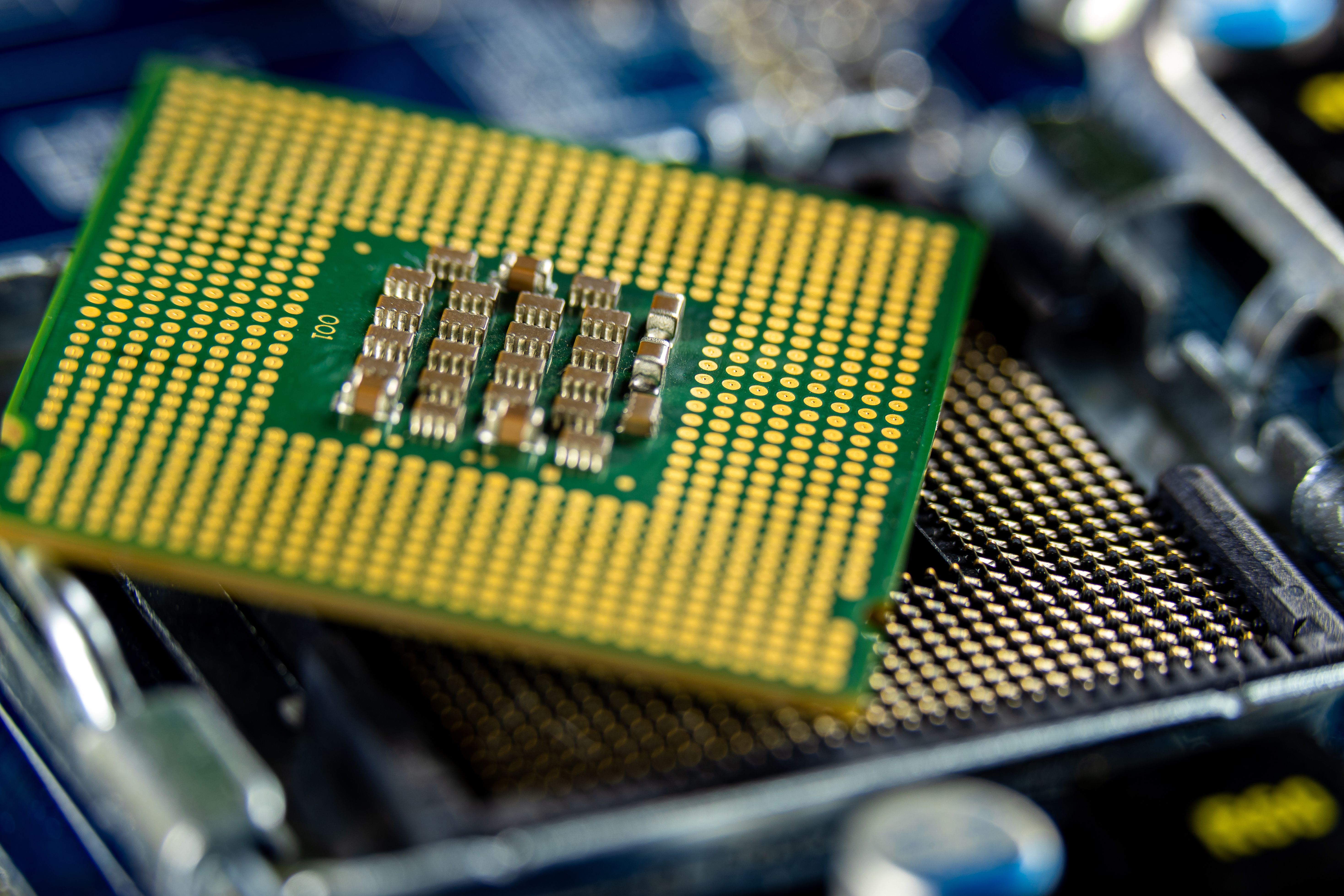
Post-quantum cryptography has moved from a research program to a mandated migration, and its patent landscape is distinctive because the value has shifted from the algorithms themselves to how they are implemented and deployed. A sufficiently powerful quantum computer would break the public-key cryptography, based on integer factorization and elliptic curves, that secures most digital communication today, and to prepare for that, the US National Institute of Standards and Technology finalized its first post-quantum standards, FIPS 203 (ML-KEM, for key establishment), FIPS 204 (ML-DSA), and FIPS 205 (SLH-DSA, for signatures), in August 2024, selected HQC as a fifth, backup key-establishment algorithm in 2025, and continues to develop further signature standards.⁷ The intellectual property divides across several regions, each a distinct area of patenting: the algorithm implementations across the lattice, hash, and code-based families; the hardware accelerators that make these computationally heavier algorithms fast enough for real systems;¹,⁵ the side-channel countermeasures that protect implementations from physical attack;²,³ the crypto-agility and migration tooling that let organizations discover and swap cryptography; and the integration of post-quantum schemes into protocols such as transport-layer security and into hardware roots of trust. Because a deployed system depends on several of these layers, freedom-to-operate and white space analysis must span the algorithm families and the implementation layers together.
The landscape has an unusual structure because of how the standards were set. NIST's standardization process operates under a patent-claim assurance framework: for any essential patent claim, the holder must either disclaim it or make a license available on reasonable-and-non-discriminatory or royalty-free terms, and patent questions around the leading lattice scheme were resolved through such licensing arrangements before finalization, so the foundational algorithm layer is comparatively open, though it is not accurate to call it "patent-free."⁸ That has pushed proprietary activity outward, toward the implementations and the migration ecosystem, where patenting is active and growing. The migration itself is not optional: NIST's draft transition guidance would deprecate the vulnerable classical algorithms after 2030 and disallow them after 2035, and national-security policy sets a 2035 migration target, while the "harvest-now, decrypt-later" threat, in which encrypted data captured today could be decrypted by a future quantum computer, gives the transition urgency even before large quantum computers exist.⁸ This is reshaping the record: across the Cypris corpus of more than 500 million patents and scientific papers, the post-quantum-cryptography set holds on the order of 4,642 families and rose from about 141 in 2020 to roughly 606 in 2024 and about 1,425 in 2025 on a partial count, an inflection that coincides with the standards' finalization, with the most active assignees a mix of chipmakers, banks, and platform vendors, including Intel, Wells Fargo, Huazhong University of Science and Technology, Huawei, IBM, and Samsung, and China ahead of the United States on geography; 2025 and 2026 counts are partial because of the publication lag.
The strategic question is which implementation layer to own, and the white space sits where the standardized algorithms meet real systems. Hardware acceleration for the lattice arithmetic and sampling that these algorithms require is a high-value layer, especially for constrained and Internet-of-Things devices where compute and power are limited.¹,⁵ Side-channel-resistant implementations are a distinct and heavily engineered layer, because a mathematically secure algorithm can still leak its keys through physical measurement, and even masked hardware implementations remain a target of attack research, so higher-order protection is an active frontier.²,³,⁴,⁶ Crypto-agility, the ability to inventory and swap cryptographic primitives across large systems, and migration tooling are a fast-growing ecosystem layer, as are hybrid schemes that run classical and post-quantum cryptography together during the transition, an option NIST accommodates rather than requires.⁸ Reading the landscape by algorithm family and implementation layer, and tracking both the patents and the underlying cryptography research, is what separates a crowded region from an open one.
Where the PQC white space is
Hardware acceleration. Accelerators for lattice arithmetic and sampling, especially for constrained and Internet-of-Things devices, are a high-value layer as the algorithms are computationally heavier than their predecessors.¹,⁵
Side-channel countermeasures. Implementations that resist physical attacks, which can leak keys even from a mathematically secure algorithm, are a distinct, heavily engineered layer where masking and higher-order protection are active frontiers.²,³,⁴,⁶
Crypto-agility and migration tooling. Discovering cryptographic assets across large systems and swapping primitives cleanly is a fast-growing ecosystem layer driven by migration deadlines.
Hybrid classical-and-post-quantum schemes. Running classical and post-quantum cryptography together during the transition is an active layer, particularly in protocols such as transport-layer security.
Protocol and root-of-trust integration. Embedding post-quantum schemes into protocols, secure elements, and hardware roots of trust is where deployment is decided.
How AI-powered landscape and white space analysis helps
Resolving a landscape that spans several algorithm families and implementation layers, under migration deadlines, requires more than keyword search. AI-powered analysis addresses this with semantic search that clusters activity by algorithm family and implementation layer across varied terminology, attribution that normalizes vendor, academic, and standards-linked filers to canonical entities, and continuous monitoring that keeps pace with a deadline-driven field. Because cryptography advances appear in scientific and conference literature before they are patented, reading both patents and literature gives the earliest signal of where the frontier and the white space are moving.
Where Cypris fits
Cypris runs patent landscape and white space analysis for fast-moving deep-tech fields such as post-quantum cryptography across a corpus of more than 500 million patents and scientific papers, organized through a proprietary R&D ontology. The ontology clusters activity by algorithm family, lattice, hash, and code-based, and by implementation layer, hardware acceleration, side-channel defense, crypto-agility, and protocol integration, and normalizes filers to canonical entities, so a team can resolve which families and layers are crowded and which remain open as white space. Semantic search across patents and scientific literature connects filings to the underlying cryptography research, which is where post-quantum advances appear first, often in preprints and conference proceedings ahead of the patent record. Cypris Q, the platform's agentic layer, lets teams run landscape and white space analysis conversationally and chain the clustering, attribution, and gap analysis, and Agentic Monitoring tracks a defined layer over time and flags new patents and papers as they publish. Cypris provides enterprise API partnerships with OpenAI, Anthropic, and Google, and is built with enterprise-grade security. Cypris serves hundreds of enterprise customers across pharmaceuticals, chemicals, advanced materials, energy, and other regulated industries.
FAQ
What is post-quantum cryptography? Post-quantum cryptography is a set of cryptographic algorithms designed to resist attack by quantum computers, which would break the public-key cryptography that secures most digital communication today. NIST finalized the first standards, mainly lattice-based schemes plus a hash-based signature scheme, in August 2024 and added a backup key-establishment algorithm in 2025. It is now moving into mandated deployment.
Why is PQC patenting shifting to implementations? PQC patenting is shifting to implementations because the core standardized algorithms are published under NIST's royalty-free or reasonable-and-non-discriminatory licensing-assurance framework, with the leading lattice scheme's patent questions resolved before finalization, leaving the algorithm layer comparatively open. Proprietary activity has therefore moved to hardware acceleration, side-channel defenses, crypto-agility, and protocol integration. That is where the growing patent activity now concentrates.
Are the post-quantum standards patent-free? No. The standards are published under NIST's patent-claim assurance framework, under which any essential patent claim must be disclaimed or licensed on royalty-free or reasonable-and-non-discriminatory terms, and specific licensing arrangements resolved the questions around the leading lattice scheme before finalization. That makes the algorithm layer comparatively open, but implementations, accelerators, and countermeasures are actively patented. "Comparatively open" is accurate; "patent-free" is not.
Why is migration to PQC urgent if quantum computers are not here yet? Migration is urgent because of the "harvest-now, decrypt-later" threat: an adversary can record encrypted data today and decrypt it once a capable quantum computer exists. NIST's draft transition guidance would deprecate vulnerable classical algorithms after 2030 and disallow them after 2035, and national-security policy sets a 2035 target. Long data lifetimes and slow cryptographic transitions make early action necessary.
Where is the white space in post-quantum cryptography? The white space includes hardware acceleration, especially for constrained and Internet-of-Things devices, side-channel countermeasures, crypto-agility and migration tooling, hybrid classical-and-post-quantum schemes, and protocol and root-of-trust integration. The standardized algorithms themselves are comparatively open. The higher-value opportunities are in the implementation and migration layers.
Why does PQC analysis need scientific literature? PQC analysis needs scientific literature because cryptography advances appear in research, preprints, and conference proceedings before they are patented, so the literature gives the earliest signal. Analyzing patents alone gives a lagging view. Cypris analyzes both across more than 500 million patents and scientific papers.
What software helps analyze the post-quantum cryptography patent landscape? Software for the PQC landscape should cluster activity by algorithm family and implementation layer, resolve vendor, academic, and standards-linked filers to canonical owners, search patents and scientific literature semantically, and monitor a deadline-driven field continuously. Cypris does this across more than 500 million patents and scientific papers using a proprietary R&D ontology, semantic search, Cypris Q, and Agentic Monitoring.
Which teams use PQC patent landscape analysis? Post-quantum cryptography patent landscape analysis is used by R&D, IP, and strategy teams at cybersecurity, semiconductor, cloud, and hardware-security companies, as well as investors and government-facing vendors. Because value concentrates in implementation layers under migration deadlines, structured analysis is essential. Cypris serves hundreds of enterprise customers across research-intensive and regulated industries.
Endnotes
- Xing, Y., & Li, S. (2021). A compact hardware implementation of CCA-secure key exchange mechanism CRYSTALS-KYBER on FPGA. IACR Transactions on Cryptographic Hardware and Embedded Systems, 2021(2). https://doi.org/10.46586/tches.v2021.i2.328-356
- Jati, A., Gupta, N., Chattopadhyay, A., & Sanadhya, S. K. (2023). A configurable CRYSTALS-Kyber hardware implementation with side-channel protection. ACM Transactions on Embedded Computing Systems, 22(2). https://doi.org/10.1145/3587037
- Mujdei, C., Beckers, A., Karmakar, A., et al. (2022). Side-channel analysis of lattice-based post-quantum cryptography: exploiting polynomial multiplication. ACM Transactions on Embedded Computing Systems. https://doi.org/10.1145/3569420
- Cabrera Aldaya, A., Camacho-Ruiz, E., & Navarro-Torrero, P. (2026). A framework for designing high-order side-channel-protected hardware implementations of ML-KEM (HOPE-MLKEM). IACR Transactions on Cryptographic Hardware and Embedded Systems, 2026(2). https://doi.org/10.46586/tches.v2026.i2.272-295
- Zhang, C., Zhang, Y., Wang, W., & Gu, D. (2024). Optimized hardware-software co-design for Kyber and Dilithium on RISC-V SoC FPGA. IACR Transactions on Cryptographic Hardware and Embedded Systems, 2024(3). https://doi.org/10.46586/tches.v2024.i3.99-135
- Ji, Y., & Dubrova, E. (2025). A side-channel attack on a masked hardware implementation of CRYSTALS-Kyber. Journal of Cryptographic Engineering, 15. https://doi.org/10.1007/s13389-025-00375-7
- National Institute of Standards and Technology. Post-quantum cryptography standardization (FIPS 203, 204, 205 finalized August 2024; HQC selected 2025). https://csrc.nist.gov/projects/post-quantum-cryptography/post-quantum-cryptography-standardization
- National Institute of Standards and Technology (2024). Transition to post-quantum cryptography standards (NIST IR 8547, initial public draft). https://csrc.nist.gov/pubs/ir/8547/ipd