
A faster, more accurate way to explore innovation data—now available in Cypris.
For innovation teams, speed and accuracy aren’t optional—they’re critical. You need to quickly find all relevant documents, slice and dice datasets however you want, and trust that the results are complete and representative. With this in mind, we’ve upgraded how semantic search works inside Cypris.
Today, we’re launching an upgraded search infrastructure that gives users access to full, exact result sets—unlocking more powerful analysis, faster iteration, and deterministic filtering and charting.
Unlike traditional semantic or vector search engines—which make it difficult to count, filter, or chart large sets of matched documents—our new approach prioritizes transparency and performance while preserving semantic relevance.
Why we moved away from vector search
Our original implementation relied on semantic and vector search to capture the “meaning” behind user queries. But as our platform evolved, it became clear that these systems weren’t well-suited for our core use cases.
Users needed:
- Deterministic filtering (e.g., "how many results match this atom?")
- Transparent, complete result sets to power charts and dashboards
- Fast, repeatable queries that don’t change subtly over time
Modern vector search systems don’t easily support this level of transparency. They return approximate matches and abstract similarity scores, often making it hard to understand why a document was returned—or whether it’s the full picture.
So we made a decision: move away from vector search and lean into what traditional search engines do best.
A return to boolean and lexical search—with a twist
We rebuilt our search infrastructure on top of Elasticsearch’s powerful boolean and lexical search capabilities. This shift brings major advantages:
- Faster query speeds that dramatically improve iteration time
- Deterministic filtering and counts, so every chart is grounded in the full dataset
- Predictable, explainable results that users can trust
But we didn’t stop there.
To preserve the benefits of semantic understanding, we’ve rethought where that intelligence should live—not at query time, but at data ingestion.
Capturing semantic meaning at ingest time
Instead of computing document-query similarity during search, we enrich documents at the time of ingestion. Here’s how:
- Synonym expansion: We find related words and concepts not explicitly mentioned in the document and add them as fields, enabling semantic-style recall via lexical search.
- Stemming: Both queries and documents are reduced to their root forms, allowing consistent matches (e.g., “running” and “run”).
The result? You get the same functionality—semantically relevant results—without the opacity or latency tradeoffs of vector search.
What’s next: Reranking for even better relevance
We’re not done. Coming soon to Cypris is a reranking layer that boosts the most relevant results to the top of the list using lightweight vector techniques.
Here’s how it works:
- A standard lexical search retrieves the full result set.
- We take the top N results and rerank them using vector similarity, powered by Elasticsearch’s new hybrid scoring capabilities.
- You get faster queries with even better relevance—without compromising on counts or transparency.
This layered approach gives us the best of both worlds: precise filtering and fast queries, plus smarter ordering of results where it matters most.
We’re excited to bring this upgrade to our users, and we’re already seeing teams iterate faster and uncover insights more confidently. This is a foundational shift—and just the beginning of what’s to come.
Want a walkthrough of what’s changed? Reach out to our team.

Introducing our upgraded semantic search



A faster, more accurate way to explore innovation data—now available in Cypris.
For innovation teams, speed and accuracy aren’t optional—they’re critical. You need to quickly find all relevant documents, slice and dice datasets however you want, and trust that the results are complete and representative. With this in mind, we’ve upgraded how semantic search works inside Cypris.
Today, we’re launching an upgraded search infrastructure that gives users access to full, exact result sets—unlocking more powerful analysis, faster iteration, and deterministic filtering and charting.
Unlike traditional semantic or vector search engines—which make it difficult to count, filter, or chart large sets of matched documents—our new approach prioritizes transparency and performance while preserving semantic relevance.
Why we moved away from vector search
Our original implementation relied on semantic and vector search to capture the “meaning” behind user queries. But as our platform evolved, it became clear that these systems weren’t well-suited for our core use cases.
Users needed:
- Deterministic filtering (e.g., "how many results match this atom?")
- Transparent, complete result sets to power charts and dashboards
- Fast, repeatable queries that don’t change subtly over time
Modern vector search systems don’t easily support this level of transparency. They return approximate matches and abstract similarity scores, often making it hard to understand why a document was returned—or whether it’s the full picture.
So we made a decision: move away from vector search and lean into what traditional search engines do best.
A return to boolean and lexical search—with a twist
We rebuilt our search infrastructure on top of Elasticsearch’s powerful boolean and lexical search capabilities. This shift brings major advantages:
- Faster query speeds that dramatically improve iteration time
- Deterministic filtering and counts, so every chart is grounded in the full dataset
- Predictable, explainable results that users can trust
But we didn’t stop there.
To preserve the benefits of semantic understanding, we’ve rethought where that intelligence should live—not at query time, but at data ingestion.
Capturing semantic meaning at ingest time
Instead of computing document-query similarity during search, we enrich documents at the time of ingestion. Here’s how:
- Synonym expansion: We find related words and concepts not explicitly mentioned in the document and add them as fields, enabling semantic-style recall via lexical search.
- Stemming: Both queries and documents are reduced to their root forms, allowing consistent matches (e.g., “running” and “run”).
The result? You get the same functionality—semantically relevant results—without the opacity or latency tradeoffs of vector search.
What’s next: Reranking for even better relevance
We’re not done. Coming soon to Cypris is a reranking layer that boosts the most relevant results to the top of the list using lightweight vector techniques.
Here’s how it works:
- A standard lexical search retrieves the full result set.
- We take the top N results and rerank them using vector similarity, powered by Elasticsearch’s new hybrid scoring capabilities.
- You get faster queries with even better relevance—without compromising on counts or transparency.
This layered approach gives us the best of both worlds: precise filtering and fast queries, plus smarter ordering of results where it matters most.
We’re excited to bring this upgrade to our users, and we’re already seeing teams iterate faster and uncover insights more confidently. This is a foundational shift—and just the beginning of what’s to come.
Want a walkthrough of what’s changed? Reach out to our team.
Keep Reading

As a research and development manager or engineer, you know that staying ahead of the competition is paramount. One way to do this is by conducting a patent landscape analysis.
With patent landscape analysis, teams can gain insight into what competitors are doing in their industry as well as understand existing technology trends before investing resources in new ideas.
In this blog post, we’ll explore exactly what patent landscape analysis entails, including types of patents present in the market, challenges faced during the process, and how Cypris can help with your team’s efforts!
Table of Contents
What is Patent Landscape Analysis?
How to Conduct a Patent Landscape Analysis
Step 1: Identify Relevant Patents
Step 2: Look Into Claims and Prior Art Documents
Step 4: Create an Actionable Plan
Challenges of Patent Landscape Analysis
How Can Cypris Help with Patent Landscape Analysis?
What is Patent Landscape Analysis?
Patent landscape analysis is a process of researching and analyzing the patent environment to identify opportunities, risks, and trends in a particular field or industry. It involves researching existing patents, understanding their claims and prior art documents, as well as keeping track of changes in the market. This type of analysis helps teams assess potential competitors and partners, identify areas where innovation could be beneficial, evaluate the risks of developing new products, and develop strategies for protecting intellectual property.
Don’t get left behind in the patent race! Get ahead of the competition with patent landscape analysis. #Innovation #R&D #Patents Click to Tweet
How to Conduct a Patent Landscape Analysis
Conducting a patent landscape analysis requires research into existing patents, understanding their claims and prior art documents, and keeping track of changes in the market.
Here’s a step-by-step guide to conducting a patent landscape analysis properly.
Step 1: Identify Relevant Patents
Start by researching relevant patents that are related to your product or service. This can be done using various tools such as patent databases, search engines, and analytics software. Once you have identified the relevant patents, it is important to thoroughly research them for any potential conflicts with your own product or service.
Step 2: Look Into Claims and Prior Art Documents
After identifying the relevant patents, it is important to understand each one’s claims and prior art documents in order to determine if there are any potential issues with your own product or service. This involves reading through each document carefully and making sure that all aspects of the claim are understood before proceeding further.
Step 3: Analyze the Data
Once you have collected all of the necessary data from your research on existing patents, it is time to analyze this information in order to know how best to proceed with developing your product without infringing upon another’s intellectual property rights.
Various analytical techniques such as clustering algorithms can be used for this purpose in order to gain insights into trends that could affect your product development plans.
Step 4: Create an Actionable Plan
The final step is creating an actionable plan based on data analysis. This plan should include steps on how to protect yourself against infringement while also ensuring compliance with applicable laws governing intellectual property rights. Doing so will help you avoid any legal repercussions later on.
There are various tools that can help simplify and streamline patent landscape analysis, including Google Patents, the USPTO database, analytics software like Cypris, and other resources that provide free access to public records.
Key Takeaway: A thorough patent landscape analysis can help R&D and innovation teams identify potential opportunities in the market.
Types of Patents
There are four main types of patents: utility patents, design patents, plant patents, and provisional patents.
Utility Patents
These patents protect inventions such as machines, processes, or compositions of matter. These are the most common type of patents and require an invention to have a novel structure or process with some degree of usefulness. Examples include new computer programs, medical devices, and pharmaceuticals.
Design Patents
Design patents protect ornamental designs for products such as furniture or clothing items. The design must be both novel and non-obvious in order to qualify for a design patent from the United States Patent and Trademark Office. Examples include unique patterns on fabric or shapes of furniture pieces.
Plant Patents
Plant patents protect new varieties of plants developed through cross-breeding techniques or other methods involving genetic engineering like cloning. In order to receive plant patent protection, the variety must be distinct from all other species known before it was created.
An example would be a newly developed hybrid rose bush with unique coloration and characteristics not present in any existing roses.

(Source)
Challenges of Patent Landscape Analysis
Analyzing patent landscapes can be a daunting task due to the sheer number of patents that need to be examined. Identifying relevant patents is often difficult as there may be thousands of similar patents, making it hard to determine which ones are applicable.
Patent landscape analysis requires extensive research into existing databases such as Google Patents and USPTO Patent Full Text Database. Keep in mind that international patents could also affect your product and may not always appear in domestic databases.
In addition to identifying relevant patents, it’s also necessary for R&D teams to analyze each one thoroughly. This process involves examining both the literal language and the broader interpretation of what might constitute infringement based on industry standards or accepted practices.
Furthermore, keeping track of changes in the market is essential for staying up-to-date on new developments and ensuring that any potential infringements are avoided.
Key Takeaway: Analyzing patent landscapes requires an in-depth understanding of the claims and prior art documents associated with each patent. To ensure that any potential infringements are avoided, R&D teams must identify all relevant patents related to their invention and keep track of changes in the market.
How Can Cypris Help with Patent Landscape Analysis?
Cypris provides a comprehensive platform for R&D teams to streamline their data sources into one platform. This allows teams to quickly access all relevant information needed for their research projects without having to switch between multiple sources or applications.
Cypris automates tasks such as searching through large datasets for specific keywords or phrases so that teams can save time and money while still getting accurate results quickly.
For example, with the help of Cypris’s patent landscape analysis tool, users can search through thousands of patents in seconds instead of spending hours manually going through them. The tool also offers visualizations and analytics that allow users to get an overview of the patent landscape they are researching in order to make informed decisions about their project.
Cypris also keeps track of changes in the market by providing real-time updates on new developments. With this feature, companies can ensure they remain competitive in their respective markets by staying ahead of any potential threats from competitors who may have already developed similar products before them.
Conclusion
Patent landscape analysis is an important part of the research and innovation process. It helps teams to identify potential opportunities for product development, as well as areas where competitors are innovating. With Cypris, R&D and innovation teams can easily access all the data sources they need to conduct a comprehensive patent landscape analysis.
By utilizing this powerful tool, organizations can gain valuable insights into their competitive environment that will help them make informed decisions about their product development strategy.
Are you an R&D or innovation team looking for a way to quickly analyze patent landscapes? Look no further than Cypris, the research platform designed specifically for teams like yours!
With its centralized data sources, Cypris provides rapid time-to-insights so that your team can make informed decisions faster. Get ahead of the competition by taking advantage of this powerful tool today!

Research and innovation teams understand the importance of Intellectual Property (IP) portfolio analysis in order to protect their investments. An IP portfolio is a collection of all registered trademarks, copyrights, patents, trade secrets, and other forms of intellectual property associated with an organization or individual. Conducting an IP portfolio analysis can help organizations identify potential opportunities for improvement as well as areas where they may be vulnerable to litigation.In this blog post, we will explore what IP portfolio analysis entails, how it should be conducted effectively, common challenges, and strategies to optimize your IP portfolio.Join us on our journey to understanding the ins and outs of effective IP portfolio analysis!
Table of Contents
What is IP Portfolio Analysis?
Benefits of IP Portfolio Analysis
How to Conduct an IP Portfolio Analysis
Common Challenges in IP Portfolio Analysis
Identifying the Right Metrics and KPIs
Analyzing Data Accurately and Efficiently
Strategies to Optimize Your IP Portfolio
What is IP Portfolio Analysis?
IP portfolio analysis is the process of analyzing a company’s intellectual property assets to gain insights into how best to manage and protect them. It involves assessing the value, strength, and potential risks associated with each asset in order to develop an effective strategy for protecting it. The goal of IP portfolio analysis is to help companies maximize their return on investment by ensuring that they are leveraging their intellectual property assets in the most efficient way possible.
Benefits of IP Portfolio Analysis
The primary benefit of conducting an IP portfolio analysis is that it provides organizations with valuable information about their existing patent portfolios.For example, IP portfolio analysis allows you to understand which patents are strong enough to warrant further investment or licensing agreements and which ones may need additional research or development before they become commercially viable.Additionally, this type of analysis also helps companies identify areas where they may have overlooked important aspects when developing new products or services – allowing them to better prepare themselves against competitors who may try to infringe upon their rights.Ultimately, all types of IP portfolio analysis aim to provide organizations with actionable intelligence so that they can make informed decisions regarding how best to protect their intellectual property rights while maximizing ROI.
Key Takeaway: IP portfolio analysis is a systematic evaluation of an organization’s intellectual property assets to identify opportunities for improvement or protection.
How to Conduct an IP Portfolio Analysis
Conducting an IP portfolio analysis is a critical step for any research and development (R&D) or innovation team. It helps teams identify gaps in their intellectual property (IP) assets, evaluate the performance of existing IP, and make informed decisions about future investments.Here’s how to conduct an effective IP portfolio analysis.The first step is to identify all relevant data sources related to your organization’s current and potential intellectual property assets. This includes patents, trademarks, copyrights, trade secrets, etc.Once you have identified the data sources that are applicable to your organization’s goals and objectives, you can begin gathering information from them. This may include collecting patent applications or searching databases such as Google Patents or USPTO records for existing patents related to your industry or product lines.Additionally, it may be beneficial to review competitor portfolios and compare them with yours in order to gain insights into what other organizations are doing within the same space.There are numerous tools available that can help streamline the process of analyzing large amounts of data associated with intellectual property portfolios. Cypris is one such platform designed specifically for R&D teams, providing rapid time-to-insights by centralizing multiple data sources into one platform.Here are other resources you may find online:
- Online databases such as PatentLens provide detailed information on individual patents including filing dates and assignees.
- Legal software solutions like Anaqua offer automated workflows.
- Analytics platforms like Clarivate Analytics allow users to track changes in market dynamics over time.
- Specialized services such as LexisNexis TotalPatent One offer advanced search capabilities tailored toward patent attorneys looking for specific types of documents.
When conducting an effective IP portfolio analysis, it is important to not only gather accurate data but also interpret it correctly. To ensure accuracy during this process, it is important to consider both quantitative factors (number of filings/grants) along with qualitative ones (quality/strength of claims).It may also be beneficial to use visualization techniques – e.g., heat maps – to quickly spot patterns within large datasets.Finally, remember to stay up-to-date on changes in market dynamics and the technology landscape, as these often affect the value of certain types of intellectual property assets.Next, we’ll explore some common challenges in IP portfolio analysis.
Key Takeaway: Conducting an IP portfolio analysis can help you make informed decisions about your innovation and R&D strategies. To ensure a successful analysis, it is important to identify the right metrics and KPIs for evaluation, analyze data accurately and efficiently, and keep track of changes in the market.
Common Challenges in IP Portfolio Analysis
Conducting an effective IP portfolio analysis can be challenging due to several factors.
Identifying the Right Metrics and KPIs
One of the biggest challenges in IP portfolio analysis is determining which metrics and key performance indicators (KPIs) are most relevant for evaluating intellectual property assets. Different industries have different needs when it comes to analyzing their portfolios, so it’s important to consider industry-specific trends when selecting metrics and KPIs.
Analyzing Data Accurately and Efficiently
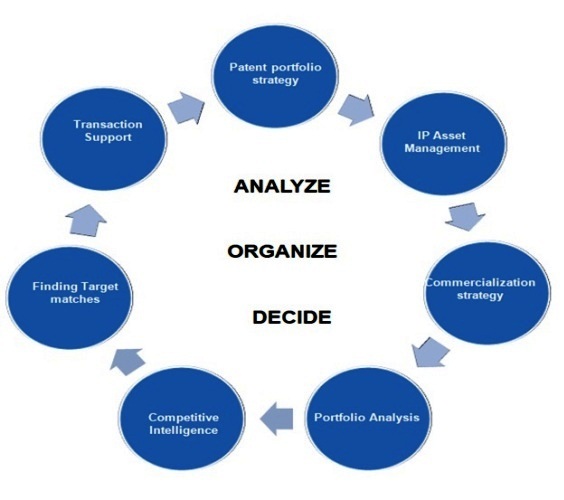
Another challenge associated with IP portfolio analysis is accurately analyzing data from multiple sources in order to draw meaningful conclusions about a company’s intellectual property assets. This requires collecting data from various sources such as patents databases, technology roadmaps, competitor analyses, etc., then combining them into one comprehensive report that can be used by decision-makers within the organization.To do this efficiently requires having access to powerful tools that allow users to quickly search through large amounts of data and generate actionable insights quickly.Analyzing an IP portfolio can be a complex and time-consuming process, but with the right strategies in place, it can be made much more efficient. Let’s explore how to optimize your IP portfolio by leveraging technology and automation.
(Source)
Strategies to Optimize Your IP Portfolio
Developing a comprehensive strategy for your intellectual property assets is essential to ensuring that you are able to protect them effectively. This includes identifying the types of IP that you own, understanding how they can be used, and creating a plan for protecting them. It also involves evaluating the competitive landscape and staying up-to-date with market trends so that you can make informed decisions about when to invest in new technologies or expand existing ones.Additionally, it’s important to have an understanding of the legal implications associated with each type of IP asset so that you can ensure compliance with applicable laws.Leveraging technology to streamline processes related to managing your intellectual property assets is another key component of optimizing your portfolio. By using tools such as the Cypris research platform, R&D teams can quickly access data sources needed for analyzing their portfolios.Automation capabilities within these platforms enable teams to set up alerts when changes occur in their portfolios or competitor landscapes, allowing them to stay ahead of potential risks or opportunities.
Key Takeaway: Technology tools like Cypris can help streamline processes related to portfolio management by providing access to data sources needed for analysis. Automation capabilities within these platforms also allow teams to set up alerts when changes occur in their portfolios or competitor landscapes so that they can stay ahead of potential risks or opportunities.
Conclusion
IP portfolio analysis helps teams identify potential opportunities for growth and better understand the competitive landscape. By understanding their current IP portfolio, teams can develop strategies to optimize it for maximum value. With the right tools in place, teams can quickly analyze their IP portfolios to make informed decisions about future investments.Are you looking for an efficient way to analyze your intellectual property portfolio? Cypris is the perfect solution! With our research platform, R&D and innovation teams can quickly access all of their data sources in one place.We provide fast time-to-insights that will help you make informed decisions about your IP investments faster than ever before. Get started with us today and start making smarter decisions now!

Design patents are a type of intellectual property that protect the visual characteristics or ornamental features of an invention, such as its shape or surface ornamentation. Knowing how to search design patents ensures that you are not infringing on someone else’s intellectual property right.
With Cypris’ research platform, you can easily search for existing design patents and find out what is already out there on the market. It is important for any R&D team to learn how to search design patents and prepare a patent application correctly in order to protect its inventions.
In this blog post, we will explore all these topics in detail so that you have all the information necessary for success!
Table of Contents
Why Should You File for a Design Patent?
Searching for Existing Design Patents
How to Conduct a Thorough Search for Existing Patents
Resources for Searching Design Patents
Preparing Your Application for a Design Patent
Requirements for Filing a Design Patent Application
Cost and Timeline of Obtaining a Design Patent
Protecting Your Rights After Obtaining A Design Patent
What are Design Patents?
Design patents are a form of intellectual property protection that covers the ornamental design of an object. A design patent protects how something looks, not what it does or how it works. It is important to note that this type of patent does not protect any functional features of the product, only its aesthetic elements.
A design patent is a legal document issued by the United States Patent and Trademark Office (USPTO) which grants exclusive rights to an inventor for their unique ornamental design for an article of manufacture. The scope and duration of these rights depend on the country in which they are granted, but typically last up to 15 years from the date of issuance.
Why Should You File for a Design Patent?
Obtaining a design patent can provide inventors with several benefits.
- Increased marketability and brand recognition due to the exclusive right over an invention’s aesthetics.
- Deters competitors from copying or using similar designs.
- Assures potential investors of the product’s originality and uniqueness when considering investing resources into your project.
In the next section, we will explore how to search for design patents that already exist.
Key Takeaway: Design patents are an important tool for protecting and defending the intellectual property of inventors, so it is essential to thoroughly search existing design patents before filing a new one.
Searching for Existing Design Patents
Conducting a thorough search for existing design patents is essential to ensure that your invention does not infringe on the rights of another inventor.
How to Conduct a Thorough Search for Existing Patents
A thorough search should include searching through both public and private databases as well as conducting manual searches in libraries or other resources. When searching, it is important to use keywords related to the type of product you are designing and be sure to check all relevant jurisdictions.
Resources for Searching Design Patents
There are numerous online resources available for searching design patents including the US Patent Office website, Google Patents, the European Patent Office database, the World Intellectual Property Organization database, and more. Many universities also have access to specialized databases that contain information about existing patents in certain fields or regions.
To ensure that your research yields accurate results, keep track of all relevant documents and take advantage of tutorials offered by various organizations regarding patent searches.
Review all relevant documents carefully before submitting them with your application. Make sure they meet all necessary requirements set forth by governing bodies such as the USPTO or EPO.
(Source)
Preparing Your Application for a Design Patent
To obtain a design patent, applicants must submit an application to the United States Patent and Trademark Office (USPTO). Here’s everything you need to know about filing a design patent.
Requirements for Filing a Design Patent Application
In order to file for a design patent in the USPTO, you must provide drawings or photographs of your invention as well as detailed descriptions of its features. The drawings should be clear enough so that someone skilled in the art can easily recognize them.
You should also include information about any prior art related to your invention and declare whether or not you believe it is novel or non-obvious compared with existing designs.
Search for Similar Designs
Prior to submitting your application, it is important that you conduct thorough searches for existing patents related to your invention. This helps ensure that there are no similar designs already protected by another inventor’s patent rights which could prevent yours from being granted.
Make sure all paperwork associated with filing has been completed correctly and accurately before submission. This includes providing accurate contact information such as name and address on all forms submitted along with payment if applicable.
If incorrect contact info is given, then the applicant may miss out on critical communication updates from the USPTO regarding the status and progress of pending applications. Inadequate research can also lead to costly delays.
By understanding how to search design patents and the requirements of governing authorities, you can prepare your application more efficiently and reduce the cost and timeline of obtaining it.
Key Takeaway: When filing for a design patent, provide accurate drawings of your invention, research prior art related to your invention, and complete all paperwork accurately.
Cost and Timeline of Obtaining a Design Patent
The cost of obtaining a design patent can vary greatly depending on the complexity and scope of the invention. Generally, it is estimated that filing fees for a single design patent application will range from $1,000 to $2,500. This does not include attorney’s fees or other costs associated with submitting an application to the USPTO.
Several factors can affect both the cost and timeline for obtaining a design patent. These include the complexity of the invention, the number of drawings required to adequately describe it, whether foreign filings are necessary, as well as any legal issues that may arise during the review process.
If there are multiple inventors involved in creating an invention, then additional costs may be incurred due to having to file separate applications for each inventor’s contribution.
Key Takeaway: Obtaining a design patent can be costly and time-consuming, with filing fees ranging from $1,000 to $2,500.
Protecting Your Rights After Obtaining A Design Patent
It is important to maintain your IP rights after obtaining a design patent. This includes regularly monitoring the market for any potential infringements of your design and taking action if necessary.
Keep records of all transactions related to the patented design, such as licensing agreements or sales receipts. These documents can be used in court should an infringement occur.
There are several ways that R&D teams can ensure their rights are protected after receiving a design patent.
First, they should consider registering their patents with customs authorities in order to prevent counterfeits from entering the country.
Companies may wish to register their designs with international organizations like WIPO (World Intellectual Property Organization) or OHIM (Office for Harmonization in the Internal Market).
Finally, companies should also consider using trademarks or copyrights on products featuring their patented designs in order to provide additional protection against infringement.
Conclusion
Understanding how to search design patents is important for any R&D or innovation team looking to protect their work. Once you have obtained a design patent, make sure to protect your rights by monitoring potential infringements on your search design patents.
Are you looking for a research platform to quickly find the design patents that will help your R&D and innovation teams succeed? Cypris is here to help. Our powerful search engine allows you to easily locate relevant design patents, giving your team access to valuable insights faster than ever before.
With our comprehensive data sources, we can provide unparalleled time-to-insights so that you can stay ahead of the competition. Try out Cypris today and revolutionize how your team finds solutions!