
As an R&D platform and custom report service, search functionality for our users is key.
That's why we're thrilled to announce our platform's user experience and research capabilities just got better. Meet Quick Search, a new search bar that delivers information to our users faster than ever.
What's New with this Launch?
The previous search functionality allowed for search only by keywords. With Quick Search, users can now search by patent and research paper titles in addition to keywords.
What's the User Experience Like?
As you type in your search (keyword, patent, or research paper) you'll see a live tally of the data by category available for that search.
From there, you can click into individual data sections or build a report pulling from all available data streams.
0:00/1×
Have questions or comments? Feel free to reach out to us at info@ipcypris.com for more information.
Meet Quick Search, Our New Functionality



As an R&D platform and custom report service, search functionality for our users is key.
That's why we're thrilled to announce our platform's user experience and research capabilities just got better. Meet Quick Search, a new search bar that delivers information to our users faster than ever.
What's New with this Launch?
The previous search functionality allowed for search only by keywords. With Quick Search, users can now search by patent and research paper titles in addition to keywords.
What's the User Experience Like?
As you type in your search (keyword, patent, or research paper) you'll see a live tally of the data by category available for that search.
From there, you can click into individual data sections or build a report pulling from all available data streams.
0:00/1×
Have questions or comments? Feel free to reach out to us at info@ipcypris.com for more information.
Keep Reading

Research and development (R&D) is an essential part of any business’s success, yet it can also be a costly endeavor. To ensure that the money invested in R&D pays off, companies must understand: how are research and development costs accounted for?
It’s important to have strategies in place for managing these expenses as well as tools to help optimize processes. This blog post will discuss how businesses should approach accounting for research and development costs while providing tips on controlling associated expenditures. We’ll explain what needs to be taken into consideration when calculating R&D expenses, explore different methods of managing such spending, and how to use tools that can help in your management process.
So let’s answer: how are research and development costs accounted for?
Table of Contents
Understanding Research and Development Costs
Tracking Research and Development Costs
Accounting For Research and Development Expenses
Accrual vs Cash Basis Accounting
Capitalizing vs Expensing Taxation
Strategies for Managing Research and Development Costs
Automation of Data Collection and Analysis Processes
Leveraging Technology to Streamline Workflows
Utilizing Outsourcing Solutions
Conclusion: How Are Research and Development Costs Accounted For
Understanding Research and Development Costs
R&D costs are the expenses associated with researching and developing new products, services, or processes. They can include direct costs such as salaries, materials, and equipment; indirect costs such as overhead; and capital investments in research facilities.
Tracking Research and Development Costs
Tracking R&D costs is important because it allows companies to measure the effectiveness of their investment in innovation. It also helps them identify areas where they may be able to save money or increase efficiency.
Tracking R&D costs can provide several benefits for businesses. By understanding how much is being spent on research and development activities, companies can make more informed decisions about which projects should be pursued and which ones should be abandoned before too much time or money has been invested in them. Additionally, tracking R&D costs provides insight into the performance of individual teams or departments within an organization so that resources can be allocated accordingly.
Direct and Indirect Expenses
When calculating total R&D costs, there are two main categories to consider: direct and indirect expenses.
Direct expenses refer to those related directly to a project’s completion, such as salaries for researchers working on the project, materials used during testing phases, operating expenses, and travel expenses incurred while attending conferences related to the project’s progress.
Indirect expenses refer to those not directly related but still necessary for completing a project. These include office supplies needed by researchers working on the project or software licenses required for running simulations.
In addition, there may also be capital investments made in research facilities or intangible assets that need to be accounted for when calculating total R&D cost figures over periods longer than one year. These types of expenditures typically have long-term implications on future returns from any given product under development at any given point in time.
Tracking and understanding research and development costs are essential for efficient R&D management. By calculating these costs accurately, teams can gain valuable insights into their projects’ progress and make better decisions about resource allocation.
Accounting For Research and Development Expenses
How are research and development costs accounted for? Accounting for research and development (R&D) expenses requires careful consideration due to their impact on cash flow statements (accrual vs. cash basis accounting) as well as taxation rules (capitalizing vs. expensing).
Accrual vs Cash Basis Accounting
Companies typically choose between accrual basis accounting, which recognizes revenue when earned regardless of payment, and cash-basis accounting, which only recognizes revenue once payment has been received.
Accrual basis accounting records transactions when they occur, regardless of when the money is exchanged. This method allows companies to keep track of their financial obligations in real-time and gives them an accurate picture of their current financial position. Cash basis accounting only records transactions once money has been exchanged between parties involved in the transaction.
Most organizations tend towards accrual-based approaches due to their better matching of revenues with corresponding expenditure items over extended periods. This provides more accurate financial reporting results overall.

(Source)
Capitalizing vs Expensing Taxation
As far as taxation goes, most countries allow businesses to capitalize on certain types of expenditures associated with developing products. With this, companies treat R&D like intangible assets instead of regular operating expense items, thereby allowing deductions over multiple years against taxable income.
Others allow businesses to simply expense out all associated expenditure items immediately without having the ability to deduct anything beyond the current tax period. Again depending upon what works best financially speaking at any given point in time.
Strategies for Managing Research and Development Costs
Managing research and development costs is a key factor in the success of any R&D team. Automation of data collection and analysis processes can help reduce overhead costs while leveraging technology to streamline workflows can increase efficiency. Utilizing outsourcing solutions to cut down on labor-intensive tasks can also be beneficial for reducing expenses.
Automation of Data Collection and Analysis Processes
Automating data collection processes helps reduce the manual labor associated with collecting information from various sources. This not only reduces overhead costs but also increases accuracy as it eliminates potential human errors that may occur during manual entry or transcription.
Additionally, automating analysis processes such as statistical modeling or predictive analytics allows teams to gain insights faster than ever before, helping them make better decisions quickly and efficiently.
Leveraging Technology to Streamline Workflows
Leveraging technology such as artificial intelligence (AI) or machine learning (ML) algorithms can help automate tedious tasks like document review or image recognition which would otherwise require significant manual effort. By using these technologies, teams can save time and money while still getting accurate results in a fraction of the time compared to traditional methods.
Additionally, utilizing cloud computing services such as Amazon Web Services (AWS) or Microsoft Azure enables teams to access powerful resources without having to invest heavily in physical infrastructure which further reduces overhead costs associated with running an R&D team.
Utilizing Outsourcing Solutions
Outsourcing certain tasks such as market research or product testing can significantly reduce labor-intensive activities required by an R&D team while still providing quality results at a lower cost than hiring full-time employees for those roles would entail.
In addition, outsourcing allows teams access to specialized skillsets they may not have internally which could prove invaluable when working on complex projects requiring specific expertise that isn’t available within their organization’s current staff roster.
By utilizing the strategies discussed in this article, research and development teams can reduce costs while still achieving their desired results.
Key Takeaway: Research and development teams can reduce costs by automating data collection and analysis processes, leveraging technology to streamline workflows, and utilizing outsourcing solutions for labor-intensive tasks. By taking these steps, R&D teams can save time and money while still getting accurate results in a fraction of the time compared to traditional methods.
Conclusion: How Are Research and Development Costs Accounted For
Research and development costs are a necessary part of any R&D or innovation process. But how are research and development costs accounted for?
We learned in this article that proper tracking of direct and indirect costs, as well as choosing the accounting method fit for your business are key steps in proper R&D costs accounting. With this, you can also start properly managing development and research costs, and streamlining your workflow.
Are you looking for a way to streamline your R&D and innovation teams’ data sources? Cypris is the perfect solution. Our platform centralizes all of your team’s needs into one place, allowing them to quickly gain insights that can help drive their projects forward. With our user-friendly interface, easy integration with existing systems, and comprehensive analytics tools – it has never been easier to get the most out of your research efforts! Try us today and see how we can help take your business to the next level!

Patents are a valuable asset for any business, providing protection and exclusive rights to inventions. This protection and exclusivity do not last forever, as patents expire to make room for more innovation. If you are a patent holder, you might be asking: can you renew a patent?
The answer is yes, but is important to understand the process involved so that your renewal goes smoothly and successfully. In this article, we will understand why patents expire, how and when one should go about renewing them, as well as common mistakes in patent renewals. Let’s answer together: can you renew a patent?
Table of Contents
Reasons for Early or Late Renewal
Who Can Help with the Process?
Common Mistakes to Avoid When Renewing a Patent
Not Keeping Track of Deadlines
What Happens if I Fail to Renew My Patent on Time?
Why Do Patents Expire?
Patents are a form of intellectual property that grants the patent holder exclusive rights to make, use, and sell an invention for a certain period. Patents are typically granted by governments and provide inventors with protection from competitors who may try to copy their inventions.
However, patents do not last forever; they eventually expire after a set amount of time.
So why do patents expire? The main reason is that the government wants to encourage innovation and competition in the marketplace. By allowing patents to expire after a certain amount of time, new inventors can create products based on existing ideas without having to worry about infringing on someone else’s patent rights.
This encourages more people to innovate and develop new products which helps drive economic growth. The length of time that a patent lasts varies depending on where it was issued as well as other factors such as whether or not it has been renewed or extended before its expiration date.
In the United States, most utility patents have an initial term of 20 years from when they were filed. Design patents have an initial term of 14 years from when they were granted.
After this initial term has expired, the patent will no longer be valid. Can you renew a patent? Yes, you can renew or extend it by filing additional paperwork with the US Patent Office before its expiration date.
Can You Renew a Patent?
Renewing a patent is an important step in protecting intellectual property. It is essential to understand the requirements, steps, and costs associated with renewing a patent before beginning the process.
Requirements for Renewal
To renew a patent, the patent must have been granted by the United States Patent and Trademark Office (USPTO). The renewal period begins on the date of issuance of the original patent and ends 20 years from that date.
The USPTO will not accept applications for renewal after this time frame has passed. Additionally, all renewal fees must be paid before expiration or within six months after expiration to maintain the validity of the patent.
Steps to Renewing a Patent
Once eligibility requirements are met, there are several steps involved in renewing a patent including filing paperwork with the USPTO as well as payment of applicable fees.
First, a renewal application must be filed which includes information such as:
- Title of the invention.
- Inventor name(s).
- Serial number.
- Issue date.
- Fee amount.
- Signature(s) of the applicant(s).
- Description/claims/drawings if applicable.
- Power-of-attorney (if needed).
This application should also include any additional documents required by law or regulation, such as assignments or declarations from inventors regarding ownership rights or assignment changes since initial filing.
Once complete, applicants can submit their application along with payment via mail or electronically through the EFS-Web system on the USPTO website. After the submission has been accepted by the USPTO examiner, they will review it for accuracy and completeness before approving it.
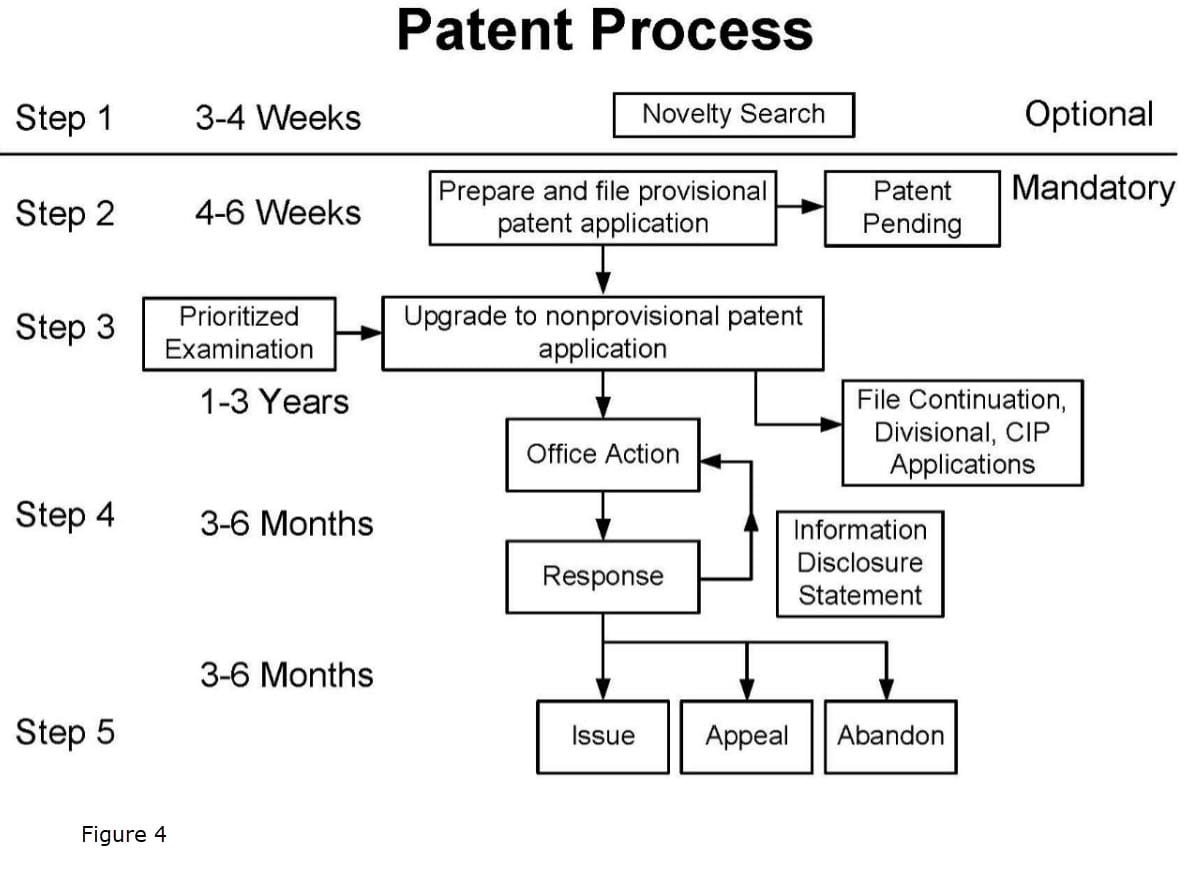
(Source)
Patent Renewal Fees
There are various fees associated with applying for and maintaining patents depending on the type being applied for (utility vs design), size, and complexity.
Generally speaking, small entity status requires $400 per utility patent while large entities require $800 per utility patent.
Design patents cost less than utility ones at $200/$400 respectively but may take longer due to their more complex nature.
In addition, maintenance fees need to be paid every 3 1/2 years ($1120), 7 1/2 years ($2280) & 11 1/2 years ($4550) post-grant respectively. These increase over time so it is best practice to start planning early.
Key Takeaway: Renewing a patent is an important step in protecting intellectual property. To renew a patent, it must have been granted by the USPTO and all fees related to renewal must be paid before expiration or within six months after expiration. The process includes filing paperwork with the USPTO as well as payment of applicable fees, which vary depending on the type and size of the patent being applied for. It is essential to understand the requirements, steps, and costs associated with renewing a patent before beginning the process.
When to Renew a Patent
Can you renew a patent? We now know that the answer is yes. But when do you renew a patent?
When it comes to renewing a patent, timing is key. Knowing when to renew your patent can be the difference between keeping and losing your intellectual property rights.
Timeframe for Renewal
Generally speaking, patents are valid for 20 years from the date of filing with the USPTO (United States Patent and Trademark Office).
However, to maintain ownership of the invention or design covered by a patent, periodic patent maintenance fees must be paid at 3 ½ year intervals after the original patent applications have been granted. If these fees are not paid on time, then the patent will expire and no longer protect against infringement.
Reasons for Early or Late Renewal
In some cases, it may make sense to file an early renewal if you anticipate that there may be changes in technology that could affect your product’s marketability or competitive advantage over other products in its class.
On the other hand, if you have already secured a strong position in your industry and don’t expect any major technological advances anytime soon, then waiting until closer to expiration might make more sense as this would save money on renewal costs.
Ultimately, each situation is unique so businesses need to evaluate their circumstances carefully before making any decisions about when they should renew their patents. Cost-effectiveness, market conditions, legal requirements, availability of resources such as personnel and funding, and strategic objectives such as protecting trade secrets or gaining exclusive access to certain markets must all be taken into consideration.
Key Takeaway: Patent renewal must be carefully planned, taking into account various factors such as cost-effectiveness, market conditions, legal requirements, and strategic objectives. Renewal should not be left to the last minute as this could result in losing your intellectual property rights.
Who Can Help with the Process?
Can you renew a patent? Yes, but it can be a complicated process, and it is important to ensure that all of the necessary steps are taken to maintain your patent. Professional assistance from experienced patent attorneys or agents can help make sure that you don’t miss any important deadlines or details when renewing your patent. They will also be able to provide advice on how best to protect your intellectual property rights and keep them up-to-date.
When looking for professional assistance with renewing a patent, it is important to find someone who has experience in this area of law. An experienced attorney or agent should know the various types of patents available, as well as familiarity with filing requirements and other legal issues related to patents.
It is also beneficial if they have experience working on similar cases before so they know what kind of documents need to be filed and how long the process may take. Additionally, look for someone who understands both local laws regarding patents as well as international regulations since many companies now operate across multiple countries
Renewing a patent? Don’t worry, we’ve got you covered! Get the professional assistance you need to make sure your intellectual property rights are up-to-date and protected. #PatentProtection #Innovation Click to Tweet
Common Mistakes to Avoid When Renewing a Patent
Can you renew a patent? Yes, but only up to a certain point. Failing to file on time and not keeping track of deadlines might make you ineligible for renewal, even if you are the original patent owners.
Failing to File on Time
One of the most common mistakes made when renewing a patent is failing to file the renewal application before the deadline. Patent applications must be filed within six months of expiration for them to remain valid and enforceable. If you miss this deadline, it could result in losing your rights and protections associated with the patent.
Not Keeping Track of Deadlines
It’s also important that you keep track of deadlines throughout the entire process. You should be aware of all deadlines related to filing fees, payment due dates, and other requirements for keeping your patent active and up-to-date.
Failing to meet any one of these deadlines could mean that your patent will not be renewed or will become invalidated if not corrected quickly enough.
Not Having Complete Documents
When applying for renewal, all documents must be complete and accurate for the process to move forward without delay or complication.
If there are errors or omissions within the documentation submitted, it could lead to delays or even denial of the application altogether which could ultimately mean losing your patent rights entirely.
What Happens if I Fail to Renew My Patent on Time?
If you fail to renew your patent before the deadline, it will expire and become invalid. This means that any protection you had from competitors using or selling your invention is gone.
Your invention can now be used by anyone without fear of legal repercussions. When a patent expires, all rights associated with it are lost as well. This includes the right to sue for infringement and collect damages for unauthorized use of your invention.
Additionally, any pending lawsuits related to the expired patent will likely be dismissed since there is no longer any valid protection in place.
In some cases, it may be possible to reinstate an expired patent if certain conditions are met within a specific timeframe after expiration. However, this process can be costly and time-consuming, so it’s best not to let your patent expire in the first place.
Key Takeaway: Renewing a patent is an important step in protecting your intellectual property. To ensure that you don’t lose your rights and protections associated with the patent, it’s important to avoid common mistakes such as: failing to file on time, not keeping track of deadlines, and not having complete documents.
Conclusion
Can you renew a patent? Yes, however, the process can be complex and time-consuming. It is important to understand the process of maintaining a patent, when to renew it, how to do so correctly, and who can help with the process to ensure that your renewal of a patent goes smoothly.
Ensuring that your patent is renewed is a crucial task for businesses to keep raking in the rewards of their innovation. Patent owners need to renew and extend their patent terms regularly to protect their property.
Are you looking for a solution to renew your patent quickly and efficiently? Look no further than Cypris! Our research platform is designed specifically with R&D and innovation teams in mind, making it easy to access the data sources necessary for renewal. With our user-friendly interface, we make sure that time spent on paperwork won’t get in the way of your innovative ideas. Don’t let bureaucracy slow down progress – try Cypris today!

Software code is the backbone of many innovative products and services. It’s an ever-evolving technology that has enabled us to build smarter, more efficient tools for businesses. But when it comes to protecting intellectual property in software development, can you patent software code?
This article will explore what is software code, how can you patent software code and the legal implications of patents on software as well as alternatives available.
Table of Contents
Requirements for Patenting Software Code
Benefits of Patenting Software Code
How to File a Patent for Software Code
Legal Implications of Software Patents
Alternatives to Patents on Software
FAQs About “Can You Patent Software Code?”
How do you patent a software program?
What is Software Code?
Software code is a set of instructions that tells a computer how to perform specific tasks. It is written in programming languages such as C++, Java, Python, and others. The code can be used to create applications or websites, control robots and other machines, or even play games.
Software code can also be used for more complex tasks such as analyzing data or running simulations.
Definition of Software Code
Software code is the language that computers understand and use to execute commands from humans. It consists of instructions that are then compiled into a machine-readable form so that the computer can interpret them correctly and carry out the desired operations accurately.
Types of Software Code
There are two main types of software codes: source codes and executable codes. Source codes are programs written by developers using different programming languages like C++ or Java, which are human-readable.
Executable codes, on the other hand, are binary files created after compiling the source code with an appropriate compiler toolchain so they can be executed on any platform without further modifications required by the user.
Examples of Software Code
Examples of software code include web browsers (Chrome/Firefox), word processors (Microsoft Word/Google Docs), video games (Fortnite/Minecraft), and operating systems (Windows/MacOS).
All these applications require software coding in order to function properly. Otherwise, they would not be able to interact with users or process their requests accurately.
Patenting software code can provide legal protection for innovators, but it also presents certain challenges. In the next section, we will discuss how to patent software code and the associated benefits and drawbacks.
Can you patent software code? Yes, you can! Just like a recipe for a delicious meal, software code is an art form that deserves to be protected. #SoftwareCode #PatentProtection Click to Tweet
Can You Patent Software Code?
Patenting software code involves protecting the intellectual property associated with it by filing for a patent.
How can you patent software code?
Requirements for Patenting Software Code
In order to patent software code, the invention must meet certain criteria established by the United States Patent and Trademark Office (USPTO). The invention must be novel, non-obvious, useful, and not already disclosed publicly or patented previously.
Additionally, an inventor must provide detailed descriptions of their invention in order to obtain a patent on their software code.
Benefits of Patenting Software Code
By obtaining a patent on your software code, you are able to protect your intellectual property from being copied or stolen. This allows you as an inventor to reap all the rewards associated with developing something new and innovative while also preventing others from taking advantage of your hard work without compensating you fairly for it.
One challenge associated with patenting software code is that there may be multiple people who have contributed ideas towards its development, which could complicate matters when attempting to secure exclusive rights over it through patents.
Due to the ever-evolving nature of technology, some inventions may also become obsolete before they even receive approval from USPTO, making them ineligible for protection under current laws governing patents related to computer programs or algorithms.
Patenting software code can be a complex process, but understanding the requirements, benefits, and challenges can help you determine if it is right for your project. The next step is to learn how can you patent software code.
We can help you protect your software code from copycats! Get the exclusive rights to your hard work with a patent – it’s worth it! #patentprotection #softwarecode Click to Tweet
How to File a Patent for Software Code
Filing a patent for software code can be a complex process. It is important to understand the steps, cost considerations, and timeline associated with filing a patent in order to ensure that your invention is properly protected.
The cost of filing depends on several factors such as the complexity of the invention and the type of protection sought, but generally speaking, costs range anywhere from $5,000 to $20,000. This depends on how many claims are included in each application submission and whether or not additional legal services are needed throughout the process (e.g., attorney consultation).
Additionally, maintenance fees must also be paid every 4 years to maintain validity. These should also be taken into consideration when budgeting out expenses associated with protecting intellectual property rights through patents/trademarks/copyrights.
It takes around 12-18 months from the initial submission date until final approval or denial by examiners at the USPTO office. However, some applications may take longer due to the complexities involved during the review period(s).
During this timeframe, applicants may need to respond back with additional information requested by examiners which can further delay overall processing times. Therefore, it is important to stay organized throughout the entire process while keeping track of all communication between applicants and examiner(s) regarding status updates and requests.
After submitting the application along with applicable fees and documentation required by the USPTO, you will receive an official filing receipt which serves as proof of ownership until such time as your application is approved or denied by examiners at the USPTO office.
Filing a patent for software code is an important step in protecting your innovation and securing legal rights to the software. It’s important to understand the process, costs, and timeline involved so that you can make informed decisions about protecting your work. Next we will discuss the legal implications of patents on software.

(Source)
Legal Implications of Software Patents
Software patents are a form of intellectual property that protect the rights of software developers and owners. They grant exclusive rights to the inventor, allowing them to stop others from using, selling, making, or distributing their software without permission.
Software patents can be used to defend against infringement claims and ensure that innovators receive proper compensation for their work.
Rights and Restrictions
Software patent holders have the right to exclude others from using their inventions in any way they choose. This includes preventing competitors from creating similar products or services based on patented technology.
Additionally, software patent holders may license their inventions for use by other parties under certain conditions set forth in an agreement between both parties.
Furthermore, software patents provide protection against reverse engineering and copying of source code which is essential for protecting trade secrets related to proprietary algorithms and processes used in developing innovative applications.
Potential Legal Issues
When filing a patent application for a piece of software code, it is important to consider potential legal issues such as prior art searches (to determine if there are existing technologies similar enough that could invalidate your claim) as well as copyright laws (which may limit how much you can protect).
Additionally, when seeking enforcement of your patent it is important to understand what remedies are available should someone infringe upon your protected invention including injunctions (stopping further use), damages awards (compensation for losses incurred due to infringement), and attorney fees reimbursement (if applicable).
Key Takeaway: Software patents are an important form of intellectual property that can protect software developers and owners from infringement. Enforcement of patents includes remedies such as injunctions, damages awards, and attorney fees reimbursement.
Alternatives to Patents on Software
Patents are one way to protect software code from being copied or used without permission. However, there are other alternatives available for protecting software code from unauthorized use.
Copyright protection for source codes provides authors with exclusive rights over their work. Copyright holders have the right to reproduce, distribute, publicly display or perform their works, create derivative works based on them, and transfer these rights to others through licensing agreements.
This type of protection applies only if the software code is original and has been fixed in a tangible form (such as being stored on a computer hard drive).
Additionally, copyright does not protect ideas but rather the expression of those ideas. Therefore it may not be sufficient for protecting certain types of software code that are highly innovative or novel.
Trade secrets provide another alternative form of intellectual property protection for software developers who do not wish to disclose information about their products publicly. Trade secrets allow companies to keep confidential information about processes or technologies from competitors by taking reasonable steps to maintain secrecy within the company and preventing unauthorized use by third parties.
Examples include customer lists, formulas used in manufacturing processes, and algorithms used in proprietary software programs.
Open-source licensing allows users to freely modify existing open-source projects while still maintaining some control over how these modifications may be used commercially.
The most popular open-source licenses include Apache License 2.0 (Apache 2), GNU General Public License v3 (GPLv3), MIT License (MIT), and BSD 3-Clause license (BSD 3).
Each license comes with its own set of terms which should be read carefully before deciding which one best suits your needs as a developer, publisher, or distributor.
FAQs About “Can You Patent Software Code?”
How do you patent a software program?
In order to patent a software program, you must first submit an application to the USPTO. The application must include detailed descriptions of the invention, including drawings or diagrams if applicable.
Additionally, it should provide evidence that your software is novel and non-obvious.
After submitting the application, USPTO will review it and may require additional information before granting a patent.
Once granted, your software is legally protected from unauthorized use by others for up to 20 years.
Can I patent my Python code?
No, you cannot patent your Python code. Copyright law may protect the source code, but patents are only available for inventions that meet certain criteria of novelty and non-obviousness.
Patents do not cover software as a whole. Instead, they can be used to protect specific elements of a program or system that involve an inventive step beyond what is already known in the field.
Conclusion
Let’s summarize how can you patent software code. The process of filing a patent for software code involves understanding the legal implications of patents on software and researching prior art in order to determine if your invention is eligible for a patent.
If you decide that a patent isn’t right for your invention, there are alternatives such as copyrighting or trade secrets that may provide protection instead.
Do you want to protect your software code and ensure that it is not used without permission? Cypris can help! Our research platform allows R&D and innovation teams to quickly gain insights, while also providing the tools necessary for patenting software code.
With our secure, centralized data sources, teams can be sure their intellectual property remains safe from misuse or theft. Let us show you how easy it is to get started with Cypris today!