United’s Relax Row and the Skycouch Patent Question
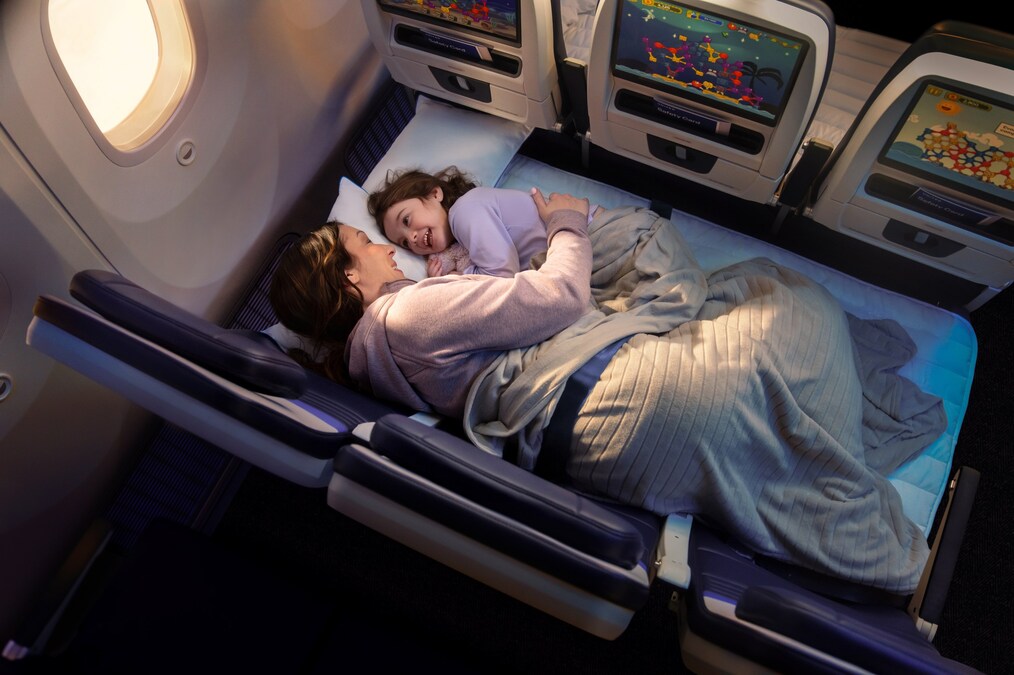
The article argues that United’s Relax Row appears to sit squarely in a preexisting patent landscape dominated by Air New Zealand’s Skycouch IP, especially the claim family covering fold-up economy leg rests that create a lie-flat surface. It also notes that United has not publicly disclosed any licensing relationship with Air New Zealand, even though Air New Zealand has licensed the concept to other carriers before2 sources. The piece concludes that if United is not operating under a license or a viable design-around, the situation could become legally and commercially contentious because Air New Zealand’s claims appear broad enough to cover the core concept.
United’s Relax Row and the Skycouch Patent Question
The article argues that United’s Relax Row appears to sit squarely in a preexisting patent landscape dominated by Air New Zealand’s Skycouch IP, especially the claim family covering fold-up economy leg rests that create a lie-flat surface. It also notes that United has not publicly disclosed any licensing relationship with Air New Zealand, even though Air New Zealand has licensed the concept to other carriers before2 sources. The piece concludes that if United is not operating under a license or a viable design-around, the situation could become legally and commercially contentious because Air New Zealand’s claims appear broad enough to cover the core concept.