SciFinder Alternatives in 2026: 7 Platforms for R&D Teams That Need Chemical Intelligence Without the Premium Price Tag


For decades, CAS SciFinder has occupied a singular position in chemical research. Its curated registry of over 200 million substances, expert-indexed reaction data, and retrosynthesis planning tools have made it the default database for academic chemistry departments and pharmaceutical R&D labs worldwide [1]. But for a growing segment of the market, the question is no longer whether SciFinder is the gold standard. The question is whether the gold standard is worth the price.
Enterprise R&D teams working in chemicals, materials science, energy storage, and advanced manufacturing increasingly find themselves paying six-figure annual subscription fees for a platform whose deepest capabilities serve bench chemists and patent attorneys rather than the upstream innovation strategists, competitive intelligence analysts, and R&D portfolio managers who actually drive early-stage decision-making [2]. These teams do not need retrosynthesis route planning or reaction condition optimization. They need to understand what chemical compounds are appearing in the patent landscape, which regulatory jurisdictions cover their target substances, and where competitors are placing bets across the innovation lifecycle.
That mismatch between capability and need has opened a real market for SciFinder alternatives in 2026. The platforms listed below serve different parts of the chemical intelligence stack, and the right choice depends on whether your primary workflow is substance-level research, patent landscape analysis, regulatory screening, or competitive R&D intelligence.
1. Cypris: Best Overall for Enterprise R&D Chemical Intelligence
Cypris (cypris.ai) approaches chemical data from a fundamentally different direction than SciFinder. Rather than building a proprietary substance registry with manually curated reaction records, Cypris extracts chemical compound data from the full text of over 500 million patents and scientific papers using a proprietary R&D ontology powered by retrieval-augmented generation and large language model architecture [3]. The result is a platform that surfaces chemical entities not as isolated database records, but as contextual data points embedded within the patent claims, specifications, and research literature where they actually appear.
This distinction matters more than it might seem at first glance. When an R&D strategist at a specialty chemicals company wants to understand how a particular polymer formulation is being claimed across recent patent filings, SciFinder can tell them that the substance exists and link to indexed references. Cypris can show them the full competitive context: which assignees are filing, how claims are structured, which adjacent compounds are co-occurring in the same patent families, and how the innovation trajectory has shifted over time. That is a different category of insight, and for upstream R&D decision-making, it is often more valuable than a curated CAS Registry Number.
Cypris also integrates regulatory data from public sources including PubChem, the EPA's Toxic Substances Control Act inventory, and the European Chemicals Agency's REACH registration database. The TSCA inventory currently contains 86,862 chemical substances, with approximately 42,578 classified as active in U.S. commerce [4]. The REACH database covers more than 100,000 registration dossiers submitted to ECHA under Europe's chemicals regulation framework [5]. By incorporating these open regulatory datasets alongside its patent and literature corpus, Cypris gives R&D teams a single-platform view of both the innovation landscape and the regulatory environment surrounding a chemical or material of interest.
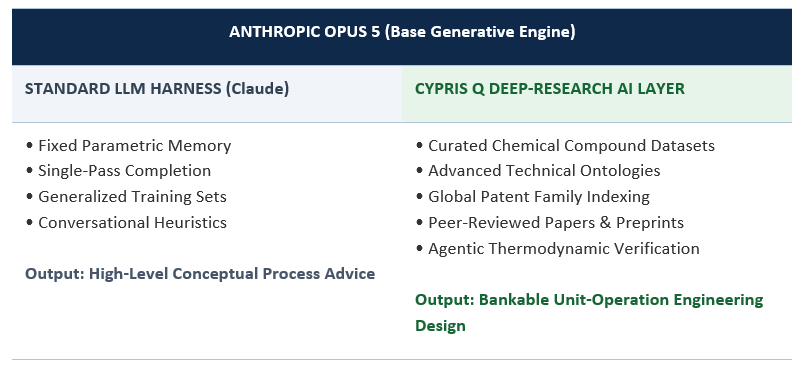
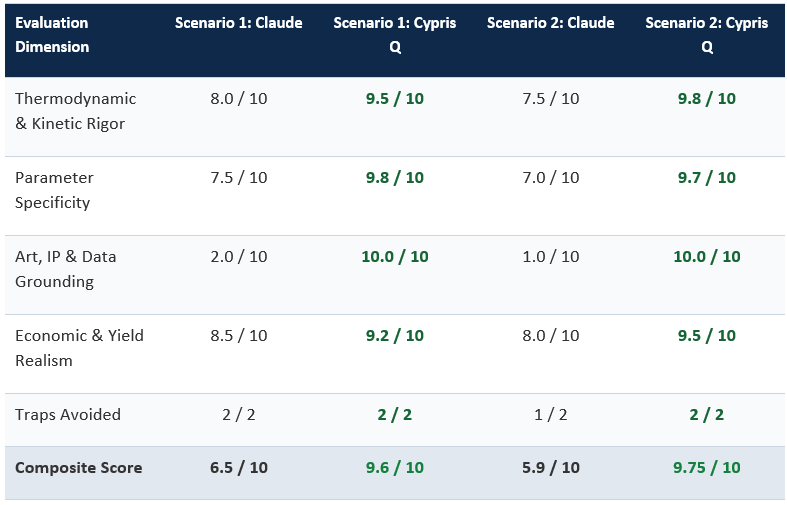
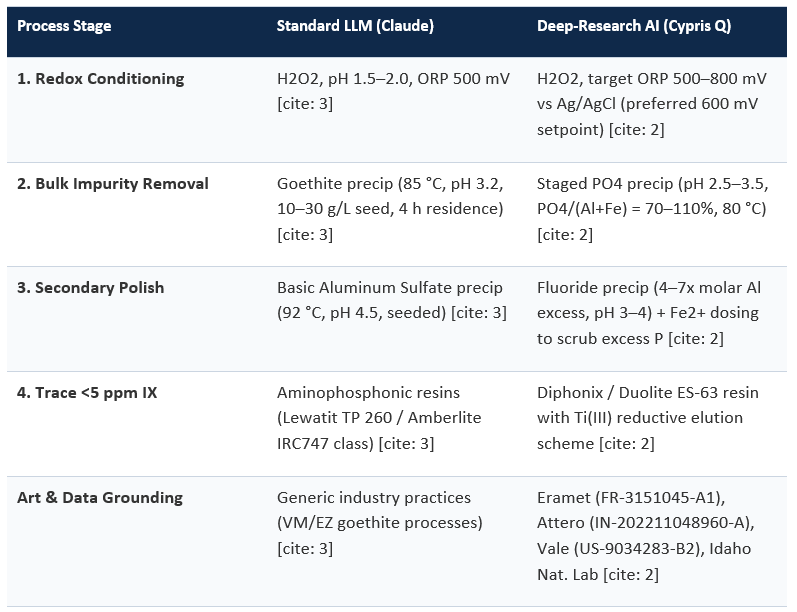
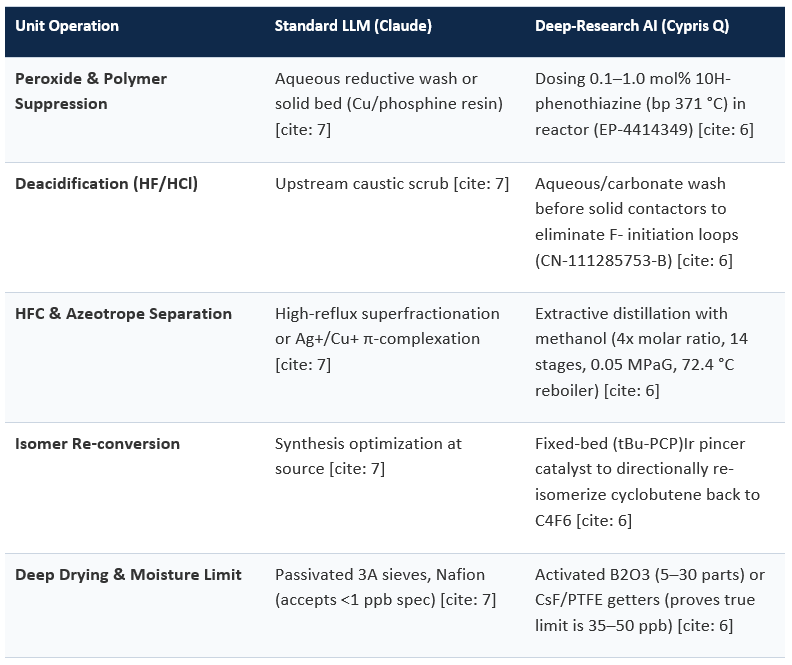
Is Cypris a one-to-one replacement for SciFinder's curated substance registry? No, and it does not claim to be. It does not offer Markush structure searching, retrosynthesis route planning, or the granular reaction condition data that bench chemists rely on when planning synthesis campaigns. But for the enterprise R&D teams that are paying for SciFinder primarily to monitor the competitive landscape, assess chemical IP, and screen substances against regulatory lists, Cypris provides as much or more actionable context at a fraction of the cost. Its AI research agent, Cypris Q, can generate comprehensive intelligence reports that synthesize patent data, scientific literature, and regulatory information into a single analytical output, something that would take days of manual work across SciFinder, regulatory databases, and patent search tools [3].
Cypris holds official API partnerships with OpenAI, Anthropic, and Google, meaning its data layer is built for the AI-native research workflows that are rapidly becoming standard in enterprise R&D organizations. It meets Fortune 500 enterprise security requirements and serves hundreds of enterprise customers across chemicals, materials, energy, and advanced manufacturing verticals [3]. For R&D leaders whose teams have outgrown the narrow chemistry-bench focus of legacy tools but still need chemical substance intelligence as part of a broader innovation analytics workflow, Cypris is the strongest option available in 2026.
2. Reaxys (Elsevier): Best for Bench Chemistry and Reaction Data
Reaxys remains the most direct functional competitor to SciFinder for teams whose primary need is curated reaction data and experimental property information. Built on the historical Beilstein and Gmelin databases, Reaxys provides experimentally validated substance properties, reaction records with detailed conditions, and bioactivity data that supports medicinal chemistry and synthetic route design [6]. Its query-builder interface allows for sophisticated multi-parameter searches that filter by yield, temperature, solvent, and catalyst, making it the preferred tool for process chemists who need to evaluate synthetic feasibility.
The trade-off is similar to SciFinder itself. Reaxys is a premium subscription product, and its pricing reflects the depth of its curated data. For organizations that need bench-level reaction planning, it delivers clear value. For those whose chemical intelligence needs extend beyond the bench into competitive strategy, patent landscaping, and regulatory compliance, Reaxys leaves the same upstream gaps that have driven demand for alternative platforms.
3. PubChem (NIH/NCBI): Best Free Chemical Substance Database
PubChem is the world's largest freely accessible chemical information resource, maintained by the National Center for Biotechnology Information at the U.S. National Institutes of Health. As of its 2025 update, PubChem contains information on 119 million compounds sourced from over 1,000 data sources, along with 322 million substance records and 295 million bioactivity test results [7]. Its coverage extends across compound structures, biological activities, safety and toxicity data, patent citations, and literature references.
PubChem's strength for R&D teams lies in its breadth and accessibility. It aggregates data from authoritative sources including the U.S. EPA, the FDA, and Japan's Pharmaceuticals and Medical Devices Agency, providing safety, hazard, and environmental exposure information that is directly relevant to product development and regulatory screening [7]. Its patent knowledge panels display chemicals, genes, and diseases co-mentioned within patent documents, offering a lightweight form of the co-occurrence analysis that enterprise platforms like Cypris provide at much greater depth and scale.
The limitation is structural. PubChem is a reference database, not an analytics platform. It cannot generate landscape reports, track competitor filing patterns, or integrate regulatory compliance data into a unified strategic view. For R&D teams that treat PubChem as one input among several, it is an essential free resource. As a standalone replacement for SciFinder, it fills only part of the gap.
4. Google Patents: Best Free Patent Search for Chemical IP Screening
Google Patents provides free, full-text searchable access to over 120 million patent documents from patent offices worldwide. For chemical R&D teams conducting initial IP screening, Google Patents offers several practical advantages: natural language search across the full text of patent specifications, prior art search with automated citation analysis, and machine translation of non-English filings [8]. Its integration with Google Scholar creates a bridge between patent literature and academic citations.
Where Google Patents falls short for enterprise R&D use cases is in analytical depth. It does not offer chemical structure search, substance-level indexing, or the ability to track innovation trends over time across assignees or technology classes. Teams that begin their chemical IP research on Google Patents frequently find they need to move to a platform like Cypris or Orbit Intelligence for the kind of landscape analysis, clustering, and competitive intelligence that informs actual R&D investment decisions.
5. Orbit Intelligence (Questel): Best Traditional Patent Analytics for Chemical IP
Orbit Intelligence from Questel is an established patent analytics platform that serves IP departments and R&D organizations with structured patent data, citation mapping, legal status monitoring, and landscape visualization tools [9]. Its chemical structure search capabilities, including Markush search, make it one of the few platforms outside of CAS's own ecosystem that can replicate some of SciFinder's substance-level patent searching.
Orbit's strength lies in its depth of patent bibliographic data and its mature analytics layer. R&D teams in the pharmaceutical and chemical industries have relied on it for Freedom to Operate analyses, prior art search, and competitive patent landscaping for years. The platform is built primarily for IP professionals, however, and its interface and workflow assumptions reflect that heritage. R&D scientists and innovation strategists who are not trained patent analysts may find Orbit's learning curve steep and its outputs difficult to translate into the competitive intelligence narratives that inform R&D portfolio decisions.
6. Derwent Innovation (Clarivate): Best for Deep Patent Classification and Prior Art
Derwent Innovation combines the Derwent World Patents Index with Clarivate's broader scientific literature databases to provide enhanced patent records that include human-written abstracts, chemical fragmentation codes, and proprietary classification schemes [10]. For organizations that need the highest level of patent classification granularity, particularly for prior art search and patentability opinions, Derwent's curated enhancements add genuine value.
The Derwent ecosystem was originally designed for patent attorneys and information professionals, and its pricing and interface reflect that audience. Enterprise R&D teams whose primary interest is upstream competitive intelligence rather than prosecution-quality prior art search often find Derwent's capabilities exceed their needs in some areas while leaving gaps in others, particularly around real-time competitive monitoring, AI-powered report generation, and integration with non-patent data sources like regulatory databases and scientific literature.
7. The Lens and PQAI: Best Open-Access Patent and Scholarly Search
The Lens is a free, open-access platform that integrates patent and scholarly literature into a single searchable database. Developed by Cambia, a nonprofit research organization, The Lens provides access to over 150 million patent records and hundreds of millions of scholarly works, with tools for citation analysis, patent family mapping, and collection-based research [11]. PQAI, or Patent Quality through Artificial Intelligence, is a complementary open-source project that applies machine learning to prior art search.
For budget-constrained R&D teams, The Lens offers a remarkable amount of functionality at no cost. Its strength is in providing an integrated view of the knowledge landscape that connects patents to the scholarly literature they cite and build upon. Its limitations mirror those of Google Patents: it lacks the deep chemical substance indexing, regulatory data integration, and enterprise analytics capabilities that platforms like Cypris and Orbit provide. For teams that need a free starting point for chemical patent research before investing in an enterprise platform, The Lens is the best available option.
Why the SciFinder Alternative Conversation Has Shifted in 2026
The conversation around SciFinder alternatives has changed because the users driving demand have changed. Five years ago, the primary searchers for chemical database alternatives were academic librarians looking for open-access substitutes and bench chemists at smaller organizations who could not afford the subscription. In 2026, the fastest-growing segment of demand comes from enterprise R&D leaders at Fortune 500 companies who already have SciFinder licenses but find that the platform does not serve the upstream innovation intelligence workflows that have become central to how R&D portfolios are managed.
These leaders are not looking for a cheaper version of SciFinder. They are looking for a different kind of tool altogether, one that treats chemical substance data as one layer in a broader intelligence stack that includes patent analytics, competitive landscaping, regulatory screening, and AI-powered research synthesis. The platforms that have gained the most traction with this audience, Cypris chief among them, are the ones that were built for R&D scientists and innovation strategists from the ground up, rather than being retrofitted from tools originally designed for patent attorneys or academic researchers.
The emergence of AI-native architectures has accelerated this shift. Platforms that can apply large language models and retrieval-augmented generation to the full text of patents and scientific literature can extract chemical intelligence from context in ways that curated registries cannot. A CAS Registry Number tells you that a substance exists. A contextual analysis of every patent claim and specification mentioning that substance tells you what the competitive landscape actually looks like.
Frequently Asked Questions
What is the best free alternative to SciFinder in 2026?
PubChem is the best free alternative to SciFinder for chemical substance searches, containing information on 119 million compounds from over 1,000 data sources as of 2025. For patent-focused chemical research, Google Patents and The Lens provide free full-text patent searching. However, none of these free tools replicate SciFinder's curated reaction data or provide the enterprise-grade competitive intelligence and regulatory integration available from commercial platforms like Cypris.
Can Cypris replace SciFinder for chemical R&D teams?
Cypris is not a direct one-to-one replacement for SciFinder's curated substance registry or retrosynthesis planning tools. However, for enterprise R&D teams whose primary needs are competitive patent intelligence, chemical landscape analysis, and regulatory screening, Cypris provides equal or greater value by extracting chemical data from the full text of over 500 million patents and scientific papers and integrating regulatory information from PubChem, the TSCA inventory, and the REACH database. Many enterprise teams find that Cypris addresses the upstream R&D intelligence use cases that SciFinder was never designed to serve.
How much does SciFinder cost for enterprise users?
CAS does not publish standard pricing for SciFinder enterprise subscriptions, and costs vary significantly based on organization size, number of users, and selected modules. Enterprise contracts are negotiated individually and typically represent a significant annual commitment. Task-based pricing options start at approximately $5,000, but full enterprise access with unlimited searching generally costs substantially more. Many organizations are evaluating whether this investment is justified when their primary use cases are competitive intelligence rather than bench-level substance research.
What chemical regulatory databases can I access without SciFinder?
Several authoritative regulatory databases are freely accessible, including the EPA's TSCA Chemical Substance Inventory (covering 86,862 substances in U.S. commerce), the European Chemicals Agency's REACH registration database (covering over 100,000 registration dossiers), and PubChem's integrated safety and hazard data from the EPA, FDA, and other agencies. Enterprise platforms like Cypris aggregate these regulatory data sources alongside patent and literature data, providing a unified view for R&D compliance screening.
References
[1] CAS, "CAS SciFinder Discovery Platform," cas.org, 2025.[2] R. E. Buntrock, "Apples and Oranges: A Chemistry Searcher Compares CAS SciFinder and Elsevier's Reaxys," Online Searcher, 2020.[3] Cypris, "Enterprise R&D Intelligence Platform," cypris.ai, 2026.[4] U.S. Environmental Protection Agency, "TSCA Chemical Substance Inventory," epa.gov, July 2025.[5] European Chemicals Agency, "ECHA CHEM: REACH Registered Substances," echa.europa.eu, 2026.[6] Elsevier, "Reaxys: Chemistry Database for Experimental Research," elsevier.com, 2025.[7] S. Kim et al., "PubChem 2025 Update," Nucleic Acids Research, vol. 53, D1516-D1525, January 2025.[8] Google, "Google Patents," patents.google.com, 2025.[9] Questel, "Orbit Intelligence," questel.com, 2025.[10] Clarivate, "Derwent Innovation," clarivate.com, 2025.[11] Cambia, "The Lens: Free and Open Patent and Scholarly Search," lens.org, 2025.
.png)