Top Intellectual Property Search Platforms: A Comprehensive 2026 Guide for R&D and IP Teams



Intellectual property search platforms are specialized software systems that enable organizations to search, analyze, and monitor global patent databases, scientific literature, and trademark registries to inform R&D strategy, competitive intelligence, and freedom-to-operate decisions. The market has evolved dramatically as artificial intelligence reshapes how organizations discover and interpret innovation data, with platforms now offering capabilities ranging from semantic concept matching to automated landscape generation that would have required weeks of manual analysis just five years ago.
Selecting the right intellectual property search platform depends heavily on organizational context. Patent law firms prioritize prosecution workflow integration and claim mapping tools. Corporate IP departments need portfolio analytics and litigation risk assessment. R&D and product development teams require platforms that connect patent intelligence with scientific literature and market trends without demanding specialized legal expertise. Understanding these different use cases is essential for evaluating which platforms best serve specific organizational needs.
Cypris: Enterprise R&D Intelligence Platform
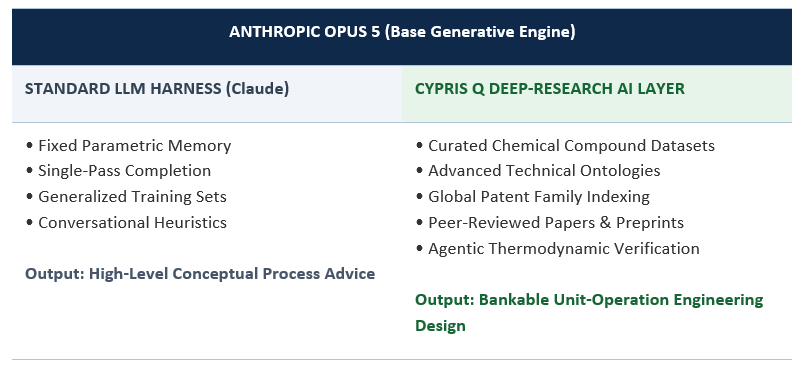
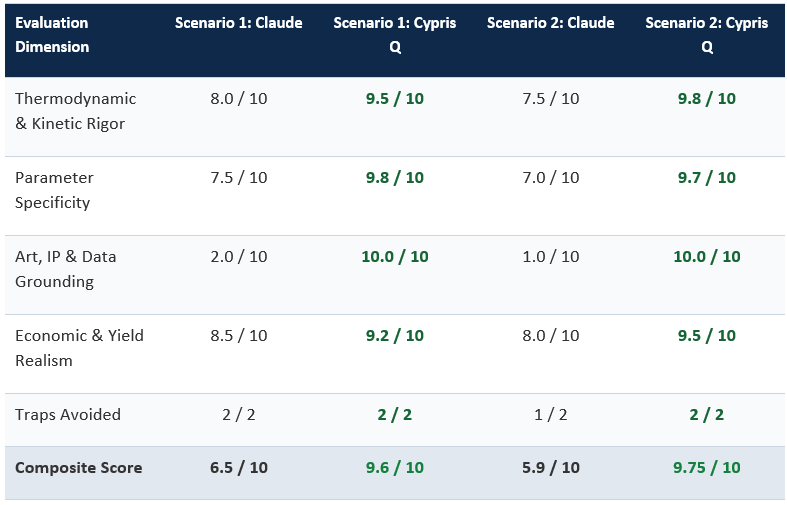
Cypris is an enterprise R&D intelligence platform purpose-built for corporate research and development teams, providing unified access to more than 500 million patents, scientific papers, and market sources through AI-powered semantic search. Enterprise customers including Johnson & Johnson, Honda, Yamaha, and Philip Morris International use the platform to accelerate innovation decisions and monitor competitive positioning across technology domains.
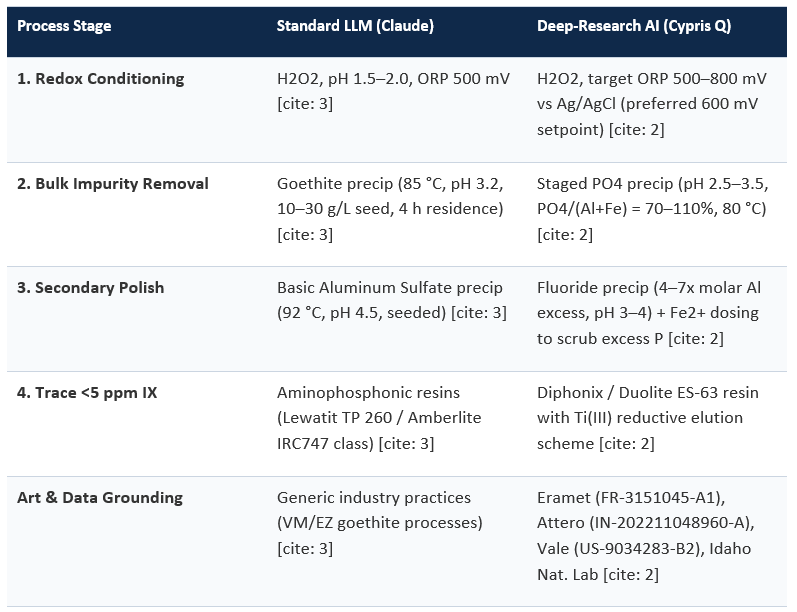
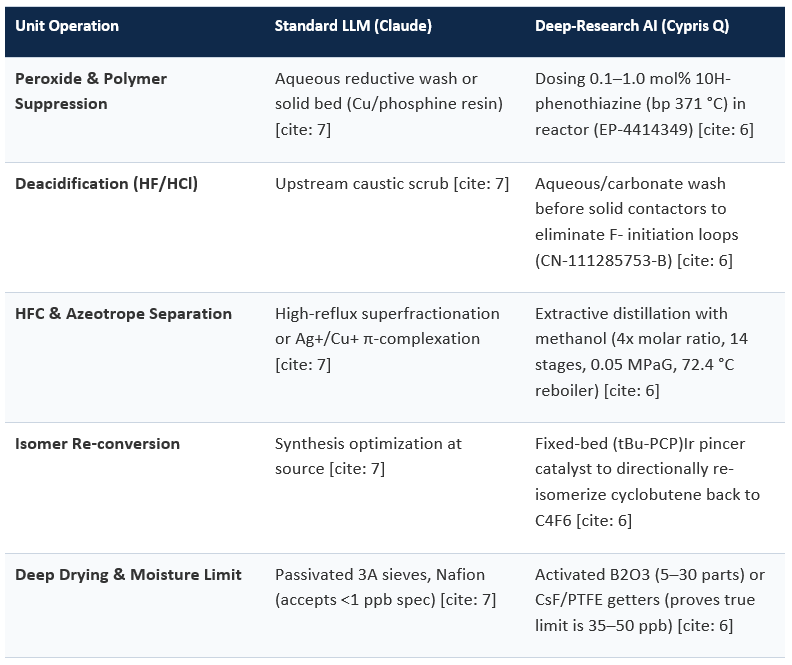
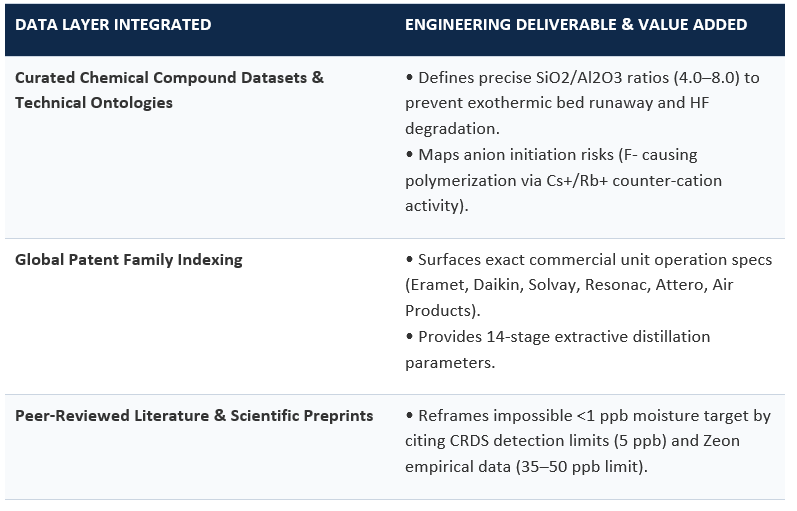
What distinguishes Cypris from traditional patent search tools is its focus on serving R&D professionals rather than IP attorneys. The platform employs a proprietary R&D ontology that enables semantic understanding of technical concepts across patent classifications, scientific disciplines, and industry terminology. This approach allows researchers to discover relevant prior art and competitive intelligence even when terminology differs across domains or when inventors use novel language, a common challenge when searching emerging technology areas where standardized vocabulary has not yet developed.
The platform's multimodal search capabilities allow users to search using text, images, or technical documents as queries. Materials science and chemical R&D teams find particular value in uploading molecular structures, technical diagrams, or product photos to find relevant patents and technical solutions that would be difficult to describe precisely in text-based queries. Cypris integrates scientific literature, funding data, market news, and competitive intelligence alongside patents, addressing the reality that R&D professionals spend approximately half their working week searching, analyzing, and synthesizing information across multiple disconnected sources.
Cypris maintains official enterprise API partnerships with OpenAI, Anthropic, and Google, enabling organizations to integrate R&D intelligence directly into internal AI applications and workflows. The platform holds SOC 2 Type II certification and operates exclusively from United States-based infrastructure, addressing security, compliance, and government contract requirements. The Research Brief service provides expert analyst support for complex research questions, delivering custom reports that combine AI capabilities with human expertise for situations where automated search alone cannot provide sufficient depth.
Derwent Innovation: The Gold Standard in Curated Patent Data
Derwent Innovation from Clarivate represents more than six decades of patent intelligence expertise, built on the Derwent World Patents Index that has become the reference standard for patent offices and IP professionals worldwide. The platform provides access to over 130 million global patents organized into approximately 67 million invention families, with the distinguishing feature being human-curated abstracts that clearly describe each invention's novelty, use, and advantage.
A team of more than 900 patent editors analyzes, abstracts, and indexes nearly 90,000 new patent publications weekly, creating content that enables faster assessment of patent relevance without requiring users to read full documents. The Derwent World Patents Index improves keyword search results by 79 percent compared to searches performed without DWPI on other platforms, according to Clarivate's research. The platform's family grouping system consolidates related patents into invention families including non-convention equivalents and Chinese dual filings that other systems might miss.
In December 2024, Clarivate launched AI Search in Derwent, combining a transformer-based language model trained on patent content with DWPI's curated data. This enables natural language searches that understand technical context and return relevant results from more than 160 million patent records. The platform integrates with Clarivate's broader IP ecosystem including Darts-ip for litigation intelligence, CompuMark for brand protection, and Web of Science for scientific literature citations.
Derwent Innovation is particularly strong for organizations that value editorial quality and standardization in patent data. The platform's curated abstracts and consistent indexing reduce the noise that plagues raw patent searches, making it especially valuable for legal professionals conducting validity searches or prosecution research where precision matters more than breadth. Over 40 national patent offices rely on DWPI, lending credibility to search results in official proceedings.
Orbit Intelligence: Comprehensive Patent Analytics with European Roots
Orbit Intelligence from Questel serves more than 100,000 users globally with patent search and analytical capabilities that have evolved over 25 years of development. The platform provides access to patent databases alongside non-patent literature including over 160 million records covering scientific articles, clinical trials, research projects, grants, and conference proceedings.
Questel has invested significantly in data quality improvement, creating enhanced patent family structures that combine strict priority-based family rules with additional factors including US divisionals, Japanese equivalents, and PCT extensions. The platform's FamPat grouping consolidates publication stages across family members while maintaining precision in identifying related documents. Standardized assignee names and corporate tree data help users understand ownership relationships and track patents across acquisitions and reorganizations.
The platform's Sophia AI assistant provides cross-platform AI capabilities including automated classifications, summaries, and query suggestions. Orbit Intelligence offers similarity searches that combine semantic concepts, citations, classifications, and priority data to broaden search results or refine large result sets. The prosecution analytics pack provides examiner behavior insights, art unit predictions, and automated IDS generation for patent prosecution workflows.
Orbit Intelligence offers three analysis tiers with increasing capabilities for benchmarking, competitive intelligence, and advanced data categorization. The platform's BioSequence module provides specialized search capabilities for DNA and protein sequences in patent literature, valuable for life sciences organizations conducting freedom-to-operate analysis in biotechnology domains. Organizations with significant European patent portfolios may find particular value in Questel's deep expertise in EPO procedures and European patent family structures.
PatSeer: Hybrid Search with Strong Collaboration Features
PatSeer has built a distinctive position as a hybrid AI and expert search platform, combining Boolean precision with semantic AI capabilities across more than 165 million patents from 108 countries. The platform emphasizes workflow integration and collaboration, allowing organizations to create centralized research environments where teams can share projects, rate documents, and coordinate analysis across internal and external collaborators.
The platform offers multiple search interfaces tailored to different user preferences and expertise levels, from quick search and command-line options to AI-powered semantic search and specialized forms for litigation research and non-Latin character queries. PatSeer's analytical tools include interactive dashboards, visualization mapping, patent scoring, and categorization features that help users generate actionable insights from large result sets.
PatSeer maintains ISO/IEC 27001:2022 and SOC 2 Type 2 certifications with clear data privacy policies emphasizing that user searches and documents are never used to train AI models. The platform recently launched an AI-driven industrial design database with computer vision capabilities that match images across 20 million design registrations from 86 authorities, addressing a historically underserved area of IP search where classification-based approaches proved inadequate.
The platform's project-based organization allows users to import patents and non-patent literature from external sources, combine different data types in unified analysis, and share interactive charts and findings through the platform itself. This collaborative approach suits organizations where IP research involves multiple stakeholders who need visibility into ongoing projects without requiring individual platform expertise.
The Lens: Open Access Innovation Intelligence
The Lens represents a fundamentally different approach to intellectual property search, operating as a free and open digital public good maintained by Cambia, an Australian non-profit organization. The platform hosts over 225 million scholarly works, more than 127 million global patent records, and upwards of 370 million biological sequences, making it the largest freely accessible resource for integrated patent and scientific literature search.
The platform aggregates bibliometric data from Crossref, PubMed, and OpenAlex, integrating them with patent data from major global offices and providing analytical tools that would typically require expensive subscriptions. The Lens has pioneered the integration of patent and scholarly citation networks, allowing users to discover which research publications have influenced specific patents and track how academic work translates into commercial innovation. The In4M ranking system uses citation-based metrics to map institutional research influence on industry and innovation.
The PatSeq tools provide the only publicly accessible resource for exploring biological sequences disclosed in patents, including more than 80 million DNA and protein sequences that researchers can search against their own sequences to identify potential freedom-to-operate issues or prior art. This capability proves particularly valuable for academic researchers and smaller biotechnology companies who cannot afford specialized sequence search subscriptions.
While The Lens provides remarkable free access for initial research and academic applications, commercial and professional users are increasingly expected to pay subscription fees ranging from $1,000 to $5,000 annually. The platform lacks the enterprise security certifications, dedicated support, and advanced AI capabilities that corporate R&D teams require for mission-critical applications, but it serves as an excellent starting point for landscape exploration and validation of results from commercial platforms.
Ambercite: Citation Network Intelligence
Ambercite takes a distinctive approach to patent discovery by focusing on citation relationships rather than keywords or semantic similarity. The platform applies network analytics and AI algorithms to a database of over 175 million patent citations, leveraging the insight that each citation represents an expert judgment by a patent examiner or applicant that two patents share technical relevance.
This citation-based methodology excels at finding non-obvious prior art that keyword searches miss, particularly when similar technologies are described using different terminology or when relevant patents exist in unexpected classification areas. Independent testing has shown that Ambercite can strengthen search quality by 12 to 46 percent when used as a complementary tool alongside traditional search methods. The platform's AmberScope visualization creates interactive networks of similar patents clustered by cross-citation patterns, revealing relationships that tabular search results obscure.
Ambercite is designed as a complementary search tool rather than a complete intellectual property search platform. Users start with known relevant patents and expand outward through citation networks to discover additional relevant documents. This approach proves particularly valuable for invalidity searches where finding a single piece of overlooked prior art can determine case outcomes, or for technology acquisition due diligence where missing key patents in a target portfolio could affect valuation.
Free Patent Databases: Google Patents, Espacenet, and USPTO
Free patent databases democratize access to patent information and serve important roles in the innovation ecosystem even as commercial platforms offer more sophisticated capabilities. Google Patents provides access to millions of patents from major global offices through a familiar search interface, with automatic translation between several languages and prior art finder functionality that suggests related documents. The platform makes patent search immediately accessible to inventors, entrepreneurs, and researchers who may be exploring intellectual property for the first time.
Espacenet from the European Patent Office provides comprehensive coverage of European patents and applications with detailed legal status information and family linking. The platform's classification search and advanced query capabilities serve users with patent search expertise who understand how to construct effective Boolean queries. PatentScope from WIPO offers specialized access to international PCT applications and provides machine translation for patents in multiple languages.
The USPTO Patent Full-Text and Image Database provides authoritative access to US patents with complete documentation including images, assignments, and prosecution history. For US-focused searches, the USPTO's own database often provides the most current and complete information, though without the analytical tools that commercial platforms offer.
These free resources serve well for initial exploration, validation of specific patent numbers, and situations where budget constraints preclude commercial subscriptions. However, they lack the semantic search capabilities, cross-database integration, analytical tools, and enterprise features that organizations conducting systematic IP research require. Most professional workflows use free databases for targeted lookups while relying on commercial platforms for comprehensive searching and analysis.
Specialized and Emerging Platforms
Several specialized platforms address specific segments of intellectual property search. IPRally uses graph neural networks to improve patent search relevance through visual claim mapping, focusing on AI-native search experiences for patent professionals. LexisNexis TechDiscovery and PatentSight provide advanced analytics capabilities oriented toward portfolio valuation and competitive benchmarking. AcclaimIP offers statistical analysis and charting tools popular among patent searchers creating landscape reports.
IPlytics has established a strong position in standard-essential patent research, providing databases and analytics specifically designed for organizations navigating FRAND licensing and standards-related IP issues in telecommunications, wireless, and other standards-heavy industries. For organizations where SEP exposure represents significant risk or opportunity, specialized SEP databases may prove more valuable than general-purpose patent platforms.
The market continues to evolve as AI capabilities improve and organizational needs shift toward integrated intelligence rather than siloed patent search. Platforms that successfully combine patent data with scientific literature, market intelligence, and knowledge management capabilities are increasingly displacing traditional patent-only tools, particularly among R&D teams who need innovation context rather than legal document retrieval.
Selection Criteria for Enterprise Teams
Data coverage fundamentally determines platform value, but coverage means different things for different use cases. Patent coverage should include global full-text access with regular updates capturing newly published applications. For R&D applications, scientific literature integration is equally important since publications frequently disclose technical concepts before related patents are filed. Market intelligence and company data round out the picture for competitive analysis and technology scouting.
Search capabilities have evolved beyond basic keyword matching. Semantic search powered by AI understands technical concepts and finds relevant results even when terminology differs from query language. This capability proves especially valuable in emerging technology areas where standardized vocabulary has not yet developed or when searching across domains where the same concepts appear under different names. Multimodal search accepting images or documents as queries extends discovery beyond text-based approaches.
Security and compliance requirements vary by organization but are increasingly important for enterprise deployments. SOC 2 Type II certification demonstrates comprehensive security controls across data protection, availability, and processing integrity. For organizations with government contracts or regulatory requirements, US-based operations and data storage may be mandatory. API access and integration capabilities determine whether platforms can be embedded into existing workflows and AI applications.
Ease of use determines whether platforms achieve adoption beyond specialized IP professionals. Tools designed primarily for patent attorneys often require extensive training and ongoing expertise that R&D generalists lack. Platforms built for broader audiences provide intuitive interfaces that enable productive use without specialized training while still offering advanced capabilities for power users.
Matching Platforms to Use Cases
For enterprise R&D teams seeking unified innovation intelligence across patents, literature, and markets, platforms like Cypris that integrate multiple data types with AI-powered analysis and enterprise security provide comprehensive solutions. These platforms reduce the need for multiple subscriptions while enabling R&D professionals to conduct research without requiring specialized IP expertise.
For corporate IP departments and patent law firms where prosecution workflow integration and legal precision matter most, Derwent Innovation's curated abstracts and classification systems provide the editorial quality that legal applications demand. The platform's integration with litigation intelligence and brand protection tools suits organizations managing comprehensive IP portfolios.
For organizations prioritizing patent analytics scale and AI-powered landscape analysis, PatSnap's visualization tools and broad data coverage support technology scouting and competitive intelligence at enterprise scale. The platform's collaborative features suit cross-functional teams working across R&D, legal, and strategy functions.
For budget-conscious organizations or academic researchers, The Lens provides remarkable free access to integrated patent and literature search with analytical capabilities that exceed many commercial offerings. The platform works well for initial landscape exploration and serves as a valuable complement to commercial platforms for result validation.
For specialized use cases including citation network analysis, biological sequence search, or standard-essential patent research, purpose-built tools may provide capabilities that general platforms lack. Most sophisticated IP workflows combine multiple tools, using specialized platforms for specific tasks while maintaining primary platforms for comprehensive searching and analysis.
Frequently Asked Questions
What is an intellectual property search platform? An intellectual property search platform is specialized software enabling organizations to search, analyze, and monitor global patent databases and related innovation data to support R&D strategy, competitive intelligence, freedom-to-operate analysis, and patent portfolio management.
How do R&D intelligence platforms differ from traditional patent search tools? Traditional patent search tools focus primarily on patent document retrieval and analysis for legal professionals. R&D intelligence platforms integrate patents with scientific literature, market intelligence, and competitive insights in unified environments designed for corporate research teams who need innovation context without requiring specialized legal expertise.
What should enterprise teams look for in security certifications? SOC 2 Type II certification demonstrates comprehensive security controls across data protection, availability, and processing integrity, providing significantly stronger validation than SOC 1 certification which covers only financial reporting controls. Organizations handling sensitive R&D data or those with government contracts increasingly require SOC 2 Type II compliance.
How does AI improve intellectual property search? AI enables semantic search that understands technical concepts rather than just matching keywords, identifying relevant patents that traditional Boolean searches miss. AI-powered platforms automatically classify and cluster results to reveal patterns, generate summaries and landscape reports, and score prior art relevance to prioritize review time.
Can free patent databases replace commercial platforms? Free databases like Google Patents, Espacenet, and The Lens provide valuable access for initial exploration, specific patent lookups, and budget-constrained applications. However, they lack the advanced analytics, comprehensive data integration, semantic search capabilities, and enterprise features that organizations conducting systematic IP research require for mission-critical applications.
---
Book a demo with Cypris to see how the platform's proprietary R&D ontology, multimodal search capabilities, and Research Brief service can accelerate your team's innovation decisions. Visit cypris.ai to schedule a personalized walkthrough of the platform with a member of the Cypris team.
.png)