
Competitive Intelligence (CI) is the process of analyzing, gathering, and using information collected on competitors, customers, and other market factors that contribute to your competitive advantage. Companies rely on CI data to develop effective and efficient business practices.
CI consists of two types of intelligence: tactical and strategic. Tactical is shorter-term intelligence, which seeks to provide input into issues like capturing market share or increasing revenues, while strategic focuses on longer-term issues, like key risks and opportunities facing the organization, and emerging trends and patterns.
Why competitive intelligence matters, particularly real-time CI.
Understanding competitor motivations and behaviors is critical to driving innovation, shaping product development, establishing pricing and brand positioning, and so much more. Companies must collect proper CI in order to identify challenges, advantages, and white spaces and build a competitive strategy equipped to compete and thrive.
Technology has transformed the CI industry, making it possible for organizations to compile data from multiple sources in a timely manner to facilitate rapid decision-making. Through actionable insights, companies can respond to changes in their markets quickly to keep up with competition. At the core of actionable insights is real-time CI. With real-time CI, companies deliver timely intelligence to the right people, increasing organizational agility.
When looking to collect CI, it’s important to plan out which insights are of value to you, how to identify your competitors, and which markets to spend time on. Take time to narrow in on your direct competitors, research objectives, and areas of interest.
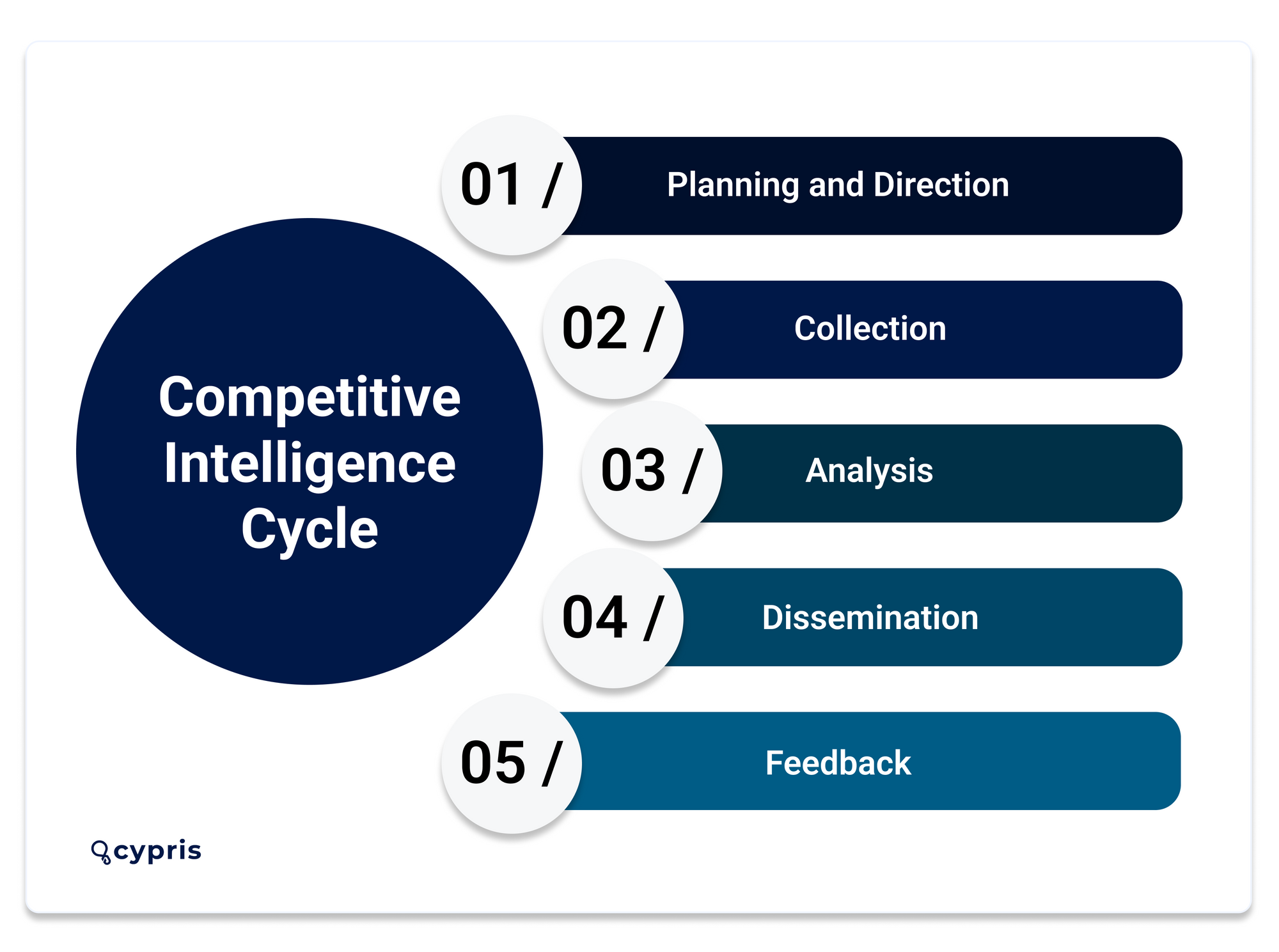
Are companies focusing on CI? These metrics might surprise you.
90% of Fortune 500 companies practice competitive intelligence. (Source: Emerald Insight)
Over 73% of businesses are investing more than 20% of overall technology budgets on intelligence and data analytics. (Source: Forbes)
61% of executives view rapid decision-making and execution as essential factors for a company’s success, and 34% consider the ability to access the right information at the right time as key factors for a company’s success. (Source: The Economist)
69% of organizations that have used an external partner to gain better data insight report positive results from that decision. (Source: The Economist)
57% of companies state that gaining a competitive advantage is one of the top 3 priorities in their industry. (Source: Forbes)
The 6 ways CI benefits your organization.

CI empowers everyone on teams, from product managers and marketers, to sales and executive teams. With the right CI, you can:
Uncover Key Data Points: Through examining new data points like significant acquisitions, new patent filings, startup investments, technology transfer agreements, research papers, etc., you can uncover pivotal data points that have the potential to influence major decisions.
Plan Strategic Moves: CI facilitates building your long-term business strategy and finding market gaps, allowing you to make the right business decisions for your organization.
Track industry Trends: Live-data CI lets you watch for new technologies, track new movement, stay on top of industry innovation trends, and predict future movement.
Drive Innovation: CI helps you to identify new market opportunities and spaces to innovate, accelerate your new product development, design better products, and improve market positioning.
Outsmart Competition: Think of CI as competitive insurance to ensure you stay on top of competitor strengths and weaknesses, anticipate what they’re planning, and identify competitor position and messaging. With CI you can uncover new product launches and services your competitors are adding, and benchmark your company against others.
Minimize Risk: Making the wrong move is costly. CI helps you prevent unsuccessful projects from taking off, save on costs, and improve decision-making ROI. With CI data, you can identify and prioritize any gaps within your business, and feel comfortable knowing you're making data-backed decisions.
Where to go from here: Actionable intelligence platforms are here to help.
Manually collecting CI takes time, and is costly. Not to mention doing your own research digging on the Internet for low-hanging fruit means you'll likely miss key data points that don't provide you with the whole picture. In the time it takes traditional market intelligence or research analysts to gather data to build into basic and applied research reports, you can receive data automatically through a platform like Cypris.
Designed specifically to deliver actionable innovation intelligence to R&D teams, Cypris improves the efficiency of data collation and interpretation. By aggregating your desired data, Cypris enables users to answer critical questions that influence the brand, margin, and profitability of your organization. Users have identified new entrants, significant IP, groundbreaking research papers, and more that have ultimately swayed the course of major projects.
Ready for real-time data on your competitors? Visit cypris.ai to get started by booking a demo.
Sources:
https://www.jimmynewson.com/10-important-competitive-intelligence-statistics/
https://www.gartner.com/en/information-technology/glossary/ci-competitive-intelligence
https://www.antara.ws/en/blog/competitive-intelligence-benefits-for-the-company
Why Your Company Needs Competitive Intelligence



Competitive Intelligence (CI) is the process of analyzing, gathering, and using information collected on competitors, customers, and other market factors that contribute to your competitive advantage. Companies rely on CI data to develop effective and efficient business practices.
CI consists of two types of intelligence: tactical and strategic. Tactical is shorter-term intelligence, which seeks to provide input into issues like capturing market share or increasing revenues, while strategic focuses on longer-term issues, like key risks and opportunities facing the organization, and emerging trends and patterns.
Why competitive intelligence matters, particularly real-time CI.
Understanding competitor motivations and behaviors is critical to driving innovation, shaping product development, establishing pricing and brand positioning, and so much more. Companies must collect proper CI in order to identify challenges, advantages, and white spaces and build a competitive strategy equipped to compete and thrive.
Technology has transformed the CI industry, making it possible for organizations to compile data from multiple sources in a timely manner to facilitate rapid decision-making. Through actionable insights, companies can respond to changes in their markets quickly to keep up with competition. At the core of actionable insights is real-time CI. With real-time CI, companies deliver timely intelligence to the right people, increasing organizational agility.
When looking to collect CI, it’s important to plan out which insights are of value to you, how to identify your competitors, and which markets to spend time on. Take time to narrow in on your direct competitors, research objectives, and areas of interest.
Are companies focusing on CI? These metrics might surprise you.
90% of Fortune 500 companies practice competitive intelligence. (Source: Emerald Insight)
Over 73% of businesses are investing more than 20% of overall technology budgets on intelligence and data analytics. (Source: Forbes)
61% of executives view rapid decision-making and execution as essential factors for a company’s success, and 34% consider the ability to access the right information at the right time as key factors for a company’s success. (Source: The Economist)
69% of organizations that have used an external partner to gain better data insight report positive results from that decision. (Source: The Economist)
57% of companies state that gaining a competitive advantage is one of the top 3 priorities in their industry. (Source: Forbes)
The 6 ways CI benefits your organization.
CI empowers everyone on teams, from product managers and marketers, to sales and executive teams. With the right CI, you can:
Uncover Key Data Points: Through examining new data points like significant acquisitions, new patent filings, startup investments, technology transfer agreements, research papers, etc., you can uncover pivotal data points that have the potential to influence major decisions.
Plan Strategic Moves: CI facilitates building your long-term business strategy and finding market gaps, allowing you to make the right business decisions for your organization.
Track industry Trends: Live-data CI lets you watch for new technologies, track new movement, stay on top of industry innovation trends, and predict future movement.
Drive Innovation: CI helps you to identify new market opportunities and spaces to innovate, accelerate your new product development, design better products, and improve market positioning.
Outsmart Competition: Think of CI as competitive insurance to ensure you stay on top of competitor strengths and weaknesses, anticipate what they’re planning, and identify competitor position and messaging. With CI you can uncover new product launches and services your competitors are adding, and benchmark your company against others.
Minimize Risk: Making the wrong move is costly. CI helps you prevent unsuccessful projects from taking off, save on costs, and improve decision-making ROI. With CI data, you can identify and prioritize any gaps within your business, and feel comfortable knowing you're making data-backed decisions.
Where to go from here: Actionable intelligence platforms are here to help.
Manually collecting CI takes time, and is costly. Not to mention doing your own research digging on the Internet for low-hanging fruit means you'll likely miss key data points that don't provide you with the whole picture. In the time it takes traditional market intelligence or research analysts to gather data to build into basic and applied research reports, you can receive data automatically through a platform like Cypris.
Designed specifically to deliver actionable innovation intelligence to R&D teams, Cypris improves the efficiency of data collation and interpretation. By aggregating your desired data, Cypris enables users to answer critical questions that influence the brand, margin, and profitability of your organization. Users have identified new entrants, significant IP, groundbreaking research papers, and more that have ultimately swayed the course of major projects.
Ready for real-time data on your competitors? Visit cypris.ai to get started by booking a demo.
Sources:
https://www.jimmynewson.com/10-important-competitive-intelligence-statistics/
https://www.gartner.com/en/information-technology/glossary/ci-competitive-intelligence
https://www.antara.ws/en/blog/competitive-intelligence-benefits-for-the-company
Keep Reading

As R&D and innovation teams look for ways to quickly access the data they need, many are turning to How to Use Google Scholar for Legal Research. R&D and innovation teams are looking to Google Scholar for its robust search functions and user-friendly design, making it a popular choice among those seeking quick access to data. In this post, we’ll investigate how to utilize Google Scholar for legal research – from refining search strategies to optimizing results. So let’s dive in and learn more about using google scholar for legal research.
Table of Contents
How to Use Google Scholar for Legal Research?
Searching for Legal Information on Google Scholar
Refining Your Search Results on Google Scholar
Tips and Tricks for Using Google Scholar for Legal Research
Exploring Related Articles on Google Scholar
Best Practices for Using Google Scholar for Legal Research
FAQs in Relation to How to Use Google Scholar for Legal Research
How do I use Google Scholar for case law?
How do I use Google Scholar for research?
How can you find articles which reference an article using Google Scholar?
What is Google Scholar?
Google Scholar is an online search engine designed specifically for research. Google Scholar offers a wide range of scholarly material, such as journals, books, theses, and conference proceedings. Google Scholar enables users to quickly locate relevant information on their topics of interest and How to Use Google Scholar for Legal Research is not a common, yet important pool of knowledge.
The benefits of using Google Scholar are numerous. For starters, it’s incredibly fast and efficient; users can find what they need in seconds rather than hours or days spent sifting through traditional library resources. Moreover, by drawing from an extensive variety of sources – not just those traditionally indexed in other databases – Google Scholar offers chances to uncover information that would otherwise be out of reach. Finally, its citation tracking feature makes it easy to keep track of references used in one’s work as well as related works cited by others in the field.
Unfortunately, Google Scholar does not have the same quality control mechanisms as a physical library and its automated nature can lead to unreliable results. These include its lack of quality control mechanisms which can lead to unreliable results if care isn’t taken when searching or evaluating sources found therein. Additionally, due to its automated nature it cannot provide personalized assistance like librarians do at physical libraries nor does it have any way of determining whether something has been updated since being published so outdated information may be presented as current fact without warning. As such, it should always be used with caution and supplemented with additional research whenever possible for best results.
Google Scholar is an invaluable tool for legal research, providing access to a wide range of sources and allowing users to refine their searches with ease. It is now time to delve deeper into the utilization of Google Scholar specifically for legal research.
#LegalResearch just got easier. Use #GoogleScholar to quickly find relevant info & keep track of references with its citation tracking feature. Click to Tweet
How to Use Google Scholar for Legal Research?
Google Scholar is an incredibly powerful tool for legal research. Google Scholar provides an expedient way to uncover and access pertinent materials, helping you remain informed of the most current progressions in your domain. With its advanced search features, citation tools, and related articles feature, it’s easy to find what you need. By utilizing its advanced search features, citation tools, and related articles feature, Google Scholar can be leveraged to conduct effective legal research.
Searching for Legal Information on Google Scholar
To begin a search using Google Scholar, enter keywords that describe the topic or area of law you’re researching into the main search box. To refine your search, you can add extra words or phrases to the keywords you’ve entered. Additionally, if you want more precise results, try using quotation marks around specific phrases when searching; this will help narrow down your results significantly.
Refining Your Search Results on Google Scholar
Once you have entered a query into the main search box and pressed “enter” or clicked “search” button at the bottom of the page, a list of relevant documents will appear in descending order from most recent publication date first (or relevance). Utilize filters such as author name(s), date range published, and type of document to customize your results for optimal satisfaction.
Lastly, don’t forget to explore related articles which show similar topics that might provide additional insight into whatever topic is being researched. However, these tend not always be directly connected so take them with a grain of salt accordingly.
By leveraging the features of Google Scholar, you can easily and effectively use it for legal research. Let’s explore some ways to maximize the potential of this potent tool.
Key Takeaway Using Google Scholar for legal research can be a powerful tool, with its advanced search features and citation tools. The related articles feature can be utilized to tailor the results to your requirements, allowing you access to the most current data. To make sure you are getting all relevant sources, use quotation marks around specific phrases when searching in order to narrow down your results significantly.
Tips and Tricks for Using Google Scholar for Legal Research
Utilizing its innovative search capabilities, related articles, and citation functions, researchers can access the data necessary for informed decisions in a fast and straightforward manner.

(source)
Utilizing Advanced Search Features on Google Scholar: The advanced search feature on Google Scholar allows users to refine their searches by keyword or phrase, author name, publication year range, language of the document, etc. This helps narrow down results so that only relevant documents are displayed in the results list. Moreover, users can configure notifications to be informed when new documents that match their specifications are added, as well as save searches for future use.
Exploring Related Articles on Google Scholar
The related articles feature on Google Scholar makes it easy to find additional sources of information related to an article or topic of interest. By clicking “related” at the bottom of any article page, users will be presented with a list of other papers which contain similar keywords or topics as well as those written by authors who have published similar work in the past.
Taking advantage of the citation tools available on Google Scholar is essential when conducting legal research. Utilizing features such as “Cited by”, “Related Citations” and “Similar Articles” provides a way to grasp the frequency of an article being referred to in other works or if there are any relevant topics that could be further explored. Additionally, this helps to ensure that the information being used for decision-making purposes is reliable and up-to-date.
By utilizing the advanced search features, exploring related articles and leveraging citation tools on Google Scholar, legal researchers can gain valuable insights quickly. Next, we will discuss best practices for using Google Scholar to ensure accuracy in research results and tracking searches effectively.
Key Takeaway Google Scholar is an invaluable tool for legal research, offering advanced search features and related articles to help researchers quickly and accurately access the information they need. Additionally, citation tools such as “Cited by” and “Related Citations” provide users with reliable data for making informed decisions. In a nutshell, Google Scholar makes researching in the legal field easier than ever before.
Best Practices for Using Google Scholar for Legal Research
Yet, as with any other resource, to guarantee accuracy and expediency one must adhere to certain rules. When using Google Scholar for legal research, verifying the accuracy of sources and keeping track of searches and results are essential best practices.
Verifying the accuracy of your sources is key when conducting legal research on Google Scholar. It’s important to remember that not all information found on the platform can be trusted as accurate or up-to-date. Therefore, double-checking your sources against multiple reliable resources such as official court documents or published case law is highly recommended before relying on them for a project or report. Additionally, always make sure you’re citing correctly by referencing each source accurately so others can find it easily if needed later down the line.
Keeping track of your searches and results is also important when conducting legal research with Google Scholar. As you search through various topics related to your project or report, take notes along the way so you don’t have to start from scratch every time you need more information about a certain subject matter area or keyword phrase used in your search query. This will help save time during future searches since having quick access to prior queries will enable you to narrow down relevant articles quickly without having to sift through irrelevant ones again from scratch each time around.
Overall, following these two best practices – verifying source accuracy and tracking searches/results – while using Google Scholar for legal research can go a long way towards ensuring successful outcomes for projects involving this powerful platform.
By following the best practices outlined in this article, legal researchers can use Google Scholar to find reliable and accurate sources quickly. Moving forward, we will discuss how these strategies come together in a conclusion that summarizes our key points.
Key Takeaway Verifying the accuracy of sources and tracking searchesresults are two essential best practices when using Google Scholar for legal research. To ensure successful outcomes, it’s imperative to double check information against multiple reliable resources while taking notes on queries to quickly narrow down relevant articles in future searches.
Conclusion
In summary, R&D Managers and Engineers, Product Dev Engineers and Managers, Scientists – Lead or Senior, Commercialization engineers/teams, Senior Directors & VPs of Research & Innovation as well as Heads of Research & Innovation can make the most out of Google Scholar for legal research by taking advantage of its advanced search features to quickly hone in on relevant results. Exploring related articles helps broaden one’s scope beyond the initial query while leveraging citation tools reveals how many other researchers have referred to a particular article or paper within their own work. All in all these techniques enable R&D teams to efficiently utilize Cypris’s platform for rapid time-to-insights when conducting legal research with Google Scholar – thus leaving no stone unturned.
R&D teams can utilize #Cypris to quickly and efficiently conduct legal research with Google Scholar – utilizing advanced search features & citation tools for rapid time-to-insights. #LegalResearch Click to Tweet
FAQs in Relation to How to Use Google Scholar for Legal Research
How do I use Google Scholar for case law?
Google Scholar is an online database of scholarly articles and legal documents. Google Scholar offers the ability to locate applicable case law for a given subject by entering pertinent words, phrases, or citations. The results will provide links to the full text of cases from various jurisdictions that are most relevant to your search terms. Additionally, you can use Google Scholar’s advanced search options such as narrowing down by date range or jurisdiction in order to refine your results even further.
How do I use Google Scholar for research?
Google Scholar is an invaluable research tool for professionals of all levels. It provides access to a vast range of scholarly literature, including journal articles, books, and conference papers. By using the search engine’s advanced features such as filters and sorting options, users can quickly narrow down their results to relevant material that meets their specific needs. Google Scholar additionally offers the capability for users to monitor citations connected to particular topics or authors, thus enabling them to stay current with the newest advancements in their area of study.
How can you find articles which reference an article using Google Scholar?
Google Scholar allows users to search for articles that reference a specific article. To search for articles that reference a specific article, simply type the title of the original article in quotation marks into Google Scholar’s search bar and select “Cited by” from its drop-down menu. This will return a list of all articles that have cited or referenced your chosen article. Additionally, you can refine your results using additional filters such as language, date range, and more.
Conclusion
Google Scholar provides an extensive database that makes it easy to find pertinent case laws and regulations related to any given subject. When using Google Scholar for legal research, best practices include refining searches with advanced filters such as court or date range; utilizing the “Cited by” feature; and saving useful results in a citation manager. By following these tips and tricks when conducting How to Use Google Scholar for Legal Research with Google Scholar, users will find that their efforts are rewarded with more accurate findings which save time in the long run.
Discover how Cypris can help you quickly access the legal research insights you need with our comprehensive Google Scholar integration. Leverage our platform to unlock your team’s full potential and take advantage of all that Google Scholar has to offer!

How to Find Primary Research Articles on Google Scholar can be a daunting task. But with the right tips and tricks, you can quickly locate relevant sources to inform your work or study. By leveraging advanced search features like My Library, you’ll be able to stay organized while exploring topics of interest in no time. Let’s dive into how best to find primary research articles on Google Scholar so that you can get started uncovering valuable insights today.
Table of Contents
Searching for Primary Research Articles on Google Scholar
Tips for Effective Searches on Google Scholar
Utilizing Advanced Search Features
Keeping Track of Your Research with My Library on Google Scholar
Additional Resources for Finding Primary Research Articles on Google Scholar
FAQs in Relation to How to Find Primary Research Articles on Google Scholar
How do I search for only primary articles in Google Scholar?
How do I find primary research articles?
How do I find research articles on Google Scholar?
How do you tell if an article is a primary or secondary source?
What is Google Scholar?
Google Scholar is an online search engine that allows users to find primary research articles. Google Scholar, established in 2004, is a powerful search engine that gives access to scholarly documents including theses, preprints, and books. By using advanced algorithms and natural language processing techniques it offers a more comprehensive view of academic publications than traditional databases or search engines like Google.
How to Find Primary Research Articles on Google Scholar has numerous advantages; it provides a convenient way for researchers to quickly find applicable sources needed for their research without having to browse through many web pages or databases. Secondly, its sophisticated algorithms allow researchers to refine their searches based on relevance and date published to easily narrow down results for specific topics or time periods. Finally, because it indexes content from across the web – including open-access repositories such as PubMed Central – users have access to full-text versions of articles that may not be available elsewhere.
Accessing Google Scholar is easy; simply go to scholar.google.com and start searching with keywords related to your topic area or use the Advanced Search feature if you want more control over your results (e.g., restricting by author name). You can also sign up for an account which will enable you to save searches, create alerts when new content is added that matches your criteria, and organize references into collections known as ‘My Library’ – making tracking progress on a project much more efficient.
Google Scholar is an invaluable resource for researchers looking to access primary research articles. With the right search techniques, you can easily find full-text articles on Google Scholar and maximize your research potential. Next, we’ll explore how to use the search interface and refine results in order to locate these resources more effectively.
“Easily find primary research articles for your #R&D project with Google Scholar. Advanced algorithms and natural language processing make it easier to narrow down results quickly.” #Cypris Click to Tweet
Searching for Primary Research Articles on Google Scholar
To make the process easier, it is important to understand the search interface and refine your results with filters and preferences.
The first step in searching for primary research articles on Google Scholar is understanding the search interface. This includes learning how to use keywords, Boolean operators (AND, OR, NOT), quotation marks (” “) for exact phrases, and wildcards (*). These search parameters can be employed to refine the results, making them pertinent to your inquiry.
Utilizing filters and personal preferences to narrow down search results can expedite the discovery of what is needed. With advanced features like citation tracking, “My Library” which allows users to save their searches, and “Similar Articles” for discovering related topics within a field of study, the research process is made easier. Additionally, keywords such as Boolean operators (AND, OR NOT), quotation marks (” “) for exact phrases, and wildcards (*) can be used to narrow down results in order to make them more relevant.
Finally, finding full-text articles is key when researching primary research papers on Google Scholar. The platform offers access to free versions of some publications through its “Find Full Text @ Your Library” feature but many require a subscription or purchase fee before viewing them in full detail online or downloading them as PDFs.
Exploring Google Scholar for primary research articles can be laborious, yet with some useful tips and tricks you can enhance your search results. Now that we have an understanding of the search interface, let’s explore how to refine our results and find full-text articles using advanced features such as filters and preferences.
Unlock the power of Google Scholar for primary research papers with advanced features like citation tracking, My Library, and Similar Articles. Use Boolean operators & wildcards to refine your search results. #GoogleScholar #ResearchPapers Click to Tweet
Tips for Effective Searches on Google Scholar
Google Scholar is an invaluable tool for researchers, scientists, and engineers looking to stay up-to-date on the latest research in their field. With its advanced search features, it can help you quickly find primary research articles that are relevant to your project or interests. Here are some suggestions to optimize your utilization of Google Scholar when seeking out primary research papers.
Utilizing Advanced Search Features
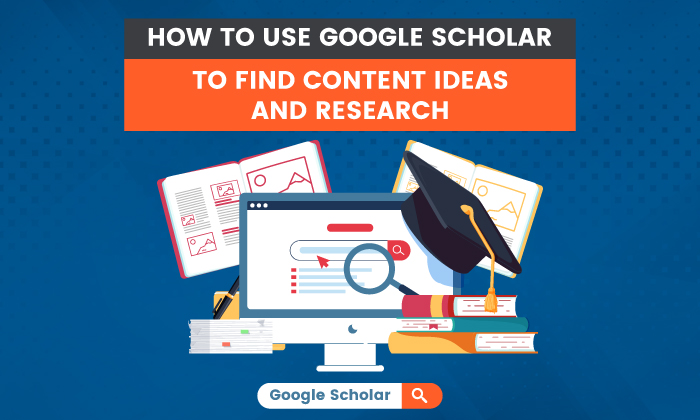
Google Scholar has several advanced search options that allow you to refine your searches and find more specific results. For example, you can limit your search by date range, language, author name, or journal title. Boolean operators, like “AND” and “OR”, can be utilized to form a single query by combining various keywords.
(source)
To refine your search even further, you can utilize the filters and preferences available on Google Scholar to narrow down results according to peer-reviewed papers from journals with high-impact factors or exclude certain authors or topics. For instance, if you want only peer-reviewed papers from journals with high-impact factors then simply select those filters before conducting your search. Additionally, if there are certain authors or topics that you would like excluded from your results then this too can be done via the preferences menu within Google Scholar.
Once you have located some applicable articles through basic keyword searches, delving into associated citations and related content can help to expand your understanding of the topic. This is especially helpful if there is not much information available on a particular subject yet, but still offers potential avenues of exploration worth pursuing further down the line. By exploring related articles and citations associated with each article one will often uncover new ideas which could potentially lead them toward interesting discoveries.
By making use of the sophisticated search capabilities, filters, and preferences provided by Google Scholar, one can easily identify primary research material related to their requirements. My Library on Google Scholar is an excellent tool for organizing and tracking your research; let’s explore how it works.
Key Takeaway Google Scholar provides advanced search features, filters and preferences to help researchers quickly locate primary research articles relevant to their project or interests. By making use of these tools and exploring related articlescitations associated with each article one can uncover new ideas that could lead them towards interesting discoveries. Google Scholar is a great aid in locating pertinent research articles.
Keeping Track of Your Research with My Library on Google Scholar
My Library on Google Scholar is a great asset for scientists and innovators to monitor their research progress. My Library enables users to construct a personalized repository of scholarly works, which they can organize into categories, export as bibliographies, or share with others.
Setting up a personal library in My Library is easy. To create a personal library, simply click the “My Library” link at the top right corner of any page on Google Scholar and select “Create new library” from the drop-down menu. Once your library has been created, you can start adding articles by clicking the “Save” button next to each article title in your search results list.
Organizing your library is also simple; simply drag and drop articles into different folders within My Library for easy access later on. You can also create collections of related topics or research themes which are great for organizing large amounts of data quickly and easily. Moreover, you can label articles with descriptors to make them easier to locate when needed.
By utilizing My Library on Google Scholar, researchers can easily keep track of their research and stay organized. Additionally, by exploring other databases in conjunction with Google Scholar as well as open-access journals and interlibrary loan services, they can find even more primary research articles to further their studies.
Key Takeaway My Library on Google Scholar is a great resource for researchers and innovators to stay organized with their research. Creating a library is straightforward – just hit the ‘Create new library’ button in the top right of any page on Google Scholar, and then drag & drop articles into collections or folders to keep them ordered. Moreover, you can assign labels or tags to make it simpler to locate the material when necessary.
Additional Resources for Finding Primary Research Articles on Google Scholar
It can provide access to a wide variety of sources, including journal articles, books, and conference papers. Nevertheless, in order to broaden one’s search range, other databases and sources can be used alongside Google Scholar.
Using Other Databases in Conjunction with Google Scholar: Many academic institutions have their own subscription-based library databases that can be accessed through the institution’s website or portal. These databases may include full-text versions of some journals not available on Google Scholar as well as more comprehensive indexing than what is available on Google Scholar. Moreover, numerous universities offer access to specialized databases such as Web of Science or Scopus that enable users to search across multiple areas and sources simultaneously.
Open-access journals, which receive funding from sources such as the NIH and Wellcome Trusts, provide free online content under Creative Commons licenses for readers to share or reuse without permission. Open-access journals typically make all content freely available online and often use Creative Commons licenses so readers are free to share and reuse material without permission from the publisher or author(s). While these publications tend to focus more heavily on scientific topics rather than humanities topics they still contain valuable information worth exploring when searching for primary research articles related specifically to science fields such as biology or medicine.
If a desired article cannot be located elsewhere, interlibrary loan services may provide an avenue to acquire it through either physical or digital means. Through this service, users can request copies of materials held by another library either physically (through mail) or electronically (via email). This allows researchers who do not have immediate access to certain materials due to geographical restrictions the ability to acquire them nonetheless, thus greatly expanding their research capabilities beyond what would otherwise be possible with just local resources alone.
Key Takeaway Google Scholar is a great tool for finding primary research articles, however there are other databases and resources that can be used in conjunction with it to maximize search capabilities. Additionally, open access journals may provide valuable content related to scientific fields while interlibrary loan services can also help researchers acquire materials from libraries located elsewhere.
FAQs in Relation to How to Find Primary Research Articles on Google Scholar
How do I search for only primary articles in Google Scholar?
To search for primary articles in Google Scholar, first, go to the main page and select ‘Advanced Search’. In the Advanced Search window, check off the box that says ‘Only show results from content I can access’ and then select ‘Include Patents’. Finally, click on ‘Search’. This will filter out all secondary sources such as reviews or books, leaving only primary research articles relevant to your query.
How do I find primary research articles?
Primary research materials can be obtained through multiple avenues, such as searching online repositories, utilizing sophisticated search strategies, and consulting specialists in the discipline. Utilizing PubMed and other online databases, researchers can access an abundance of primary research articles covering a broad range of topics. Advanced search techniques involve combining keywords with Boolean operators (AND/OR) to refine searches for specific results. Consulting experts in the field is also an effective way to locate relevant primary research articles as they have specialized knowledge about certain areas that may not be available from other sources.
How do I find research articles on Google Scholar?
Begin your hunt for research articles on Google Scholar by inputting a keyword or phrase in the search field. You can refine your search results by applying filters such as date of publication, author name, and topic area. To further narrow down your search results you can use advanced search features like exact phrases and multiple keywords. Additionally, you may access scholarly literature through library databases that are connected to Google Scholar. Finally, save time by setting up email alerts for newly published papers related to topics of interest.
How do you tell if an article is a primary or secondary source?
A primary source is an original document or record that provides first-hand information about a particular topic. Examples of primary sources can include interviews, diaries, letters, articles from when an event occurred, and photos and videos taken during the occurrence. Secondary sources are documents or records created after the fact by someone who did not experience the events firsthand. These may include books, journal articles, and reviews that analyze or discuss research already published by others.
Conclusion
How to find primary research articles on Google Scholar is an essential skill for researchers and innovators. With its advanced search capabilities, My Library feature, and additional resources available online, it can be an invaluable asset in the quest to discover new insights into any given topic. Whether you are looking for one article or hundreds of them on a specific subject matter – Google Scholar is here to help. Use these tips as your guide when searching for primary research articles on Google Scholar so that you can get the most out of this platform’s features.
Discover the power of Cypris to quickly find primary research articles on Google Scholar and unlock insights faster for your R&D and innovation teams. Unlock time-saving solutions with our comprehensive platform that centralizes data sources into one easy-to-use interface.

To remain competitive, Research and Development (R&D) teams must utilize all of the resources available to them. Google Scholar can be a powerful asset for R&D professionals who are looking to quickly find relevant sources related to their project. With its sophisticated search engine capabilities, advanced filtering options, and alert notifications, using Google Scholar for research allows teams to easily locate reliable information in an efficient manner. Want to learn how to use google scholar for research? This blog post will cover how to use google scholar for research, how R&D professionals can exploit the potential of Google Scholar to uncover novel discoveries related to their projects, as well as remain apprised of advancements in their area.
Table of Contents
Finding Relevant Sources with Google Scholar
Evaluating Sources Found on Google Scholar
Staying Up to Date with Google Scholar Alerts
FAQs in Relation to How to Use Google Scholar for Research
How do I use Google Scholar for research?
Can you use Google Scholar for research papers?
Why is it important to use Google Scholar for research?
Are Google Scholar articles credible?
What is Google Scholar?
Google Scholar is a powerful research platform that enables users to quickly find, access, and evaluate scholarly information. It provides easy access to academic literature from all disciplines, including books, journal articles, conference papers, and more. Google Scholar offers researchers a wide range of tools for searching the web for the relevant content as well as ways to keep up with new developments in their field.
Overview of Google Scholar
Google Scholar is an online search engine designed specifically for finding scholarly literature on the internet. Google Scholar provides access to a vast array of scholarly literature from renowned universities and publishers around the world, simplifying the process of locating relevant material on any subject. In addition to its comprehensive indexing capabilities, Google Scholar also includes advanced search features such as citation tracking and alert notifications when new results are published in your chosen areas of interest.
The platform makes it a breeze for users to traverse multiple facets of a given topic by providing them with an array of different filters they can apply when conducting searches – these include things such as author name or publication date range; language; type (e.g., book chapter vs journal article); source material (e.g., open access only); etc Moreover, many results found through this platform come equipped with full-text PDFs available for download – so you don’t have to worry about pesky paywalls blocking your path while doing research.

(Source)
Google Scholar is an invaluable resource for research and development teams, offering quick access to a wealth of scholarly information. Utilizing the proper search approaches, you can quickly locate precisely what you need by employing Google Scholar. Let’s look now at how to refine your results with advanced search techniques.
Key Takeaway: Google Scholar is a powerful research platform that gives researchers an array of tools to quickly locate, access and evaluate scholarly information. It provides users with advanced search features such as citation tracking and alert notifications, along with easy-to-apply filters for narrowing down results by author name or publication date range – making it the go-to tool for any researcher looking to cut through the noise.
Searching with Google Scholar
Exploring with Google Scholar can be a useful approach to quickly locate applicable scholarly material. There are several different strategies that can be used to get the most out of this powerful tool.
Basic google scholar search strategies involve entering a few keywords or phrases into the search bar and then refining your results using filters, sorting options, and related topics. This method is ideal for those who require a rapid search of information without needing to expend an excessive amount of time researching exact terms, especially for those unfamiliar with searching databases such as Google Scholar. It’s also useful for those who don’t have a lot of experience in searching databases like Google Scholar.
Advanced search strategies allow users to take advantage of more sophisticated features such as Boolean operators, wildcards, and phrase searches. These tools make it easier to narrow down results by specifying exactly what you’re looking for or excluding irrelevant sources from your search results. Advanced searchers should also pay attention to synonyms when crafting their queries since these can help broaden the scope of their searches while still providing relevant results.
Finally, refining your results is key in order to ensure that you only see sources that are truly relevant and authoritative on the topic at hand. Filters such as date range, publication type, language, author name, etc., can help refine your query so that only high-quality sources appear in your list of results. Sorting options provide users with the ability to prioritize documents, enabling them to quickly locate relevant materials without needing to review a large number of irrelevant ones.
Utilizing Google Scholar can be advantageous for swiftly finding pertinent research materials, but it is essential to comprehend the search strategies and filters at hand in order to maximize your searches. By understanding how to identify keywords and phrases, explore related topics, and utilize sorting options and filters, you can ensure that you are finding all of the relevant sources for your research project.
Key Takeaway: Google Scholar is a great tool for quickly locating relevant research sources. Advanced searchers can make use of Boolean operators, wildcards and phrase searches to narrow down their results while basic search strategies such as entering keywords into the search bar work just fine too. Additionally, refining your results with filters and sorting options helps ensure that you only see high-quality sources related to your topic at hand.
Finding Relevant Sources with Google Scholar
Locating applicable materials via Google Scholar can be a challenging endeavor, particularly for those unfamiliar with the research process. To facilitate the research process, employing various strategies can expedite and refine the search for relevant sources through Google Scholar.
Making use of keywords and phrases is a powerful method for finding pertinent sources on Google Scholar. It is important to identify key terms related to your topic or research question so you can narrow down the results. Additionally, using quotation marks around multiple words will allow you to get more precise results as it searches for exact matches instead of individual words within a phrase.
Exploring Related Topics
Exploring related topics helps provide additional context when researching on Google Scholar. This includes looking at previous studies conducted on similar topics or areas of interest, which provides further insight into potential sources available from other researchers’ work in the field. Utilizing tools such as co-citation analysis also allows users to explore how different authors have been cited together over time by providing visualizations based on their connections and relationships with each other through citations.
Utilizing filters and sorting options such as language, date range, publication type, etc., enables users to refine their search even further so they only receive results that match their specific criteria. Sorting options like relevance ranking or date published also make it easier for them to find what they need without having to sift through hundreds of irrelevant documents manually. By utilizing these features effectively, researchers can save valuable time when searching for relevant sources in Google Scholar since all the information they need will already be organized accordingly right away, saving them an hour’s worth of manual labor.
By utilizing Google Scholar, research teams can quickly and easily find relevant sources for their projects. With the next heading, we will explore how to evaluate these sources for credibility and authority.
Key Takeaway: Utilizing the right keywords and phrases, exploring related topics, and utilizing filters are essential techniques for finding relevant sources quickly with Google Scholar. By taking advantage of the available features, you can swiftly and accurately pinpoint documents that meet your criteria.
Evaluating Sources Found on Google Scholar
To assess the reliability and authority of each source, consider factors such as the publication’s reputation, author credentials in the field, and when it was published. To do this, look for publications from reputable journals or authors with credentials in the field. Furthermore, consider when the source was issued – more modern pieces may be more pertinent and exact than older ones.
It is advantageous to be aware of the distinct kinds of publications that can appear in search results, such as scholarly articles, books, conference papers, and dissertations; each offering various degrees of precision and accuracy depending on their intent and target audience.
For example, a book chapter may provide an overview of a topic while a peer-reviewed journal article will contain more detailed information backed up by research evidence. Similarly, conference papers are typically shorter summaries of research projects whereas dissertations offer comprehensive coverage including methodology and analysis results. Understanding these differences helps you identify which sources are most suitable for your needs when conducting research using Google Scholar.
Evaluating sources found on Google Scholar is an important step to ensure the credibility and accuracy of research results. By setting up alerts with Google Scholar, you can stay informed about new research findings and manage your subscriptions accordingly.
Maximize your research efforts with Google Scholar. Assess credibility & authority, pay attention to the date of publication & understand different types of publications. #ResearchTips #GoogleScholar Click to Tweet
Staying Up to Date with Google Scholar Alerts
Google Scholar is an invaluable tool for staying up to date with the latest research in your field. With its alert feature, you can easily set up notifications so that you’re always on top of new developments. Setting up alerts and managing them effectively will help ensure that you never miss a beat when it comes to relevant information.
Begin your research by utilizing Google Scholar’s sophisticated search features such as keyword and phrase searches, sorting results according to relevance or date of publication, and excluding unrelated sources. Once you’ve identified the most pertinent topics related to your research interests, set up alerts for each one by clicking on the bell icon in the upper right corner of the page. This will allow Google Scholar to send notifications whenever new content is published about those specific topics.
When setting up alerts in Google Scholar, make sure that they are tailored specifically toward what matters most to you – this could include certain authors or journals whose work has particular relevance to your own research projects. You can also adjust how often these alerts are sent (daily or weekly) depending on how frequently new material is being published within those fields of study. Additionally, if there are any other sources outside of Google Scholar which may contain useful information (such as blogs), consider adding their RSS feeds into your alert system too so that all relevant updates appear in one place.
Finally, don’t forget to manage existing alerts regularly; this means keeping track of which ones are still relevant and deleting any no longer needed from time to time (this helps keep clutter down). Additionally, try experimenting with different combinations/filters within each alert until you find what works best for keeping yourself informed without getting overwhelmed with notifications.
Key Takeaway: Utilize Google Scholar to stay up-to-date on the latest research in your field – create tailored alerts for specific topics and authors, adjust frequency of notifications as needed, and manage existing alerts regularly. Stay ahead of the curve by gathering all pertinent news in one location.
FAQs in Relation to How to Use Google Scholar for Research
How do I use Google Scholar for research?
Google Scholar is a great tool for conducting research. It provides access to millions of scholarly articles, books, and other sources from across the web. Google scholar works by entering keywords related to your topic into the search bar at the top of the page to quickly locate relevant scholarly articles, books, and other sources from across the web. Then narrow down your results using filters such as date range or publication type.
Finally, skim through the abstracts and full texts to pinpoint useful information for your research project.
Can you use Google Scholar for research papers?
Yes, Google Scholar is a great resource for research papers. It offers access to an extensive range of scholarly literature from journals, books, and conference proceedings. The search engine provides a convenient way to locate the most recent research in any area by entering keywords or phrases.
Advanced capabilities, such as citation monitoring, can be utilized to track the latest citations of one’s own or others’ work.
Why is it important to use Google Scholar for research?
Google Scholar is an invaluable tool for research, as it provides access to a vast range of scholarly literature from around the world. It allows researchers to quickly and easily search through millions of publications and journals in order to find relevant information.
Google Scholar also offers the ability to trace connections between different works, allowing researchers to stay abreast of recent developments in their field. With its user-friendly interface, Google Scholar makes researching easier than ever before.
Are Google Scholar articles credible?
Yes, Google Scholar articles are credible. They provide access to a wide range of academic literature from reliable sources such as peer-reviewed journals and conference proceedings. Expert scrutiny has been conducted to guarantee the accuracy and excellence of the articles before they are put up on Google Scholar. Additionally, each article includes information about its authorship and citation count which can help readers assess their credibility further.
Conclusion
Google Scholar provides a convenient way to uncover pertinent material, assess the quality of these sources with ease, and be informed about novel advancements in your area through notifications. Thus, R&D supervisors should know how to use google scholar for research. Also, R&D supervisors considering utilizing Google Scholar for investigation ought to recall that this apparatus should not supplant customary techniques, for example, peer survey or manual searching; rather it should supplement them.
With its powerful search capabilities and ability to keep researchers informed about their fields of interest, using Google Scholar for research can save time while providing more accurate results than ever before.
Unlock the power of research with Cypris. Our platform provides rapid time to insights, enabling R&D and innovation teams to quickly access data sources for their projects.