Innovation Basics: How Do Companies Encourage Innovation?


How do companies encourage innovation? This is a question that many organizations grapple with, and the answer isn’t always straightforward. Businesses need to understand how they can best foster an environment of creativity and exploration if they are going to stay competitive in today’s market.
We’ll explore what innovation is, how companies can encourage it within their teams, common challenges faced when attempting to do so, and the strategies for overcoming those obstacles. So let’s answer together: how do companies encourage innovation?
Investing in the development of technical and soft skills amongst staff is essential for companies that wish to foster a culture of innovation. This could involve providing educational opportunities such as workshops or seminars, offering mentorship programs, or encouraging cross-functional collaborations across departments. These activities not only help build capacity but also create an environment conducive to generating creative solutions.
Table of Contents
How Do Companies Encourage Innovation?
Creating a Culture of Creativity and Risk-taking
Establishing a Supportive Environment
Fostering a Collaborative and Positive Team Structure
Challenges to Encouraging Innovation in Companies
Lack of Resources and Time Constraints
Innovation Strategies to Encourage Employees
Leveraging Automated Processes
How Do Companies Encourage Innovation?
Innovative companies capture the market and avoid lagging. But how do companies encourage innovation? We take a look at some ways to foster workplace innovation.
Creating a Culture of Creativity and Risk-taking
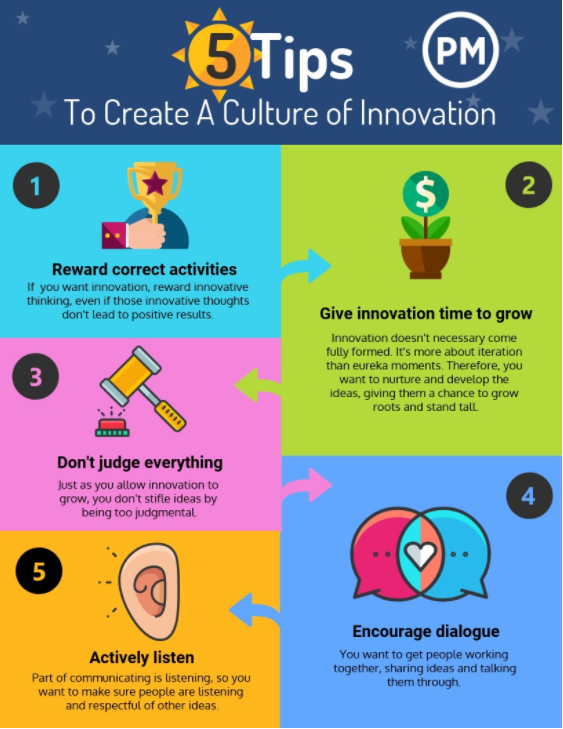
Companies can foster innovation by creating an environment that encourages creativity and risk-taking. This means providing employees with the freedom to explore new ideas, try out different approaches, and take calculated risks.
To do this, companies should focus on building trust between management and employees, allowing for open communication where ideas are shared without fear of judgment or criticism. They should provide resources such as training opportunities to help develop skills related to creative problem-solving.
Finally, managers need to reward innovative thinking with recognition or other incentives to encourage further exploration of new ideas.
Establishing a Supportive Environment
Innovation thrives when teams feel supported in their work. Companies can create a supportive environment by making sure that everyone feels heard during meetings and brainstorming sessions.
This includes actively listening to all opinions while also being mindful not to shut down any potential solutions too quickly due to preconceived notions about what might be possible or practical.
Additionally, companies need to provide access to tools that allow teams the flexibility needed to explore various options without feeling limited by outdated systems or processes.
(Source)
Fostering a Collaborative and Positive Team Structure
Encouraging collaboration among team members is key when trying to promote innovation within an organization. Having multiple perspectives working together towards common goals often leads to more creative solutions than if one person was working alone on the same task.
Companies should strive for positive team dynamics where each individual feels valued regardless of their position within the company hierarchy. This will help ensure that everyone has an equal opportunity for input. This may lead them towards unexpected but valuable insights into how best to approach certain challenges faced by the organization as a whole.
Capacity Development
Innovation requires individuals who have both technical know-how as well as soft skills like critical thinking and problem-solving abilities. Companies must invest time into developing these capacities amongst their staff if they want them to be able to generate fresh ideas consistently over time.
This could involve:
- Providing educational opportunities such as workshops or seminars aimed at helping employees hone specific skill sets relevant to their job roles.
- Offering mentorship programs so they can learn from experienced professionals.
- Encouraging cross-functional collaborations across departments so people gain exposure outside their usual scope of work.
All these activities serve not only to build up capacity but also to cultivate an atmosphere conducive to generating innovative solutions.
In encouraging employee innovation, companies should innovate their culture, structure, and how they treat employees and team members. Companies that reward innovation by creating valuable support systems, encouraging risk-taking, and continuous professional development are more likely to succeed and lead the market.
Companies that want to encourage innovation must create a culture of creativity & risk-taking, provide resources, and reward successful innovations. #innovation #creativity Click to Tweet
Challenges to Encouraging Innovation in Companies
How do companies encourage innovation? Encouraging innovation in companies can be a difficult task, as several challenges must be overcome.
Lack of Resources and Time Constraints
One of the most common challenges for innovative companies is a lack of resources and time constraints. Companies often struggle to find enough resources to invest in research and development (R&D) initiatives or devote sufficient time for employees to explore new ideas. This can lead to stagnation within the organization, preventing it from taking advantage of opportunities for growth and progress.
Fear of Failure
Fear of failure and risk aversion are challenges that a company faces when trying to transform into an innovative organization. Employees may hesitate to take risks due to fear of repercussions if their ideas fail or do not meet expectations. This reluctance can stifle creativity and prevent teams from exploring potential solutions that could benefit the company in the long run.
Resistance to Change
Finally, resistance to change and adaptation is a major obstacle when attempting to encourage innovation within an organization. Many people become comfortable with existing processes and systems, making them resistant to any changes proposed by others, even if those changes could improve efficiency or productivity levels significantly over time.
Leaders within organizations need to recognize this issue so they can create strategies for overcoming it. Examples are providing incentives for embracing new technologies or rewarding employees who come up with successful innovations despite initial resistance from colleagues.
Despite the challenges of encouraging innovation in companies, some strategies can be implemented to overcome these obstacles and create a culture of innovation. By investing in R&D, embracing technology and automation, and fostering collaboration and open communication, companies can take steps towards creating an environment where innovative ideas are welcomed and encouraged.
Encouraging innovation in companies can be challenging. Lack of resources, fear of failure, and resistance to change are common obstacles. Leaders must create strategies for overcoming these issues. #innovation #R&D #businessgrowth Click to Tweet
Innovation Strategies to Encourage Employees
How do companies encourage innovation? Companies that embrace innovation are more likely to stay ahead of their competition and remain competitive in the marketplace. However, there are several challenges that companies must overcome to encourage innovation within their organization.
Investing in R&D
Investing in research and development (R&D) is one way for companies to foster innovation and stay ahead of the competition. By investing in R&D activities such as research projects, technology development initiatives, and new product design efforts, companies can create an environment where employees feel empowered to come up with creative solutions and innovative ideas.
Additionally, it allows them access to resources they may not have had before which could help spur further creativity and exploration into new areas of research or development.
Leveraging Automated Processes
Leveraging automated processes such as machine learning algorithms or artificial intelligence systems is another strategy for encouraging innovation within organizations. Businesses can streamline operations while also creating opportunities for employees to explore more creative solutions without having to worry about mundane tasks taking away valuable time spent on problem-solving activities.
This type of automation frees up time for team members so they can focus their efforts on higher-level thinking instead of tedious manual labor tasks that don’t require much thought but still take up precious time during the workday.
Key Takeaway: Companies can foster innovation by investing in R&D and leveraging automated processes such as machine learning algorithms or artificial intelligence systems. This allows employees to focus on creative solutions while freeing up time for higher-level thinking.
Conclusion
Innovation is a key component of any successful business and companies must be proactive in encouraging it. But how do companies encourage innovation?
Companies should strive to create an environment that fosters creativity and encourages employees to think outside the box. There are challenges associated with this process which can be overcome by developing strategies such as providing resources for research and development or creating incentives for innovative ideas.
Are you an R&D or innovation team looking for a better way to stay ahead of the competition? Cypris is here to help.
Our platform centralizes data sources and provides rapid time-to-insights so that teams can quickly find solutions and innovate faster than ever before. With our intuitive interface, your company will be able to encourage innovative thinking in no time!
.png)