
As an R&D platform and custom report service, search functionality for our users is key.
That's why we're thrilled to announce our platform's user experience and research capabilities just got better. Meet Quick Search, a new search bar that delivers information to our users faster than ever.
What's New with this Launch?
The previous search functionality allowed for search only by keywords. With Quick Search, users can now search by patent and research paper titles in addition to keywords.
What's the User Experience Like?
As you type in your search (keyword, patent, or research paper) you'll see a live tally of the data by category available for that search.
From there, you can click into individual data sections or build a report pulling from all available data streams.
0:00/1×
Have questions or comments? Feel free to reach out to us at info@ipcypris.com for more information.
Meet Quick Search, Our New Functionality



As an R&D platform and custom report service, search functionality for our users is key.
That's why we're thrilled to announce our platform's user experience and research capabilities just got better. Meet Quick Search, a new search bar that delivers information to our users faster than ever.
What's New with this Launch?
The previous search functionality allowed for search only by keywords. With Quick Search, users can now search by patent and research paper titles in addition to keywords.
What's the User Experience Like?
As you type in your search (keyword, patent, or research paper) you'll see a live tally of the data by category available for that search.
From there, you can click into individual data sections or build a report pulling from all available data streams.
0:00/1×
Have questions or comments? Feel free to reach out to us at info@ipcypris.com for more information.
Keep Reading

Innovation is an essential part of staying competitive in today’s business environment. But the question remains, how can we bring innovation to our customers? It takes more than just a great idea and good execution: it requires careful planning, understanding customer needs, and having the right tools for success.
In this article, we will explore what innovation means, how to bring it to customers effectively, which tools are necessary for the successful delivery of innovative solutions, challenges that may arise along the way, as well as strategies needed to ensure the successful implementation of new ideas. So let’s answer: how can we bring innovation to our customers?
Table of Contents
What is Customer-Focused Innovation?
What Makes Customer-Focused Innovation Different?
The Benefits Of Customer-Focused Innovation
How to Implement a Customer-Focused Innovation Strategy
How Can We Bring Innovation to Our Customers?
Identifying Customer Needs and Wants
Strategies for Successful Innovation Delivery to Customers
What is Customer-Focused Innovation?
Customer-focused innovation is the process of creating products, services, and experiences that are tailored to meet the needs of a specific customer or group. It involves understanding what customers want and need, then developing solutions that innovatively address those needs. It involves answering the question: how can we bring innovation to our customers?
These innovation efforts can be applied to any industry, from technology to healthcare to retail.
What Makes Customer-Focused Innovation Different?
Customer-focused innovation differs from traditional product development in several ways.
First, it focuses on giving customers what they need rather than simply introducing new features or technologies. It centers product innovation on the customer experience instead.
Second, it requires deep knowledge about the target market’s wants and needs as well as an understanding of how they use existing products or services. Customer-focused innovation efforts require product development that has strong foundations for customer feedback.
Finally, it requires a willingness to experiment with different approaches until something works for the customer base being served.
The Benefits Of Customer-Focused Innovation
One major benefit of this approach is that companies can create products and services that are more likely to be successful because they have been developed with input from their intended users. By listening closely to customers’ feedback during development cycles, companies can make sure their offerings remain relevant over time instead of becoming outdated quickly after launch.
Finally, customer-focused innovation encourages collaboration between teams within organizations which leads to better problem-solving capabilities overall. This is a key factor in staying competitive in today’s marketplace.
How to Implement a Customer-Focused Innovation Strategy
To successfully implement a customer-focused strategy there must first be an understanding among all stakeholders (including executives) about why this approach is important for success long term. Without buy-in at every level, progress will be difficult if not impossible.
Once everyone understands why this approach should be taken, there must also be agreement on how best to collect data from customers throughout the product lifecycle. It should also be clear who will analyze this data once collected so insights can inform future decisions related to both short-term tactics and long-term strategic planning efforts.
(Source)
How Can We Bring Innovation to Our Customers?
Bringing innovation to customers is an important part of any successful business. But how can we bring innovation to our customers? Here are some basic steps.
Identifying Customer Needs and Wants
Identifying customer needs and wants is the first step in developing innovative solutions that will meet those needs. This requires research into customer demographics, preferences, and behaviors.
Companies can use surveys, focus groups, interviews, or other methods to gain insight into the customer experience. Once these needs are identified, companies can begin developing innovative solutions that address them.
Developing Innovative Ideas
Developing innovative solutions involves creative problem-solving and a willingness to think outside the box. Companies should look for ways to improve existing products or services or create entirely new ones that improve the customer experience.
It’s also important for companies to consider how they can make their products more accessible or easier to use so that all potential customers have access to them regardless of age or ability level.
Careful Implementation
Once an innovative solution has been developed it must be implemented for it to be effective at meeting customer needs and wants. This process involves testing the product or service before releasing it on a larger scale as well as marketing efforts designed to reach potential users who may not otherwise know about the offering.
Additionally, businesses should ensure they have adequate support systems in place so that any issues with the product are quickly addressed and resolved if necessary after its release.
Measuring Success
Finally, companies should take steps towards measuring success with their innovation efforts. They can do this by tracking metrics such as user engagement levels over time as well as feedback from both current users and potential users who were exposed but did not purchase yet.
By doing this, businesses can determine whether their innovations truly met the expectations of their customer base. At the same time, it also provides valuable insights into areas where further improvements could be made going forward.
Key Takeaway: Successful innovation involves research into customer needs, creative problem-solving, implementation of the solution, and measuring success. Companies should use surveys, focus groups, interviews, and other methods to gain insight into customer wants and needs before developing solutions that are accessible and easy to use. Additionally, businesses must track user engagement levels over time as well as feedback from users to determine if their innovations truly met customer expectations.
Strategies for Successful Innovation Delivery to Customers
How can we bring innovation to our customers? To bring innovation to customers, it’s important to identify their needs and wants, develop innovative solutions that meet those needs and then implement them effectively.
To do this successfully requires a well-thought-out strategy with the right tools and resources at your disposal.
Establish a Clear Vision
Establishing a clear vision and goals is key for any successful innovation delivery project. This will help ensure everyone involved has a common understanding of what you are trying to achieve as well as how you plan on achieving it.
Utilize Technology Platforms
Utilizing technology platforms specifically designed for research and development can also be extremely helpful in streamlining the process. These platforms centralize data sources into one platform.
Data analysis tools such as machine learning algorithms can also provide valuable insights when used correctly which can help inform decisions throughout the entire process from ideation through implementation stages. Collaboration tools like video conferencing software allow teams located anywhere in the world to stay connected during every step of the journey toward successful customer delivery of innovative solutions.
Quality Control
Quality control is another critical factor when bringing innovation to customers since it helps ensure that all deliverables meet expectations set forth at each stage along with overall customer satisfaction once complete. Quality assurance testing should be conducted throughout each phase from design through production so any issues can be identified early on before they become bigger problems.
Key Takeaway: Bringing innovation to customers requires a clear vision, data analysis tools, collaboration platforms, and quality assurance testing for successful delivery. Utilize technology specifically designed for research & development to streamline the process and provide rapid time to insights.
Conclusion
Innovation efforts are an essential component of customer success. But how can we bring innovation to our customers? With the right tools and strategies in place, companies can maximize innovation efforts that will help them achieve their goals.
However, there are challenges associated with implementing an innovation strategy such as cost, time constraints, and lack of resources. To overcome these challenges and be successful in their innovation efforts, organizations must have a clear understanding of what innovation means for them and how it can benefit their business objectives.
We understand that innovation is the key to staying competitive in today’s market. That’s why we created Cypris, a research platform specifically designed for R&D and innovation teams.
Our goal is to provide you with rapid time-to-insight so you can stay ahead of the curve by making informed decisions quickly and efficiently. We invite your team to join us on our mission as together we bring innovative solutions to customers around the world!

How can innovation benefit the community? From technological advances to creative problem-solving, the potential for innovation in our world today is limitless. In this article, we will explore innovative ideas and how they can benefit communities.
We will do this by examining what it means for something or someone to innovate, looking at examples of innovations that have already benefited various communities around the globe, and identifying challenges associated with implementing innovative solutions in different contexts. So let’s answer together: how can innovation benefit the community?
Table of Contents
How Can Innovation Benefit the Community?
Examples of Innovations that Have Benefited Communities
Challenges to Implementing Innovative Solutions in Communities
How Can Innovation Benefit the Community?
Innovation has the potential to benefit communities in a variety of ways. From economic growth to improved quality of life, innovation can help create a more sustainable future for all.
How can innovation benefit the community? Let’s look at the different advantages that innovation creates.
Improved Quality of Life
Innovation often leads to improved quality of life for members of the community. For example, advances in medical technology can lead to better healthcare outcomes for patients. Innovations such as renewable energy sources can reduce pollution levels and improve air quality in urban areas.
New products or services that make everyday tasks easier or more efficient can also improve people’s lives by saving them time and money.
Economic Growth
Innovation is essential for economic growth because it creates new markets, industries, jobs, andinvestment opportunitiest.
When businesses innovate, they create products or services that are either cheaper than existing alternatives or offer features not available before. Both scenarios increase demand from consumers which helps stimulate the economy.
Additionally, when companies invest resources into research & development (R&D) activities they are investing back into their local economies which helps create jobs and further stimulates economic activity.
Social Impact
Innovation doesn’t just benefit individuals but entire societies too!
For instance, advancements in transportation infrastructure like public transport networks allow citizens greater freedom of movement. This allows them access to education and employment opportunities. This ultimately contributes towards reducing poverty levels within communities over time, as well as helping bridge social divides between different socio-economic classes.
Similarly, innovations such as mobile banking apps enable financial inclusion amongst those who were traditionally excluded from traditional banking systems due to a lack of access. This opens up a whole range of possibilities including increased access to credit facilities which again help contribute towards reducing poverty levels within certain regions.
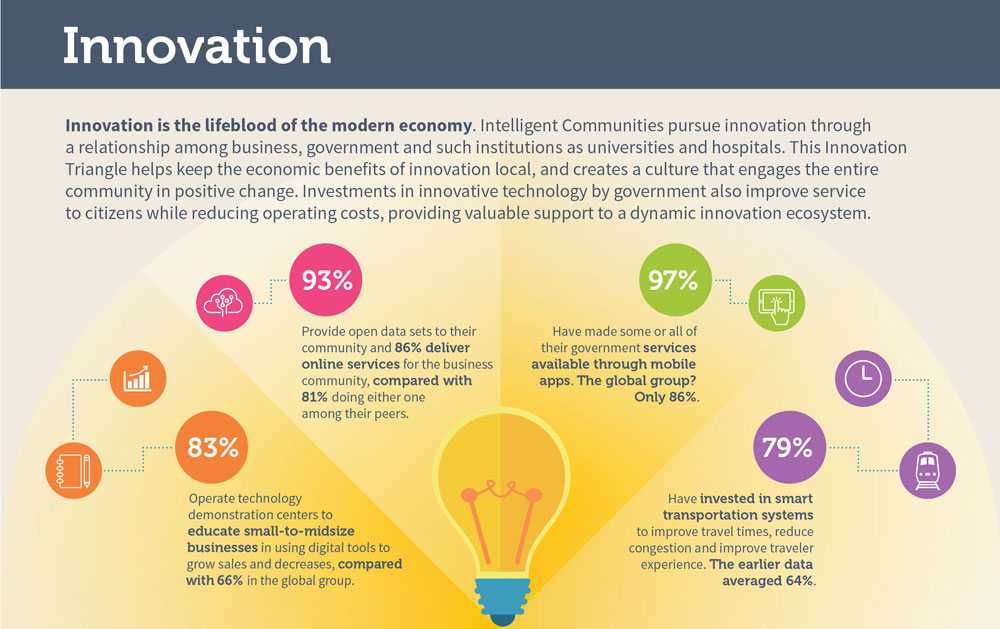
(Source)
Overall, innovation has the potential to be an incredibly powerful tool capable of positively transforming entire communities if used correctly.
Innovation can have a profound impact on communities, from improving economic conditions to increasing social well-being and environmental sustainability. By looking at examples of successful innovations that have already benefited communities, we can gain insight into how future innovation efforts can be used to benefit society in the same way.
Key Takeaway: Innovation has the potential to benefit communities in many ways, such as economic growth and development, increased productivity and cost savings, improved communication technology, and access to products that may not have been available before.
Examples of Innovations that Have Benefited Communities
Innovation has been an integral part of human progress for centuries. It can take many forms, from technological advancements to new business models and processes. Innovations have the potential to benefit communities in a variety of ways, including economically, socially, and environmentally.
How can innovation benefit the community? Here are some examples of innovations that have had positive impacts on communities around the world.
Healthcare Innovations
Healthcare is one area where innovation has made a significant difference in people’s lives. From medical devices such as pacemakers and artificial organs to telemedicine platforms that allow patients to access care remotely, healthcare innovations have improved access to quality care while reducing costs.
Additionally, advances in genomics research have enabled more personalized treatments tailored specifically to individual patients’ needs.
Education Innovations
Education is another sector where innovation has played an important role in improving outcomes for students and teachers alike. Technology-enabled solutions such as online learning platforms provide greater flexibility for students who may not be able to attend traditional classes due to geographical or financial constraints. Augmented reality tools also offer exciting opportunities for immersive learning experiences that engage students with interactive content like never before possible.
Energy Innovations
Sustainable energy sources are becoming increasingly important as we strive to reduce our reliance on fossil fuels and other non-renewable resources, which can cause environmental damage over time.
Examples of sustainable energy solutions include solar panels that harness the sun’s rays, wind turbines that generate electricity through wind power, and geothermal systems that tap into underground heat sources. These technologies help reduce emissions while providing clean energy alternatives at a lower cost than traditional methods.
These are just some examples of how innovative solutions can benefit communities across different sectors. There are countless others out there waiting to be discovered. With proper planning and implementation strategies, we all can workk together towards creating better futures through innovation.
Innovation has the potential to benefit communities in many ways, from healthcare to education and beyond.
Key Takeaway: Innovation has the potential to benefit communities in a variety of ways, from healthcare and education to sustainable energy sources. Examples include medical devices, telemedicine platforms, online learning tools, and renewable energy solutions. With proper planning and implementation strategies, we can create better futures through innovation.
Challenges to Implementing Innovative Solutions in Communities
While innovation has many benefits such as increased efficiency and productivity, it also presents challenges when trying to implement innovative solutions in communities.
Financial Barriers
Financial barriers are one of the most common challenges faced when implementing innovative solutions in communities. These financial barriers can include a lack of access to capital, limited resources for research and development, and high costs associated with the implementation, and maintenance of an innovative solution.
For example, installing solar panels on homes may require upfront investments that some people cannot afford due to their economic situation.
Cultural Barriers
Cultural barriers are another challenge that must be addressed when implementing innovative solutions in communities. This includes attitudes towards change within a community which may prevent them from accepting an innovative solution even if it could benefit them greatly over time.
For instance, some rural areas may not accept new technologies because they feel comfortable with traditional methods or fear change itself which prevents any kind of progress from happening in those areas.
Political Barriers
Political barriers can also be encountered when attempting to introduce innovative solutions into a community due to divergences between local governments and businesses that have distinct interests. For example, there may be disputes between government officials regarding whether or not renewable energy sources should be adopted by a particular region because of potential economic effects on existing industries.
Despite the challenges that come with implementing innovative solutions in communities, there are strategies and resources available to help overcome these barriers. By developing a comprehensive implementation plan, securing funding for implementation, and engaging stakeholders in the process, we can work towards overcoming these challenges and achieving successful implementations of innovative solutions.
Key Takeaway: Innovation can benefit a community, but it must overcome financial, cultural, and political barriers. These include a lack of access to capital, attitudes toward change, and disputes between governments and businesses.
Conclusion
How can innovation benefit the community? From improving access to healthcare and education to creating new jobs and economic opportunities, innovation has the potential to transform lives.
However, implementing innovative solutions in communities can be challenging due to factors such as a lack of resources or infrastructure. To overcome these challenges, stakeholders from both the public and private sectors need to collaborate on strategies that will ensure the successful implementation of innovative solutions in communities. By doing so, we can unlock the full potential of innovation and create lasting positive impacts on our society.
Innovation is key to the growth and development of any community. With Cypris, R&D and innovation teams can access a platform that allows them to quickly gather data from multiple sources in one place.
This saves time while allowing for deeper insights into new ideas or products they are working on, which leads to more informed decisions. We urge all members of our communities – both public and private – to explore how this innovative tool could benefit their research & development initiatives today!

Innovation is the cornerstone of success for any R&D and innovation team. Oftentimes, when we think of innovation, we think of large budgets. But can frugal innovation be disruptive innovation?
Frugal innovation requires creating new solutions with limited resources while disrupting existing markets or products often requires significant capital investment. In this article, we’ll explore what exactly frugal and disruptive innovations are, and how to possibly create innovations on a budget. Let’s answer: can frugal innovation be disruptive innovation?
Table of Contents
Frugal Innovation in a Nutshell
What Are the Characteristics of Frugal Innovation?
What is Disruptive Innovation?
Disruptive Innovation in a Nutshell
Examples of Disruptive Innovation
Can Frugal Innovation Be Disruptive Innovation?
Disruptive Innovation Potential
What is Frugal Innovation?
Frugal innovation is a term used to describe the process of creating products and services that are low-cost but still meet customer needs. It involves finding creative solutions to existing problems with limited resources.
Frugal innovation focuses on making products more affordable and accessible for people who may not have access to traditional methods or resources.
Frugal Innovation in a Nutshell
Frugal innovation is an approach that emphasizes affordability, accessibility, sustainability, and scalability in product design and development. It seeks to reduce costs while maintaining quality standards by using fewer materials, simpler processes, and more efficient production techniques. This type of innovation also often includes strategies such as reusing components from other products or utilizing local resources instead of imported ones.
(Source)
What Are the Characteristics of Frugal Innovation?
Frugal innovation is a concept that has gained traction in recent years, especially among companies looking to maximize their resources and cut costs.
It involves finding creative solutions to problems with minimal resources, often through the use of existing technology or processes.
The characteristics of frugal innovation are:
Low-Cost Solutions
Frugal innovation focuses on creating low-cost solutions for everyday problems. This means using existing technologies or processes instead of investing in new ones. Finding new applications for existing technologies can add to substantial cost reduction than learning a whole new system.
Resource Optimization
Frugal innovators strive to optimize their resources by utilizing them more efficiently and effectively than before. This could involve rethinking production processes or leveraging existing infrastructure. An example is using cloud computing services instead of building out physical data centers.
User-centricity
Frugal innovators prioritize user experience when designing products and services, ensuring they meet customer needs while still being affordable and accessible for all users regardless of income level or location.
Companies that implement user-centricity become successful by offering products or experiences at competitive prices without sacrificing quality or service levels.
Simplicity and Scalability
Frugal innovations are designed with simplicity in mind so that they can be easily scaled up as demand increases without having to invest heavily into additional infrastructure or personnel training programs. Many mobile apps offer this type of scalability since they require minimal development effort but can reach millions of users quickly if successful enough.
Sustainability and Resilience
Finally, frugal innovations should be sustainable over time. This means businesses don’t need to constantly reinvest into them every few years just to keep up with changing market trends and consumer demands.
Resilience is also important since these solutions must remain reliable even during times of crisis or even when other disruptive innovations come into play.
Frugal innovation can be a powerful tool for organizations looking to create products and services that are both cost-effective and innovative. Can frugal innovation be disruptive innovation? By understanding the key principles of frugal innovation, R&D teams can maximize the substantial cost reductions to create disruptive technologies.
Key Takeaway: Frugal innovation is an approach to product design and development that emphasizes affordability, accessibility, sustainability, and scalability.
What is Disruptive Innovation?
Disruptive innovation is a term used to describe an innovation that significantly changes the way an industry or market operates. It often involves introducing new products, services, or business models that challenge existing ones and create entirely new markets.
Disruptive innovations are usually developed by small companies that can take advantage of their size and agility to quickly develop and launch innovative solutions before larger competitors have time to respond.
Disruptive Innovation in a Nutshell
Disruptive innovation is defined as a process in which a product or service creates a completely new market by challenging the existing dominant technology, product, or service. This type of innovation typically comes from smaller players who can leverage their agility and resources more effectively than established incumbents.
Examples of Disruptive Innovation
A classic example of disruptive innovation is Netflix’s introduction of streaming video services in 2007. Before this development, consumers had been limited to renting physical DVDs through brick-and-mortar stores such as Blockbuster Video.
By offering customers on-demand access to movies via the internet at lower prices than traditional rental outlets could offer, Netflix disrupted the home entertainment industry with its revolutionary model for movie rentals.
Another one of the most successful examples of disruptive innovation is Apple. By introducing revolutionary products such as the iPod, iPhone, iPad, and Macbook Air, they have disrupted traditional markets and created entirely new ones.
Their success can be attributed to their focus on creating innovative products that are easy to use for consumers while also providing a high-quality experience.
This combination of user-friendly design and quality has allowed them to remain at the forefront of technological advancement.
Disruptive innovation can create new markets, transform existing ones and open up opportunities for organizations to become more competitive.
Usually, disruptive innovation comes with a high cost. But the substantial cost reduction of frugal innovation frameworks allows companies to navigate markets easily. So let’s take a look: can frugal innovation be disruptive innovation?
Key Takeaway: Disruptive innovations can create entirely new markets and provide opportunities for entrepreneurs, start-ups, and small businesses. Benefits include increased competition leading to better quality products at lower prices as well as potential competitive advantages in new markets.
Can Frugal Innovation Be Disruptive Innovation?
Frugal innovation is an approach to product development that focuses on cost reduction and user-centricity. It has been gaining traction in recent years as a way for companies to outmaneuver larger competitors by creating products with fewer resources.
Can frugal innovation be disruptive innovation? Let’s discuss how it can be more advantageous over other traditional processes of development.
Cost Reduction Benefits
Substantial cost reduction is one of the main benefits of frugal innovation. By reducing costs, companies can create products that are more affordable for their customers while still maintaining high-quality standards.
This allows them to compete with larger companies that may have higher overhead costs or be unable to produce certain items due to budget constraints.
Additionally, cost reductions can lead to increased profits which can then be reinvested into further research and development efforts or used for other purposes such as marketing campaigns or hiring new employees.
User-Centricity Advantages
Another benefit of frugal innovation is its focus on user-centricity. Companies utilizing this approach strive to create products that meet the needs of their target audience without sacrificing quality or features they may find important.
This helps ensure customer satisfaction and loyalty which leads to repeat business and referrals from satisfied customers – something every company should strive for!
Additionally, by understanding what users want from a product before it’s even created, companies can reduce time spent in design cycles and get their products out faster than ever before. This is another key advantage when competing against larger rivals who often take longer to develop complex designs due to a lack of direct feedback from consumers during design phases.
Disruptive Innovation Potential
The combination of cost-reduction benefits and user-centricity advantages makes frugal innovation particularly well-suited for disrupting established markets. Large incumbents have become complacent due to detachedness from the customer base over time.
Frugal innovators have the potential to capitalize on these weaknesses by offering lower prices while providing better services tailored specifically toward consumer needs. This is something traditional players often struggle with given their size and complexity.
Furthermore, through rapid iteration cycles enabled by reduced overhead and streamlined processes, smaller players can quickly introduce new features and updates ahead of the competition. This gives them the edge needed to succeed in highly competitive marketplaces.
Frugal Innovation offers many advantages over traditional approaches including cost savings, improved user experience, shorter design cycles, and greater agility in introducing new features ahead of the competition. This enables disruptors to challenge the status quo and gain a foothold in previously untapped markets.
Frugal innovation has been gaining traction in recent years as a way for companies to outmaneuver larger competitors by creating products with fewer resources. Click To Tweet
Conclusion
Can frugal innovation be disruptive innovation? With the right strategies and a focus on customer needs, companies can create solutions that are both cost-effective and disruptive.
By leveraging existing resources and focusing on creating innovative solutions to solve customer problems, businesses can achieve success with their frugal innovations while also disrupting already developed markets. Ultimately, understanding how to use frugal innovation as a tool for disruption is key for any R&D or Innovation team looking to stay ahead of the competition.
Do you want to be a leader in disruptive innovation? Are you looking for ways to save money while still being able to innovate quickly and effectively? Then Cypris is the perfect platform for your R&D and innovation teams.
With our research-focused approach, we provide comprehensive data sources that can help you get insights fast. Our cutting-edge technology ensures maximum efficiency with minimal costs – allowing you to stay ahead of the competition! Join us today on Cypris and revolutionize how your team innovates!